AI Copy Trading: Revolutionizing Automated Investment with Intelligent Technology

Think of AI copy trading as putting your investments on a smart auto-pilot. It blends the community-powered idea of following successful traders with the precision of artificial intelligence. Instead of just copying trades blindly, the AI helps choose, manage, and adjust them using real-time data and built-in safety measures. It’s designed to navigate market ups and downs more steadily than traditional methods.
What is AI Copy Trading, Really?
At its core, AI copy trading uses algorithms to handle the heavy lifting. While old-school copy trading simply replicates another trader's moves, the AI version adds a layer of smart analysis. It sifts through historical performance, risk patterns, and current market conditions before making a move. This helps remove emotional bias and can execute decisions faster and with more consistency.
Traditional vs. AI-Enhanced Copy Trading
| Aspect | Traditional Copy Trading | AI-Enhanced Copy Trading |
|---|---|---|
| Selection Process | Manual choice based often on past returns alone. | Algorithmic scoring based on performance, risk patterns, and strategy consistency. |
| Execution | Direct mirroring of trades, delays possible. | Analyzes market context at moment of copy; can adjust size or timing. |
| Risk Management | Largely manual; relies on your own stops/limits. | Automated controls based on your preset risk level and real-time volatility. |
| Adaptability | Static; follows the trader regardless of market shifts. | Dynamic; can pause or filter signals in extreme or unsuitable conditions. |
How It Actually Works: A Simple Breakdown
The process is straightforward from your perspective:
- You Connect: Link your trading account (on platforms like MT4 or MT5) to an AI copy trading service. Your funds always stay in your own broker account.
- You Set Your Guardrails: Define your comfort zone—like how much you’re willing to risk daily or per trade.
- The AI Takes the Wheel: It selects strategies from its vetted pool, monitors the markets, and places trades that fit your risk profile. It manages the entire execution loop, from opening to closing trades.
- You Stay Informed: You can watch activity in real-time and adjust your settings anytime. You’re in control of the big picture, while the AI handles the minute-to-minute decisions.
In short, it’s a tool that gives you access to experienced trading strategies, but with a smart, automated co-pilot helping to manage the journey.
How AI Copy Trading Actually Works
Finding the Right Strategy, Automatically
Think of it like having a super-dedicated assistant who learns from history. At the heart of AI copy trading are models that learn from mountains of data—not just past prices, but also trading volume, company news, and even the overall mood of the market from financial reports. They don't just follow a static checklist; they get better and adjust their understanding the more data they see, much like a human trader gains experience.
So, how does it pick who to copy? It looks at strategy providers from every angle. It's not just about who made the most money last week. The AI checks their consistency, how they handle both good and bad markets, their reaction to costs, and their performance at different times of the day. The goal is to find traders whose success comes from a repeatable edge, not just a temporary lucky run.
Constant, Real-Time Protection
This is where it feels like a genuine upgrade. Traditional tools often show you what just happened. AI systems, however, are built to sense and react to market shakiness as it occurs. They can pause or adjust the approach the moment things get too volatile, which is a huge shift in how automated trading can work.
Modern platforms layer on several automatic safety features:
- AI Advisors: Constantly watching live market conditions.
- Sentiment Filters: Getting a read on the overall market psychology.
- Rate Guards: Making sure every potential trade has a sensible balance of risk to reward.
These safeguards work around the clock. They can place trades in milliseconds to catch short-lived opportunities, but more importantly, they’re always there working to protect your capital when the market gets rough.
Why AI Copy Trading Makes Sense for Modern Investors
Let's talk about what actually makes AI-powered copy trading stand out. It's not just a fancy tool; it solves some very real challenges people face when trying to grow their investments.
1. It Acts with Supercharged Reflexes
Imagine being able to react to a market opportunity in the literal blink of an eye. AI trading systems do exactly that—executing trades in milliseconds. They catch price movements and shifts so fast that a human would still be loading the chart. This incredible speed, plus the ability to watch dozens of markets at once, lets you spread your investments intelligently and without delay.
2. It Takes the Emotion Out of the Equation
We've all been there: watching the markets swing and feeling that pull to make a rash decision out of excitement or panic. AI doesn't have those feelings. It sticks to the plan, following its trading rules with discipline whether the market is crashing or soaring. This cool-headed approach is crucial for protecting your money when things get volatile.
3. It Looks for Real Skill, Not Just Luck
Sophisticated AI platforms dig deeper than just asking, "Did this trader make profit last month?" They analyze consistency and behavior. Why? Because a risky, all-in strategy might win big in the short term but crash just as fast. The goal is to find signal providers with a solid track record and sound risk management, not just those who got lucky during a good week.
4. You Stay in the Driver's Seat
This isn't a set-it-and-forget-it black box. You get to set the rules that match your comfort zone. You can control:
- How much to invest per trade
- Where to set automatic stop-loss limits
- Your overall level of risk exposure
| Feature | What It Lets You Do |
|---|---|
| Adjustable Trade Size | Control exactly how much capital is used on each copied trade. |
| Custom Stop-Loss Limits | Define the maximum loss you're willing to accept on a position. |
| Risk Exposure Settings | Dial your overall risk up or down based on your personal tolerance. |
| Performance Tracking | Review clear, historical data before following any trader. |
| Smart Filtering | Automatically find and follow reliable, consistent signal providers. |
Before you commit any money, you can review all the historical performance data on a transparent dashboard. Plus, smart filters help you connect with the most reliable, high-performing traders, giving you greater peace of mind.
Things to Watch Out For: The Not-So-Glamorous Side of AI Trading
While AI tools are powerful, they aren't magic. Jumping in without being aware of the pitfalls is a bit like sailing into new waters without checking the weather. Here are some key realities to keep on your radar.
Your AI is Only as Smart as Your Data
Think of your AI model as a brilliant student. If you only give it old, incomplete, or messy textbooks to learn from, it’s going to learn the wrong lessons. In trading terms, poor-quality data leads directly to flawed predictions and bad trades. If the system was only trained on calm market periods, it might panic during a sudden crash. Garbage in, garbage out still applies.
Navigating the Rulebook
Just because your trading is powered by AI doesn't mean the rules don’t apply. Regulators like the CFTC have made it clear: you’re still fully responsible. This means:
- Documentation: You need to be able to explain how your AI makes decisions.
- Testing & Audits: Your systems must be regularly checked and validated.
- Core Principles: Fairness, transparency, and accountability aren't optional, even if the tech is complex.
In short, you can’t blame the algorithm for a compliance failure. The responsibility stays with the firm.
The Danger of Being "Too Tuned"
This is a classic trap. It’s possible to tweak an AI model so perfectly that it aces every historical test, looking like a genius on paper. But in reality, it’s just memorized the past and can’t adapt to the future. When new, unseen market conditions hit, an over-optimized system often fails spectacularly. The fix? Constantly test it with fresh, real-world data it hasn't seen before.
When the Tech Fails
Putting all your trust in an automated system introduces new risks. What happens during a major internet outage, a server crash, or a sudden bug in the code? Complete dependence without a backup plan is risky. Any solid AI trading strategy needs built-in safety nets and constant human oversight to watch for these tech hiccups.
Looking for a way to participate in the markets with a little help from technology? AI copy trading platforms let you follow and automatically replicate the trades of experienced investors, with algorithms helping to manage the process. It can be a great starting point, but not all platforms are the same. The right one for you depends on what you value most: tight risk controls, a vibrant community, or flexibility. For a deeper dive into building systematic approaches, explore the TradingView Codes: The Complete Guide to Pine Script Indicators, Strategies, and Embeds.
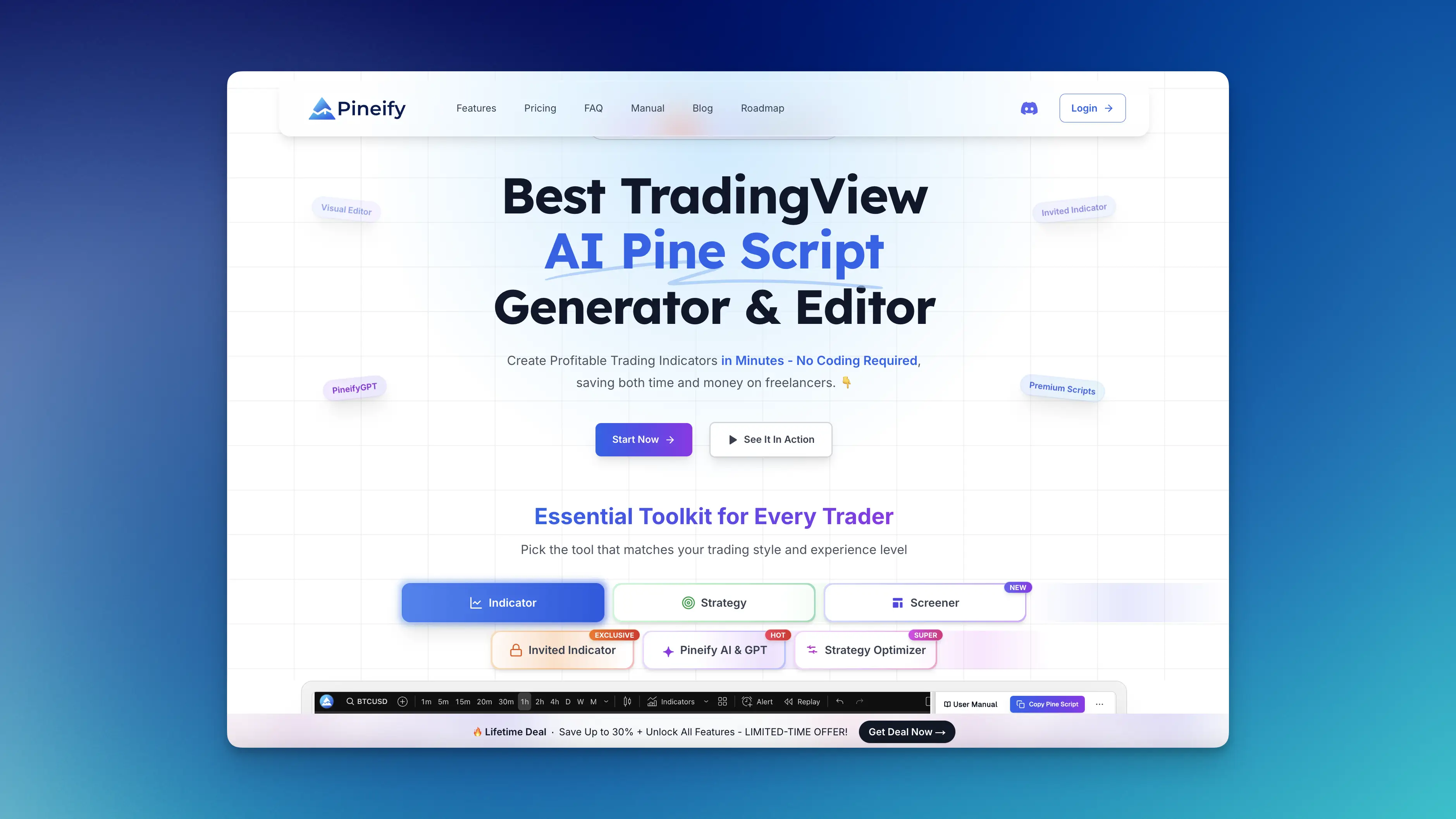
Of course, the ultimate form of "trading with technology" is building your own automated edge. Instead of just following others, you can create custom indicators and strategies that perfectly match your personal trading style. This is where tools like Pineify truly shine. It's the best AI Pine Script generator and editor for TradingView, allowing you to build profitable, error-free indicators and strategies in minutes—no coding required. It’s a powerful alternative that shifts the focus from copying to creating your own systematic approach.
Here’s a breakdown of some leading copy trading platforms to see how they stack up.
| Platform | Core Features | Risk Management | Best For |
|---|---|---|---|
| SmartT | AI-powered risk control with verified AI traders | AI Advisor, Market Sentiment Filter, Rate Guard 1:2 | Traders prioritizing risk discipline and broker-custodied funds |
| eToro | Social trading with community features | Standard stop-loss and take-profit tools | Users wanting large social feeds and trader discovery |
| ZuluTrade | Marketplace model with broker flexibility | Customizable risk parameters | Traders preferring multiple broker options |
| NAGA | Community-driven platform | Integrated risk settings | Social traders seeking network effects |
| AvaTrade | Single broker environment | MT4/MT5 expert advisor support | Traders wanting integrated broker and copy trading |
Think about what fits your style. If your main concern is having smart, automated guards in place to protect your capital, a platform focused on AI risk management might be the priority. If you learn best by watching and interacting with a community, then a social-heavy network could be more your speed. It’s all about finding the tool that aligns with how you want to trade. And if your goal is to develop a unique, automated trading edge, then a dedicated creation tool like Pineify, which saves both time and money compared to hiring freelancers, could be your most strategic choice. For those looking to understand and modify existing code, learning about Understanding Labelnew in Pine Script for TradingView is a great foundational step.
What’s Next for AI Copy Trading?
Looking ahead, the world of AI copy trading isn’t just getting smarter—it’s becoming more intuitive and protective. Here are a few key shifts experts see shaping the next couple of years.
Smarter Market Timing with AI. Instead of just copying trades, future systems will act more like a cautious co-pilot. They’ll analyze market turmoil in real-time and likely pause new trades when things get too choppy. The goal? To help protect your capital from those sudden, sharp reversals that can trigger multiple stop-losses in a row.
Judging Traders by Their Discipline, Not Just Profits. Platforms are moving beyond just showing a trader’s historical returns. The next wave involves behavior-scoring systems that assess consistency, risk management habits, and strategy adherence. Think of it as evaluating the methodology behind the results, which can give you a much clearer picture of who you’re copying.
The Best of Both Worlds: Hybrid Models. Many believe the most robust approach will blend human creativity with AI’s discipline. In this setup, a human trader develops the core strategy and identifies opportunities, while the AI handles the strict execution, position sizing, and risk controls. This combo aims to leverage human insight while minimizing emotional or impulsive decisions.
Professional-Grade Tools for Everyone. A major trend from 2024 into 2025 is the trickle-down of institutional risk-management tools to retail platforms. Everyday investors are increasingly seeking platforms that offer automated features to limit downside risk and manage exposure. Essentially, the sophisticated safeguards once reserved for big funds are becoming a standard expectation for individual traders wanting to reduce uncertainty.
| Trend | What It Means for You |
|---|---|
| AI-Driven Volatility Filtering | Your AI system may temporarily stop entering new trades during extreme market chaos, helping to preserve your capital. |
| Behavior-Scoring Systems | You’ll be able to evaluate traders based on their discipline and risk habits, not just their profit and loss statement. |
| Hybrid Trading Models | A collaborative approach where human strategy meets AI execution for more disciplined and consistent trade management. |
| Institutional-Grade Retail Tools | Access to advanced, automated risk-management features previously only available to professional trading firms. |
Your AI Copy Trading Questions, Answered
You’ve got questions—it’s only natural when something sounds this innovative. Let’s break down the most common ones about AI copy trading in plain terms.
Is AI copy trading okay for someone just starting out?
Absolutely. In many ways, it’s built with newcomers in mind. Instead of feeling lost, you can learn from the live strategies of traders who’ve been at it for years. The AI’s built-in tools for managing risk are like a helpful co-pilot, steering you away from simple, early mistakes while you get your bearings.
How much money do I need to try it?
You might be surprised how low the barrier to entry can be. Many platforms let you start with an account between $100 and $500. The important thing to remember is that your money always stays in your own brokerage account. You’re never handing it over to the platform, so you keep control and security.
Does AI copy trading mean I’ll make money?
Let’s be straight: no form of trading can ever promise profits. AI copy trading makes the process smarter and helps manage risk, but it doesn’t erase the inherent risk of the markets themselves. What worked yesterday might not work tomorrow, so it’s crucial to go in with realistic expectations. To sharpen your market analysis, tools like a Session Volume Profile Pine Script: A Concise Guide for Traders can provide valuable insights.
What's the difference between this and a robo-advisor?
Think of them as serving different goals. AI copy trading is often about more active strategies in markets like forex or stocks, looking for short to medium-term moves. A robo-advisor, on the other hand, is like a set-it-and-forget-it planner for your long-term wealth, automatically balancing a portfolio of investments over years.
Is this kind of trading regulated?
Yes, legitimate platforms operate under financial rules. In the U.S., for example, the Commodity Futures Trading Commission (CFTC) is the main watchdog for this space, requiring transparency and proper oversight. Always do a quick check to see if a platform you’re using has the proper regulatory credentials—it’s a key step for your safety.
Thinking About AI Copy Trading? Here's How to Get Started
If you're curious about trying AI copy trading, the best approach is to take it step by step. Here’s a straightforward path to begin:
-
Look at Your Options: First, spend some time checking out different platforms. Think about what you want—are you looking to trade specific markets, or is keeping fees low your top priority? Use comparison tables (like the one earlier) as a starting point, but also visit the platforms yourself to get a real feel for how they work.
-
Play Around with a Demo Account: This is the most stress-free way to start. Nearly all the major platforms let you use a practice account with fake money. Use it! Click around, follow a few different AI traders, and see how the tools for managing risk actually function. There’s no substitute for hands-on experience when it’s risk-free.
-
Get Clear on Your Risk Comfort Zone: Before any real money is involved, sit down and decide on your rules. What’s the most you’re willing to lose in a day? How much of your capital should go into a single trade? Setting these boundaries upfront helps you, and it lets the AI system operate within the guardrails you’re comfortable with.
-
Start Small with Real Money: When you’re ready to go live, begin with an amount that wouldn’t keep you up at night if it were lost. Treat the first month or so as a learning period. Watch how the AI strategies you’ve chosen handle calm days, volatile news events, and everything in between. This observation phase is crucial.
-
Keep Learning as You Go: The markets and the technology keep evolving. Make a habit of staying in the loop. This doesn’t mean hours of study daily—just follow a few trusted sources, glance at platform announcements, and chat with others in trading forums. The more you understand, the better your decisions will be.
-
Make Regular Check-ins a Habit: Set a calendar reminder to review your portfolio’s performance every month or quarter. Ask yourself: Is this still matching my goals? Do I need to adjust anything based on a change in my life or in the market? A quick, scheduled review helps you stay on track without needing to obsess over it daily.
The simplest first move you can make right now is to open a demo account with a well-regarded platform. It costs nothing and gives you a real sense of how AI can fit into your approach to the markets.