TradingView Pricing 2026: All Plans & Costs Compared

TradingView is a web-based charting platform used by over 50 million traders each month. I've been on it for over three years and have tried four of the six plans at different stages of my trading. You can start with a completely free option or go up to $239.95 a month for the professional tier. Annual billing knocks up to 40% off some plans, which I've found makes the Essential tier the best value in the lineup.
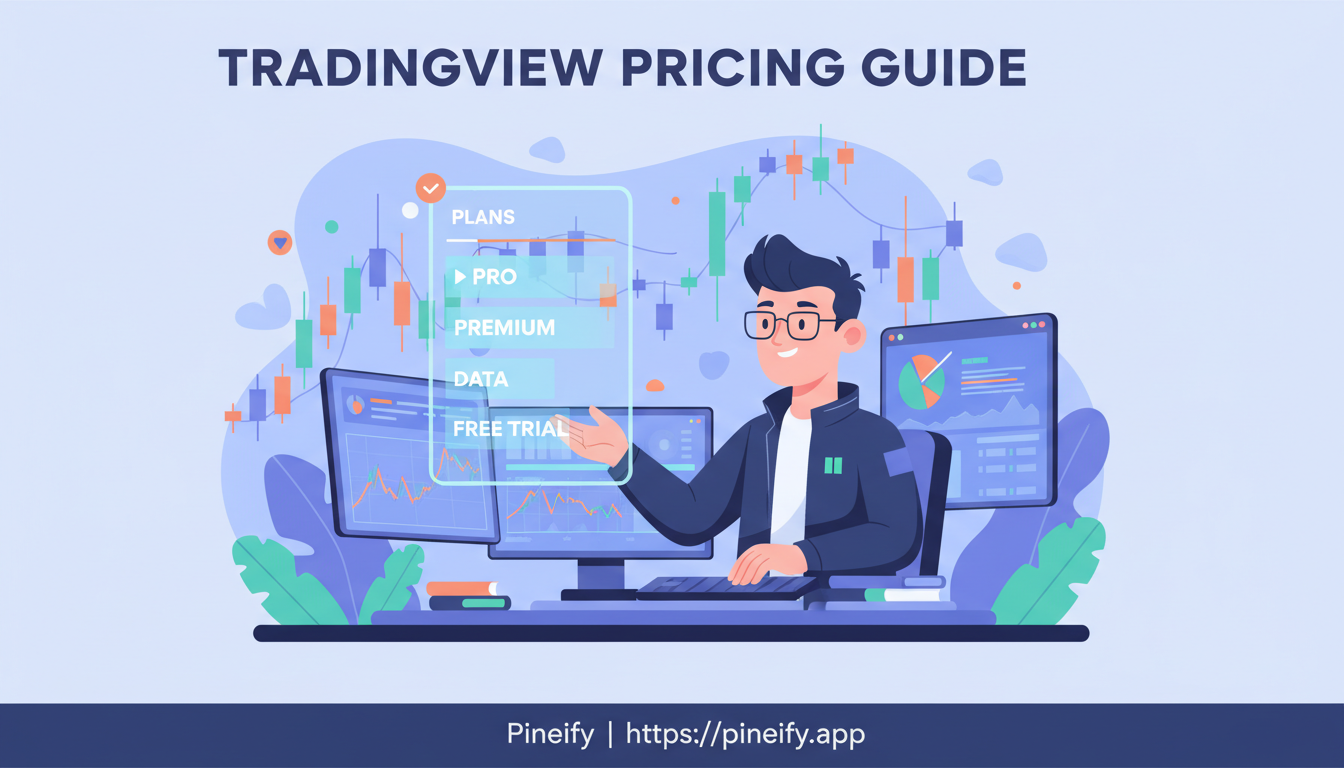
Overview of Plans
TradingView splits its plans into two groups: Non-Professional and Professional. This makes it easy to find the right fit for your experience level.
Non-Professional Plans These work well for most individual traders.
- Basic (Free): Your starting point. You get access to all the core charting and analysis tools, but you'll see ads.
- Essential: For $14.95 a month (or $155.40 a year), trade without ads and get more indicators.
- Plus: At $29.95 a month (or $299.40 a year), you get more chart layouts and can set more alerts.
- Premium: For $59.95 a month (or $599.40 a year), you get advanced charting tools and priority support.
Professional Plans Built for serious traders, institutions, and proprietary trading firms.
- Expert: Priced at $199.95 a month or $1,199.40 a year. It includes professional-grade analysis and powerful backtesting.
- Ultimate: The top-tier plan at $239.95 a month or $2,399.40 a year for those who need the maximum number of alerts and indicators.
Annual Billing Discounts
Paying for a year upfront is the smartest way to save. You can get up to 40% off on the Essential plan and up to 20% off on the Plus and Premium plans. Going with a yearly subscription gets you roughly two months free.
Detailed Plan Breakdown
Basic Plan (Free)
The Basic plan is your chance to try things out without commitment. It works well if you're new to charting and want to see how everything fits together. Here's what you get:
- One chart per tab, with up to two indicators on that chart.
- Three price alerts that expire after two months.
- Access to community chat and the basic market screener.
- Since it's free, you'll see some ads and occasional reminders about paid plans.
One limitation I ran into early on: the alert expiry. If you're holding a swing trade that lasts longer than two months, your alerts just disappear. That's annoying.
Essential Plan
For $14.95 a month (or $155.40 if you pay annually), the Essential plan removes ads and gives you much more power. It's a solid step up if you're getting more serious.
- View two charts side by side for easier comparison.
- Add up to five indicators to each chart.
- Set twenty active price and technical alerts.
- Data updates faster, and customer support responds quicker.
Plus Plan
If you're an active trader, the Plus plan at $29.95 per month ($299.40 annually) gives you the flexibility you probably need.
- Keep an eye on multiple markets with four charts in a single layout.
- Go deeper with up to ten indicators on each chart.
- Set one hundred active alerts and connect them to other apps using webhooks.
- You'll also get more advanced chart types and layout options.
Premium Plan
The Premium plan is for the serious trader or someone who trades for a living. At $59.95 monthly or $599.40 annually, it includes professional-grade tools.
- Build a massive workspace with up to eight charts in one layout.
- Use twenty-five indicators per chart for detailed analysis.
- Set four hundred alerts that stay active until you remove them.
- Analyze every tick with second-based intervals and test your strategies with advanced backtesting.
- You get prioritized support and exclusive learning materials.
Professional Plans: Expert & Ultimate
The Expert and Ultimate plans are a different category, built for professional trading firms and funds.
- Expert: At $199.95 a month or $1,199.40 per year — 400 non-expiring alerts, 25 indicators per chart, and advanced backtesting.
- Ultimate: For $239.95 monthly or $2,399.40 annually — up to 16 charts per layout, 50 indicators per chart, and a dedicated account manager.
I've never subscribed to the Ultimate plan myself. At over $2,300 a year, it only makes sense if you're running a prop desk or managing significant capital.
Quick Plan Comparison
| Plan | Monthly Price | Yearly Price (Savings) | Charts Per Layout | Indicators Per Chart | Active Alerts | Best For |
|---|---|---|---|---|---|---|
| Basic | Free | Free | 1 | 2 | 3 (expire) | Beginners testing the waters |
| Essential | $14.95 | $155.40 | 2 | 5 | 20 | Traders removing ads & scaling up |
| Plus | $29.95 | $299.40 | 4 | 10 | 100 | Active traders needing flexibility |
| Premium | $59.95 | $599.40 | 8 | 25 | 400 (no expiry) | Serious traders & professionals |
| Expert | $199.95 | $1,199.40 | 8 | 25 | 400 (no expiry) | Professional funds & firms |
| Ultimate | $239.95 | $2,399.40 | 16 | 50 | 400 (no expiry) | Institutions needing top-tier resources |
Finding the TradingView Plan That's Right for You
Figuring out how much TradingView costs really comes down to what kind of trader you are. Think about how often you trade, how deep your analysis needs to go, and what fits your budget.
| Plan | Best For... |
|---|---|
| Basic | Beginners and hobbyists just getting started. |
| Essential | Casual traders who want an ad-free experience. |
| Plus | Active traders using multiple screens and custom alerts. |
| Premium | Day traders and backtesters who need speed and power. |
| Expert/Ultimate | Professional traders running complex strategies. |
I prefer the Plus plan for my daily workflow — 10 indicators per chart is enough for my strategy setups, and 100 alerts covers the setups I track across forex and crypto. Here's how I'd break it down:
-
If you're just starting out, the Basic plan is a free way to get familiar with the platform. I'd recommend starting with Pine Coding 101 for beginners to learn the basics of scripting. You can always upgrade later if the ads bother you or you hit the indicator limit.
-
For the casual trader past the beginner stage, the Essential plan is often the sweet spot. It removes ads and gives you solid tools without being overwhelming.
-
If you're actively trading and rely on multiple charts, custom alerts, or automation through webhooks, the Plus plan is where things get powerful. It's built for someone who spends a good part of their day at the charts.
-
Serious day traders and backtesters will get the most out of the Premium plan. You're paying for ultra-fast data, multiple workspaces, and advanced tools. If you're working with custom indicators like the Normalized Smoothed MACD Indicator, you'll appreciate the additional charting capabilities.
-
For pros and institutional traders who need everything TradingView offers — the highest number of alerts, indicators running at once, and custom integrations — the Expert or Ultimate plans are built for that environment. I haven't tested the Ultimate tier myself, but if your firm handles enough volume, the cost is a drop in the bucket. For those interested in other options, I've put together this in-depth look at TradingView alternatives.
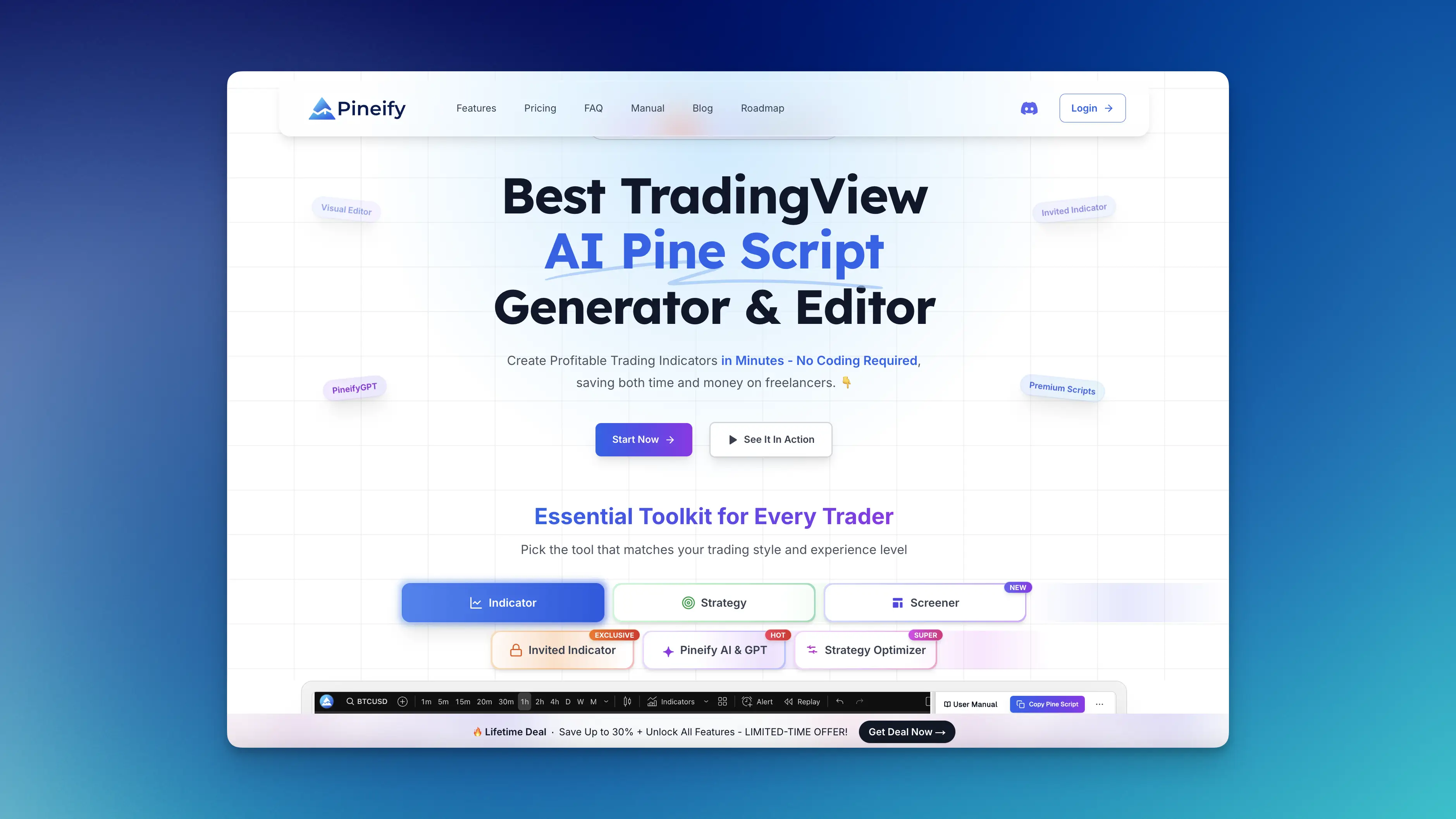
That said, TradingView's built-in indicator library only covers the basics. I've been using Pineify alongside my Premium plan for months — it lets me build custom Pine Script indicators, strategies, and screeners without writing code. It saves me the $50-100 I used to spend per script on freelancers.
Billing and Payment Options
When you sign up for a paid plan, you can choose monthly or annual billing. I've calculated the savings myself, and annual billing works out to roughly two months free on most tiers.
| Plan | Annual Savings |
|---|---|
| Essential | SAVE 40% |
| Plus | SAVE 20% |
| Premium | SAVE 17% |
One catch I've noticed: annual billing locks you in for a full year. If your trading volume drops or you decide to switch platforms, you won't get a prorated refund. Monthly billing costs more but gives you the flexibility to change plans or cancel anytime.
How to Upgrade to a Pro Plan
Ready to get all the features that come with a Pro plan? Here's how it works:
- Go to TradingView.com and log in or sign up for a free Basic account.
- Click your profile icon in the top right corner and select Go Pro.
- Browse the available plans and pick the one that fits your trading style and budget.
- Enter your payment details. Your upgrade happens instantly, and all those premium features are ready to use.
| Step | Action | Key Details |
|---|---|---|
| 1 | Log in or sign up | Start with a free Basic account at TradingView.com. |
| 2 | Go to upgrade | Click your profile icon and select Go Pro. |
| 3 | Select your plan | Choose the plan and billing cycle that fits your needs. |
| 4 | Complete payment | Enter your details to finalize and get instant access. |
Frequently Asked Questions
Is there a free version I can try? Yes. TradingView offers a free Basic plan with full charting access, two indicators per chart, and a few price alerts. You'll see ads on the free tier, but it's a solid way to test the platform before committing.
Can I switch between monthly or yearly billing? You can change your billing cycle at any renewal date. If you switch from monthly to annual, the system applies the discounted yearly rate on your next billing cycle automatically.
Do the plans let me connect to my broker? Yes — broker integration is available on every plan, including the free Basic account. You can connect your brokerage and trade directly from the charts.
How many price alerts come with the Premium plan? The Premium plan includes up to 400 active alerts that never expire. I've used this feature to track swing trade entries across multiple assets without worrying about alerts timing out.
Which plan do I need for backtesting? Backtesting is available starting with the Premium tier at $59.95 per month. If you want to test strategies on historical data, you'll need at least a Premium subscription. If you're still learning the ropes, the Pine Coding 101 guide covers scripting fundamentals that pair well with backtesting.
If you're still on the fence, start with the free Basic plan. Open a chart, add a few indicators, and see how the platform feels. You can always move up to Essential or Plus when you hit the limits. I've been through that exact progression, and it's the most natural way to grow into the platform.