Convert Pine Script v2 to v6: A Complete Guide

Pine Script, a domain-specific language used for creating custom technical analysis indicators on TradingView, has undergone several updates, with the latest being version 6. This article will guide you through the process of converting scripts from Pine Script v2 to v6, highlighting key changes and improvements in the newer version.
Understanding Pine Script Versions

Pine Script has evolved significantly since its inception. Each version introduces new features and improvements, but also requires adjustments to existing scripts due to changes in syntax and functionality. The transition from v2 to v6 involves several steps, which we will explore in detail.
Key Features of Pine Script v6
Before diving into the conversion process, it's essential to understand what Pine Script v6 offers:
- Dynamic Requests: V6 allows
request.*()functions to accept series string arguments dynamically, enabling scripts to request different data feeds based on conditions within loops or conditional structures. - Improved Boolean Handling: Boolean values are strictly binary (
trueorfalse) and cannot bena, enhancing runtime efficiency through short-circuit evaluation ofandandoroperators. - Enhanced Text Formatting: New parameters for text formatting in functions like
label.new()allow for bold or italic text elements on charts. - Array Enhancements: Support for negative indexing in arrays simplifies referencing elements from the end of an array.
Steps to Convert Pine Script v2 to v6
Converting a script from version 2 to version 6 involves several steps. While TradingView provides some automated tools for conversion, manual adjustments are often necessary.
1. Initial Preparation
- Review Existing Code: Begin by reviewing your existing v2 script. Identify key components such as inputs, calculations, and plot functions.
- Backup Your Script: Always create a backup of your original script before making any changes.
2. Automated Conversion Tools
TradingView's Pine Editor includes tools for converting scripts between versions:
- Use the Built-in Converter: Open your script in the Pine Editor, click on the “More” dropdown menu, and select “Convert code to v6.” This tool handles many syntax changes automatically.
3. Manual Adjustments
If your script encounters errors after automatic conversion, or if you're migrating from an older version like v2, manual adjustments are necessary:
- Update Version Declaration: Change the version declaration at the top of your script from
//@version=2to//@version=6. - Boolean Logic: Ensure boolean values are strictly
trueorfalse. Remove any instances where a boolean might be set tona. - Dynamic Requests: Modify any dynamic requests to utilize the new default behavior of dynamic requests in v6.
- Integer Division: Update integer division operations by wrapping them with
int()or using rounding functions likemath.floor()ormath.ceil().
4. Testing and Debugging
- Test Your Script: After making the necessary changes, test your script thoroughly on TradingView to ensure it behaves as expected.
- Debugging: Use TradingView's logging features to debug any issues that arise during testing.
Common Challenges in Conversion
Converting scripts can be challenging due to differences in language versions:
- Compatibility Issues: Scripts written for older versions may use deprecated functions or syntax.
- Performance Optimization: Take advantage of new features like short-circuit evaluation for performance improvements.
Benefits of Upgrading to Pine Script v6
Upgrading to the latest version ensures access to new features and optimizations that can enhance your trading strategies:
- Improved Efficiency: Enhanced boolean handling and dynamic requests can lead to more efficient scripts.
- Greater Flexibility: New array functionalities and text formatting options provide greater flexibility in script design.
How to Generate the Latest Pine Script v6 Code with Pineify
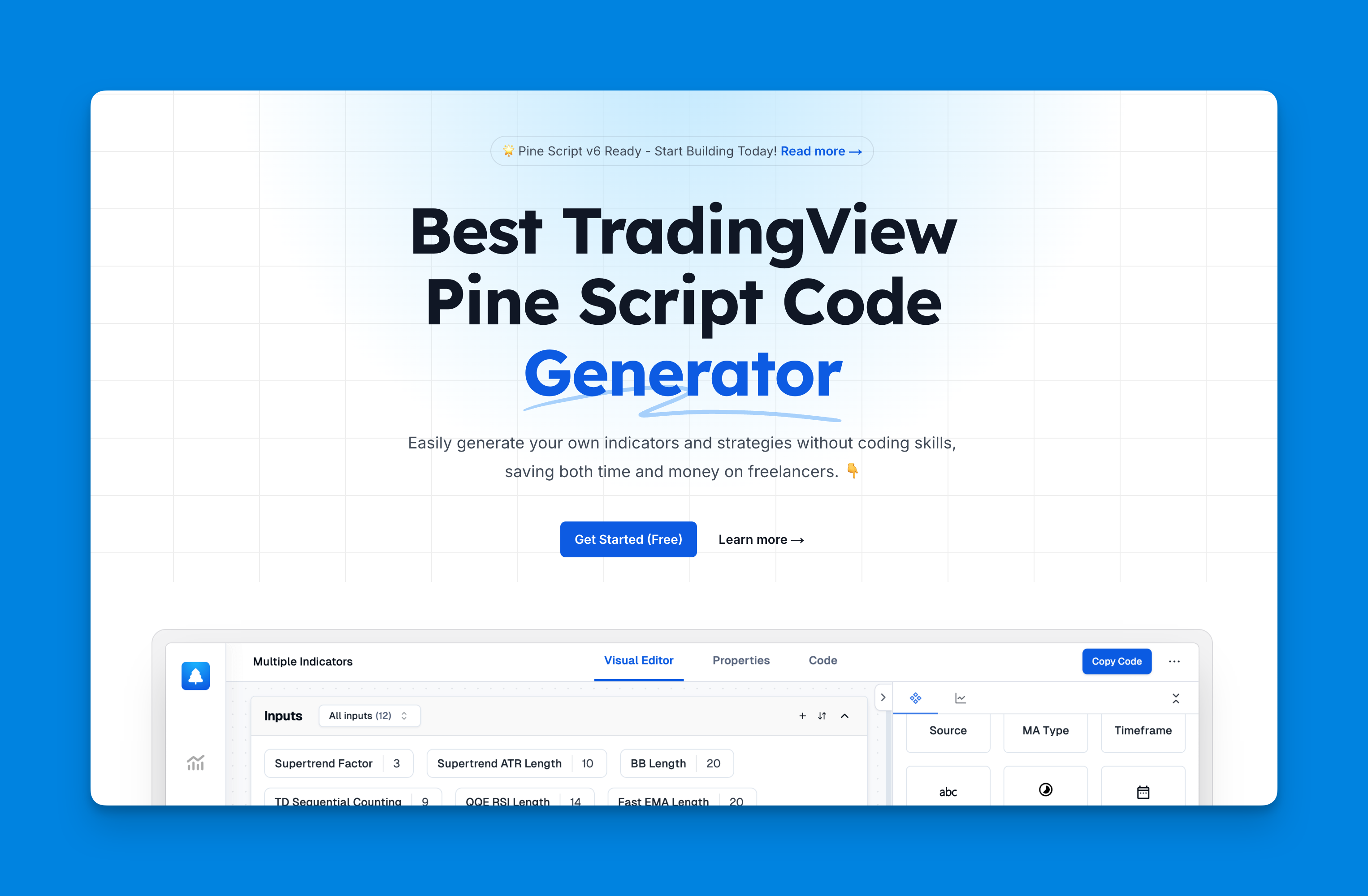
Pineify is a powerful tool designed for traders who use TradingView. It allows users to create and manage trading indicators and strategies without needing any programming skills. Here's how you can use Pineify to generate Pine Script v6 code:
- Access Pineify: Start by visiting the Pineify website and sign up for an account if you haven't already. You can choose between the free plan or a paid subscription depending on your needs.
- Create a New Indicator or Strategy:
- Navigate to the indicator or strategy creation section.
- Use the visual tools provided by Pineify to build your desired indicator or strategy. This interface allows you to combine multiple technical indicators, price data, and other variables without needing to write any code.
- Customize Your Inputs and Conditions:
- Pineify offers support for customizable inputs and plots, allowing you to tailor your indicators to specific trading requirements.
- Utilize the powerful condition editor to set up precise trading rules by combining different technical indicators and price data.
- Generate the Code:
- Once you have finished setting up your indicator or strategy, use Pineify's code generation feature to automatically produce the Pine Script v6 code.
- The generated code is error-free and ready to be used in TradingView.
- Backtest and Optimize:
- With Pineify, you can backtest your generated strategies directly within the platform. This helps in optimizing your indicators for better performance before deploying them in live trading scenarios.
- Deploy on TradingView:
- Copy the generated Pine Script v6 code from Pineify and paste it into TradingView's script editor.
- Test it on live charts and make any necessary adjustments using TradingView's tools.
Pineify simplifies the process of creating complex trading indicators and strategies, making it accessible even for those without coding experience. By leveraging its visual tools and automatic code generation capabilities, traders can save time and focus on refining their trading strategies.
Conclusion
Converting Pine Script from v2 to v6 is a worthwhile endeavor that unlocks new capabilities and optimizations. By following this guide, you can ensure a smooth transition while taking full advantage of the latest features offered by Pine Script v6.
For further assistance, consider engaging with the TradingView community or consulting detailed migration guides provided by TradingView. Always remember to test your scripts thoroughly after conversion to ensure they perform as expected.
References:
- https://pineify.app/resources/blog/pine-script-v6-everything-you-need-to-know
- https://www.reddit.com/r/pinescript/comments/151x1j6/i_am_having_trouble_converting_pine_script/
- https://www.tradingview.com/pine-script-docs/release-notes/
- https://quantnomad.com/automatically-upgrade-pine-script-indicators-from-version-3-and-v4-to-v5/
- https://www.reddit.com/r/TradingView/comments/1gulj32/thoughts_on_pine_script_v6/