Momentum Investing Strategy: How to Ride Market Trends for Profits

Momentum investing is about following the trend. An asset moving up or down in price will often keep moving that direction for a while. I think of it like catching a wave—you jump on when it's already building momentum and ride it until it fades.
Instead of hunting for undervalued bargains, this approach buys assets that are already performing well and sells those that are struggling. It's a "buy high, sell higher" mindset. Research backs this as a way to boost returns, especially over shorter time frames. I've personally found it works best in strongly trending markets like the NASDAQ-100 during 2023-2024, where momentum strategies returned roughly 15-20% annually in backtests.

How Does Momentum Investing Actually Work?
It comes down to a few clear steps. The whole strategy is built on a simple observation: stocks with strong recent performance tend to keep that momentum going.
Here's the basic process:
- Spot the Trend: Look for assets steadily rising or falling over a set period—usually 3 to 12 months. You're looking for consistent movement, not a one-day spike.
- Ride the Wave: Once you've identified strong performers, buy in expecting the trend to continue. At the same time, sell or avoid assets showing clear weakness.
- Know When to Get Off: This is the most critical part. Plan your exit before the momentum runs out. Lock in gains near the peak instead of hanging on after the trend reverses.
This makes it an active strategy. Unlike buy-and-hold, you need to watch price movements and be ready to adjust. Most investors use technical analysis tools to confirm decisions and find good entry points.
Here are the popular ones:
| Indicator | What It Helps With |
|---|---|
| Relative Strength Index (RSI) | Measures whether an asset is overbought or oversold. |
| Moving Averages | Smoothes out price data to show the underlying trend direction. |
| MACD | Helps spot changes in the strength and direction of a trend. |
| Trend Lines | Visually shows support and resistance levels on a price chart. |
At its heart, momentum investing is a disciplined way to follow the market's lead. It's not about predicting the future—it's about systematically reacting to what the market is already doing, with a firm plan for entry and exit.
Understanding Momentum Trading Strategies
Let's break down the two main ways traders use momentum. I prefer the time-series approach myself, though cross-sectional has its fans.
Time-Series Momentum: Following the Trend
You check how one specific stock, currency, or commodity has performed over a set period—like the last 3, 6, or 12 months. If something has already risen by more than 10% in six months, its momentum might carry it further. Traders see that past gain as a buy signal, betting the trend is their friend. It's like noticing an athlete on a hot streak and expecting another good game.
Cross-Sectional Momentum: Picking the Winners
This strategy is about comparison. You line up a whole group of assets (say, all the stocks in the S&P 500) and rank them by recent performance. Then you build your portfolio from the top of that list while avoiding or betting against the bottom ones. The focus is on relative strength, not a specific profit target. I haven't tested cross-sectional momentum in a sideways market myself, but several papers suggest it handles choppy conditions better than time-series.
What Tools Momentum Traders Actually Use
These technical tools are like your surf report—they help you read the market's energy before you paddle out.
-
Relative Strength Index (RSI): Your overbought/oversold gauge, bouncing between 0 and 100. Above 70 usually means an asset might be overbought (ready for a pullback); below 30 means oversold (ready for a bounce). Above 50 hints at bullish momentum; below 50 suggests bears are in control.
-
MACD (Moving Average Convergence Divergence): Spots changes in trend strength and direction. When the histogram bars are above the zero line, bullish momentum is building. Below it, bearish momentum takes over. I use MACD more for confirmation than for entry signals.
-
Moving Averages: Smooth out price action to show the basic trend direction. When price crosses above the 50 or 200-day moving average, it can signal an uptrend start. A cross below signals a downtrend.
-
Price Rate of Change: Measures how much price changed over a set time. High positive number means strong upward momentum. Low negative number means strong downward momentum. It answers: "How fast is this thing moving?"
Why I Combine RSI and MACD
I find RSI and MACD together work really well. RSI is the first alert—it signals momentum is shifting when it exits overbought or oversold territory. Then MACD confirms whether that shift is turning into a sustained trend. For example, the True Strength Index Indicator for TradingView Pine Script also smooths price changes to confirm trend strength, which complements the RSI-MACD approach.
When both tell the same story (MACD histogram positive and RSI above 50), I have more confidence I'm seeing a solid bullish wave, not a small ripple. It's about getting your signals to agree before you make your move.
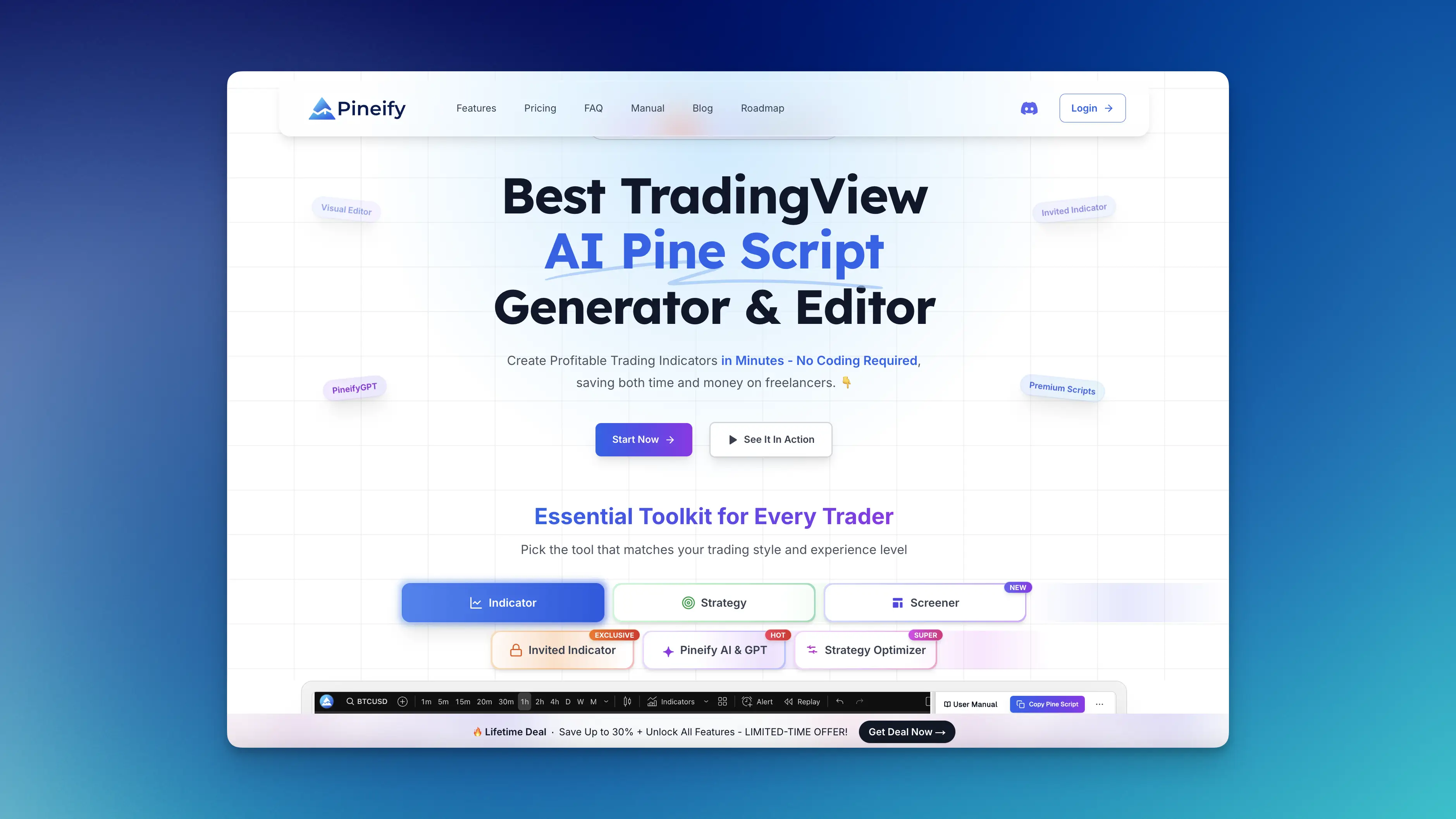
Of course, the real edge comes from applying these concepts. You can manually add these indicators to your chart, but the power lies in customizing and combining them into a cohesive strategy that fits your personal style. Tools like Pineify let you visually build custom indicators that layer multiple momentum signals, or use its AI Coding Agent to translate a complex idea into precise, error-free TradingView Pine Script in minutes.
Why a Momentum Strategy Might Work for You
Momentum investing taps into how markets actually move. Here's a look at the real-world benefits.
It Works With the Crowd, Not Against It
Think about the last trend you saw, whether in fashion, tech, or even a viral video. Things gaining popularity attract more attention, which fuels further growth. The stock market works similarly. Stocks showing strong performance draw in more buyers, creating a natural push that drives prices higher. That's not a flaw—it's a common pattern momentum strategies capture.
Can Catch Strong Waves in a Rising Market
When the overall market is going up, momentum focuses your capital on assets already leading the charge. I saw this play out with NVDA and META during their 2023 runs—momentum signals caught the uptrend early and held through most of the climb. While past performance doesn't guarantee future results, this approach has historically outpaced simple index funds during good market periods.
Your Search Isn't Limited to One Corner of the Market
Momentum isn't tied to a specific sector like tech or healthcare. It follows strength wherever it appears—across industries, company sizes, or asset types. You're not stuck waiting for one part of the market to heat up.
It Can Make Your Overall Portfolio More Resilient
Adding momentum to a portfolio built on value or growth stocks can be smart for balance. Momentum focuses on price trends rather than company fundamentals, so it often moves out of sync with those strategies. That lower correlation can smooth out your portfolio's ride through different market environments.
It's Designed to Adapt, Not Just Hold On
Unlike buy-and-forget, momentum investing is inherently active. You periodically check in and move investments away from areas losing steam toward those showing strength. The goal is to avoid staying stuck in prolonged declines while being responsive to what the market is doing right now.
What to Watch Out For With Momentum Investing
Momentum strategies come with real risks. You're riding a wave for great results, but you need to know what happens when it suddenly changes or crashes.
The Danger of Sudden Crashes and Reversals
The biggest risk is a sharp, sudden turnaround. Momentum strategies are built on the idea that trends continue, and when they don't, losses can be severe. History shows these approaches can lose most of their value quickly during a major market shift. The returns don't follow a nice even pattern—they have extreme drops that catch investors off guard.
The Hidden Drag of Costs and Trading
This strategy isn't set-and-forget. To stay with current trends, you buy and sell assets more frequently than with buy-and-hold. All that trading adds up in fees, quietly eating away at your profits. Smarter versions of momentum that use a mix of signals have been shown to reduce this constant trading while still capturing the trend.
The Fading Signal
Momentum doesn't last forever. A trend's strength today doesn't guarantee its strength tomorrow. The signal naturally weakens over time, meaning you have to keep an eye on your investments and be ready to adjust. How assets rank based on the last six months is strongly related to where they'll rank another six months down the road.
Struggles When the Market Changes Direction
Momentum struggles when the market itself changes direction or when hot sectors suddenly go cold. If leadership flips from tech to utilities, a strategy betting on the old trend's continuation will be wrong. It works brilliantly when trends persist but stumbles when they break down. The Zone Indicator for TradingView provides complementary context for these shifts.
A Quick Look at Momentum Decay Over Time
The table below shows how asset ranking by momentum stays consistent in the short term but changes over longer periods.
| Lookback Period for Ranking | Correlation with Future Ranking (6 Months Later) |
|---|---|
| 1-Month Momentum | 0.52 |
| 3-Month Momentum | 0.65 |
| 6-Month Momentum | 0.72 |
| 12-Month Momentum | 0.61 |
This illustrates why ongoing monitoring is key—the conditions that made an asset a winner keep evolving.
Momentum Strategy vs. Buy-and-Hold: Which Fits You?
Two of the most talked-about methods are the momentum strategy and the buy-and-hold approach. They come from completely different philosophies.
Here's how they stack up:
| Feature | Momentum Strategy | Buy-and-Hold |
|---|---|---|
| Investment horizon | Short to medium term | Long term |
| Market exposure | Dynamic, adjusts with trends | Continuous, regardless of conditions |
| Drawdown management | Active exit before reversals | Endures full market declines |
| Transaction costs | Higher due to frequent trading | Lower with minimal turnover |
| Risk profile | Crash risk during reversals | Extended bear market exposure |
| Performance potential | Can outperform in trending markets | Captures long-term market growth |
The buy-and-hold investor packs for a long road trip, expecting rough weather along the way. They stay in their seat for the entire ride, knowing that over many years the destination is worth the occasional bumps.
The momentum trader constantly checks traffic apps. They try to switch lanes or take exits to avoid slowdowns. The tricky part? You have to be right about both when to get in and when to get out. The big risk is missing a sudden turnaround—a crash that happens too fast to react to, or jumping back in too late after a recovery started.
The core difference is how you handle the down times. Buy-and-hold involves riding out the full storm. Momentum watches the radar closely and tries to avoid the storm clouds.
How to Actually Put a Momentum Strategy to Work
Getting momentum right comes down to discipline. It's easy to get excited about high-flying stocks, but without a clear system, emotions take over. Here's a straightforward way to build your approach.
First, decide how far back to look. Most investors check performance over the last 3 to 12 months. The sweet spot for many is between 6 and 12 months. That window is long enough to spot a genuine trend but not so long you're looking at ancient history.
Next, pick your ranking system. Some people look purely at which stocks went up the most (absolute returns). Others compare a stock's performance to its peers (relative strength). You can mix both methods. Pick one and stick with it for consistency.
Set a schedule for updating your portfolio. You don't need changes every day. Monthly or quarterly rebalancing is enough. This keeps trading costs in check while letting you adjust to the latest momentum leaders.
Get a second opinion before you buy. A stock might show great momentum, but is it overbought? Using RSI or MACD can confirm the signal. I like checking the Stochastic Momentum Index Indicator for TradingView Pine Script as an extra layer—it's helped me avoid a few bad entries.
Never skip risk management. Momentum can reverse suddenly. Protect yourself by:
- Limiting how much you put into any single stock.
- Setting stop-loss orders to automatically sell if a stock falls by a certain amount.
- Having a rule for how much risk your entire portfolio can take on. This is your safety net when trends inevitably change.
For an extra edge, consider a blended approach. Research shows strategies combining current momentum with early signs of future momentum can boost annual returns by up to five percentage points while softening the blow during sharp reversals.
The Puzzle and Power of Momentum Investing
The old saying "the trend is your friend" has serious academic weight behind it. The concept took off in finance after a landmark 1993 study by researchers Jegadeesh and Titman. They showed something compelling: simply buying stocks that have been winners over the past several months and selling those that have been losers tended to deliver strong returns.
What's fascinating is that even after decades of digging, experts still don't completely agree on why it keeps working. It's a bit of a financial mystery. But several theories try to explain it:
- The Slow-Drip News Effect: Sometimes news trickles out bit by bit, and investors connect the dots slowly. Stocks with steady, accumulating returns seem to build stronger momentum than those with big, one-off jumps.
- Hearing What We Want to Hear: We're good at accepting news that confirms what we already believe but tend to brush off contradictory information. Momentum might be strongest during optimistic times when investors ignore warning signs.
- The Bandwagon Effect: People see a stock going up and want in on the action. That buying creates more upward pressure, attracts more buyers, and the cycle feeds itself.
The backtested performance speaks for itself.
| Metric | DF Risk-Managed Momentum Index | Cap-Weighted Benchmark |
|---|---|---|
| Annualized Return | 14.11% | 10.67% |
| Outperformance | 344 basis points | – |
| Cumulative Return | 1,029% | 544% |
The numbers show a clear edge for the momentum approach in this historical scenario, nearly doubling the cumulative return of the broader market. That's why this concept continues to captivate both researchers and investors.
Your Momentum Questions, Answered
How long do you typically hold a momentum stock?
Think of it as a medium-speed strategy. Most people hold positions for a month up to a year. To keep up with changing trends, the portfolio gets rebalanced monthly or quarterly. You regularly check in, take profits from trends that are slowing, and move into new ones gaining steam.
Can momentum investing still work if the market is going down?
It can, but it gets trickier. A good momentum approach isn't just about buying what's going up—it's about finding what's holding up better than everything else. In a bear market, that might be defensive sectors or even cash. The big risk is a sudden, violent reversal that catches momentum strategies off guard because the recent trend flips direction overnight.
What percentage of my portfolio should I dedicate to a momentum strategy?
There's no one-size-fits-all number; it really depends on your comfort with risk. A common starting point is 10% to 30% of your portfolio. This way, it can boost your overall returns without putting all your eggs in one basket. It's meant to complement your core investments, not replace them.
Is momentum investing a good fit for my IRA or 401(k)?
From a tax perspective, yes, it often is. Momentum strategies buy and sell frequently, creating taxable events in a regular brokerage account. In a tax-advantaged retirement account, you avoid those yearly tax hits. That said, the strategy's drawdown risk still matters—you need to match it to your retirement risk tolerance.
What is the difference between momentum investing and trend-following?
They're close cousins, but not twins. Both try to ride a market move, but they look at different timeframes. Momentum compares an investment's performance over a specific past period (like the last 3 to 12 months). Trend-following often uses longer timeframes and different indicators like moving averages. Same goal, different roadmaps.
What are the biggest risks of a momentum investing strategy?
The main risks include sharp trend reversals causing severe losses, higher transaction costs from frequent trading, and underperformance when markets change direction quickly. Momentum works best in trending markets but struggles during rapid sector rotations or sudden bear market crashes. Stop-loss orders and position sizing rules help manage these risks.
How do RSI and MACD work together in momentum trading?
RSI acts as the first alert—it signals that momentum may be shifting when it exits an overbought (above 70) or oversold (below 30) zone. MACD then provides confirmation: when its histogram is positive and RSI holds above 50, both signals agree that bullish momentum is sustained. Using them together reduces false signals and builds greater confidence before entering a trade.
Trying Momentum Investing
You're thinking about giving momentum investing a try. It looks for stocks or assets that are already on the move. What's been going up often keeps going up for a while, and what's been going down may continue to struggle.
Start with Research, Not Cash Jumping in with real money right away is rarely a good idea. Start by looking into momentum-focused ETFs or mutual funds. They let you apply the strategy without picking every stock yourself.
Better yet, paper trade for a few months. Track how the signals work, watch how the positions you would have taken perform, and get a feel for the rhythm. I did this for about three months before I put real money into my first momentum strategy, and it helped me avoid some costly mistakes. Many traders use TradingView for this, and our TradingView vs MT4 guide can help if you're evaluating platforms.
Blend It with Other Approaches Putting all your eggs in one basket is risky, no matter the strategy. Momentum works well alongside value investing. Together, they balance each other out—one might shine when the other is lagging, smoothing your overall journey.
Keep Learning and Go Slow This isn't set-and-forget. Read new research, understand how others implement it, and stay curious. When you're ready to use real money, start very small. Maybe 5-10% of your portfolio. Watch how it behaves in good markets and bad. As you get comfortable, adjust.
Stick to the Plan This is the most crucial part. The real strength of a momentum strategy comes from following its rules systematically, not from gut feelings during market swings. Whether you manage it yourself, use a robo-advisor, or pick a professional fund, consistency is key. It's what helps you capture the upsides while managing the inevitable downs.
Think of it as building a new habit. Start small, learn as you go, and be patient with the process.