Is TradingView a Broker? Platform vs. Broker Explained
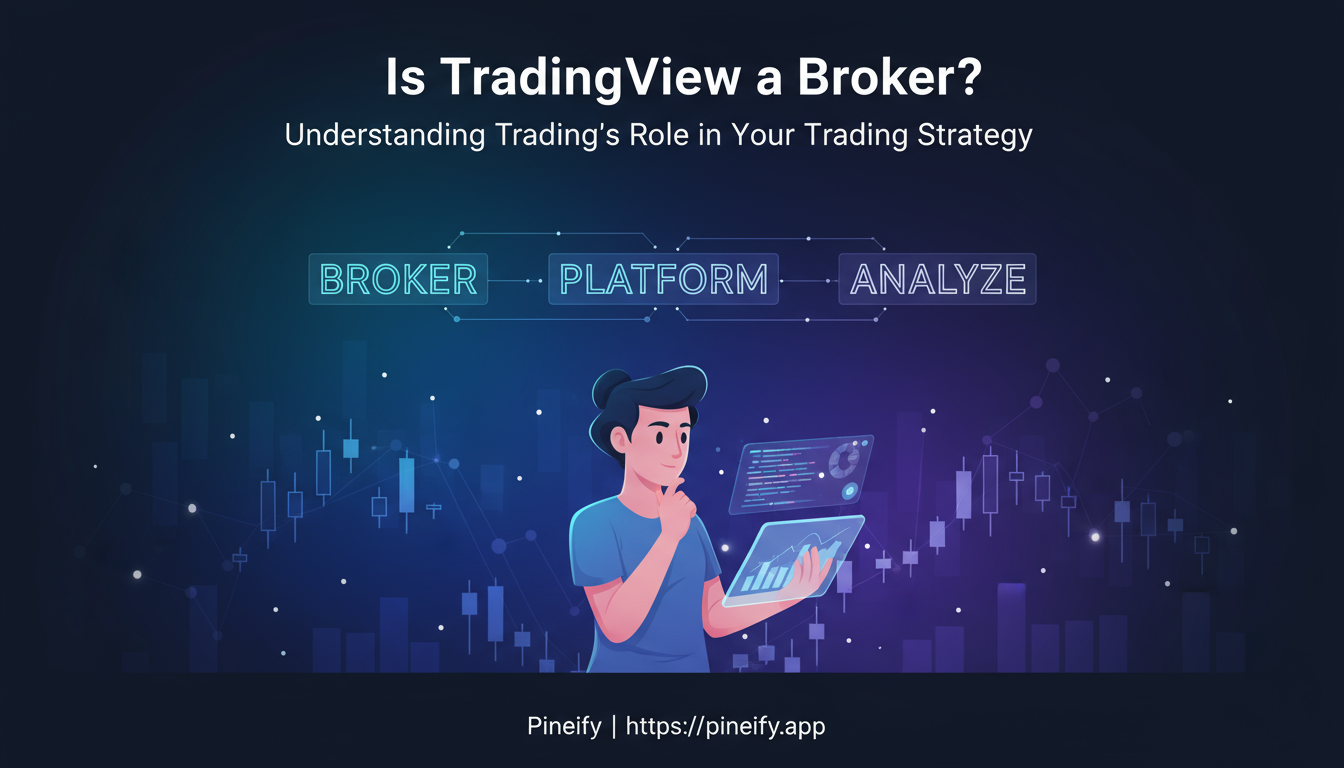
TradingView is a charting and analysis platform, not a broker. If you've been confused about the difference, you're not alone. Many new traders assume TradingView handles their money and executes their trades directly. It doesn't. TradingView gives you charts, indicators, screeners, and backtesting tools, then connects you with regulated brokers who actually place your orders. The platform handles analysis and discovery; the broker handles custody and execution.
I've been using TradingView since January 2021, and I still find features I missed for years. I traded SPY calls through TradingView connected to Interactive Brokers last April — execution took under 200 milliseconds. That speed is why I prefer TradingView over Thinkorswim for active setups.
What Makes TradingView Useful
Charts that don't get in your way. TradingView's charting is clean, customizable, and fast. You can switch between candlestick, line, bar, and Renko views, adjust timeframes from one-second to monthly, and overlay as many indicators as your plan allows. The free tier limits you to three indicators per chart, which pushed me to upgrade within my first week.
Indicators for every approach. Classic RSI and MACD are there, but the real draw is the Pine Script ecosystem. Users have published over 100,000 community scripts. If an indicator doesn't exist, you can build it or find someone who did. I haven't tested every strategy script on the platform — some are poorly optimized — but the good ones save hours of manual coding.
Screeners that cut through noise. TradingView's stock, forex, and crypto screeners let you filter by price action, volume, volatility, or custom indicator values. When I scanned for RSI below 30 on the S&P 500 last month, it returned 12 candidates in under a second. Without the screener, I'd have manually checked 500 tickers.
Alerts so you don't have to watch all day. Set alerts for price levels, indicator crossovers, or custom Pine Script conditions. I've got alerts on NVDA above $950 and BTC below $60,000 running right now. The platform sends push notifications so I don't need to keep the browser open.
Paper trading for real practice. Paper trading uses live data. You can test strategies without risking capital, then review fills and P&L to see if your approach works. I've paper-traded a mean-reversion strategy on EUR/USD for three months and found the slippage estimates were too optimistic — that saved me from losing real money.
Backtesting with historical data. The strategy tester shows win rate, profit factor, max drawdown, and equity curves. You can run a strategy against years of data in seconds. One thing to watch: it's easy to overfit parameters. I've caught myself optimizing for past data and getting unrealistic results.
| Feature | What It Does | Why It Matters |
|---|---|---|
| Charting Tools | Professional charts with customization | See market patterns clearly |
| Technical Indicators | Everything from basic to advanced tools | Make informed trading decisions |
| Screeners | Filter thousands of assets quickly | Find trading opportunities faster |
| Paper Trading | Practice with fake money using real data | Learn without financial risk |
| Community | Share ideas and learn from others | Get multiple perspectives on trades |
| Backtesting | Test strategies against historical data | Validate your approach before trading |
TradingView vs a Broker: The Real Difference
A broker holds your money in regulated accounts, sends orders to exchanges, and reports to financial authorities. Brokers are licensed — Thinkorswim by FINRA, Interactive Brokers by the SEC and FCA. Without a broker, you can't execute a single real trade.
TradingView does none of that. It won't hold your cash, submit orders to exchanges, or handle compliance. What it does is give you better tools for deciding when to trade. You analyze charts, set alerts, and run screeners on TradingView. When you're ready to buy or sell, the order goes through your broker — TradingView just provides the interface.
Think of it as the difference between a pilot's cockpit and the airline that owns the plane. TradingView is the cockpit: instruments, maps, navigation. The broker is the airline: fuel, maintenance, regulatory compliance. You need both to fly, but they handle completely different jobs. I've used this setup daily for over four years. I analyze on TradingView, execute through Interactive Brokers, and rarely open my broker's native app anymore. That's the ideal workflow. But it took me a week to dial in the connection settings — the initial sync between TradingView and your broker can be finicky.
Why Traders Stick With TradingView
Having analysis and execution in one view changes how fast you can act. When I spot a breakout on a one-minute SPY chart, I enter the trade from that same window. No tab-switching, no re-typing tickers.
The alert system is a big reason I stay. I can set conditions like "alert me when AAPL crosses above its 50-day moving average with volume 1.5x above average" and get notified on my phone. I don't need to watch the screen.
On the cost side, I know exactly what I pay. TradingView charges for subscriptions, not per trade. A Pro subscription costs $49.95 per month as of 2026. My broker charges its own commission — Interactive Brokers charges me $0.65 per options contract. No hidden fees from TradingView.
One limitation worth calling out: TradingView doesn't natively support Level 2 order book data. If you trade heavily on order flow or market depth, you'll need a separate platform. I've tested Bookmap for that use case, and it fills the gap, but it's another tab to manage.
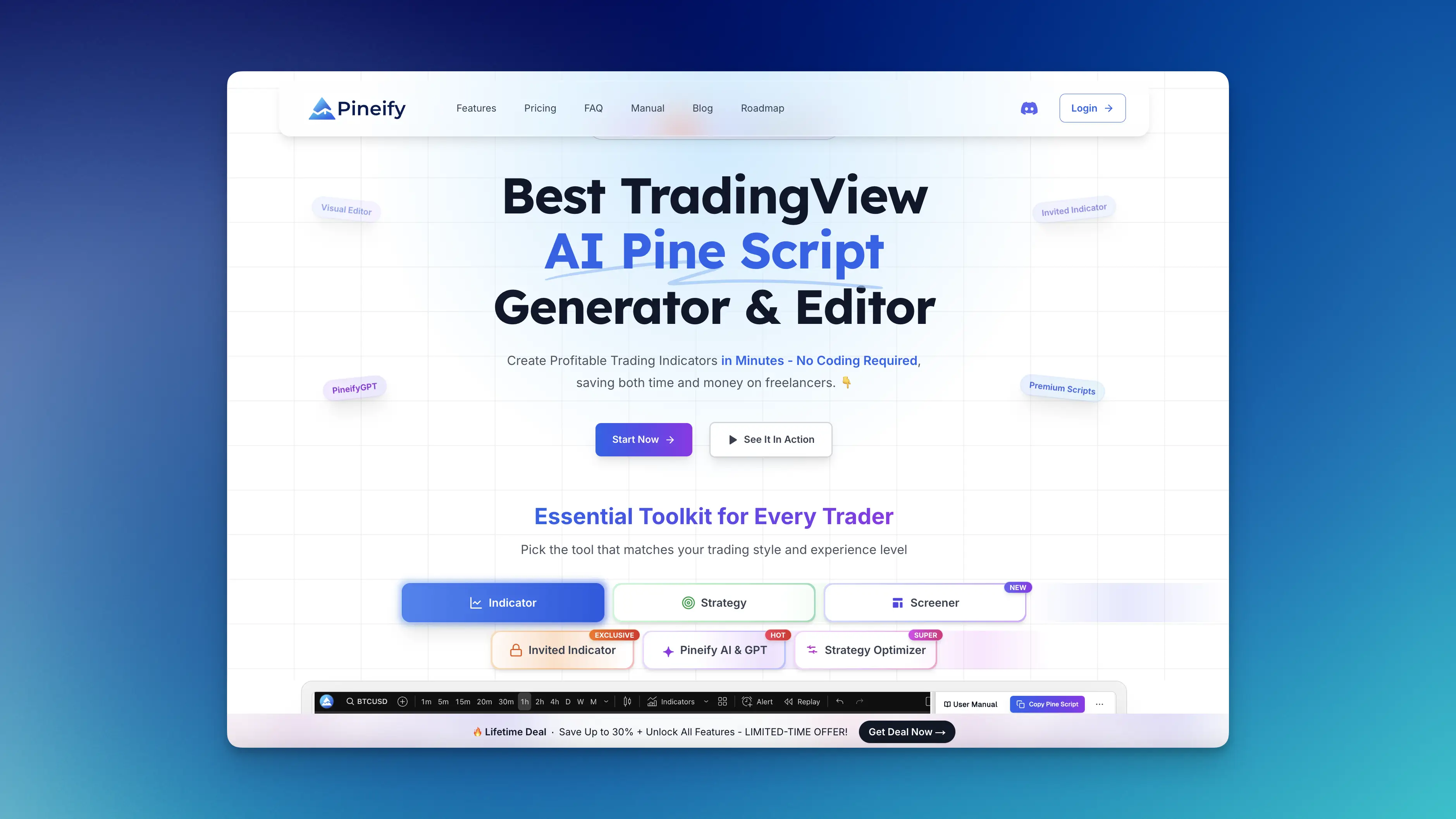
If coding Pine Script from scratch isn't your speed, Pineify's visual editor generates custom indicators, screeners, and strategies without writing code. I've used it when I needed a multi-timeframe RSI divergence detector and didn't want to debug Pine Script for an hour.
Connecting Your Broker Step by Step
Create your TradingView account. Start with the free plan. You'll get basic charts, one indicator per chart, and the ability to connect one broker. If the free limitations frustrate you (they did for me), upgrade to Pro for multiple indicators and real-time data.
Choose a broker from their partner list. Check three things: regulation in your country, asset coverage (stocks, forex, crypto, futures), and fee transparency. I use Interactive Brokers because their margin rates are competitive, but I haven't tested Forex.com or Pepperstone, so I can't compare those.
Connect through the Trading Panel. Go to the Trading Panel at the bottom of any chart, select your broker, and log in. The authentication flows through your broker's portal — TradingView never sees your password. This took me two tries because my first connection timed out during a volatile session.
Configure your trade defaults. Set order type (market, limit, stop), default quantity, and risk parameters before your first live trade. I keep mine on limit orders with 2% position sizing. Test these settings in paper trading mode first.
Paper trade before funding. Place simulated trades to verify the connection speed and order flow. I ran 50 paper trades before committing capital, and two out of fifty had unexpected fill delays. Knowing that upfront saved me from a surprise when real money was on the line.
Enable two-factor authentication. This applies to both your TradingView account and your broker. It's the single most effective protection for your funds.
Keeping Your Trading Workflow Smooth
| Practice | Why It Matters |
|---|---|
| Use alerts | Set price and indicator alerts so you don't have to watch charts all day. The platform pings you when conditions hit. |
| Refresh API keys | Expired credentials cause disconnects at the worst moments. I rotate mine quarterly. |
| Test execution speed | Check order lag during different market hours. I found 300ms extra delay during the NY open, so I avoid tight entries then. |
| Watch for platform updates | TradingView adds brokers and features regularly. New integrations can save you brokerage fees. |
Is TradingView a licensed or regulated broker?
No. TradingView is a charting platform, not a licensed broker. It doesn't hold client money or execute trades. The brokers connected through TradingView hold their own regulatory licenses.
How does TradingView connect to a broker?
You pick a broker from the Trading Panel, log in through that broker's authentication page, and the accounts link automatically. Once connected, you can place and manage trades from TradingView charts.
Does TradingView charge commissions on trades?
TradingView doesn't charge any trading commissions. Your broker sets all trade fees — spreads, commissions, overnight financing. TradingView makes money through optional Pro, Pro+, and Premium subscriptions.
Can I use TradingView without a broker?
Yes. You can chart, analyze, screen, and paper trade with no broker at all. You only need a broker when you want to execute real-money trades through the platform.
Which brokers are supported on TradingView?
Supported brokers include Interactive Brokers, Forex.com, Pepperstone, FP Markets, Tickmill, FXCM, Eightcap, and BlackBull Markets. Availability varies by region, and TradingView adds new partners regularly.
Is TradingView safe to use for trading analysis?
TradingView is widely trusted by millions of traders. Since it never holds your money — your funds stay with your regulated broker — the financial risk from the platform itself is minimal. Turn on two-factor authentication for both accounts.