AI Stocks Under $1: Guide to Affordable Artificial Intelligence Penny Stock Investments

· 17 min read

Looking for a way to get into the AI investing game without a huge bankroll? AI stocks trading for under $1 can seem like an enticing backdoor. They let you grab a whole lot of shares for a small amount of money, offering a front-row seat to the artificial intelligence boom with just a little cash.

The dream, of course, is that one of these small companies hits it big—maybe they perfect a new algorithm, land a huge deal, or get bought out by a larger player. That tiny investment could potentially grow significantly. But it's crucial to understand exactly what you're looking at.

AI Stocks Under $1: Guide to Affordable Artificial Intelligence Penny Stock Investments

Understanding AI Penny Stocks

Simply put, AI penny stocks are shares of small companies working on artificial intelligence that cost less than a dollar each. We're talking about young firms experimenting with everything from smart software and robots to cloud analytics and data platforms.

The big attraction is the possibility of explosive growth. Since shares are so cheap, a modest investment buys you a large number of them. If the company's value rises even a little, the impact on your holding can be magnified.

However, this potential comes with very real risks that are much higher than with established tech companies. These stocks are often harder to buy and sell quickly (they're less liquid), and there's frequently less public information about their financial health. The biggest pitfall isn't always bad technology; it's that a great idea sometimes never turns into a sustainable business. Many of these companies struggle to find a clear way to make money from their innovations, which is why caution is so important.

AI Stocks Under $1 to Keep an Eye on for 2026

If you're curious about the AI space but don't want to start with the giants, there's a world of smaller companies trading for under $1 per share. These "penny stocks" are known for their higher risk, but some are working on genuinely interesting corners of artificial intelligence. Let's look at a few that have been getting attention.

A Look at Some Promising Companies

Cycurion, Inc. (CYCU) is all about using AI to fight digital threats. They're a small player, valued around $8 million, and their strategy has been to grow by acquiring other companies and building up a list of security contracts.

Guardforce AI Co., Limited (GFAI), valued near $22 million, is in the robotics game. They offer robots as a subscription service (often called RaaS) and create AI solutions for everything from physical security guards to online customer service tools.

Verses AI Inc. (VRSSF) is working on something called "Genius," a smart platform for the "Spatial Web"—think the next step for augmented and virtual reality. With a value around $37 million, they're betting on AI to power future immersive digital worlds.

BigBear.ai Holdings, Inc. (BBAI) is the much larger company in this group, valued at about $3 billion. They provide AI systems that help with complex decision-making, primarily for U.S. national security and defense. They're also working to bring that technology into more commercial businesses.

Other Interesting Names on the Radar

Beyond those, people are also watching other sub-$1 stocks in areas like quantum computing and voice AI.

SoundHound AI (SOUN) is a known name in voice recognition. Their independent AI systems are the "brains" behind voice assistants in cars, smart devices, and restaurant drive-thrus.

The quantum computing space is especially volatile, but several stocks here trade as penny stocks too. This includes Quantum Computing Inc. (QUBT), Rigetti Computing (RGTI), and D-Wave Quantum (QBTS). It's a fascinating field with massive long-term potential, but the stocks can be very bumpy.

Finding Value: A Look at Promising AI Stocks Under $1

Trying to find interesting opportunities in the AI space can feel overwhelming, especially with so many big, expensive names out there. But what if you're curious about companies working on the next big thing in AI, without the hefty price tag? Looking at stocks trading under $1 can be a way to explore emerging players.

It's important to remember that these are generally smaller, earlier-stage companies. They often have higher potential for growth, but also come with more risk and volatility. The key is to understand what each one actually does.

To help you get a clearer picture, here’s a side-by-side look at a few AI-focused companies in this category. Think of it as a quick reference guide to see what they do and where they operate.

CompanyTickerSectorMarket CapKey Strengths
CycurionCYCUCybersecurity~$8MAI-driven security, strategic acquisitions
Guardforce AIGFAIRobotics & AI~$22MRaaS offerings, retail expansion
Verses AIVRSSFSpatial Computing~$37MGenius platform, Spatial Web focus
BigBear.aiBBAIDecision Intelligence~$3BGovernment contracts, commercial growth

As you can see, even within this price range, there's a big difference in company size and focus. A company like BigBear.ai has grown significantly and works on large-scale projects, often for government clients. Others, like Verses AI, are diving into futuristic concepts like the "Spatial Web," which is all about blending the digital and physical worlds.

On the other end of the scale, you have companies like Cycurion applying AI to the always-critical field of cybersecurity, though they're operating at a much smaller scale for now. Guardforce AI shows how AI and robotics are merging in the real world through their "Robotics-as-a-Service" model for businesses.

This table isn't a recommendation, but more of a starting point for your own research. Understanding the specific sector and the company's unique approach—whether it's securing data, building smart robots, or creating intelligent digital spaces—is the first step in seeing if their vision aligns with what you find promising for the future.

Finding Your Way with AI Penny Stocks

Investing in AI companies trading for under $1 a share is a unique journey. It’s filled with exciting potential but requires a specific map and a level head. Here’s a straightforward guide to thinking about it.

Do Your Own Homework (It's Non-Negotiable)

Before anything else, you’ve got to dig in. Because these stocks often fly under the radar, you can’t rely on mainstream news alone. Your job is to look into what the company actually does. Is their AI focused on healthcare, logistics, or something else? Then, check their financial footing—look for recent news, any revenue trends, and the overall health of their balance sheet. Remember, they don’t have to share as much info as big companies on the NASDAQ, so finding reliable details is a key part of your work.

Playing it Smart: Managing the Risk

These stocks can jump around a lot, so protecting yourself is the most important strategy. Here’s how thoughtful investors approach it:

  • Only Use What You Can Lose: This is rule number one. Never use rent or grocery money. Think of this as capital you’re fully prepared to see vanish.
  • Don’t Put All Eggs in One Basket: Spread your investment across a few different AI penny stocks. If one doesn’t work out, the others might balance things.
  • Use the Tools Available: Good screening tools, like a TradingView custom screener Pine Script, can help you sort stocks by things like trading volume or price patterns. It’s a way to filter out noise and find ones that meet your basic criteria.
  • Set a Safety Net (Stop-Loss Orders): Decide in advance the point at which you’ll sell to prevent a bigger loss. It’s an automatic way to limit your downside if a stock takes a sudden dive.

Staying Alert: Timing and Watching Your Investments

The market for these stocks doesn’t sleep. Prices can swing 20%, 50%, or even more in a single day. That means the chance for quick growth is real, but the risk of a sharp drop is just as real.

The antidote to this volatility is having a plan before you buy. Know why you’re getting in and, more importantly, know the conditions under which you’d get out—whether you’re taking a profit or cutting a loss. Once you’re invested, keep an eye on them. Regular check-ins help you stick to your plan and adjust if the company’s story changes.

Things to Keep an Eye On: The Risks of AI Penny Stocks

The Foundation: Data Quality & Security

Think of data as the fuel for AI. If the fuel is bad, the engine sputters. Nearly half of investors (49%) say their biggest worry is how these companies handle data. It's not just about having lots of information; it's about whether that data is accurate, clean, and—most importantly—secure. How a company builds its AI model and protects sensitive info is a major red flag if it's done poorly.

Getting Stuck: Liquidity Challenges

This is about how easy it is to buy or sell. With AI penny stocks, trading can be thin. This creates a wide gap between the price someone will pay (the bid) and the price someone will sell for (the ask). You might find yourself unable to sell your shares for the price you want, or even sell them at all, especially if the market gets rocky. It's like having a valuable collectible but no one in your town is buying.

The Rollercoaster: Volatility and Swings

Brace for big ups and downs. These stocks don't have the huge pool of buyers and sellers that giant companies do. That means smaller trades can cause much bigger price jumps and dips. While this can mean quick gains, it often leads to nerve-wracking drops that are far more severe than what you'd typically see with established, large-cap stocks. Having a solid trading strategy, like the best free strategy on TradingView, can help you navigate this volatility.

From Cool Tech to Real Business

Here’s a common story: a company has brilliant AI technology but struggles to turn it into a real, sustainable business. Creating the AI is one thing; making money from it is another. The real hurdles are often finding paying customers, generating steady revenue, and running efficiently. Many promising ventures stumble not on the technology, but on the basics of building a company around it.

How to Check the Health of an AI Penny Stock

Looking at AI stocks trading for under $1 a share? The price tag is just the starting point. To see what's really going on, you need to peek under the hood and check a few key things. Think of it like checking out a used car—you wouldn't buy it just because it's cheap, right?

Here’s what smart investors are really paying attention to:

  • Is the business growing? Look for steady revenue growth. This tells you if the company is actually turning its cool AI tech into something people will pay for. No growth often means the idea isn't catching on.
  • Can it pay the bills? Check the debt levels and cash runway. A company with a lot of debt and little cash might be in trouble if it can't secure more funding soon. You want to know it has enough fuel to keep going.
  • Who's backing them? Partnerships with big companies or government agencies are a huge plus. It’s a strong signal that someone important believes their technology actually works.
  • What's in the pipeline? A healthy contract backlog means there’s visible work lined up for the future. Even better is a recurring revenue model—it’s more stable than relying on one-off sales.
  • Is the price fair? Look at the market cap (total value of the company) and compare it to similar companies at the same stage. This helps you guess if the stock is a bargain or if it’s already priced for perfection.
  • What do the pros think? Take note of analyst ratings, but remember, many tiny stocks don't get much professional coverage. When you do find an analysis, it’s one more piece of the puzzle, not the whole answer.
What to Look ForWhy It Matters to You
Revenue Growth TrendShows if the AI product is gaining real customers and market traction.
Debt & Cash RunwayReveals financial health and how long the company can operate before needing more money.
Strategic PartnershipsActs as a validation stamp from established players, reducing perceived risk.
Contract BacklogProvides a clearer picture of future income, not just past sales.
Market CapitalizationHelps you gauge if the stock's total value is reasonable for its size and potential.

At the end of the day, it's about connecting the dots between the exciting AI story and the practical, measurable business behind it.

Using Tech to Make Smarter Investment Choices

Sorting through thousands of stocks to find promising, low-priced AI companies is like finding a needle in a haystack. This is where technology can give you a real hand. Modern screening tools, many powered by AI, can do that heavy lifting for you. You can set them to look for specific things—like companies under a certain price, involved in AI, with growing trading volume—and they’ll filter the market in real time to show you matches.

These platforms do more than just list stocks. They analyze live market data and can send you alerts about potential opportunities or shifts, all based on their programmed logic. Other technical analysis tools can visually map out price patterns and trends, helping you see what’s happening beneath the surface.

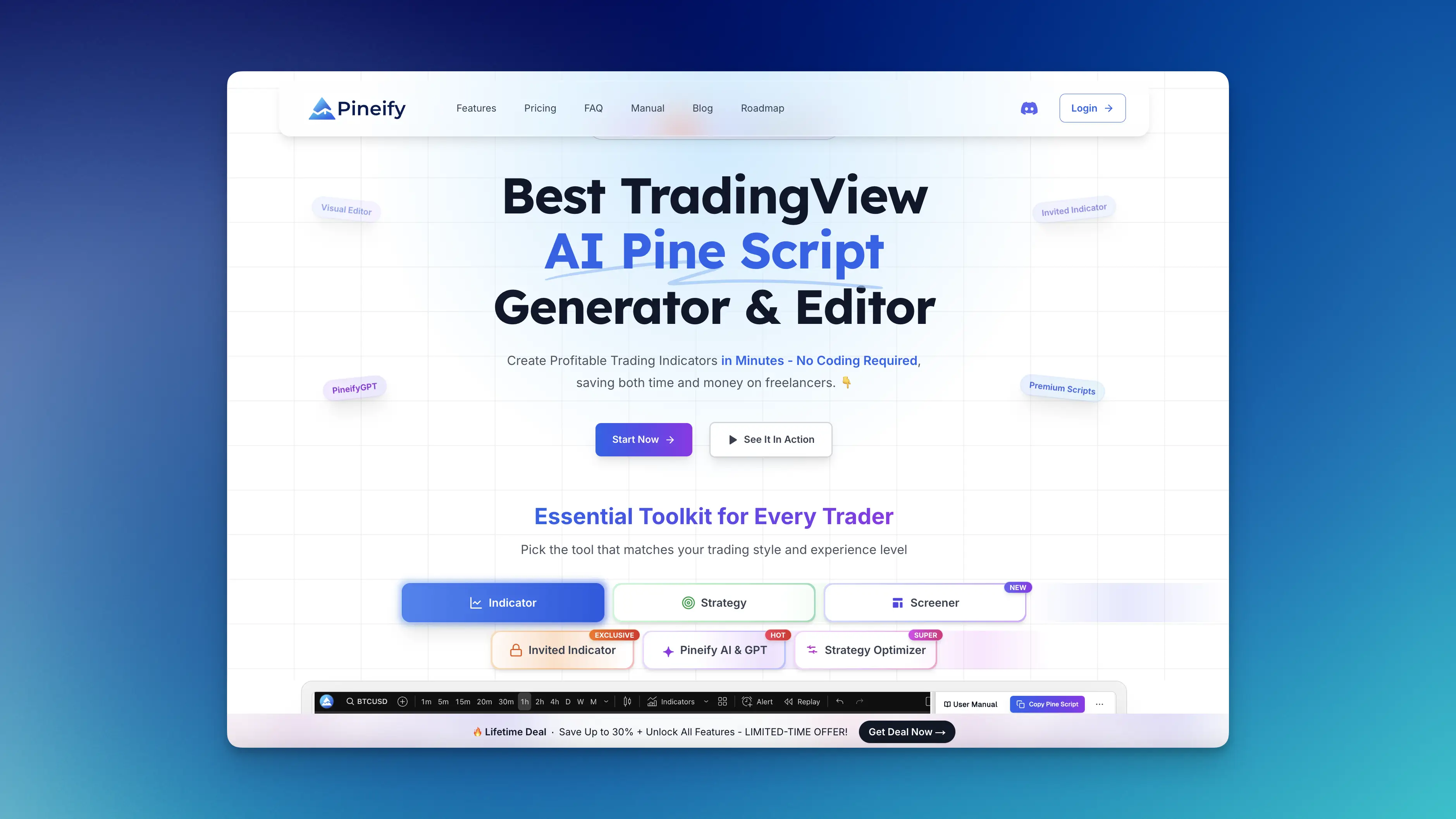
For traders looking to build their own custom screening logic or technical indicators, platforms like Pineify make this process incredibly efficient. Instead of manually coding complex filters in TradingView's Pine Script, you can use its AI Stock Picker and Visual Screener Editor to define your criteria—such as price, volume, and AI sector involvement—and generate a powerful, error-free screening script in minutes, with no coding required. It perfectly embodies this blend of AI-powered data processing and user-defined strategy.

Pineify Website

But it’s important to remember what these tools can’t do. They are brilliant at processing historical and real-time data, but they can’t predict the unexpected. A sudden new regulation, a geopolitical clash, or a breakthrough news story are human-world events that algorithms often miss.

That’s why the smartest approach blends the best of both worlds. Use these tech tools as powerful assistants to narrow your focus and spot signals. Then, pair those insights with your own research, a look at the company’s fundamentals, and an honest check of your own risk comfort. The tech gives you the data, but you make the final decision.

Your Questions, Answered

I’m new to investing. Are AI stocks under $1 a good place for me to start?

To be honest, probably not. Stocks that trade for less than a dollar—often called penny stocks—are notoriously risky. They can be very volatile, hard to research, and sometimes lack the public reporting of bigger companies. It’s usually smarter to get your feet wet with more established companies first. Once you’re comfortable with how the market works, then you can think about exploring riskier corners if you choose.

If I do decide to invest, how much money should I put into AI penny stocks?

Only money you’re completely okay with losing. Think of it like money you might take to a casino—it should be an amount that, if it vanished tomorrow, wouldn’t affect your daily life or long-term goals. Many seasoned investors suggest keeping these kinds of speculative bets to a tiny slice of your overall investment pie, well under 5%.

What’s the real difference between a company like NVIDIA and an AI penny stock?

It mainly comes down to track record and stability. A company like NVIDIA is a giant on a major exchange, with billions in revenue and products you can actually buy. An AI penny stock is more like a startup in the AI space—it might have a promising idea or a niche technology, but it’s still proving itself. The potential for growth is higher, but so is the chance the company doesn’t make it.

How do I steer clear of scams and sketchy penny stocks?

Do your homework. Look for companies that are transparent about their finances and have a real, understandable business model. Stick to stocks that have been around for a bit and have some trading history you can review. A big red flag is getting a random "hot tip" from an email, social media, or a promotional blast. If it sounds too good to be true, it almost always is.

Why are people talking about 2026 for these stocks?

The AI boom isn’t slowing down. Huge investments from tech giants are creating a rising tide that could lift smaller, specialized companies. By 2026, some of these smaller players might have matured or found their perfect niche. But that’s also the catch—more opportunity means more competition and the road will definitely be bumpy. It’s not a guaranteed win; it’s a calculated guess on future growth.

What To Do Next

Thinking about checking out those AI stocks under $1? Here’s a simple, practical way to get started.

First, you’ll need a brokerage account that lets you trade penny stocks and OTC securities. Once that’s set up, make a watchlist of the companies we discussed. Keep an eye on them by tracking their price changes, any news they put out, and their official financial reports.

It helps to set up stock alerts. That way, you’ll get a notification if there’s a big price swing or a surge in trading volume for the stocks you’re watching. If you’re new to this, consider trying paper trading first. It’s just practicing with virtual money to get a feel for your strategy before using real cash.

Don’t go it alone. There are great online forums and communities focused on penny stocks and AI investing. They can be goldmines for learning from others and spotting new ideas. And the old rule always applies: only use money you’re comfortable with, and stick to the risk limits you set for yourself.

StepActionWhy It Helps
1Open a suitable brokerage account.Gives you the platform to actually trade these stocks.
2Create a watchlist and track news/filings.Helps you make informed decisions, not just guesses.
3Set up price & volume alerts.Keeps you in the loop without having to stare at charts all day.
4Consider paper trading.Lets you test your approach risk-free.
5Join relevant investing communities.Learn from the experiences and research of others.

Which one of these AI penny stocks catches your eye first? Drop your thoughts or questions in the comments below—I’d love to hear what you’re looking into. Subscribe if you want more updates on finding affordable ways to invest in AI.