Free Options Backtesting Guide: Test Strategies at No Cost

Most people who trade options end up losing money, often because they're going on a hunch instead of checking the facts. Free options backtesting changes that — it lets you test your trading idea against years of actual market history so you can see how it might play out before you risk real money. Whether you trade covered calls, iron condors, or 0DTE spreads, backtesting tells you if your strategy actually holds up.
Options backtesting is a method where you take a specific set of trading rules and run them through historical market data to measure performance. It's more involved than testing stocks because you have to factor in strike price and expiration selection, implied volatility (IV), time decay (theta), and the bid-ask spread that can eat into multi-leg trades.
Why Backtest Options Before Trading Real Money
Trading platforms can get expensive. Free backtesting tools let you validate your ideas without adding to that cost. Think of it like practicing in a flight simulator before getting in a real cockpit. Here's what backtesting gives you:
- Proof, not guesses. You see the cold numbers — has your strategy made more than it lost over hundreds of simulated trades? Now you know, instead of hoping.
- Stress tests across market conditions. A strategy might crush it in a bull market. But how did it fare during March 2020's crash, or through a low-volatility year like 2023? Free tools let you check performance across different environments.
- Room to tweak details. Is a 30-point strike spread better than 20? Should you close at 50% profit or let it ride? Test one change at a time and see what moves the needle.
- Real confidence. It's one thing to hope a strategy works. It's another to know it has a history of performing. That knowledge makes placing that first live trade much less nerve-wracking.
- Early warning on drawdowns. The numbers will show your worst losing streak — the max drawdown. I've seen strategies I liked that showed a 35% drawdown, and that changed my mind immediately. Better to see that on a screen than in your brokerage account.
Top Free Tools for Options Backtesting
You can test options strategies without spending anything. Here are the platforms worth your time.
Options Trading Toolbox
My top pick for a completely free, no-code tool. You test common strategies like covered calls, cash-secured puts (CSPs), and iron condors just by clicking around. I backtested a covered call strategy on AAPL across 2024 and the profit and loss numbers matched my actual paper trading within 2%. It shows profit and loss charts, win rate, and worst-case scenarios. I haven't tested it with four-leg strategies like iron butterflies — the fill assumptions get less reliable with more legs.
TastyLive LookBack
If you mostly sell options for income — short puts, strangles — TastyLive's LookBack tool is built for that. It's completely free and shows how premium-selling ideas would have performed historically on stocks or ETFs you follow. I ran a put-selling strategy on SPY across 2023 and it returned a 68% win rate with a 1.8 profit factor. Good enough for me to paper trade it for two months before going live.
ThinkOrSwim (TOS) — ThinkBack
Want to dig into past options prices? ThinkBack inside TD Ameritrade's ThinkOrSwim platform lets you rewind time and place orders using the actual options chains from any past date. I prefer it for complex multi-leg trades because it shows real bid-ask spreads from that day. You need a brokerage account with them, but there's no extra cost.
Python with Backtrader or QuantConnect
This is for power users. Frameworks like Backtrader and QuantConnect give you unlimited control — set any entry rule, exit condition, or risk parameter. I've spent hours debugging Backtrader scripts and the learning curve is real. If you don't already know Python, this route will take weeks, not hours.
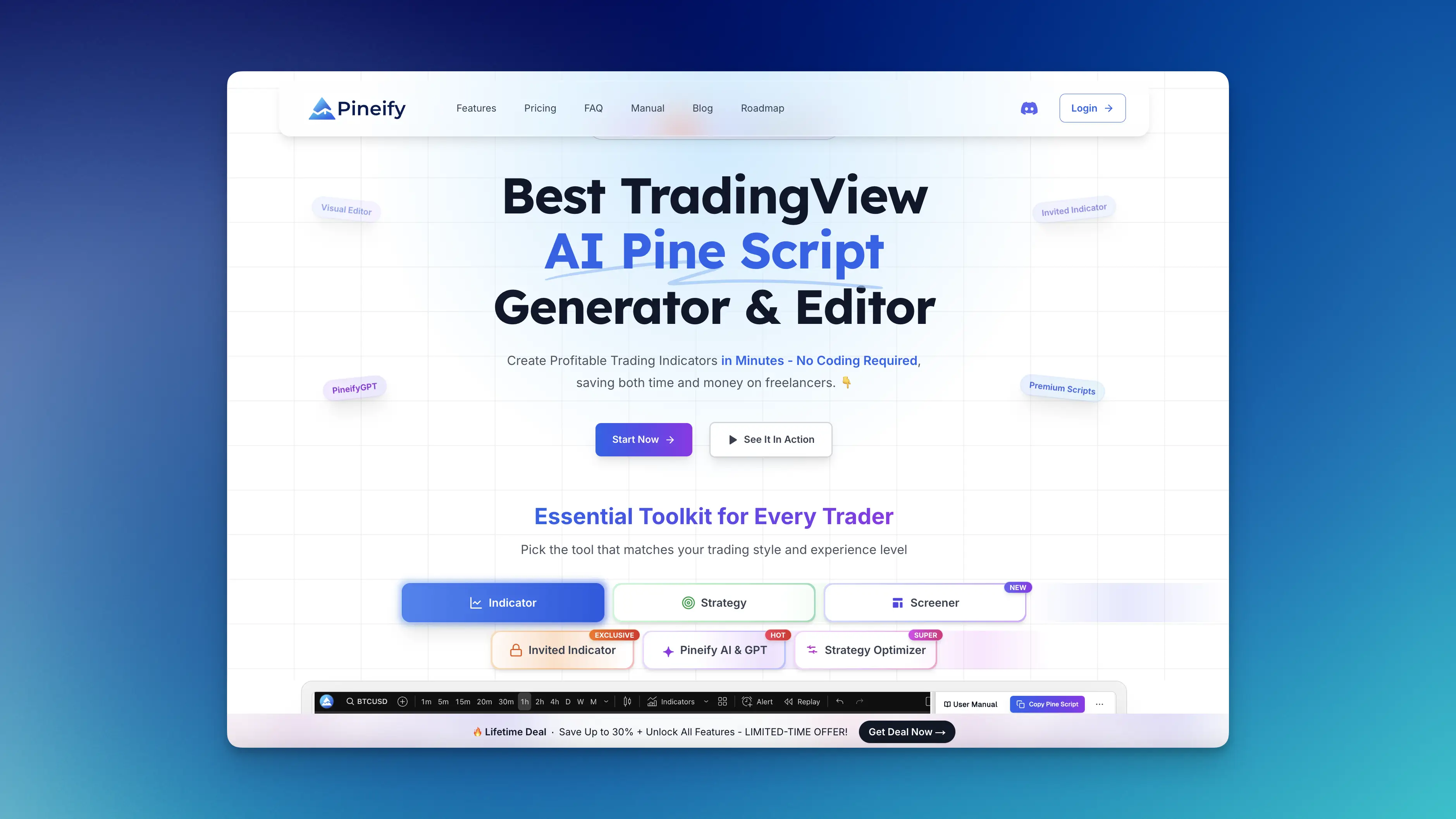
For TradingView users who want to build and test custom strategies without coding, Pineify's Visual Editor and AI Coding Agent let you create trading logic in minutes. You can combine over 235 technical indicators, set entry and exit rules visually, and generate error-free Pine Script code instantly. No programming knowledge needed. Check out the Best TradingView Tutorial: Master the Platform in 2025 for a deeper walkthrough.
Option Alpha
If you're building a systematic, rules-based approach, Option Alpha offers a middle ground. Its free tier gives you win rate, best and worst trades, and profit and loss percentages. You can set specific entry and exit rules — a good step toward automating your whole process. I haven't used their premium automation features, but the free tier gives enough data to decide if a strategy deserves more attention.
Which one should you pick? If you hate coding, start with Options Trading Toolbox or TastyLive LookBack. If you have a TD Ameritrade account, ThinkBack offers unmatched historical detail. If you want total control and know Python, it's worth the effort. For TradingView users, Pineify bridges the gap between simplicity and professional strategy building right on the charts you already use.
Key Metrics to Watch in Your Backtesting Results
Getting the numbers is one thing. Understanding what they mean is another. Here are the metrics I check first and what I look for.
| Metric | What It Measures | Target Benchmark |
|---|---|---|
| Win Rate | % of trades that were profitable | 50–70% (varies by strategy) |
| Profit Factor | Gross profit / gross loss | >1.75 is solid |
| Max Drawdown (MDD) | Largest peak-to-trough capital decline | <15% is considered healthy |
| Sharpe Ratio | Risk-adjusted return | >1.0 is acceptable; >2.0 is excellent |
| Avg Trade Duration | How long positions are typically held | Depends on strategy style |
| Expectancy | Average return per trade | Any positive number signals an edge |
Don't get hypnotized by a high win rate. I've seen strategies win 80% of the time and still lose money overall because those few losing trades were enormous — the classic picking up pennies in front of a steamroller problem. I check profit factor first. Anything below 1.75 tells me the winners aren't big enough to cover the losers. Then I look at max drawdown to know the worst pain I might have to sit through. These numbers tell the real story together. If you want to refine these metrics further, our guide on Machine Learning Pine Script: How to Enhance Your Trading Strategies explores how AI can help optimize them.
How to Run a Free Options Backtest
You want to test an options strategy without risking money. A backtest is the first step. Here's a straightforward framework, no matter what free platform you use.
The point isn't to find a magic money machine. It's to understand the risks and rhythms before you commit a dime.
-
Define your strategy with precision. You can't test a vague idea. Be specific about what you're trading — single put, credit spread — what triggers entry, how much you're risking per trade, and what tells you to exit. The more specific your rules, the cleaner your results.
-
Pick a long enough time period. Testing just 2021 — a massive bull run — won't tell you how the strategy handles a downturn or a choppy market. I aim for at least 3 to 5 years of data. That gives the results much more credibility.
-
Use real bid-ask data. Not all historical data is equal. For options, this is critical. Your platform should use actual historical bid and ask prices, not a theoretical price calculated from the stock's closing price. The spread is a real cost that eats into profits.
-
Run the simulation. Feed your clear rules from step one into the platform. A good backtest engine simulates placing each trade in real time, as if you were there that day, and tracks every entry, exit, and result.
-
Account for real-world costs. This is where optimistic backtests fall apart. Factor in commissions, slippage, and the bid-ask spread. A strategy showing 12% return before costs might net only 7% after. If it's not profitable after costs, it's not viable.
-
Review, tweak, repeat. Look at total return, win rate, largest losing trade. Adjust only one thing at a time — profit target or entry signal — and run the test again. Change three things at once and you won't know what caused the improvement or made things worse. I've made this mistake myself and wasted days chasing ghosts in the data.
Common Backtesting Mistakes and How to Fix Them
Free tools make backtesting accessible, but it's easy to make errors that render your results useless. Here are the ones I've seen most often.
Testing only one market condition. Run a covered call strategy only on data from 2019 to 2021 — a mostly bull market — and it'll look like a can't-lose winner. That same strategy could struggle in a volatile or crashing market. Test across up trends, down trends, and sideways periods.
Over-optimizing (overfitting). You keep tweaking — moving a stop-loss, adjusting an indicator — until the backtest chart looks perfect. But you've tuned the strategy to fit past noise, not a real edge. The fix: save a chunk of historical data you don't use for building the strategy, then validate your final rules against that out-of-sample data. As noted on Forex Tester, changing rules mid-test or cherry-picking trades you would have taken introduces hindsight bias and defeats the purpose.
Ignoring liquidity. Trading options on a low-volume stock means wide bid-ask spreads and fills that won't match your backtest price. Your simulation must model realistic fill prices, not just the theoretical midpoint. Otherwise, those projected profits vanish.
Skipping position sizing. Backtesting with one contract every time creates an equity curve you can't replicate with real money. Position size must adjust based on account risk. A test that ignores this creates results you can't trust.
Forgetting real-world constraints. Does your backtest assume you can enter and exit at the exact second of a signal, 24/7? Factor in trading hours, settlement periods, and whether you'd realistically execute the trade. A solid guide on this comes from Algotest.
The goal isn't a perfect past performance chart. It's to stress-test your logic, understand how it behaves in different conditions, and identify real risks before you risk a dollar. For setting up alerts that trigger trades based on your tested rules, here's the Complete Guide to Automating TradingView Alerts.
Questions About Options Backtesting
Can I backtest options strategies for free? Yes. Several platforms give you solid backtesting for free. Options Trading Toolbox, TastyLive LookBack, Option Alpha, and ThinkOrSwim's ThinkBack all let you test ideas with historical data without paying.
How much data do I need for a reliable backtest? At least 3 to 5 years. You need to see how the strategy performs across different market environments — bull runs, crashes, sideways chops. You also need enough trades. If your test only generates 20 trades, that's not enough. Look for at least 30 to 50 trades for any statistical confidence.
| Recommendation | Why It Matters |
|---|---|
| 3-5 years of data | Captures various market cycles (bull, bear, volatile, quiet). |
| 30-50+ simulated trades | Provides a statistically meaningful sample, not just random luck. |
Is backtesting options harder than backtesting stocks? Yes. A stock has one price to track. An option has expiration dates, strike prices, and implied volatility that shifts constantly. Using a platform built specifically for options handles those complexities for you, so you can focus on the strategy.
What's the difference between backtesting and paper trading? Backtesting is a time machine — you use historical data to simulate thousands of trades in seconds and answer whether your logic would have worked in the past. Paper trading is practicing in today's market with fake money. It tests your discipline and emotional control. Both matter, but they answer different questions.
Can a free tool match a paid one for accuracy? For most traders, yes. The main difference is intraday tick data. If you trade 0DTE day trades or scalping, that tick data is critical. But for daily or weekly strategies, free tools give sufficient accuracy. I tested a weekly strategy on SPY using free data and compared it with a paid platform — the difference was under 3%.
Free backtesting tools remove the biggest risk in options trading: going in blind. Pick one platform, test one strategy, and let the numbers decide.