Composer vs Pineify Visual Pine Script Editor: Which Trading Platform Fits Your Strategy?

· 16 min read
Pineify Team
Pine Script and AI trading workflow research team

Compare Composer's AI-powered automated trading with Pineify's no-code Pine Script editor for TradingView. Discover which platform suits your technical analysis or portfolio automation needs best.

Composer vs Pineify Visual Pine Script Editor: Which Trading Platform Fits Your Strategy?

Trying to pick a platform to build your trading strategies can feel overwhelming. Get it right, and your whole process becomes smoother. Get it wrong, and it’s a constant headache.

Both Composer and Pineify's Visual Pine Script Editor let you build strategies without typing a single line of code. But here’s the thing: they’re built for different kinds of traders. One feels like a sleek, automated assistant, while the other is like having direct, visual control over the TradingView charts you already use. If you want to master the environment where Pineify's code runs, a solid understanding of How to Edit TradingView Chart: The Complete, Step-by-Step Guide is invaluable.

This isn’t about which one is "better." It’s about which one is better for you. Let’s break down their core differences so you can see which tool matches your goals, your experience, and how you like to work.

What Is Composer?

Think of Composer as your personal investing assistant that handles the complex stuff. It’s a platform where you can create automated trading strategies—they call them "symphonies"—without needing to know how to code. Whether you have a specific market idea or just want to try a hands-off approach, Composer lets you build and run those strategies visually.

The best part? It’s an all-in-one system. You don’t have to link a separate brokerage account because Composer itself is a registered broker. Your investments are protected by SIPC coverage up to $500,000, which adds a nice layer of security.

Here’s how simple it is: you describe what you want your strategy to do. You can either drag and drop blocks in their editor or just type a plain-English prompt like "create a strategy that buys tech stocks on dips." Their AI takes that description, builds the algorithm, backtests it against historical data, and can have it ready to trade in under a minute. It automatically handles the tedious details like stock splits, dividends, and rebalancing.

The platform works with stocks, ETFs, options, and crypto. It’s grown pretty popular, with over 160,000 users and more than $12 billion traded through it. For traders curious about the broader AI evolution on the platform, the developments are part of TradingView's AI Revolution: The Messy, Beautiful Truth About Smart Indicators in 2026.

In a nutshell, Composer gives you:

  • A visual, no-code tool to build automated trading strategies.
  • An AI helper that turns your text ideas into working strategies.
  • Realistic backtesting that adjusts for corporate actions automatically.
  • Fractional shares, auto-rebalancing, and tax-friendly trade execution.
  • A shared library with thousands of pre-made strategies you can use or tweak.
  • A built-in, SIPC-protected brokerage with no commission fees on stocks and ETFs.

What Is Pineify's Visual Pine Script Editor?

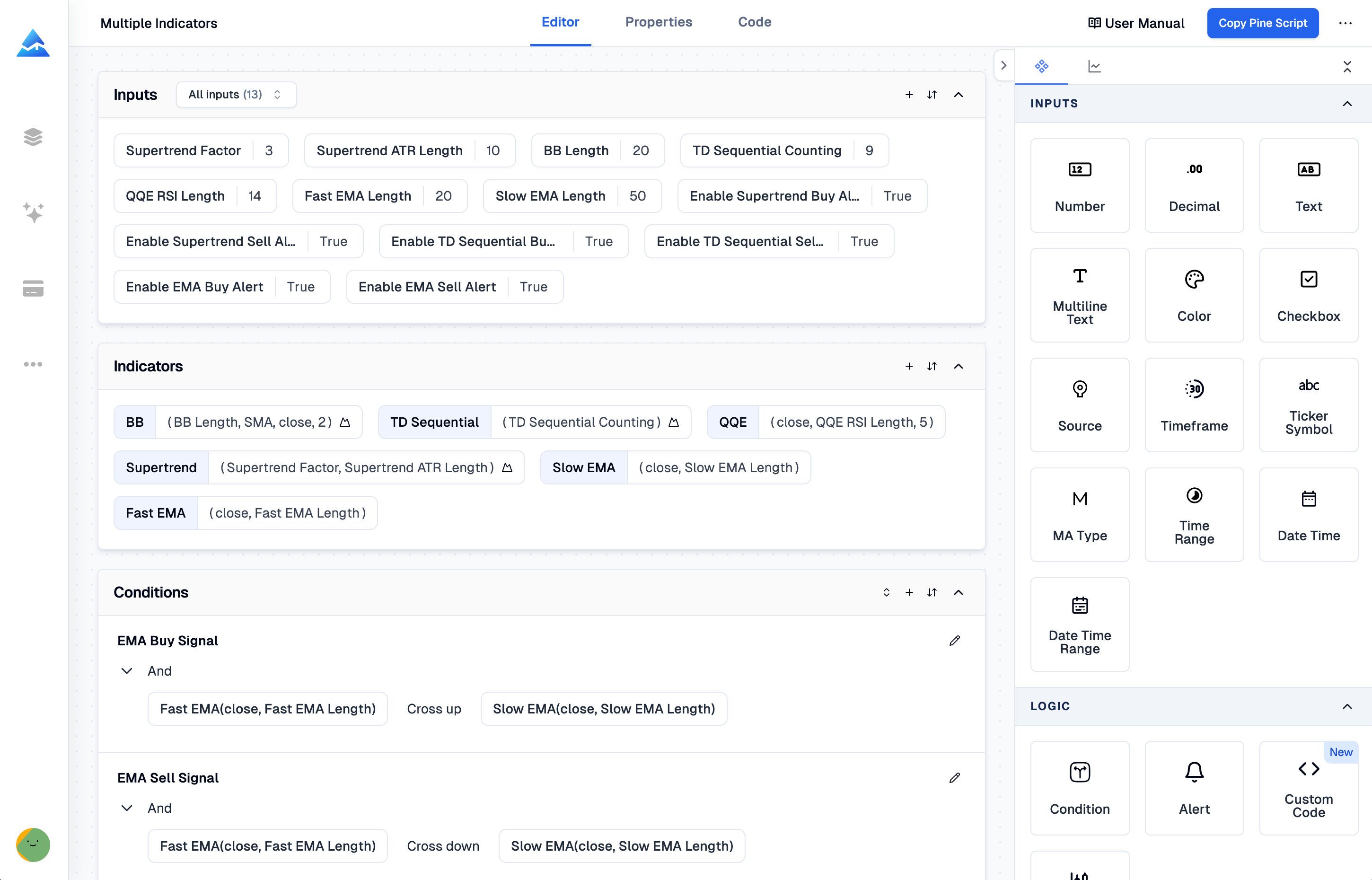
If you use TradingView and have ever wanted to customize an indicator or build a strategy but felt stuck by the coding, Pineify's Visual Pine Script Editor is like having a shortcut. It's a point-and-click tool built specifically for TradingView traders. You can create professional Pine Script indicators, strategies, and screeners without needing to learn how to write code yourself. To truly leverage this, a foundational grasp of What is Pine Script? The Beginner's Guide to TradingView's Programming Language is highly recommended.

Think of Pineify not as a brokerage, but as your strategy design assistant. You piece together your trading logic using simple visual blocks, and the tool writes the clean, ready-to-use Pine Script v5/v6 code for you. All you have to do is copy and paste it right into TradingView.

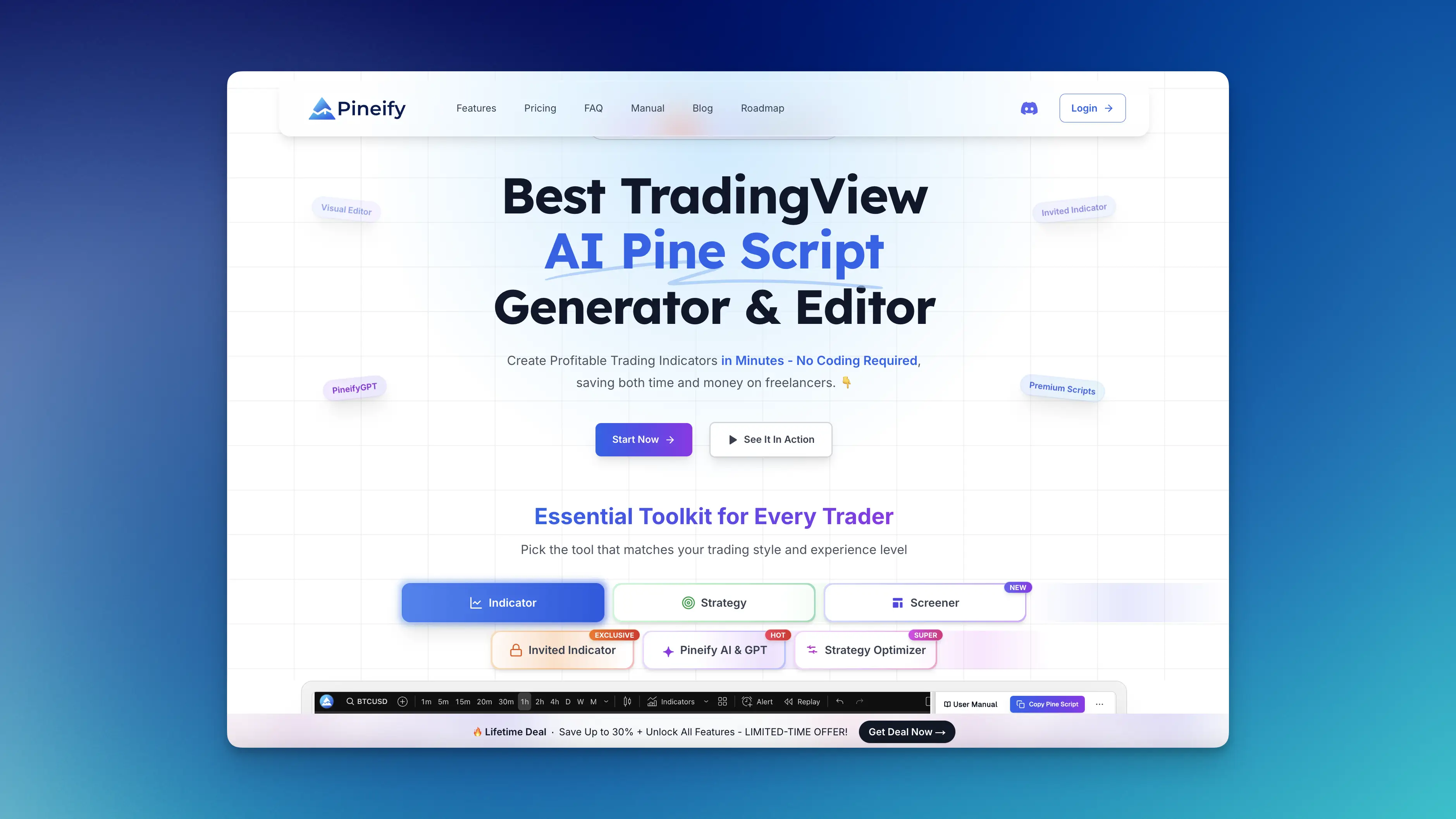
Pineify Website

You get access to over 235 built-in technical indicators—things like RSI, MACD, Bollinger Bands, VWAP, ATR, and candlestick patterns are all there. Need to scan the market? The built-in Screener Generator lets you check multiple symbols and timeframes at once. You can even set up real-time alerts, all through the same visual interface.

Here’s what you can do with it:

  • Use 235+ Indicators Visually: Configure every setting for indicators like RSI or MACD with just a few clicks.
  • Build Strategies Visually: Define your entry/exit rules, set stop-loss and take-profit levels, and manage position sizing—all with drag-and-drop blocks.
  • Scan the Market: Use the Screener Generator to run your conditions across many stocks or timeframes simultaneously.
  • Set Alerts in Real-Time: Configure alert conditions without touching a line of code.
  • Work with Existing Code: Import and break down your own (or others') Pine Script code into the visual editor to understand or modify it.
  • Get AI Help: Use the AI assistant to explain code, suggest optimizations, and automatically fix errors.
  • Export Instantly: With one click, get the complete Pine Script v5/v6 code to paste directly into TradingView.

Trying to decide between Composer and Pineify? It can be confusing because they tackle automated trading from two completely different angles. Think of it like this: one is a full-service platform where everything happens in one place, and the other is a powerful tool that helps you build strategies for another platform.

The table below breaks down the key differences to help you see which one aligns with how you want to work.

FeatureComposerPineify Visual Editor
Primary FunctionAll-in-one trading platform + brokeragePine Script code generator for TradingView
ExecutionDirect auto-execution via Composer SecuritiesDeploy generated code manually in TradingView
Supported MarketsUS stocks, ETFs, options, cryptoAny market available on TradingView
Indicators AvailableBroad strategy logic with AI235+ built-in technical indicators
BacktestingBuilt-in backtesting on the Composer platformVia TradingView after code export
AI CapabilitiesNatural language strategy generation ("Trade with AI")AI Coding Agent for code fix, explanation, optimization
Community3,000+ community symphoniesDiscord community + 18 premium scripts
ScreenerBasic screening within strategy logicDedicated visual Screener Generator
Pricing ModelSubscription ($32/month or $384/year for automation)One-time lifetime payment (from $99)
Regulatory ProtectionSIPC-protected brokerageNo brokerage (TradingView handles execution)
Free TierFree manual trading + 14-day automation trialFree version with limited features

Note: Pineify generates code specifically for TradingView's Pine Script language. Your final strategy runs, backtests, and executes within your TradingView account. To ensure your strategies are robust, learning the principles of Backtest Indicator TradingView: Complete Guide to Testing Your Trading Strategies is crucial.

In short, if you want a simplified, all-in-one service that handles the brokerage side for you, Composer is built for that. If you're already comfortable with TradingView and want a more powerful, visual way to create and customize your own Pine Script code, then Pineify is your tool. Your choice really comes down to whether you prefer a ready-made ecosystem or a specialized toolkit for the platform you already use.

Trading Style Fit: Which Tool Is Right For You?

Choosing the right tool depends entirely on how you like to trade. Think of it like picking shoes—you want the pair that fits your journey best. Here’s a straightforward look at who tends to prefer each platform.

Who Gets the Most Out of Composer?

Composer is a fantastic fit if you're an individual investor or a systematic trader who dreams of full automation. It’s built for those who want to go from a simple idea to a live, running strategy without jumping between different apps or writing code. The magic is in the natural language AI. You can literally type something like, “build me a momentum strategy using SPY and QQQ that rotates based on relative strength,” and it will create, test, and even run that strategy for you.

You’ll love Composer if you’re focused on portfolio-level, rules-based investing in US stocks and ETFs. It’s been a game-changer for making advanced quantitative techniques feel approachable. That said, traders on forums and in reviews often mention it can feel a bit limiting if you have a highly specific, condition-heavy plan in mind, or if your approach revolves around complex options strategies.

Who Is Pineify's Visual Editor Perfect For?

Pineify is the natural choice if TradingView is your trading home base. It’s designed for traders who live on those charts and use technical analysis, but who want their own custom indicators, alerts, or strategies without needing to become a programmer. Whether you’re building a unique RSI divergence scanner, a strategy with five different entry conditions, or a screener for an entire market sector, you can do it visually. Its library of over 215 pre-built indicators and visual logic blocks means you might not need to write a single line of code.

Independent reviewers regularly call it the top tool for generating Pine Script because the code it produces is reliable and ready to use. If TradingView is already your primary tool for charting and analysis, Pineify slides right into your existing routine without any friction.

Trying to decide between trading platforms can be tricky, especially when it comes to understanding what you'll actually pay. Let's break down how two popular options, Composer and Pineify, structure their pricing, since they take pretty different approaches.

Composer is great if you want to start simple and are okay with a subscription for advanced features. You can manually trade stocks and ETFs for free, which is fantastic for getting your feet wet. If you want to use their automated trading strategies (the algorithmic part), that’s unlocked with a subscription. It runs $32 per month, or $384 if you pay yearly, and they offer a 14-day free trial so you can test it out properly. A big plus is they don’t charge any commissions on trades, so your main cost is just that clear monthly or annual fee.

Pineify works on a completely different model. Instead of a monthly bill, you pay a single, one-time fee for lifetime access. They have three tiers (Plus, Advanced, Expert), and they often run discounts. Each plan comes with a set amount of AI credits every month that refresh automatically. The idea is you pay once and avoid any recurring fees, which can be a huge money-saver over time.

Here’s a quick look at their key differences:

PlatformModelBest For
ComposerFreemium + SubscriptionTraders who want a free start and prefer an ongoing service with continuous updates.
PineifyOne-time Lifetime FeeTraders looking for long-term cost certainty and wanting to avoid recurring subscriptions.

In short, your choice kind of depends on your style. Do you prefer a low barrier to entry with a known monthly cost (Composer)? Or does paying once upfront for lifetime access, even if it's a larger initial sum, sound more appealing for your budget (Pineify)?

Getting Your Strategy Right: The Power of Backtesting

Before you trust a trading strategy with real money, you need to see how it would have performed in the past. This process, called backtesting, is essential. It’s like a dress rehearsal for your investment ideas, helping you spot potential flaws before the live show.

Different platforms handle this in their own way:

Composer has backtesting built directly into its system. A big plus is that it automatically adjusts for things like stock splits and dividend payments, which gives you a clearer, more accurate picture of historical performance. It also quietly takes care of practical details for you, like managing fractional shares and rebalancing in a tax-smart way.

Pineify, on the other hand, connects you directly to TradingView’s Strategy Tester. For many traders, this is actually a major benefit. TradingView’s backtester is widely considered the gold standard—it’s robust, trusted, and familiar. If you want to get really into the weeds, Pineify’s Advanced plan offers a Backtest Report Deep Dive feature for that extra layer of detailed analysis.

Here’s a quick look at their approaches:

PlatformBacktesting EngineKey Feature for AccuracyAdvanced Analysis
ComposerNative, built-inAuto-adjusts for dividends & corporate actionsBuilt into the platform
PineifyTradingView's Strategy TesterLeverages a trusted, independent environment"Backtest Report Deep Dive" (Advanced Plan)

In short, both approaches get the job done well. Composer offers a seamless, all-in-one experience that manages the complex details automatically. Pineify gives you the confidence and deep customizability of TradingView's professional toolkit. The "better" choice really depends on whether you prefer an automated, integrated system or a powerful, standalone testing environment you might already know.

Learning Curve and Getting Started

A big worry for many new traders is that you need to be a programmer to build and test strategies. The good news is that neither of these platforms requires any coding knowledge. The main difference is in how you interact with them.

Imagine you're explaining your trading idea to a friend. With Composer, you can do just that. You describe a strategy in plain English, like "buy when the RSI is low and sell when it's high," and its AI works to create a ready-to-use trading strategy. It’s a very intuitive, conversational way to build.

Pineify takes a more hands-on, building-block approach. You visually select technical indicators, set up your conditions ("if this, then that"), and configure your stops and position sizes step-by-step. You’re piecing the logic together yourself, just without writing a single line of code.

Both are fantastic for non-coders, but they suit different styles:

FeatureComposerPineify
Core ApproachDescribe your idea in natural languageAssemble your logic with visual blocks
Best ForTotal beginners who want to go from idea to strategy quicklyTraders who prefer to see and connect each part of their technical analysis
Learning StyleFeels fast and conversationalRewards a methodical, detail-oriented mindset

In short, if you want to translate a trading hunch into a backtest as quickly as possible, Composer's conversational style is a great fit. If you naturally think in terms of charts, indicators, and specific rules, you'll likely appreciate Pineify's visual, step-by-step process.

Your Pineify and Composer Questions, Answered

Got questions about how Pineify and Composer fit into your trading? You're not alone. Here are straightforward answers to the most common things people ask.

If I already pay for TradingView, can I still use Pineify? Absolutely. Pineify doesn't replace TradingView; it works with it. It creates clean Pine Script code (for versions 5 or 6) that you copy and paste right into the TradingView editor. It works on any TradingView plan, free or paid.

Do I need another brokerage account to use Composer? Nope. Composer is your brokerage. You fund your account directly within the Composer app, and it handles all the trades automatically. They don't charge commissions for trading stocks or ETFs.

I want to trade crypto. Which platform should I use? Both can be part of your crypto strategy, but in different ways. Composer lets you trade cryptocurrencies directly within the same account as your stocks and ETFs. Pineify, on the other hand, is for creating analysis tools on TradingView, which has great crypto charts. You'd use Pineify to build indicators, but you'd place the actual trade on your preferred crypto exchange.

Pineify's "one-time payment" sounds too good. Is it really for life? Yes, it truly is. The Plus, Advanced, and Expert plans are a single payment. That includes all future feature updates for life. The monthly AI credits that come with those plans also automatically reset each month.

Can I use Pineify and Composer together? For sure, and many savvy traders do just that. Think of Pineify as your strategy workshop on TradingView, where you perfect your indicators and signals. Once you're confident in a strategy, you can use a platform like Composer to run it as an automated, hands-off portfolio. They complement each other well.

What to Do Next: Finding the Right Tool for You

Getting the difference on paper is one thing, but the real test is trying them out for yourself. The best way to see which one fits your style is to take each for a quick spin. Luckily, both make it easy to get started.

Here’s how you can explore each platform:

  • Test Pineify’s Visual Pine Script Editor for free. Head to pineify.app/visual-pine-editor to start building an indicator visually—no sign-up is needed to begin. It’s the fastest way to see if a visual builder clicks for you.
  • Start a free 14-day trial with Composer. Visit composer.trade to see how their AI-driven strategies work and how the automated execution handles everything from idea to trade.

So, which one is for you? Think about your daily routine. If you’re constantly tweaking ideas on TradingView and love digging into the logic of indicators, then Pineify will feel like a natural extension of your work. It gives you more control without needing to write code from scratch.

On the other hand, if you’re looking for a system that handles everything—from finding opportunities to placing the trades—without you needing to connect a separate brokerage account or manage code, then Composer is built for that. It’s designed to run in the background.

The great part is that these tools can complement each other. You might use Pineify to prototype and test ideas, and Composer to automate a longer-term strategy. There’s no rule saying you can to pick only one.

Tried one (or both) of these tools? Have a question about how they might work for your specific approach? Share your thoughts or ask away in the comments below. I’d love to hear what you think.