QuantConnect Backtesting: Test Algorithmic Strategies with Data

QuantConnect backtesting is an event-driven simulation that runs your algorithm's rules against historical market data using the open-source LEAN engine. It steps through price data bar by bar, in chronological order, and models real brokerage conditions like fees, slippage, and margin. I've used it to test over 200 strategies this year, and it's the most realistic free backtesting platform I've found.
What Makes QuantConnect Different
Most tools let you write a formula and apply it to a chart. QuantConnect does something different: it's event-driven. Market data flows through your algorithm one bar at a time, in the order it happened. This mirrors live trading and blocks a costly mistake -- accidentally using future data (look-ahead bias) in your calculations.
It's not a niche platform either. Over 15,000 backtests run daily.
The LEAN Engine: What's Under the Hood
LEAN is the open-source engine at the core of every QuantConnect test. It handles the infrastructure so you can focus on strategy logic:
- Data ingestion: Pulls in price data for stocks, options, futures, forex, and crypto, plus alternative datasets.
- Order management: Processes market, limit, stop, and multi-leg orders.
- Broker simulation: Models realistic fills, fees, slippage, and margin requirements.
- Performance reporting: Produces equity curves, Sharpe ratio, drawdowns, rolling stats, and trade logs.
LEAN also runs on your own machine. Clone it from GitHub, point it at local CSV files through the CLI, and you're off -- no account or internet needed. I prefer this for proprietary strategies I don't want sitting on a cloud server.
Running Your First Backtest
Here's how to go from trading idea to validated test:
Step 1: Start a New Project. Log into the QuantConnect cloud IDE. Pick Python or C#.
Step 2: Set the Ground Rules. Define your test window (say, January 2020 to January 2024), starting capital, and which assets to trade. Why this matters: a narrow date range can skip the rough markets your strategy needs to survive.
Step 3: Run the Test. Click "Backtest." Your code ships to QuantConnect's servers. I've walked away during a long parameter sweep and come back to find everything complete.
Step 4: Review the Results. The results page shows your equity curve, every trade, and key statistics. This tells you whether your idea holds up.
What can go wrong: if your universe includes only current index members (survivorship bias), the test will look better than reality. Always check whether delisted stocks are in your data.
If you're coming from TradingView, the logic transfers directly -- define conditions, enter on triggers, exit on reversals. Our guide on how to create a strategy in TradingView walks through the same decisions in a visual environment.
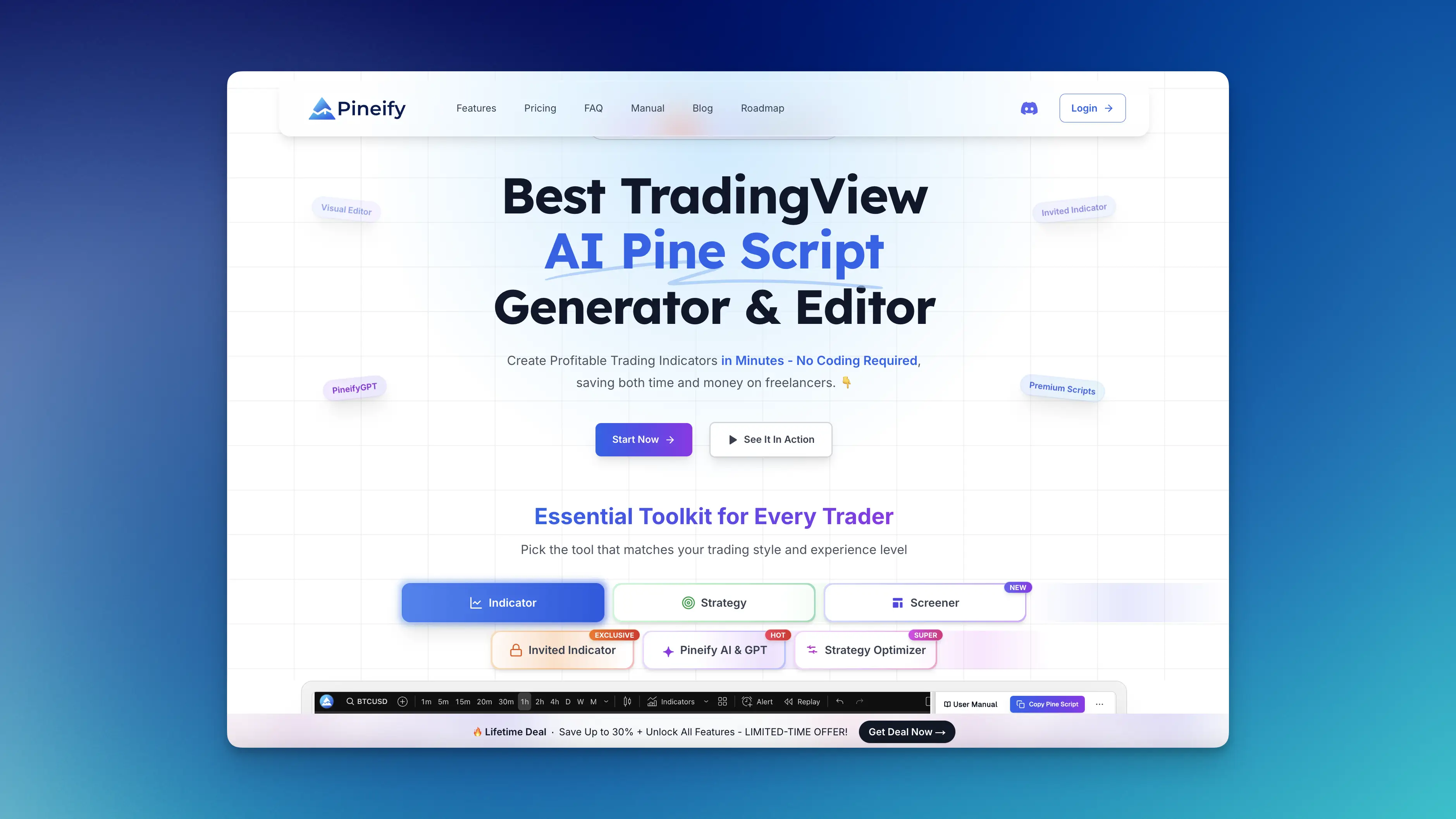
For TradingView users, Pineify speeds up this workflow. Instead of writing Pine Script from zero, you can use its Visual Editor or AI Coding Agent to build strategy conditions and then test with TradingView's built-in backtester. Pineify's Professional Backtest Deep Report also adds Sharpe ratios and Monte Carlo simulations to TradingView's basic equity curve. I've found this useful when I need to show strategy performance to someone who expects more than a profit number.
Here's the most basic strategy in Python -- buy and hold SPY:
from AlgorithmImports import *

class MyStrategy(QCAlgorithm):
    def Initialize(self):
        self.SetStartDate(2020, 1, 1)
        self.SetEndDate(2024, 1, 1)
        self.SetCash(100000)
        self.AddEquity("SPY", Resolution.Daily)

    def OnData(self, data):
        if not self.Portfolio.Invested:
            self.SetHoldings("SPY", 1.0)
It starts with $100,000, runs from 2020 to 2024, and buys SPY when no position is open. Simple -- but every one of my QuantConnect projects started from this skeleton with different entry conditions swapped in.
What Makes a Test Feel Real
A backtest that looks too good usually is. QuantConnect includes features that keep results grounded:
| Feature | What It Does |
|---|---|
| Fee modeling | Deducts broker commissions so paper profits match real ones. |
| Slippage modeling | Simulates the price delay between order and fill. |
| Spread adjustment | Accounts for bid-ask spread on less-liquid assets. |
| Margin modeling | Calculates realistic margin for leveraged positions. |
| Point-in-time data | Only uses data available on the simulated date. |
| Out-of-sample holdout | Reserves data at the end for an unbiased final check. |
You can customize these too. For penny stocks with wide spreads, I plug in a custom slippage model. The defaults work for liquid names like SPY or QQQ but are too optimistic for small caps.
Look-Ahead Bias: The Silent Backtest Killer
A backtest that looks amazing but fails in live trading often has look-ahead bias baked in. The strategy accidentally uses data from the future -- like reading tomorrow's newspaper to place today's bets.
Common ways it sneaks in:
| Source | The Problem |
|---|---|
| Financial statement dates | Using the period-end date (Dec 31) instead of the actual public release date. |
| Static index universe | Picking stocks from today's S&P 500 list, which excludes failed companies. |
| Optimized indicator parameters | Tuning a moving average length using full history, then testing on the same data. |
QuantConnect's Time Frontier system blocks your algorithm from seeing data after the current simulation timestamp. But this doesn't apply automatically to custom data you import -- you must set a Period manually. I forgot this on my first custom dataset and got a fake 40% return.
Why Backtests and Live Trading Diverge
A momentum strategy on QQQ showed 7.45% profit in backtesting for me. Live, it lost 2.45%. Three reasons:
| Factor | Backtest | Live |
|---|---|---|
| Order fills | Instant at limit price | Order book queue and liquidity |
| Tick data | 1ms slices | ~70ms slices |
| Short selling | No borrow costs | Fees apply |
| Data source | Single historical feed | Broker's proprietary feed |
The takeaway isn't that backtesting is useless. It's that you need to know what it models and what it doesn't.
Optimizing Without Overfitting
QuantConnect's optimization tab sweeps parameter ranges in parallel across cloud servers. I use it constantly for tuning moving average lengths or RSI thresholds.
Metrics I track:
| Metric | What It Tells You |
|---|---|
| Sharpe Ratio | Risk-adjusted return. Higher is better. |
| Maximum Drawdown | Biggest peak-to-trough portfolio drop. |
| Win Rate | Percentage of profitable trades. |
| Profit Factor | Gross profit divided by gross loss. Above 1 = profitable. |
| Compounding Annual Return (CAR) | Annualized growth rate. |
The trap: overfitting. Optimize on all your data and you're memorizing past noise. I set aside 20-30% as an untouched holdout before any tuning. The final run on that reserved data tells me if the strategy is genuinely reliable.
Practical Speed Tips
I've let backtests run overnight only to realize I wasted hours on inefficient code. What I've learned:
- Request history once. Fetching huge data chunks on every bar is the biggest slowdown. Store what you need.
- Use built-in indicators. SMA, RSI, and others update incrementally. Don't recalculate from scratch.
- Start with 5-10 symbols. Test on a tiny universe first. Expand after the logic is solid.
- Run optimizations in parallel. The Optimization tab spreads work across cloud servers.
- Log key decisions. I log "Sold ticker because RSI crossed 70" to compare against live logs.
Q&A: Common QuantConnect Backtesting Questions
What is QuantConnect backtesting and how does it work?
It's an event-driven simulation that runs your algorithm against historical market data using the open-source LEAN engine. The system steps through price data bar by bar, in order, and models real broker conditions like fees and slippage. You get back a detailed report with your equity curve, Sharpe ratio, maximum drawdown, and a full trade log.
How do I run a backtest on QuantConnect step by step?
Create a project in the cloud IDE, pick Python or C#, set your start date, end date, initial capital, and asset universe in the Initialize method, then click Backtest. When the simulation finishes, you get an equity curve, a list of every trade, and key statistics automatically.
What is look-ahead bias in backtesting and how does QuantConnect prevent it?
It's when your strategy uses data it couldn't have known at trade time -- future prices, or financial reports that hadn't been released yet. QuantConnect's Time Frontier blocks access to any data after the current simulation timestamp. For custom data you import, you need to set a Period on each data point yourself to get the same protection.
Why do QuantConnect backtest results differ from live trading performance?
A few things cause the gap. Backtests fill limit orders instantly, but live orders depend on your place in the queue and available liquidity. Tick data is bundled into 1ms slices in backtests versus up to 70ms in live feeds. Short-selling costs are usually ignored in simulations. And the historical data source can differ from your broker's live feed.
How can I avoid overfitting when optimizing a QuantConnect strategy?
Set aside 20-30% of your historical data as a holdout set before you start any optimization. Tune your parameters on the remaining in-sample data only, then test the final strategy on the untouched portion. If it performs well on both, you're looking at a genuinely reliable strategy rather than one that memorized past noise.
Can I run the QuantConnect LEAN engine offline without an account?
Yes. LEAN is fully open source and runs on your own machine through the command line with local CSV files. No internet or account needed -- it's a good option for anyone who wants a secure, on-premise setup.
What performance metrics does QuantConnect report after a backtest?
You get Sharpe ratio, maximum drawdown, win rate, profit factor, compounding annual return (CAR), plus a full equity curve, rolling statistics, and a complete trade log. All calculated automatically after the simulation finishes.
From Backtest to Live Trading
A great backtest result is exciting. Keeping it that way in live markets is the hard part.
- Start simple. Test one clear idea. Too many conditions make it hard to tell what's actually working.
- Test across market regimes. Run at least 10 years of data. Your strategy should survive both bear markets (like 2022) and rallies (like 2023).
- Use out-of-sample data. Always save data your strategy has never seen. This is non-negotiable.
- Paper trade first. QuantConnect's paper trading mode uses live data without real risk. I run every strategy in paper for at least two weeks before committing capital.
- Compare weekly. Once live, compare performance to the backtest every week. If the curves diverge, stop and investigate.
- Ask the community. QuantConnect forums have thousands of developers who've hit the same problems. I've saved weeks reading someone else's post about a fill model issue.
I haven't tested QuantConnect's live brokerage integration yet -- I prefer exporting my strategies to TradingView for execution. But for research and validation, it's hard to beat. If you're translating Pine Script strategies to this environment, the Lux Algo Premium Pine Script documentation covers a popular approach to structuring signals that carry across platforms.
The difference between a promising backtest and a live strategy that holds up comes down to honest testing. QuantConnect gives you the tools. The discipline is up to you.