TradingView Price Plans: Complete Guide to Choosing the Right Subscription for Your Trading Needs

· 13 min read

Comprehensive breakdown of TradingView subscription tiers from Basic to Ultimate. Compare plans, pricing, features, and choose the right trading plan for your experience level and strategy needs with our detailed guide.

TradingView Price Plans: Complete Guide to Choosing the Right Subscription for Your Trading Needs

If you've ever looked at a stock or crypto chart online, you've probably used or seen TradingView. It's the go-to charting platform for millions of traders and investors around the world. But with several subscription plans to choose from, it can be tricky to figure out which one is right for you.

You don't want to pay for features you'll never use, but you also don't want to be stuck with a plan that holds you back. This guide will walk you through the different TradingView subscriptions in plain language, helping you match a plan to your specific trading style and budget. Let's find the one that fits you best.

Overview of TradingView Subscription Tiers

TradingView has five different subscription plans to fit pretty much any kind of trader, whether you're just starting out or trading for a living. You can choose from a Basic (Free) plan, three paid tiers for most individuals (Essential, Plus, and Premium), and an Ultimate plan for serious pros and institutions. If you pay for a year upfront, you save about 16% compared to paying month-to-month—it's like getting two months free. The best part? Every paid plan comes with a 30-day free trial, so you can really test-drive the features before your card gets charged.

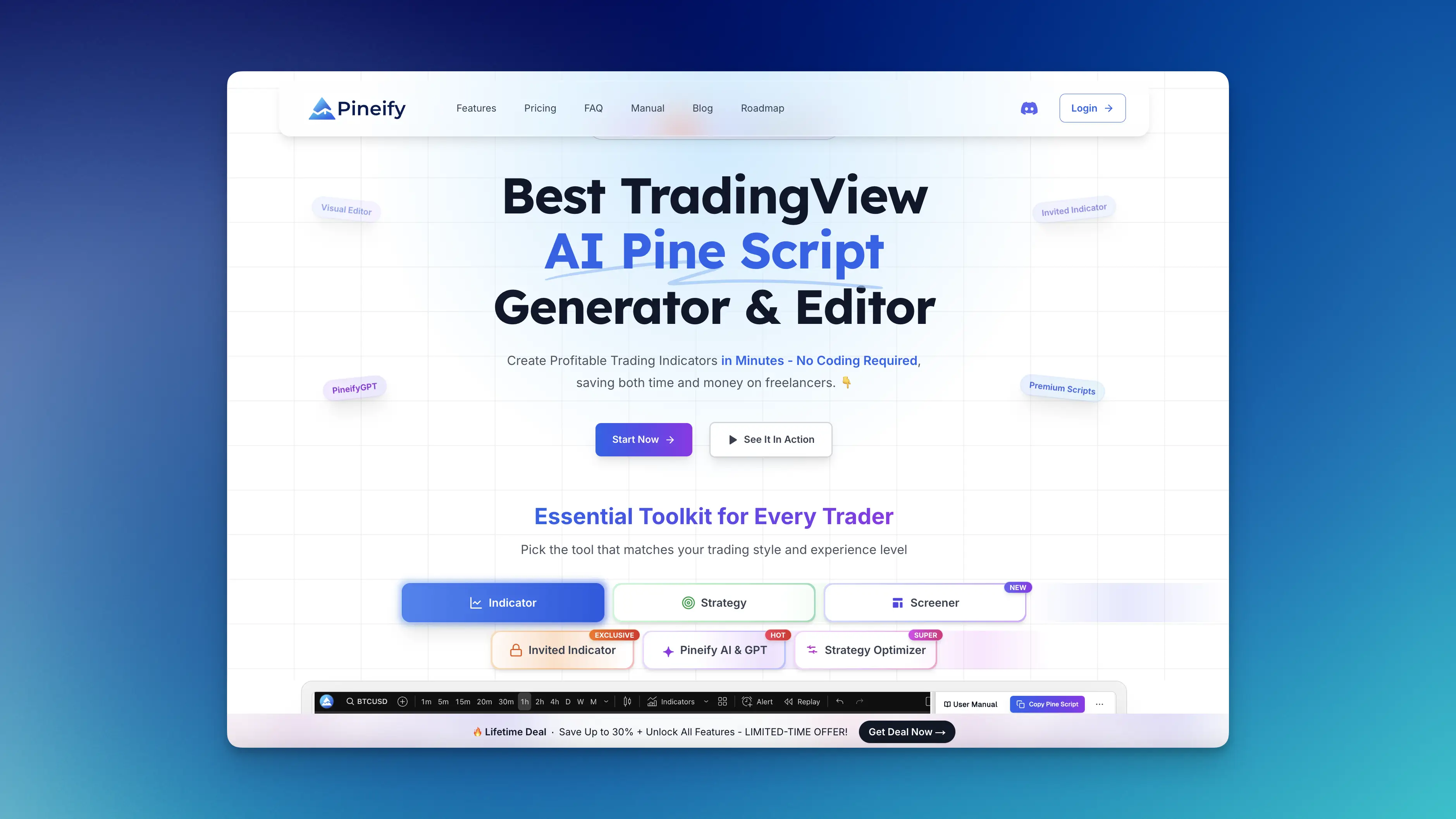
Pineify Website

What many traders discover, especially on the free and lower-tier plans, is that while TradingView provides the platform, creating custom indicators that match their unique trading style can be challenging due to indicator limits. This is where tools like Pineify become invaluable, allowing you to build custom indicators and strategies without coding knowledge, effectively bypassing the platform's indicator limitations and saving both time and money on freelancers.

Basic Plan (Free)

Think of the Basic plan as your free pass to check out the platform. It's perfect if you're new to trading or just like to keep a casual eye on the markets. You get one chart per tab, can add two indicators to a chart, and set three price alerts. It's a solid starting point for learning the ropes, but you will see ads, and the limited tools can feel restrictive if you get more serious. Once you start wanting to watch more than a couple of things at once, you'll likely feel the need to upgrade.

Essential Plan: Entry-Level Premium Features

Pricing:

Billing CyclePrice per Month
Annual Billing$12.95
Monthly Billing$14.95

The Essential plan is where things get a lot smoother. The ads disappear, and you get a nice boost in tools for taking your trading a bit more actively. You can now open two charts per tab, use five indicators on each chart, and set up to 20 price and technical alerts. This plan also gives you 10,000 historical bars to backtest your ideas and unlimited watchlists to organize everything. A really cool feature you unlock here is Bar Replay, which lets you simulate past market action to practice your strategy without any risk. For a trader who focuses on a few markets and uses common indicators, this plan often has everything you need.

Plus Plan: Multi-Monitor Trading

Pricing:

Billing CyclePrice per Month
Annual Billing$24.95
Monthly Billing$33.95

The Plus plan is built for active traders who like to have a lot of information on screen at once. It bumps you up to four charts per tab, 10 indicators per chart, and a generous 100 price alerts. The standout feature here is the multi-monitor support—you can spread your charts across several screens for a true command-center setup. While the historical data for backtesting stays at 10,000 bars, the huge jump in alert capacity is a game-changer if you're tracking lots of stocks or crypto pairs across different timeframes. You also get some advanced chart types and extra drawing tools to refine your analysis.

Premium Plan: Professional-Grade Analysis

Pricing:

Billing CyclePrice per Month
Annual Billing$49.95
Monthly Billing$67.95

The Premium plan is TradingView's most popular package for serious traders. It's packed with pro-level tools, giving you eight charts per tab, 25 indicators per chart, and a massive 400 alerts. Two features really set it apart: second-based charting and built-in backtesting. The second-based intervals let you see price movements tick-by-tick, which is crucial for scalpers. The backtesting feature lets you run your trading strategy against years of market data to see how it would have performed, which is invaluable for avoiding costly mistakes with real money. Alerts on this plan never expire, and you get 20,000 historical bars, automated chart pattern recognition, and priority support.

Ultimate Plan: Institutional-Level Capabilities

Pricing:

Billing CyclePrice per Month
Monthly Billing$239.95

The Ultimate plan is the whole toolbox, designed for institutional traders, quants, and anyone who needs absolute maximum power. You get 16 charts per tab, can load up 50 indicators on a single chart, and have a staggering 1,000 alerts at your disposal. With 40,000 historical bars, you can backtest complex, long-term strategies across entire market cycles. The sheer scale of this plan handles multi-asset, algorithm-driven trading that would overwhelm any other tier. The price is significant, but if trading is your full-time business and you need every possible data point and tool, it's built for you.

Understanding Additional Data Costs

Here's one thing that's easy to miss when you're looking at TradingView's pricing: your subscription fee and the cost for real-time data from exchanges are two separate things.

Think of it like this: your plan (Pro, Pro+, or Premium) gets you access to all of TradingView's amazing charts, tools, and indicators. But for live, ticking-by-the-second data from specific exchanges, you often need to pay extra. TradingView doesn't set these prices; the exchanges themselves do, and they have strict rules about how their data is licensed and sold.

To make it clearer, here's a quick breakdown:

Asset ClassTypical Data Cost on TradingView
Forex & CryptocurrencyUsually Free (via partnered data providers)
U.S. Stocks (NYSE, NASDAQ)Paid Subscription
Options Data (OPRA)Paid Subscription
Futures (CME, CBOT, etc.)Paid Subscription
European & Asian StocksPaid Subscription

So, if you're a day trader focusing on U.S. markets, it's really important to factor in the cost of these extra data packages on top of your monthly subscription. It's an essential part of your trading budget.

Finding the Trading Plan That Fits How You Trade

Think of this as matching your trading habits to the right set of tools. Here's a straightforward look at which plan might suit you best.

If You're a Swing Trader You're in trades for days or weeks, not minutes. You don't need to stare at the screen all day. For this style, the Plus or Premium plan is usually the sweet spot. You get multi-chart layouts to keep an eye on several setups at once, and more than enough alerts to track your potential entry and exit points across a solid watchlist.

If You're a Day Trader Your game is fast, and you need to see every tick. Active day trading requires real-time data and the ability to track a lot of things at once. The Premium plan is built for this, giving you the second-by-second data crucial for intraday moves and a hefty 400 alerts to monitor numerous conditions simultaneously. Paired with the necessary exchange data packages, this gives you the speed and depth of information needed to compete.

If You Use Trading Bots (Algorithmic Trading) When your strategies are automated, your needs are a bit different. If you're running bots, the Essential plan often does the trick, as its 20 active alerts with webhooks cover the basics for most automated systems. That said, upgrading to Premium is a smart long-term move because your alerts won't expire, meaning you won't have to babysit and recreate them, making your automation truly reliable.

If You're a Multi-Asset Quant Trader Your strategies are complex, spanning different markets like stocks, forex, and crypto. This advanced approach justifies the Ultimate plan. You get access to deeper historical data, unlimited flexibility for your chart layouts, and a high alert capacity. This plan supports sophisticated, quantitative strategies that would quickly run into limitations on any other tier.

How to Actually Save Money on Your TradingView Plan

Let's talk about how to keep more cash in your pocket when you sign up for TradingView. It's simpler than you might think, and a little timing goes a long way.

The absolute best time to buy is during Black Friday and Cyber Monday. That's when they roll out their deepest discounts, sometimes slashing as much as 70% off their yearly plans. If you can wait for that sale, it's a game-changer.

Even without a sale, you can save a good chunk of change just by choosing annual billing over paying every month. Paying for the whole year at once usually saves you about 16%—it's basically like getting two months for free.

Here's a little secret not everyone knows: if you sign up using a special referral link from a friend (or you can find them online), you'll often get a bonus credit, like $15, to put towards your first subscription. Every bit helps!

One super important thing to remember: don't buy your subscription through the Apple App Store or Google Play. The promotional discounts and sale prices almost never work there. Always purchase your plan directly on the TradingView website to make sure you get the best deal.

Billing CycleEffective Monthly CostAnnual CostYou Save
Monthly BillingFull Price(Full Price x 12)-
Annual BillingReduced RateOne Lower Price~16%

Your TradingView Questions, Answered

Q: Can I switch between TradingView plans after subscribing?

A: Absolutely. You're not locked in. Think of it like changing your phone plan—you can upgrade anytime, and they'll just charge you the price difference for the rest of your billing period. If you decide to downgrade to a cheaper plan, that change will usually happen at the end of your current billing cycle, so you get the full value of what you already paid for.

Q: Do the paid plans include all real-time market data?

A: This is a really common point of confusion. The short answer is no. Your subscription fee pays for all the cool TradingView tools and features, but not for the live data from most major stock and futures exchanges. Those exchanges charge their own fees, which you pay as add-ons through TradingView. The good news is that data for forex and major cryptocurrencies is almost always included for free.

Q: Is the free Basic plan good enough for someone just starting out?

A: The free plan is a fantastic starting point to get your feet wet. You can learn the basics of drawing on charts and get a feel for the platform. The main limitations you'll bump into are a cap of only two indicators per chart and seeing quite a few ads. If you're serious about learning, it's worth trying the 30-day free trial of a paid plan (like Essential or Plus). It lets you experience the platform without those training wheels, so you can decide if it's worth the investment later.

Q: What's the smartest way to save money on a TradingView subscription?

A: If you want the best deal, patience and a yearly commitment are key. Here's the strategy that tends to work best:

  1. Wait for a Sale: TradingView often runs its biggest discounts during Black Friday/Cyber Monday, with savings of 60-70% off.
  2. Go Annual: Always choose annual billing over monthly. The per-month cost is significantly lower.
  3. Use a Bonus: If a friend has a referral link, using it to sign up can sometimes give you a credit.

Combining these steps is your ticket to the maximum savings.

Q: Can I use the Premium features on my phone, tablet, and computer?

A: Yes, and it works seamlessly. Any paid plan lets you log in on all your devices—your desktop browser, the mobile app, your tablet—and everything stays in sync. The charts you set up, the indicators you apply, and your custom settings will be waiting for you no matter which device you pick up.

Next Steps

If you're thinking about taking your trading analysis to the next level, here's a simple, practical way to approach it.

First, get clear on your own trading style and the tools you actually need. For example, if you're a day trader, you'll probably live on the shorter timeframes and need a platform that can handle a ton of alerts. If you're more of a swing trader, you'll care more about having multiple charts open at once and solid pattern recognition tools.

The best part is you can test everything with TradingView's 30-day free trial. It's a no-pressure way to get your hands on the Premium or Plus features. Use that trial period like a real-world test drive:

Compare it directly to whatever charting tool you're using now. Is it really that much better? Is the upgrade worth it for you?

If you're watching your budget, here's a pro tip: keep an eye on TradingView's pricing page and set a reminder for their Black Friday sale. That's when the annual subscriptions are usually at their absolute cheapest.

Also, don't sleep on the community. Jump into the TradingView forums and see how other traders are using the features in the plan you're considering. You can learn a ton about how to get the most value from your subscription.

Taking a little time now to find the right plan is a smart move. It helps you avoid hitting frustrating limits later or paying for features you don't really need. It's all about finding that sweet spot where your trading performance and your budget are both happy.