CFD Gold Trading: Profitable Strategies for 2026

Gold hit $4,000 an ounce in early 2026. You don't need to buy a single bar to profit from that move. CFD Gold Trading is a method of speculating on gold prices through a Contract for Difference with a broker, where you exchange the price difference from trade open to close without owning physical metal. It's flexible, requires less capital than buying gold outright, and lets you trade both directions.
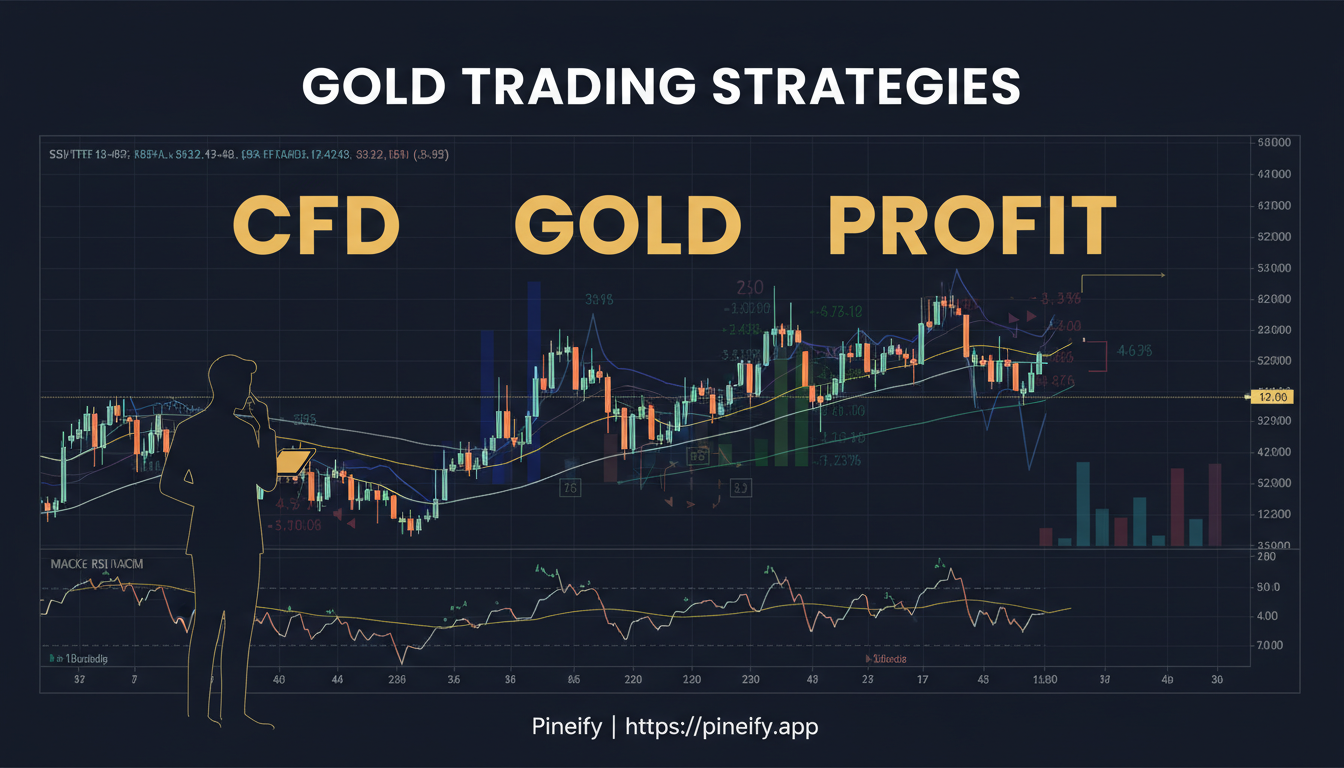
What is CFD Gold Trading?
A Gold CFD is an agreement based on gold's price, not the metal itself. You settle the difference between your entry and exit prices with your broker. That's it.
Expect the price to rise? Open a long position. Expect a fall? Go short. Your profit or loss depends on being right. No vaults, no insurance, no storage fees. Just a position on your screen, settled in cash.
How CFD Gold Trading Actually Works
The mechanics are straightforward once you understand the core pieces.
Leverage and Margin
Leverage lets you control a big position with a small deposit. Say gold trades at $2,000 per ounce. Buying 100 ounces outright costs $200,000. With CFD leverage at 200:1, you control that same position with roughly $1,000 in margin.
I started trading gold CFDs with a $2,000 account back in 2023, and my first real lesson was how fast leverage can work against you. A 0.5% move against your position at 200:1 leverage wipes your margin out. Regulators in Europe cap retail leverage at around 20:1 for gold. Now I know why.
Contract Sizes
You're not stuck trading 100-ounce blocks. Most brokers let you trade as little as 0.1 of an ounce. That makes gold accessible with smaller account sizes.
The Trading Process
- Analyze the market. Look at charts for patterns or consider macro factors like inflation and central bank policy. I prefer the London-New York overlap for gold trades -- that's when I see the clearest directional moves. Keeping a trading journal helped me figure out which setups actually work versus which ones just felt good at the time.
- Pick your direction. Long if you expect gold to rise, short if you expect a fall. The ability to short is what separates CFDs from physical gold.
- Size your position. Based on your account and risk tolerance. I've never risked more than 1% of my account on a single gold trade.
- Watch the spread. The gap between bid and ask is your cost. Tight spreads matter more for short-term trades.
- Enter the trade. Market order gets you in now. Limit order waits for your price.
- Monitor. Stay aware of news that could move gold while you're in a position.
- Exit with a plan. Set take-profit and stop-loss orders before you enter, not after. I haven't tested gold CFDs with brokers outside of regulated EU and Australian jurisdictions, so I can't speak to the experience elsewhere.
Why Trade Gold CFDs?
Gold CFDs come with real advantages physical metal can't match.
You can profit in either direction. Physical gold only pays off when prices climb. CFDs let you short too. That's useful when rates are rising or the dollar strengthens.
Leverage frees up your capital. You're not tying up $200,000 to control 100 ounces. Use that money elsewhere.
No physical headaches. No vault, no insurance, no logistics. Your gold is a digital position, settled in cash.
High liquidity. Gold CFDs trade in massive volumes globally. You can enter and exit at predictable prices most of the time.
Nearly 24/5 market access. Trade through Asian, European, and US sessions Monday through Friday.
Lower barrier to entry. Get gold exposure without buying a futures contract or a physical bar.
| Advantage | What It Means for You |
|---|---|
| Trade in Both Directions | Profit if gold prices go up OR down. |
| Use Leverage | Control a larger position with less capital upfront. |
| No Physical Hassles | No storage, insurance, or security costs. |
| High Liquidity | Enter and exit trades easily with minimal price gaps. |
| Trade (Almost) 24/7 | React to global market moves from Monday to Friday. |
| Start Smaller | Get exposure to gold prices without buying a whole bar. |
The Risks
Leverage cuts both ways. A small price move against you can trigger a big loss. That first 2023 trade I mentioned? I got caught in a gold selloff during a surprise Fed hawkish remark and lost 40% of my account in one afternoon. That's why I don't touch high leverage anymore.
Overnight financing fees eat into longer positions. CFDs aren't built for buy-and-hold. Hold for weeks and those swap charges add up.
Volatility is a double-edged sword. Gold jumps on economic data, geopolitical news, and central bank announcements. Fast moves create opportunity but also magnify risk.
CFD Gold Trading Strategies
| Strategy Type | Success Rate | Average Return | Best For |
|---|---|---|---|
| Trend Following | 64% | 31% | Beginners and intermediate traders |
| Range Trading | 58% | 27% | Experienced traders in sideways markets |
| Breakout Trading | 51% | 35% | Advanced traders seeking high returns |
Trend Following
Ride the prevailing direction. If gold keeps printing higher highs and higher lows, buy into that momentum. Simple moving averages help confirm the trend. When the 50-day sits above the 200-day, the trend is your friend. I've found this strategy the most forgiving for new traders.
Support and Resistance
Gold tends to respect certain price levels. A level where buyers consistently step in becomes support. A level where sellers appear becomes resistance. Buy near support, sell near resistance. Not revolutionary, but it works more often than chasing breakouts.
Day Trading Gold
Open and close within the same session. Capture intraday swings and avoid overnight gap risk. I focus on 5-minute and hourly charts during the London-New York overlap. It needs attention but keeps risk contained to one session. Automating repetitive tasks with AI trading bots can free up time while maintaining consistency.
What Drives Gold Prices in 2026
Central bank buying. Countries have loaded up on gold for years. This steady demand creates a price floor that isn't going away.
Monetary policy. When the Fed raises rates, bonds become more attractive and gold loses some appeal. When rate cuts are on the table, gold shines. Simple math.
The US dollar. Gold is priced in dollars. A weaker dollar means gold costs less in other currencies, pushing the price up. They move opposite each other.
Geopolitical tension. Wars, trade disputes, global instability -- all of it sends investors toward gold. It's been the safe haven for centuries.
Inflation. When people worry their currency is losing value, they buy gold as a store of wealth. That pattern repeats through every economic cycle.
Morgan Stanley projects gold at $4,400 per ounce for 2026, with aggressive scenarios reaching $6,000. Their reasoning: tight supply, record central bank purchases, and persistent economic uncertainty.
Risk Management for Gold CFD Trading
Think of risk management as the hull of your boat. You can't control the market's waves, but you can make sure your boat doesn't sink.
Position sizing. Risk no more than 1-2% of your account on any single trade. On a $10,000 account, that's $100 to $200 max per trade. A losing streak hurts but doesn't wipe you out.
Stop-loss orders. Set your exit level before you enter. This removes emotion from the decision. I've found that a trailing stop-loss works well for gold during trending sessions -- it locks in gains while giving the trade room to breathe. A Pine Script cheat sheet helps when I'm building custom stop logic for backtesting.
Risk-reward ratio. Aim for potential profit at least double your potential loss. A 1:2 ratio means you can be wrong half the time and still come out ahead.
Respect leverage. It's a tool, not a strategy. Use it sparingly until you've built real experience.
Stick to your plan. The market will tempt you to deviate. Fear and greed are expensive emotions. Consistency beats heroism every time.
Regulatory Environment for Gold CFDs
The rules vary by region. Know them before you trade.
| Region | Regulatory Body | Key Points for CFD Traders |
|---|---|---|
| United States | CFTC | CFD trading is not available to most retail traders. US regulators classify them as high-risk. |
| Europe & UK | ESMA | Leverage caps apply, with negative balance protection required. You can't lose more than your account balance. |
| Australia | ASIC | Strict margin requirements with margin close-out rules that auto-close positions below thresholds. |
Always trade with a properly licensed broker. Check your regulator's website before depositing money. It's boring homework, but it keeps your capital safe.
Frequently Asked Questions
What is CFD gold trading and how does it work?
You're betting on gold's price direction without buying the metal. Open a Contract for Difference with a broker, and you exchange the difference between entry and exit prices. Go long if you expect prices up, short if you expect them down. No physical gold changes hands.
How much money do I need to start trading gold CFDs?
Many brokers accept deposits from $100 to $500. I'd recommend starting with $1,000 to $2,000 so you can size positions properly. More importantly, start with a demo account. I spent three months on demo before risking real money.
What are the main risks of gold CFD trading?
Leverage amplifies losses just as fast as gains. Overnight financing fees eat into longer holds. Gold can swing hard on news events. And there's counterparty risk with your broker -- they need to be solvent and regulated. Stop-losses and position sizing are non-negotiable.
What is the difference between gold CFDs and gold futures?
CFDs are simpler. No fixed expiry dates, no standardized contract sizes, no exchange settlement. Futures trade on exchanges with set sizes and expiration dates. For smaller retail accounts, CFDs offer easier access. For institutional-scale trading, futures are the standard.
When are the best times to trade gold CFDs?
The London-New York overlap, roughly 8:00 AM to 12:00 PM EST. That's when volume peaks and spreads tighten. Economic reports, Fed announcements, and geopolitical events also create actionable moves. I avoid Monday opens and Friday afternoons when liquidity drops.
Can I use leverage when trading gold CFDs?
Yes, and it's the main appeal. 200:1 leverage lets you control a 100-ounce gold position with about $1,000. But I've been burned by leverage myself. Start low, 5:1 or 10:1, until you understand how your strategy performs under leverage.
How to Start Trading Gold CFDs Today
Here's the practical path.
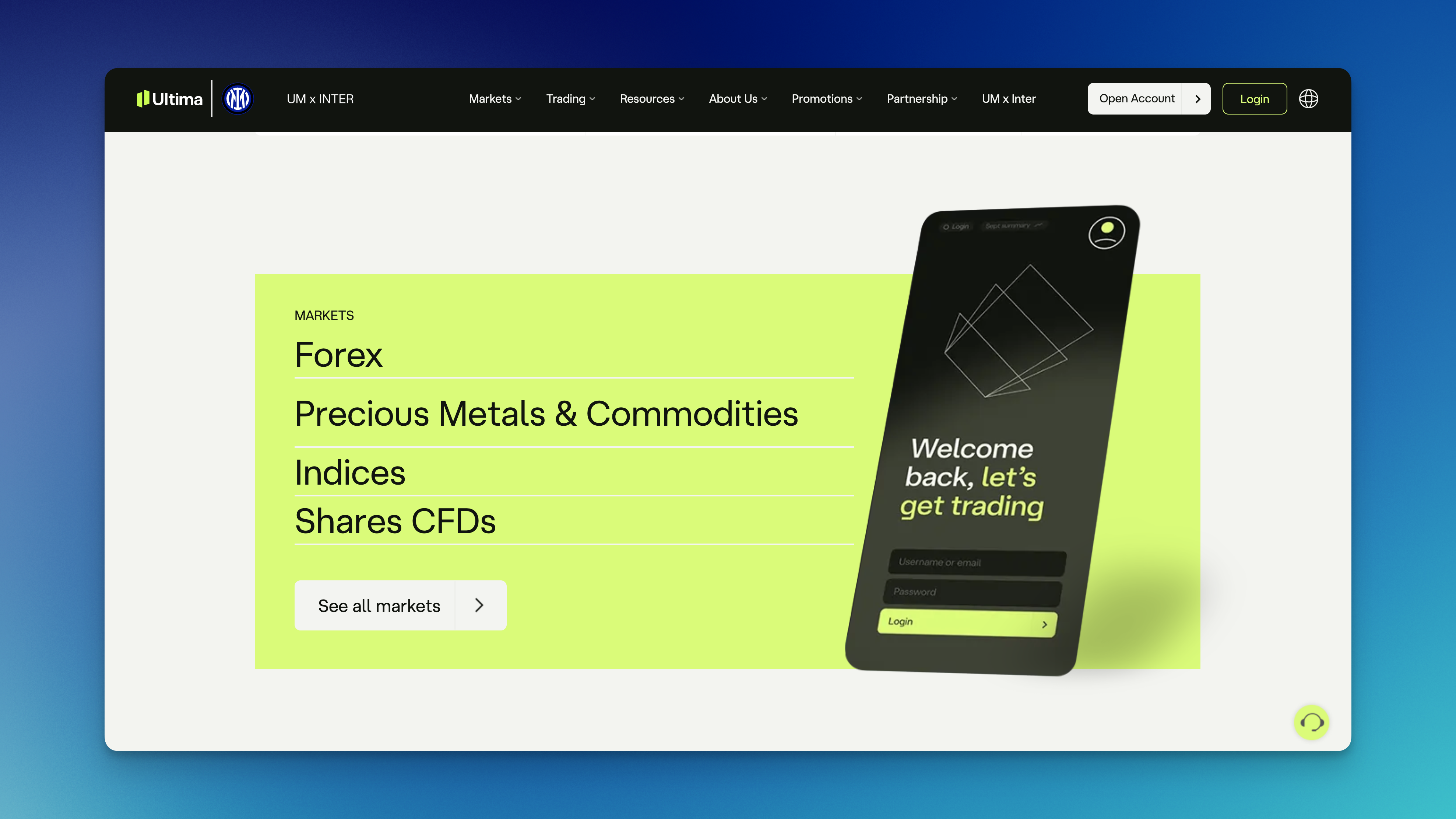
Open a demo account first. Don't skip this step. Find a regulated broker like Ultima Markets with a demo platform on MetaTrader 4 or 5. Trade for two to three months before considering real money. Treat the demo like it's real -- same position sizing, same stop-loss discipline.
Focus your learning on gold specifically. Understand what moves gold -- central bank policy, inflation data, the dollar. Ignore everything else. Check an economic calendar weekly and note events that could affect gold.
Write your trading rules. Answer these: How much will you risk per trade? What position size matches your account? When do you enter and exit? Keep a trade log. Reviewing your own decisions is the fastest way to improve.
Stay informed without information overload. Gold reacts to major macro events and central bank signals. You don't need to watch news all day. A weekly scan of key events is enough.
Start live with the smallest possible trade. The goal isn't profit -- it's getting comfortable with real money emotions. Grow position sizes slowly, only after proving you can stick to your plan. A broker like Ultima Markets offers raw spreads from 0.0 pips and execution under 20ms, which helps when your strategy depends on precise entries. One limitation I'll flag: spreads can widen significantly during major news events like Fed announcements, so factor that into your entry planning.
This is a long-term skill. Protect your capital first. Growth comes second.
The gold market in 2026 offers real opportunity for prepared traders. Start with that demo account. Get a feel for the market. Everything else follows from there.