Option Omega Backtesting: Precision Tools for Options Strategy Testing

If you're looking to improve your options trading, guessing based on intuition is a sure way to lose money. What if you could test your trading ideas against a decade of real market history before placing a live trade? That's the value of Option Omega backtesting. It simulates your options strategies against detailed historical data, so you can see what would have actually happened without risking your capital. Whether you're tweaking a 0-DTE trade or evaluating a multi-leg strategy, Option Omega gives traders data-driven clarity.
I've run hundreds of backtests on SPX iron condors using this platform. The results changed how I think about exit rules entirely.
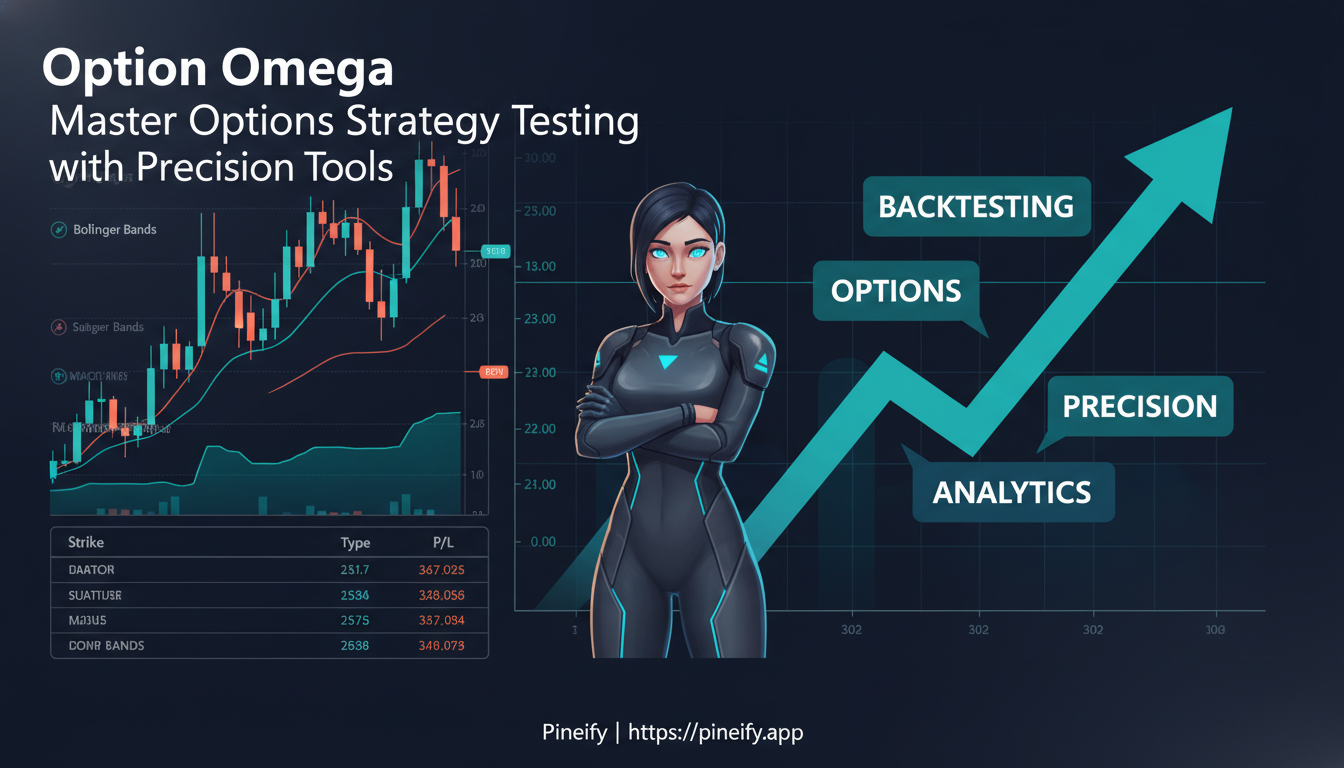
Option Omega backtesting is a web-based platform built for one main purpose: automating options backtesting. Instead of piecing together old trade data by hand, the platform does the heavy lifting. It runs your strategy against 1-minute historical options data all the way back to January 2013.
This level of detail matters, especially for short-term strategies. If you're trading setups that expire in a day or two (like 0-DTE or 1-DTE), price moves within a single trading session determine your success or failure. Having minute-by-minute historical data means your backtest reflects real trading conditions, not rough estimates. For strategies that rely on timing, the Ehlers EMA Smoother Indicator: The Ultimate Pine Script Guide for Clean Trading Signals can help filter noise from your entry signals.
The platform currently supports backtesting on these core tickers:
| Ticker | Description |
|---|---|
| SPX | S&P 500 Index |
| SPY | S&P 500 ETF |
| QQQ | Nasdaq 100 ETF |
| IWM | Russell 2000 ETF |
| TSLA | Tesla Inc. |
| AAPL | Apple Inc. |
These cover some of the most liquid and actively traded options markets available. I use it for testing credit spreads on SPY and QQQ specifically. It's a practical way to pressure-test your ideas before committing real money.
What Makes This Platform Different
1. Historical Data Down to the Minute
Many backtesters work with end-of-day or 5-minute snapshots. That can skew your results, especially for quick trades. Option Omega uses 1-minute data, giving you a truer picture of how your orders might have filled. It even handles intraday stop-losses for same-day SPX and SPY trades, which I haven't seen done well in other tools.
2. Build Strategies With Up to 8 Legs
Want to test an iron condor, a calendar spread, or something custom? You can build it here with up to 8 legs in a single test. A standout feature is linked legs. This locks legs together at specific distances — like making sure your long put is always exactly 10 points below your short put — so your strategy structure stays intact through the backtest.
3. Entry Rules You Can Fine-Tune
You're not stuck entering trades at the open. You can set conditions:
- VIX Level: Only trade when the VIX is between 15 and 25, for example.
- Option Delta: Filter by delta of your short or long leg.
- Days to Expiration (DTE): Target specific DTE ranges.
- Time of Day: Wait until 15 minutes after the market opens.
- Chart Indicators: Use RSI or moving averages (e.g., only enter if price is above the 200-day average).
4. Smart Exit Rules & Risk Controls
Knowing when to get out is half the battle. The platform lets you define clear exits:
- Take Profit: Based on a percentage of premium collected or a fixed dollar amount.
- Stop Loss: Set a max loss percentage or a hard dollar limit.
- Time-Based Exit: Close after a set number of days, or a few days before expiration.
- Delta Exit: Get out if the position's delta moves beyond a certain point.
- Avoid Noise: The "Require Two Consecutive Hits" option helps prevent exits from brief price spikes.
I prefer using a 25% take-profit target over fixed dollar exits — it adapts better as premium levels shift. You'll want to test both and see which fits your style.
5. See the Whole Picture with Portfolio Backtesting
You can backtest multiple strategies together as a portfolio. You can also break a single strategy (like a credit spread) into its individual parts to see which leg is helping or hurting. It shows how everything interacts, giving you a complete view of potential risk and return.
6. Export Your Data for Deep Dives
Every backtest result — including the detailed log of every simulated trade — exports to CSV. You can take the data into Excel, Python, or any other tool. I usually dump trades into Python to double-check the numbers and spot odd patterns.
How to Set Up an Option Omega Backtest
Starting a backtest is straightforward, but going step-by-step helps you get useful results. Here's how I approach it:
- Pick your stock or ETF. SPX, SPY, QQQ, IWM, TSLA, or AAPL.
- Lay out your trades. For each leg, decide the strike (using delta, a fixed price, or linked legs), the expiration, and whether you're buying or selling.
- Tweak your entry. Set conditions for when you'd enter: a specific time of day, VIX range, or a moving average filter. You can use one filter or mix several.
- Know when you'll exit. Define your exit rules before you run the test. Will you take profits at a certain dollar amount? Cut losses at a max loss? Exit after a set number of days?
- Decide on trade size. How many contracts max? How many trades open at once? Set those limits.
- Choose your time period. Data goes back to January 2013. Test over different market cycles — bull and bear — not just the easy years.
- Turn on the quality filter. Enable "Ignore Trades with Wide Bid-Ask Spread." This filters out unrealistic fills and keeps results honest.
- Run it and dig into the results. Look at the equity curve, win rate, max drawdown, and the detailed trade log. This is where you learn what works.
In 2024, I ran a 5-year backtest on SPY credit spreads and found my win rate dropped 12% when I removed the VIX filter. That kind of insight only comes from honest testing.
| Step | Focus | Key Questions to Ask |
|---|---|---|
| 1 & 2 | Strategy Setup | "What am I actually trying to test?" |
| 3 & 4 | Rule Definition | "What are my exact, unemotional rules for getting in and out?" |
| 5 & 7 | Reality Check | "Am I trading sizes and prices that are realistic for me?" |
| 6 & 8 | Analysis | "How did this strategy perform over a long, varied period?" |
Backtesting Real Strategies: Iron Condors & 0-DTE
Let me walk through two examples I've actually tested.
SPX Iron Condor (50 DTE): I set up short strikes at the 15 delta with a 25% take-profit, a 30% stop-loss, and a forced close after 15 days. I added two filters: enter only when VIX is between 15 and 25, and only when SPX sits above its 200-day moving average. When I compared this managed version against a buy-and-hold-to-expiration approach, the managed one won on every metric — smoother equity curve, higher Sharpe, lower max drawdown. It turns a static trade into a managed, adaptive approach.
0-DTE Iron Condors: This is where 1-minute data really earns its keep. I've tested a strategy that enters a condor 15 minutes after the open with a strict intraday stop loss. The backtest shows realistic P&L swings throughout the day under actual market conditions. What I learned: the single most important factor isn't the entry. It's having a disciplined stop-loss plan. That's what separates a steady track record from a blowup waiting to happen. For automated risk management in other contexts, a well-coded TradingView Trailing Stop Script: The Complete Guide to Automated Risk Management can enforce similar discipline.
How Much Does Option Omega Cost?
Option Omega runs on a subscription model. Most users pay around $99.99 per month. The annual plan is roughly $599.99 per year, which saves money over time. There's a free trial to test features with no risk. New users often find referral or affiliate codes that cut up to 50% off the first year. There's a video overview that walks through the platform.
| Plan | Price | Who It's Perfect For |
|---|---|---|
| Monthly | ~$99.99/month | Traders who want to stay flexible month-to-month. |
| Annual | ~$599.99/year | Committed users looking for the best value over the long run. |
| Discounted (via referral) | Up to 50% off first year | New users who find a partner or affiliate offer. |
No Tool Is Perfect
No backtesting tool is perfect, and Option Omega has real gaps. Here's what I've noticed:
- It's Fully Automated: You can't manually step through a trade day by day to simulate adjustments you'd make in real life. If your strategy relies on active management, this is a limitation you need to account for.
- Limited Stock Selection: It only works with six tickers. If you're trading NVDA or AMZN options, you'll need another tool. I've had to use OptionNet Explorer for those instead.
- The Overfitting Trap: You can tweak settings until the backtest looks perfect for past data. Those "perfect" settings often fail on new market data. I've fallen into this trap myself — the great-looking result is often just noise, not a reliable strategy.
- Missing Market Context: The tool focuses on the options chain. It doesn't include dark pool activity, gamma exposure (GEX), or unusual options flow. Learning to read these signals, like with the Williams Accumulation Distribution Indicator: The Secret to Reading Market Psychology Through Price Action, can help fill this gap.
- Historical Data Gaps: Sometimes, looking back, the options market for a stock didn't have a full range of strikes available. The backtester might choose a less-than-ideal strike, which skews results for that period.
Knowing these limits lets you use the tool for what it's good at and fill in the blanks elsewhere.
| Platform | Data Resolution | Automation | Best For |
|---|---|---|---|
| Option Omega | 1-minute | Yes | 0DTE, intraday, SPX strategies |
| OptionNet Explorer | 5-minute | No (manual) | Complex multi-leg, active management |
| tastylive Lookback | Daily | Yes | Free, simple strategy testing |
| Option Alpha | Daily | Yes (bots) | Automated live trading + backtesting |
| ORATS | Daily | Yes | Income strategies, vol-based testing |
The main differentiator is data resolution — how finely you can slice the market data in your test. Option Omega carves out a niche here. If you're focusing on intraday moves, especially with 0DTE options, that 1-minute data lets you see how a strategy would have reacted to the tiny ups and downs that happen all day long. That extra detail leads to more realistic tests. Getting a decade of backtest results in minutes means you can iterate and learn faster.
This principle of needing the right tools for precise, realistic testing applies across all of trading. Just as detailed data is crucial for options backtesting, having the right environment to build and validate your core indicators and strategies is fundamental. For TradingView users, this means moving beyond guesswork and manual coding.
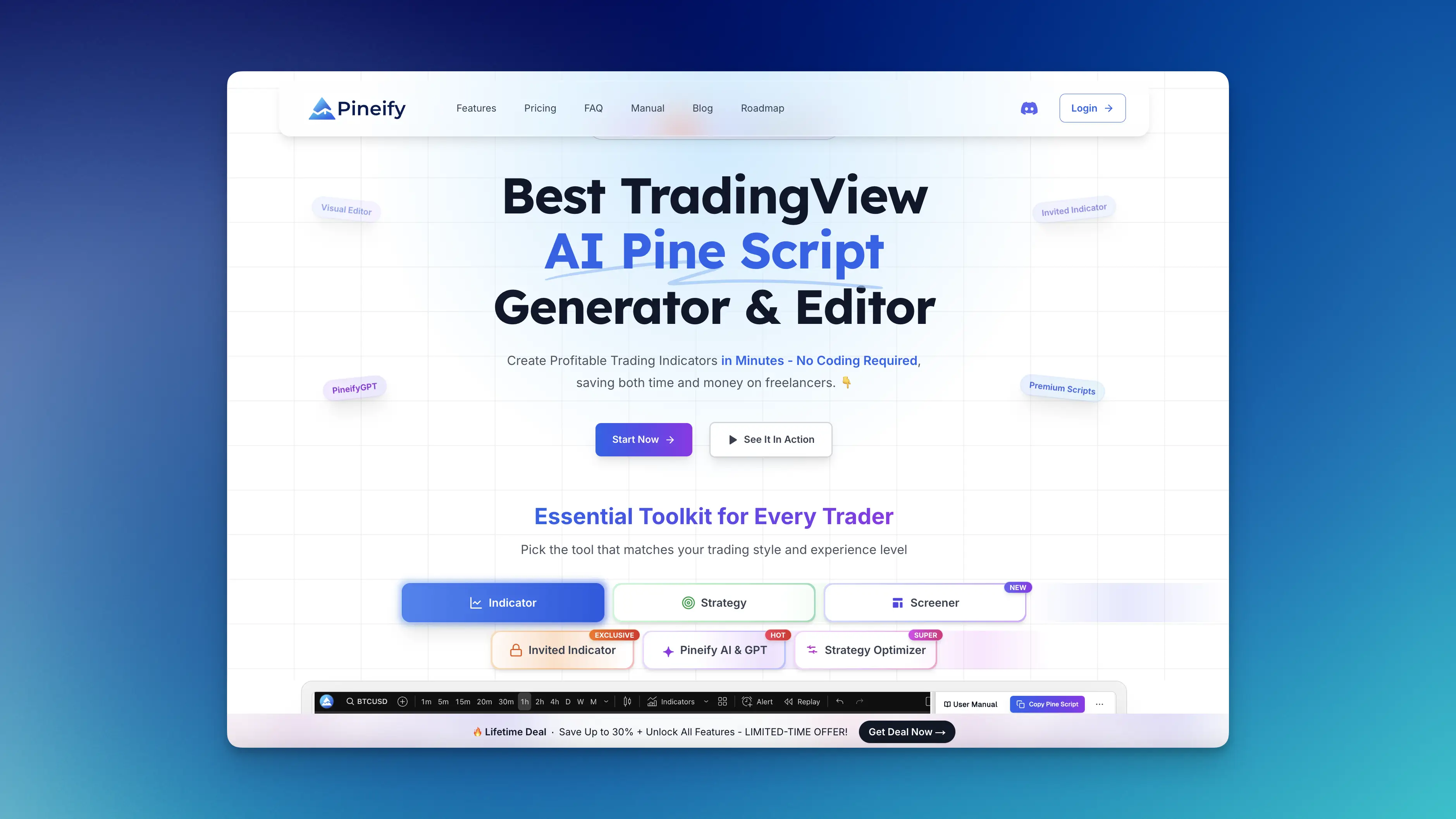
Pineify provides that professional environment. It's the premier AI Pine Script generator and editor that allows you to create, test, and automate your trading ideas without needing to code. Whether you use the Visual Editor with its 235+ technical indicators or the AI Coding Agent that turns your ideas into error-free code in minutes, you can build indicators and strategies far more efficiently. The platform also includes a Professional Backtest Deep Report analyzer to transform your TradingView results into institutional-grade insights, and an AI Stock Picker to find high-potential opportunities. It's designed to save you the significant time and money typically spent on freelancers, giving you the tools to systematically develop and validate your edge. Just like with options, proper testing is key — and our guide on How to Backtest Trading Strategies with Pineify: The Complete 2025 Guide That Actually Works shows you how.
Questions & Answers
Q: Can I use Option Omega to backtest same-day expiration (0-DTE) options trades? Yeah, that's the main use case for this tool. The 1-minute data makes it possible to simulate those fast intraday moves on SPX and SPY. If your strategy has a stop-loss during the trading day, the backtest accounts for that.
Q: How much historical data is available for backtesting? It goes back to January 1, 2013 and updates through the end of the previous trading day. That's over a decade of data across different market regimes.
Q: Can I test more complex strategies like iron condors or credit spreads? Yes. Up to 8 legs per strategy. Iron condors, butterflies, credit spreads, or custom combinations — they're all testable.
Q: Is it possible to run several strategies together to see their combined effect? The portfolio tool lets you run multiple strategies at once and see how each leg contributes to overall performance. It's useful for understanding diversification and risk across your whole book.
Q: What's the best way to prevent overfitting or curve-fitting my strategy? Always validate on out-of-sample data. Develop your strategy on one time period, then test it on a different, unseen period. If it still holds up, you've got something real. If not, you're probably overfit.
Q: Is there a free version of Option Omega to try? There's a free trial. After that, it's a paid subscription — around $99.99/month or $599.99/year.
Next Steps
You've got the ideas. Now see how they play out:
- Try it for free. Head to optionomega.com and sign up for a trial. Click around the interface before any subscription kicks in.
- Keep your first test simple. Run a basic backtest on an SPX iron condor or credit spread to see how the process works.
- Change one thing at a time. Adjust a single parameter between each test run — DTE or the VIX filter. This helps you pinpoint what's actually helping.
- Dig into the trade details. Download the trade logs. Scroll through individual trades to spot anything unusual: data quirks, odd strike selections, or the trades that caused big losses.
- Validate with fresh data. Once you've tuned an approach on one period, test again on a different time period the data hasn't seen before. This is your best check.
- Mix data with real-time context. Pair backtest insights with what's happening now — the current VIX term structure or IV rank — to decide when to actually place a trade.
Have you run your go-to strategy through Option Omega? Drop your findings in the comments. Sharing what you've learned could help someone else spot a blind spot.
Disclaimer: This article is for educational purposes only and does not constitute financial or investment advice. All trading involves risk. Past backtested results do not guarantee future performance.