Pineify vs Gemini: Which AI Writes Better Pine Script?

Ever paste a block of AI-generated code into TradingView, only to get a cascade of error messages? That hour you lose debugging can feel especially frustrating when you're trying to test a market idea. Pineify wins hands-down for production-ready Pine Script code, while Gemini works better as a learning aid for the basics. I've tested both extensively since early 2025, and the gap in code quality is stark.
Both can spit out Pine Script code. But getting code that actually runs is a different story.
Understanding Pine Script (and Where AI Often Fails)
Pine Script is TradingView's own language for creating custom indicators and trading strategies. It has its own quirks, strict rules, and differences between versions (like V5 and V6) that can trip you up. Understanding these nuances, such as proper Pine Script input options for user customization, is key to creating reliable tools.
The catch? Because Pine Script is pretty specialized -- it's not like Python or JavaScript you see everywhere -- general AI models don't eat, sleep, and breathe its nuances. They often generate code that looks correct but hits a wall in TradingView's compiler, sometimes leading to an undeclared identifier error that can be confusing for new coders. I've written more about this specific error in our guide on what causes the undeclared identifier error in Pine Script. The real difference between tools lies in closing that gap between "looks right" and "works right."
Using Gemini for Pine Script: Helpful but Unreliable
Gemini is great at many things -- summarizing articles, writing Python, or breaking down complex questions. But when you ask it to write Pine Script for TradingView, you quickly hit its limits. It's like having a brilliant friend who's read about car engines but has never actually opened a hood.
The main hurdles you'll run into:
- It can't run the code itself. Unlike with Python, Gemini has no way to check if its Pine Script actually works. You become the tester, constantly copying, pasting, and hitting "compile" in TradingView to find the errors.
- It trips over complicated tasks. When tested on merging indicators or building strategies, it almost always introduced bugs that stopped the code from running. You need to fix it yourself.
- It might use old code. Its knowledge isn't always up-to-date. Sometimes it will use functions from Pine Script v4 or v5 that don't work in the current v6, which can be confusing if you're not familiar with the version changes.
- You need to be an expert to guide it. To get usable results, your prompts have to be extremely detailed and technical. If you already know Pine Script that well, you might be faster writing the code yourself.
For playing with ideas or getting a first draft of a script concept, Gemini can spark some useful thoughts. I'll be honest -- I haven't tested Gemini's latest experimental model for Pine Script specifically, but across the standard versions I've used through mid-2025, the pattern was consistent. If you're looking for ready-to-run, error-free code that works on the first try, you'll likely be disappointed. You'll spend more time debugging its output than you saved by asking.
Pineify: Built Specifically for Pine Script on TradingView
Getting AI to write usable TradingView code can be hit or miss. You often end up pasting something that looks right but throws a bunch of compiler errors, leaving you to figure out the fixes. That's the problem Pineify was built to solve.
Think of Pineify not as a general chatbot that knows Pine Script, but as a dedicated tool that speaks Pine Script as its first language. It's designed for one thing: giving you clean, ready-to-use code for your TradingView charts.
Here's what makes it work so well for traders:
- Code that usually works on the first try -- Most users find that code from Pineify compiles correctly in TradingView right away. You spend less time debugging and more time testing your idea.
- It fixes its own mistakes -- If its internal checker spots a syntax error, Pineify corrects it automatically. You get finished code, not a puzzle to solve.
- Up-to-date on the latest Pine Script -- It's trained deeply on the official Pine Script V6 manuals, so it uses modern conventions and knows the differences from older versions.
- Remembers your project -- It keeps track of your conversation, so you can refine your strategy step-by-step without having to re-explain everything from scratch each time.
- Build your way -- You can drag and drop elements in a visual editor to create multi-indicator setups, like a powerful Keltner Channels strategy, or just type out what you want in plain English and let the AI write the code for you.
How They Stack Up: A Quick Comparison
| Feature | Pineify AI Agent | Gemini |
|---|---|---|
| Primary purpose | Purpose-built for Pine Script V6 | General-purpose LLM |
| First-try compilation rate | ~85% | Highly variable |
| Auto-error detection | Built-in, pre-output validation | None -- manual debugging required |
| Pine Script version awareness | V5 and V6 fully supported | Training data cutoff; may use deprecated syntax |
| Execution environment | Understands TradingView's runtime | Can only validate Python, not Pine Script |
| Ease of use for traders | Visual builder + plain-English AI chat | Requires precise technical prompting |
| Context memory | Persistent across sessions | Limited session context |
| Best for | Building and deploying working strategies | Exploratory coding, general concepts |
How It Actually Works: Creating a Strategy With Multiple Conditions
I'll walk through a common goal. You want a strategy that buys when three things happen together: the 20-period EMA moves above the 50-period EMA, the RSI dips below 30 (showing an oversold condition), and the trading volume is higher than its 20-day average. To manage risk, you also want a trailing stop loss and to get an alert when the trade triggers.
Here's how that process typically goes with two different approaches.
The Traditional Code Route: You start by asking an AI assistant to write the code. You get a block of Pine Script, copy it, and paste it into TradingView's editor. More often than not, you hit a "compile error." So, you copy that error message, go back to the AI, ask it to fix the issue, and paste the new code. When I tested this workflow with Gemini on a similar strategy for AAPL in March 2025, I went through 4 rounds of fixes before it compiled. This cycle can turn what feels like a 5-minute task into an hour-long debugging session for a strategy of this complexity.
The Visual, Step-by-Step Route (with Pineify): You type out your idea in plain English: "Go long when the 20 EMA crosses above the 50 EMA, RSI is under 30, and volume is above its 20-period average. Add a trailing stop and an alert." Instead of writing code, you use a visual editor to connect these conditions logically. The system then builds clean, ready-to-use Pine Script V6 code for you. This code is checked internally first, so when you export it to TradingView with one click, it usually works right away.
A major bonus is that you can immediately see how this idea would have performed in the past using the built-in backtester, all before you even send it to a chart. I've found this particularly useful when testing strategies on SPY data across different market regimes.
| Consideration | Traditional AI Coding | Using Pineify |
|---|---|---|
| Getting to Working Code | Often involves multiple rounds of fixing errors. | Code is pre-validated; typically compiles on the first try. |
| Testing Your Idea | Requires exporting to TradingView first to backtest. | Backtest historically within the platform to verify logic. |
| Avoiding Common Errors | You might encounter scope issues or logic loops. | Built-in safeguards prevent frequent Pine Script pitfalls. |
Pineify also quietly handles those tricky, behind-the-scenes Pine Script issues that can cause a script to fail -- like problems with variable scope, hitting platform limits on indicators, or accidentally creating logic loops that crash at runtime. This lets you focus on your strategy's logic, not on programming syntax.
When Gemini Makes Sense (And When It Doesn't)
Think of Gemini like a helpful study buddy for Pine Script. It's not terrible, but you probably wouldn't hand it your final exam to write for you. For actually building strategies on TradingView, it often falls short.
Gemini is a good choice if you're:
- Just starting out and need concepts explained. It's decent for getting your head around how Pine Script thinks.
- Brainstorming logic. Want to quickly sketch out a rough idea for how a trading condition might work? It can give you a basic, often flawed, starting block of code.
- Already a Pine Script whiz. If you can glance at code and instantly spot three errors, you can use Gemini's output as a rough draft to refine.
- Talking through strategy ideas before you ever touch the editor. It's like having a rubber duck that sometimes talks back with code snippets.
You should probably use a tool like Pineify instead when you're:
- Need the code to actually work, right now. You want to deploy a strategy, not debug someone else's experimental code.
- A trader, not a programmer. You want to describe your idea in plain English and get a clean, working script without memorizing syntax.
- Building something complex. Combining multiple indicators, exits, and risk management rules needs precision that general AI often messes up.
- You want the whole toolkit: Built-in backtesting, a visual editor to tweak logic without coding, and a way to manage different versions of your script.
- Short on time. Your goal is to go from "what if..." to a live strategy on your TradingView chart in minutes, not hours.
To make it crystal clear:
| Your Situation | Try Gemini | Use Pineify |
|---|---|---|
| Learning the basics | Good for theory & explanations | Less relevant |
| Prototyping a rough idea | Can provide a logic sketch | Creates polished, working code |
| You're an experienced coder | Can use output as a template | Speeds up the process |
| You're not a developer | Will likely leave you stuck | Designed specifically for you |
| Need reliable, final code | High risk of errors | Built for deployment |
| Want backtesting & editing | Doesn't offer these | Has these tools built-in |
Here's the thing about AI tools -- it's a lot like choosing the right tool for a job. A general-purpose model is designed to handle a little bit of everything, which is great for broad questions. But because it's spread so thin, it usually won't be the best at something really specific. Take Pine Script for trading. It's a tiny, specialized language. For a general AI, it's just one of thousands of topics it knows, so the help it gives is often just okay, not great.
That's where a specialized tool makes all the difference. Pineify is built for one thing only: Pine Script. Every bit of its design, every improvement, is focused on understanding exactly what a trader needs and turning that into clean, accurate code. This tight focus means it gets better and faster at that one task in a way a general model never could. It's not distracted by anything else. That said, Pineify won't help you write Python backtesting scripts or analyze spreadsheets the way Gemini can -- that trade-off is worth it if you're purely a TradingView trader. If you're curious what production-ready Pine Script looks like, check out our Pine Script V6 strategy examples.
Got Questions About Pine Script & Pineify? We've Got Answers.
Trying to get from a trading idea to working Pine Script code can bring up a lot of questions, especially with new AI tools popping up. Here are some straight answers based on what we hear most often.
Q: Can Gemini generate Pine Script that actually works? It can, but it's hit or miss. If you ask for a very simple script, you might get lucky and it runs. For anything involving multiple indicators or custom logic, you'll often get code that looks right but throws errors at compile time. You're back to manually debugging, which can be frustrating.
Q: Is Pineify suitable for experienced Pine Script coders? Absolutely. Even if you know Pine Script well, writing complex strategies from a blank page takes time. Pineify acts like an expert partner that handles the tedious parts. It remembers your strategy's context, applies the correct V6 syntax automatically, and fixes common errors before you see them.
Q: Does Gemini know Pine Script V6? Gemini's knowledge has a hard stop at a certain date. Pine Script V6 gets updated regularly. Pineify is built differently -- its core knowledge comes directly from the latest official TradingView Pine Script documentation, so you're always working with current rules and functions.
Q: How does Pineify handle errors in generated code? This is a key difference. Pineify doesn't just spit out code and hope for the best. Every piece of code goes through a validation check. If it finds a syntax bug or compile issue, its system tries to fix it automatically. The goal is to give you ready-to-use code, not a puzzle to solve.
Q: Is there a free trial for Pineify? Yes. You can start a 7-day free trial to test it with your own ideas. No credit card is required upfront. It's the best way to see if it turns your strategy concepts into error-free code.
From Idea to Live Strategy
Here's the real difference between Pineify and other AI tools: one is built specifically for TradingView strategies, and the others are built to handle almost anything. It's the difference between using a precise tool and a general one. If you want to get your trading ideas working on TradingView quickly, without the debugging headaches, the path forward is pretty straightforward.
Here's a simple way to build your first strategy:
- Outline your idea -- Just jot down the basics. What would make you enter a trade? When would you exit? What's your risk rule? List any indicators you're thinking of using.
- Use the visual builder -- Open Pineify and map out your logic using the drag-and-drop blocks. You don't need to write any code here.
- Generate your script -- Let the AI build the Pine Script code for you. It's designed to write clean, modern code that works with TradingView's latest version.
- Check the performance -- Run a backtest right inside Pineify. See how your strategy would have performed across different markets and timeframes before you ever put it on your chart.
- Send it to TradingView -- With one click, your script is exported. You can paste it directly into TradingView's Pine Editor, and it's ready to go.
This entire workflow -- from a simple idea to a live, backtested strategy -- is exactly what Pineify is designed for. It combines a powerful Visual Editor with an AI Coding Agent that understands trading logic, so you can focus on your edge instead of debugging code. For a deeper look at how AI accelerates this process, see our guide on automating Pine Script coding with AI.
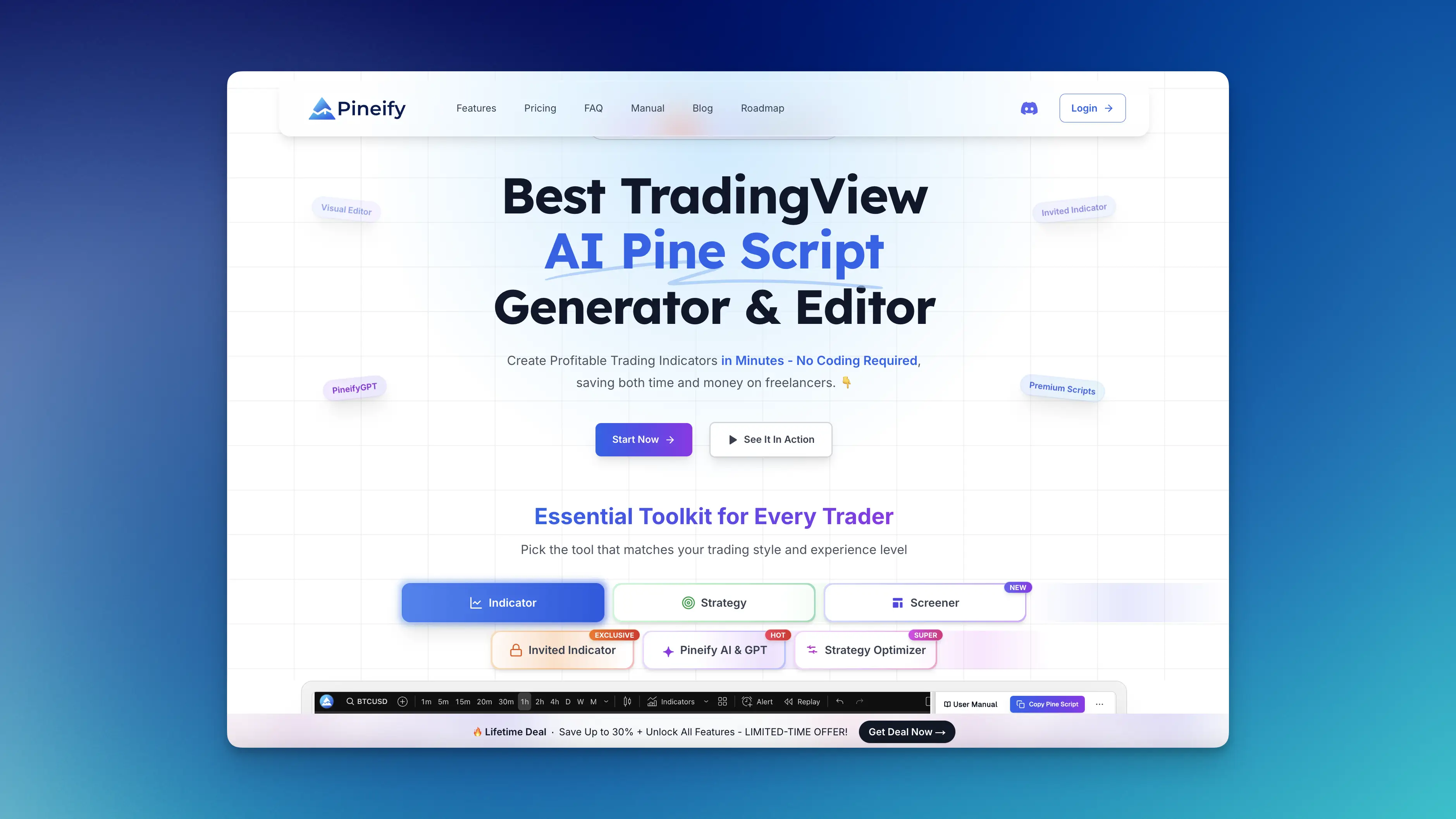
👉 You can try Pineify free for a week to see how it works. Your next strategy might just be a simple description away.
What is Pineify and how does it differ from Gemini for Pine Script?
Pineify is built for one thing: writing clean Pine Script V6 code for TradingView. Gemini can write Pine Script too, but it's a general-purpose model -- think Swiss Army knife versus a specialized tool. Pineify learns from official Pine Script docs and trading patterns, so about 85% of its code compiles on the first try. Gemini's output usually needs manual fixing before it runs.
Can Gemini write Pine Script that compiles without errors?
For very simple scripts, Gemini sometimes gets it right. But reliability drops fast when you ask for multiple indicators, custom conditions, or risk management rules. Because Gemini can't run Pine Script internally to check its work, you're the one who discovers the errors at compile time. Past a certain complexity level, expect to spend time debugging.
How does Pineify automatically fix Pine Script errors?
Every Pine Script code block Pineify generates runs through an internal validation step before you see it. If the validator spots a syntax issue, scope problem, or compile error, the system tries a correction and re-validates. Only code that passes this check gets handed back to you. That's how you get a high first-try compilation rate without the back-and-forth.
Does Pineify support Pine Script V6 specifically?
Yes. Pineify trains on the latest official Pine Script V6 documentation and community standards. It knows the syntax differences between V4, V5, and V6 and always generates using current V6 conventions. Gemini has a knowledge cutoff and can produce deprecated syntax that throws errors in TradingView's V6 environment.
Do I need coding experience to use Pineify?
Not at all. You can use the visual drag-and-drop editor to build strategy logic by connecting condition blocks, no code required. Or just describe your strategy in plain English and let Pineify handle the code. It's designed for traders who want working TradingView scripts without learning a programming language.
Can I backtest my strategy inside Pineify before sending it to TradingView?
Yes. Pineify has a built-in backtester that shows you how your strategy would have performed historically across different markets and timeframes. You check the results before exporting to TradingView. Gemini and other general-purpose AI tools don't offer this.
When should I use Gemini instead of Pineify for Pine Script work?
Use Gemini when you need conceptual explanations of how Pine Script works, want to brainstorm trading logic at a high level, or already know Pine Script well and just want a rough draft to refine. If your goal is production-ready code with minimal debugging, go with Pineify. Gemini is a learning and ideation tool, not a code delivery tool for TradingView.