ADR Strategy Guide: Alternative Dispute Resolution for Business

A business disagreement lands on your desk. You could call a lawyer and brace for a court battle — I've watched companies blow six figures on litigation that did nothing but poison their partnerships. There's a smarter route. Alternative Dispute Resolution (ADR) is a structured way to settle conflicts through mediation, arbitration, or Med-Arb, outside the courtroom. This approach mirrors the methodical planning traders use when they compare TradingView plans to match their specific goals.
The payoff is real: ADR typically resolves disputes in weeks, not years, at a fraction of the cost. It keeps things private — no public filings, no press coverage. And because the process is collaborative rather than adversarial, it preserves business relationships that litigation would shred.
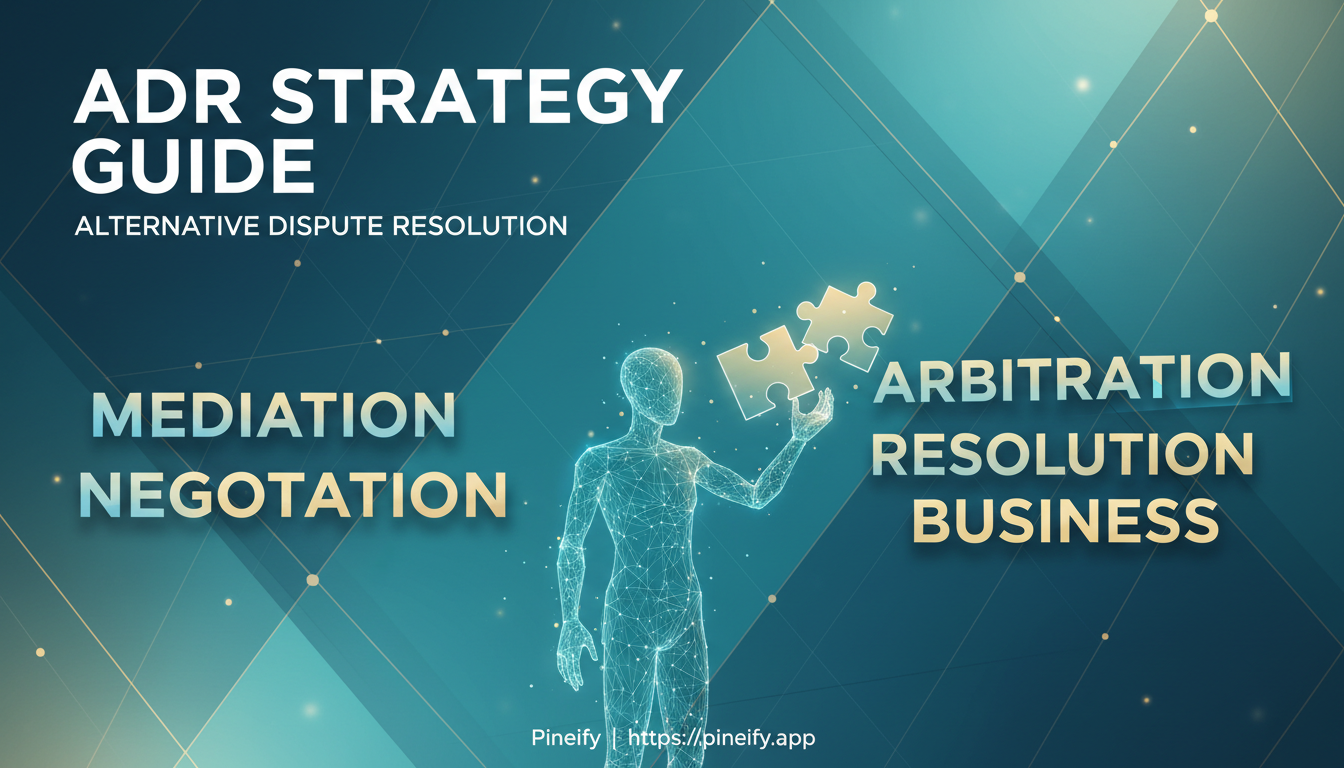
What Alternative Dispute Resolution Covers
ADR sits between informal negotiation and full-blown litigation. Each method brings in a neutral third party — a mediator or an arbitrator — to guide discussions or hand down a binding decision.
A good ADR strategy goes beyond cutting a quick deal. It should:
- Dig into the real root of the problem.
- Stop the conflict from escalating.
- Protect ongoing business relationships.
Companies that bake ADR into their contracts and daily operations handle disputes faster and cheaper, long before anyone needs to sue.
Building a Real ADR Strategy
When disputes show up — and they will — you need options. Here's what works.
Understanding Your ADR Options
Think of ADR methods as different tools. Pick the one that fits the specific fight.
Mediation works like a guided conversation. A trained mediator sits with both sides and helps you talk through the issue. They don't decide who's right. Instead, they uncover what each side truly needs and find common ground. Everyone walks away with a deal they agreed to voluntarily. You stay in control.
Arbitration is closer to a private trial. You present your case to a neutral arbitrator — often someone with deep industry knowledge — who issues a binding ruling. It's less formal than court, and you can adapt the rules to fit your situation. But once they decide, it's legally enforceable.
Med-Arb merges both. You start with mediation and try to hash things out together. If you hit a dead end, the same neutral party switches to arbitrator and makes a binding call. I prefer this approach for high-stakes disputes where you want a collaborative attempt first but a guaranteed resolution as backup.
Why a Good ADR Strategy Pays Off
The benefits are concrete, not abstract.
| Benefit | What It Means | The Real-World Impact |
|---|---|---|
| Cost-Effectiveness | Less paperwork, fewer billable hours, shorter timeline. | You keep thousands — sometimes tens of thousands — that would go to legal fees. |
| Time Efficiency | Months instead of years to reach a resolution. | You get back to running your business instead of managing a lawsuit. |
| Relationship Preservation | No winner-takes-all verdict. | Partners, suppliers, and employees keep working together afterward. |
| Confidentiality | Private sessions, sealed records. | Trade secrets and reputations stay protected. |
| Flexibility | You design the process around the dispute. | The outcome actually fits your business needs, not a legal template. |
Making ADR Part of Your Company's DNA
Putting ADR Clauses in Your Contracts
The easiest time to plan for a dispute is before there is one. Add ADR clauses to your standard agreements. Don't just say "we'll use mediation." Be specific.
A solid clause covers:
- The Process: Mediation first, then arbitration, or straight to a binding decision?
- Selection: How do you pick the mediator or arbitrator?
- Rules: Which framework — AAA, JAMS, or something custom?
- Timeline: When does the ADR process kick off after a disagreement?
- Scope: Does it cover every dispute, or only specific issues like payment or IP?
Building Your Own ADR Playbook
You don't need to invent this from scratch. Build habits and systems that make ADR the natural first step. I've seen companies save months of headache just by appointing one internal person to flag disputes for mediation early.
| Technique | What It Does |
|---|---|
| Regular Audits | Map how disputes get handled today and spot where ADR fits. |
| Early Triage | A simple checklist to decide if a new dispute should go straight to ADR. |
| Internal Champions | Designate people in each team who understand ADR and can nudge others. |
| Practical Training | Show teams what ADR looks like in real situations, not just legal theory. |
| Positive Reinforcement | Recognize people who resolve disputes through ADR quickly. |
| Clear Policy | A one-page guide for legal and ops teams on when to use ADR. |
Getting People to Actually Use ADR
A framework collects dust if people ignore it. Here's what I've found works:
- Discuss settlement early. Have project managers bring up mediation before positions harden.
- Make ADR the default. Ask teams to justify why they'd skip ADR for a given dispute, not why they'd use it. Just like traders automate their decisions with Pine Script alerts, you can automate the question: "Why not ADR for this one?"
- Loop in outside lawyers early. If you hire external counsel, insist ADR gets discussed at the first strategy meeting.
- Review the misses. Set a calendar reminder to revisit cases where you skipped ADR. Was litigation actually faster or cheaper? You'll refine your approach over time.
These steps turn ADR from an afterthought into standard operating procedure.
Preparing for a Successful ADR Process
Know the Flow
ADR has a structure. Understanding the timeline — what documents you need, when to file them, what the neutral party expects — keeps you from scrambling at the last minute.
I always recommend getting an outside opinion on your case early. A fresh pair of eyes spots weaknesses you've glossed over.
| Preparation Step | Why It Matters |
|---|---|
| Review every document | Builds a clear, evidence-backed story. |
| Understand the mediator's role | You'll communicate more effectively if you know what they're there to do. |
| Anticipate outcomes | Plan flexible positions so you're ready for any direction the session takes. |
Enforcing Your ADR Agreement
Once you commit to ADR, the agreement itself needs to be solid. After it's drafted, do a careful review — I've caught missing deadlines and vague language more than once. Use shared digital folders or scheduling tools to keep logistics simple.
Be specific about who owns each step, set realistic deadlines, and describe the process in clear terms. Vague agreements create second disputes, which defeats the whole point.
What's Changing in ADR Strategy Right Now (2026)
Tech Is Becoming a Natural Partner
Dispute resolution is changing fast. Companies are adopting digital tools that handle the heavy lifting — document management, scheduling, case tracking. It makes the process faster and cheaper. But here's what I've noticed: tech supports but never replaces the human element. The nuance, empathy, and final call still need a skilled neutral party.
Measuring What Actually Matters
Old metrics — hours billed, cases closed — are fading. Now people track real outcomes:
- Time to resolution
- Total cost per dispute
- Settlement percentage
Firms that can point to clear numbers build more trust. It's less about the process and more about results.
Connecting Dispute Resolution to Business Goals
Expectations have shifted. Everyone wants faster, fairer resolutions backed by smart tools. Inside companies, legal teams face more scrutiny than ever. Every choice about mediation, arbitration, or litigation gets measured against one question: does this support our core business goals?
I've seen data-driven legal teams outperform reactive ones by a wide margin. They pick the right tool for each dispute because they track what actually works. The same principle applies to learning technical tools like the understanding the na() function in Pine Script — you need to know what each option does before you can choose well.
How to Build an ADR Strategy That Actually Works
Before any conversation starts, get your paperwork locked down. Clear confidentiality agreements and sealed records aren't just formalities — they're what let people speak openly without fear.
The real power of ADR is early intervention. Catch disagreements before they escalate. Set up simple triage steps at the first sign of trouble. I prefer to flag any dispute under $50,000 for mandatory mediation — it's saved me countless hours.
Bring in a guide when things get sticky. An experienced mediator can cut through the noise before anyone even mentions litigation.
Use tech to make things easier — shared calendars, document portals, case trackers. But don't lose the human touch. The heart of ADR is still people working things out face to face.
The best strategy blends clear rules, early action, expert help when needed, and smart tools. And never forget: you're resolving a human situation, not just a business transaction.
Frequently Asked Questions
What's the real difference between mediation and arbitration?
Mediation is a guided conversation. A neutral person helps both sides talk through the issue and find their own solution — nobody can force you to agree. Arbitration is more like a private trial. The arbitrator listens to both sides, reviews the evidence, and makes a binding decision. Mediation keeps you in control; arbitration hands the keys to someone else for a definitive outcome.
How much money can ADR actually save?
A lot. Traditional lawsuits burn cash on paperwork, court fees, and endless pre-trial work. ADR cuts through that. You save on legal bills and avoid the hidden costs — stalled projects, distracted employees, damaged relationships. I've seen mid-size companies save $50,000-$100,000 on a single commercial dispute by choosing mediation over litigation.
When should I add an ADR clause to a contract?
At the drafting stage, before there's any conflict. A good clause specifies the process (mediation first, then arbitration?), how to pick the neutral party, what rules to follow, and which disputes it covers. Nail this down early and everyone knows the plan from day one.
What should we measure to know if ADR is working?
Track time to resolution, total cost per dispute, and settlement rate. More importantly, ask if the outcome helped the business move forward. I haven't found a single perfect metric, but a combo of cost, speed, and relationship health gives you a clear picture.
How do I get my team to actually choose ADR?
Make it the easy path. Train people so they understand how it works. Appoint internal champions who can guide others. Build it into your workflows — for example, require teams to consider ADR first for disputes under a certain threshold. When people see it saves them time and hassle, they adopt it naturally.
What types of business disputes work best with ADR?
Contract disputes, partnership disagreements, employment conflicts, and customer complaints are all good candidates. Any situation where both sides want to preserve a working relationship and find a practical solution quickly. I've found technical disputes work especially well because you can pick an arbitrator with specific industry expertise.
What to Do Next
Ready to put this into practice? Here's a practical starting point.
Audit your current situation. Look at how disputes are handled now. Where do things get stuck? Where do costs pile up? That's your starting point.
Review your contracts. Pull your standard agreements and check what they say about resolving disagreements. For new contracts, add a clause that says, "If a dispute arises, we agree to try mediation or arbitration before going to court."
Pick a point person. Choose someone internally who's passionate about solving problems efficiently. Their job: remind teams about ADR options and get the process rolling when needed.
Train your team. Not just legal — make sure project managers, sales, and operations understand the basics of mediation and arbitration. Knowledge drives adoption.
Talk to a pro. Connect with an experienced mediator or ADR lawyer. They can help you craft guidelines that fit your actual business.
Stay current. Dispute resolution keeps evolving. Read an article or attend a webinar now and then. The tools get better every year. Picking up skills in adjacent areas — like learning the TradingView keyboard shortcuts to boost your trading workflow — reinforces the habit of looking for smarter approaches.
Spot issues early. The best time to resolve a dispute is before it explodes. Watch for early signs of disagreement and ask, "Could a neutral third party help sort this out?"
Following these steps saves money, time, and relationships. That's hard to beat.
What's your biggest hurdle with disputes at work? Is it the cost, the time, or the strain on relationships? Share your thoughts below — let's talk about what works and what doesn't.