Can You Trade Forex on TradingView? A Complete Guide

· 24 min read

Yes, you can absolutely trade forex directly on TradingView! The platform makes it pretty seamless. You connect your existing broker account right inside TradingView, and then you can analyze the charts, place your trades, and manage your open positions all in one place—no need to switch between different apps or tabs.

If your current broker isn't on their list, or if you're just getting a feel for the markets, TradingView's Paper Trading feature is a fantastic tool. It lets you practice forex trading with pretend money, using all the same live charts and analysis tools as the real thing.

Can You Trade Forex on TradingView? A Complete Guide

Here’s what you’ll learn in this guide:

  • How TradingView forex trading actually works – from connecting your broker to placing an order.
  • Which brokers you can connect and what to know about regional availability.
  • A simple, step-by-step walkthrough for setting up and placing your very first forex trade.
  • Understanding order types, potential fees, and how to trade on your phone.
  • Practical tips and common mistakes to help you trade more confidently.
  • Your questions, answered – plus clear next steps to get you started.

What TradingView Is (and Isn’t)

Think of TradingView as your central hub for all things trading, but not the place that actually holds your money. It’s a powerful charting and analysis platform, not a broker. This is the most important thing to understand: TradingView itself doesn't custody your funds or execute the trades directly.

Instead, it provides the brilliant interface, the cutting-edge tools, the market data, and the crucial connections to let you trade. You analyze a chart, decide on a trade, and then place that order through one of their integrated broker partners. This works for everything from forex and stocks to crypto and futures.

So, your ability to trade forex (or anything else) on TradingView comes down to one simple question: Is your preferred broker connected to the platform and allowed to operate in your region?

Here’s a quick look at what makes it so powerful:

  • Your All-in-One Workspace: Analyze the markets, place your orders, and manage your risk without ever leaving your charts. Everything happens in one seamless workflow.
  • Seriously Advanced Tools: Go beyond basic indicators with multi-timeframe analysis, backtest your strategies with Pine Script, and build or use thousands of custom indicators.
  • Learn from the Community: It’s not just charts. You can share scripts, see what other traders are watching, and get ideas from public watchlists, which is fantastic for research and learning.

Can You Trade Forex on TradingView?

The short answer is yes, you absolutely can—but there's a key detail you need to know first.

TradingView itself isn't a broker. Think of it as your all-in-one trading cockpit, where you can place trades directly if you've connected a compatible forex broker. For this to work, your broker must be supported within TradingView's trading panel, and the broker must be allowed to operate in your specific country.

The good news is that TradingView partners with many well-known forex brokers. However, the list of who's available changes depending on where you live and your account type.

So, what if your current broker isn't on the list? Don't worry, you have a few solid options:

  • Sign up with a supported broker. This is the most straightforward path if you want to trade directly from the TradingView charts. You can find a broker that works in your area and supports the assets you want to trade.
  • Practice with Paper Trading. This is a fantastic, risk-free way to test your forex strategies using real-time market data. It’s perfect for getting comfortable with the platform before funding a live account.
  • Use TradingView for analysis, and your broker's platform for trades. Many traders do this! You can use TradingView's superior charts and indicators to spot your opportunities, and then simply execute the trade on your broker's own app or website.

Supported Brokers and Regional Availability

Figuring out which brokers work with TradingView can be a bit like checking a flight schedule—the options depend heavily on where you're starting from. The integration isn't one-size-fits-all; it's specific to both the broker and your region.

You'll find popular global brokers that offer forex trading, but the actual services (like trading CFDs or spot forex) can change based on your location. This is because different countries have different financial rules. For instance, leverage is capped much lower in places like the U.S. and the EU compared to other regions.

A few key things to remember:

  • The list is always evolving. New brokers are added, and features for existing ones often expand, so it's good to check back periodically.
  • Your location dictates the rules. The maximum leverage you can use, margin requirements, and even which products you can trade are all determined by your country's regulations.
  • Check your account type. Some brokers require you to have a specific kind of account (like a professional or premium tier) to connect with TradingView.

The easiest way to see your options is to log into your TradingView account, open the Trading Panel, and see which brokers are listed for your country. If your preferred broker isn't there, it might be supported in a different region, or you might need to look at one of the available alternatives.

Broker NameSupported RegionsKey Notes
Broker AGlobal (excludes US, EU)Offers both CFD and Spot Forex
Broker BEuropean Economic AreaAdheres to ESMA leverage caps
Broker CUnited StatesMaximum 1:50 leverage for forex

How to Trade Forex on TradingView: A Friendly, Step-by-Step Guide

Thinking about placing your first real forex trade directly from a TradingView chart? It’s a pretty smooth process once you know the steps. Here’s how to get everything set up.

1) Get Your Accounts Sorted First, you'll need a couple of accounts ready to go.

  • TradingView Account: A free one works perfectly to start. If you find yourself loving the platform, their paid plans give you access to more charts, indicators, and alerts.
  • Broker Account: You’ll need a live trading account with a forex broker that works with TradingView. Make sure they operate in your country. You’ll go through their sign-up process, verify your identity (this is the KYC part), and add some funds.

2) Link Everything Together This is where the magic happens.

  • Pull up a forex chart on TradingView, like EUR/USD or GBP/USD.
  • Look at the bottom of the chart and click to open the "Trading Panel."
  • You’ll see a list of brokers. Find yours, click “Connect” or “Trade,” and log in with your broker account details to authorize the link.

3) Place Your Trade Now for the exciting part.

  • You can either use the big "Buy"/"Sell" buttons on the panel or right-click directly on the chart to place an order.
  • A window will pop up where you enter your trade size, along with your stop-loss and take-profit levels.
  • Confirm everything, and you’re in! You can watch your open position in the "Positions" tab and see markers for your trade right on the chart.

4) Manage Your Open Trades Your job isn't done after you enter the trade.

  • The easiest way to adjust your stop-loss or take-profit is to just click and drag the lines on the chart itself.
  • You can close a portion of your trade from the "Positions" tab, if your broker allows it.
  • To fully exit, simply close the position from the same tab. It’s also a great idea to set alerts for key price levels or indicator moves so you don't have to stare at the screen all day.

A quick tip if you run into trouble: If your broker doesn’t show up in the list, try logging out and back into TradingView, clearing your browser's cache, or switching to a desktop browser. Some of these integrations don’t work as well on mobile apps.

Order Types and Features at Your Fingertips

Think of TradingView as your trading cockpit. While the specific tools you can use depend on your connected broker, the platform itself is packed with features to help you execute your plan. Here's a breakdown of what's generally available.

Core Order Types (Broker Dependent)

These are the basic building blocks for entering and exiting trades. Just double-check that your specific broker offers them.

  • Market Orders: Get in or out of a trade instantly at the current market price.
  • Limit Orders: Set your price. You specify the maximum you're willing to pay to buy, or the minimum you'll accept to sell.
  • Stop Orders: An order that only activates once the price crosses a specific level you set.
  • Brackets: A handy set-it-and-forget-it tool. When you place a trade, you can automatically attach your stop-loss and take-profit orders at the same time (if your broker allows it).
  • Trailing Stops: Lets your profits run while protecting them. This order automatically follows the price at a distance you set, locking in gains if the market reverses.
  • OCO/Advanced Routing: For more complex strategies. OCO (One-Cancels-Other) lets you place two orders where if one executes, the other is automatically canceled. Availability for this varies a lot by broker.

TradingView's Built-In Trading Tools

Beyond just orders, the platform gives you powerful tools to manage your trades directly from the chart.

  • On-Chart Trade Management: The most visual way to manage your trades. Simply click and drag your stop-loss and take-profit lines on the chart to adjust them.
  • Position Metrics: See all the vital stats for your open trades at a glance, including your profit/loss, entry price, risk-to-reward ratio, and overall market exposure.
  • Alerts: Never miss a move. You can set alerts for price levels, indicator crossovers, or when a trendline breaks. You can even get alerts from your own custom strategies and have them sent to you via email, SMS, or to another app using a webhook.
  • Backtesting: Test your trading ideas before risking real money. Using Pine Script, you can code your strategy and see how it would have performed historically. It's a fantastic way to refine your approach.

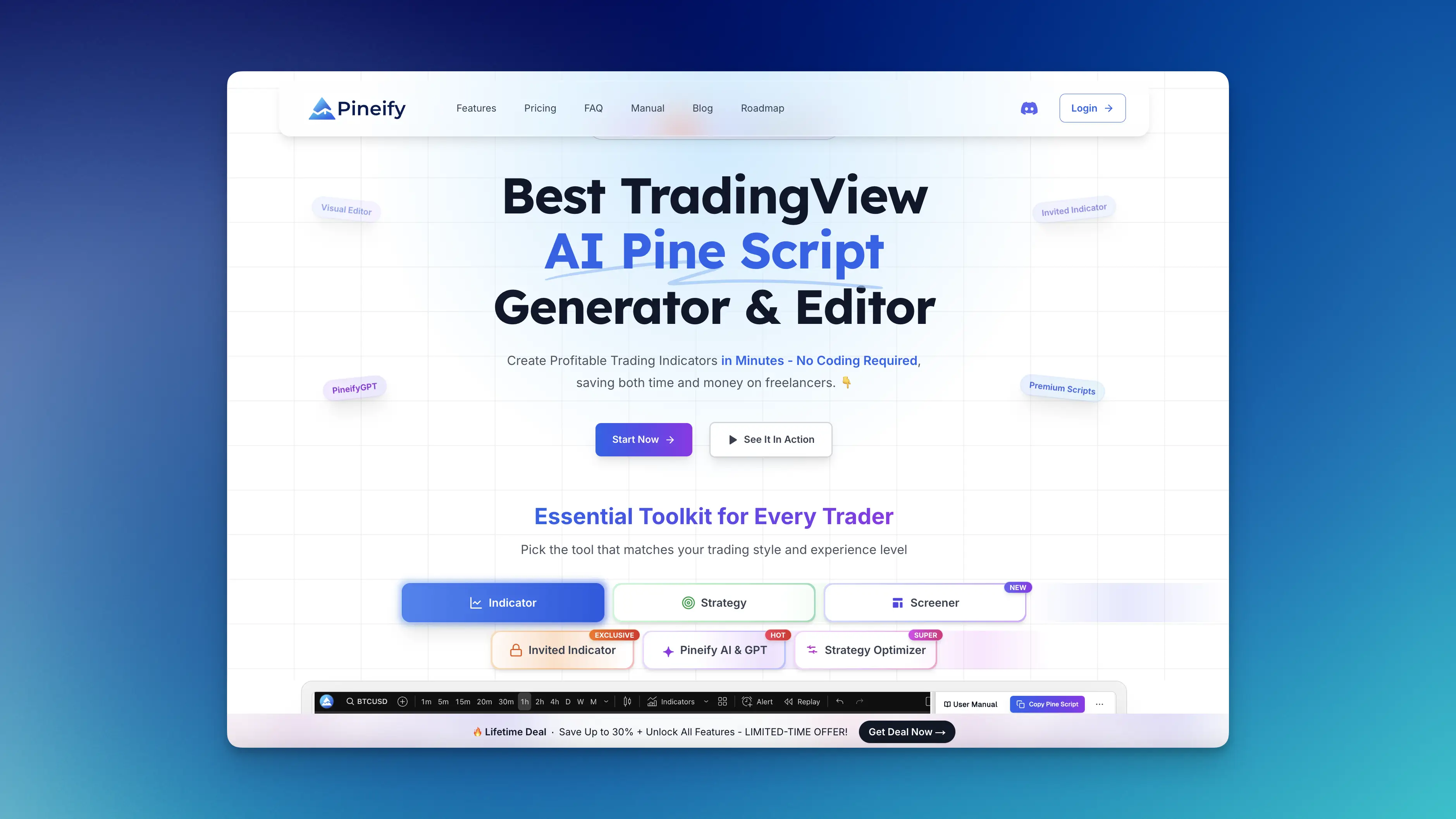
Speaking of backtesting, if you've ever wanted to create custom strategies but found Pine Script coding challenging, Pineify offers a powerful solution. Their visual editor lets you build and backtest complex trading strategies without writing a single line of code, making strategy development accessible to all traders.

Pineify Website

Fees, Spreads, and Subscriptions

Let's break down the costs so there are no surprises. When you're trading through TradingView, there are a few different places fees can come from.

Think of it in three layers:

  • What you pay your broker: This is the most direct cost of trading. It includes things like the spread (the difference between the buy and sell price), commissions on each trade, and overnight financing fees (also called swaps) if you hold a position past a certain time. Some brokers might also have fees for inactivity or for withdrawing your money. It's important to know that these fees go directly to your broker, not to TradingView.
  • Access to market data: Getting a clear, real-time view of the markets is key. The basic data for many markets, like forex, is usually included. But if you need super-specific, premium data feeds for certain stocks or assets, you might need to pay a little extra for them as an add-on.
  • Your TradingView plan: You can absolutely get started with a free plan—it's surprisingly powerful. If you find yourself wanting to use more indicators on a single chart, set up more alerts, or log in on several devices at once, then one of their paid plans might be worth it. Paid tiers can also sometimes give you data that updates a bit faster.

One thing that's great to know: TradingView itself doesn't typically tack on an extra execution fee for each trade you place through their panel. It's always smart, though, to double-check the final fee structure directly with your broker and give your account agreement a quick read.

Getting Started with Paper Trading on TradingView for Forex

Want to dip your toes into the forex market without risking any real money? That's exactly what Paper Trading on TradingView lets you do. It’s a practice environment that lets you place trades and manage positions using simulated money, so you can learn the ropes in a completely risk-free way.

It's perfect for:

  • Getting comfortable with TradingView's interface and how to place orders.
  • Practicing how to set stop-loss and take-profit orders to manage your risk.
  • Testing out your trading ideas and strategies with live market data.
  • Building up your confidence before you ever put real capital on the line.

One important thing to keep in mind: the simulated fills in Paper Trading aren't always 100% identical to what happens in a live market. Things like slippage (the difference between the expected price and the actual execution price) and changing spreads can affect real trades differently. Think of it as the perfect tool to refine your overall approach. Once you feel good about your strategy, the best next step is to try it with a tiny live account to see how execution feels with real-world conditions.

Trading on the Go with TradingView's Mobile App

Ever wish you could manage your trades from anywhere, without being chained to your desk? With TradingView's iOS and Android apps, you can do just that. It's like having your entire trading toolkit right in your pocket.

Here’s what you can do directly from your phone or tablet:

  • Place and manage orders directly on the mobile charts. See a setup you like? You can act on it immediately.
  • Adjust your stop-loss and take-profit levels with a simple drag of your finger. It’s an intuitive way to manage your risk on the fly.
  • Get push notifications for your price alerts and when your orders get filled, so you never miss an important move.
  • Everything stays in sync. Your watchlists and chart layouts are automatically updated across your phone, tablet, and desktop.

One quick but important note: just double-check that your specific broker supports all the order types you rely on within the mobile app. Some advanced features might differ slightly from the desktop experience. It's always a good idea to test your main trading workflow in the app before you jump in with real money.

Trading forex is a bit like handling a powerful tool. It's incredibly effective, but you absolutely need to understand the force behind it—that's leverage. Because the market can move quickly, it's crucial to have a solid plan for managing your risk. The rules of the game also change depending on where you and your broker are located.

Here are a few smart habits to build from the start:

  • Ease into it. Begin with conservative leverage and smaller trade sizes. There's no need to use all the power available to you right away.
  • Protect your capital. Always use a stop-loss order. A good rule of thumb is to never risk more than 0.5% to 1% of your trading account on a single trade.
  • Mind the holding costs. If you keep a trade open overnight, you'll encounter financing charges or "rollovers." These can add up, so it's important to understand how they affect your bottom line on longer-term positions.
  • Know who you're trading with. Do a quick check on your broker. Which country regulates them, and what kind of investor protection does that offer you? It’s a fundamental step for your peace of mind.

TradingView vs. MT4/MT5: Which is Better for Executing Your Trades?

Choosing between TradingView and MT4/MT5 for actually placing your forex trades can be a head-scratcher. They're both powerful, but they come from different worlds and excel at different things. Let's break down the key differences to help you pick the right tool for your style.

  • Charting and Tools: TradingView is like the new, sleek smartphone with an incredible screen. It offers modern, intuitive charts that sync across your phone, tablet, and computer, plus a massive library of indicators built by its community. MT4 and MT5, on the other hand, are like the reliable, powerful work trucks. Their charts might feel a bit dated, but they have a huge ecosystem of Expert Advisors (EAs) and have been the go-to for brokers for decades.
  • Automation: This is a big one. If you want to automate your trading, MT4/MT5 does it natively with EAs that can run directly on your platform. TradingView's approach is different; you can set up alerts that then trigger actions via webhooks, but to fully automate your execution, you'll usually need to connect it to a third-party bridge service.
  • Broker Access: MT4 and MT5 have been around so long that their broker coverage is extremely wide, especially in certain regions. TradingView has been adding more and more brokers, but it doesn't support every single one out there yet. It's always a good idea to check if your preferred broker is on the list.
  • User Experience and Sharing: TradingView wins on ease-of-use and social features. It's designed to be simple to pick up, and you can easily share your chart layouts and ideas with others. MT4/MT5 are purely functional—they get the job done very efficiently, but they don't focus on a modern, polished look or social interaction.

So, which one is for you?

Think about what you value most. If you live and breathe by the charts, love a clean and modern interface, and want to tap into the ideas of a vast trading community, TradingView is a fantastic choice. But if your strategy depends heavily on running custom, fully automated trading systems (EAs) directly with your broker without extra steps, then MT4 or MT5 is probably still your necessary tool.

Best Practices for Trading Forex on TradingView

Getting started with forex trading can feel overwhelming, but having a solid game plan makes all the difference. Here are some practical habits that can help you trade more confidently and consistently.

  • Use alerts to stay disciplined: It's easy to get caught up in the moment and chase a trade. Instead, set alerts for key price levels, when indicators cross, or when a trendline breaks. This way, the platform tells you when something important happens, so you can make decisions calmly.
  • Create a standard layout: Save yourself time and mental energy by creating and saving a chart template. Include everything you need at a glance, like your favorite indicators, risk management tools, and a view of multiple timeframes. A consistent workspace helps you focus on the trade, not on setting up your screen.
  • Define your risk before you enter: This is a big one. Always know exactly how much you're willing to risk on a trade before you place it. Pre-calculate your position size based on where your stop loss is. You can even use TradingView's Pine Script or a reliable online calculator to automate this step.
  • Test your strategies thoroughly: Don't risk real money on a hunch. First, use Pine Script to see how your idea would have performed in the past (backtesting). Then, try it out in real-time with Paper Trading to see how it feels (forward-testing). Once you're confident, start small with live funds.
  • Keep a trading journal: This is how you learn from both your wins and losses. Make a quick note of every entry and exit, take a screenshot of the chart, and jot down your reasoning. Looking back at this log will help you spot patterns in your decision-making and improve over time.
  • Keep an eye on your broker: Remember that trading conditions aren't always the same. Spreads can widen and execution can slow down during major news events or less liquid market hours. It's smart to adjust your tactics during these times to protect your capital.

Common Problems and Quick Fixes

Running into a snag while trading can be frustrating, but many common issues have surprisingly simple fixes. Here’s a breakdown of a few you might encounter and what you can try to get back on track.

The broker isn't showing up in the Trading Panel. This one is often just a small mix-up. First, double-check if your broker has any regional restrictions that might apply to you. Then, confirm your account type and that you're logged into the correct entity of your broker (sometimes they have different divisions). If you're on a mobile app, try switching to a desktop browser, as that can sometimes resolve the issue.

You're seeing login or authorization errors. If your login keeps failing, the quickest path is usually to reset your password or trading credentials directly on your broker's website. Once that's done, clear your browser's cache and re-authorize the connection. It’s also a good idea to make sure your trading account is fully active and funded, as some platforms require this.

The order type you want to use is missing. Not all brokers support every advanced order type. If you can't find the one you're looking for, it's likely a limitation set by your broker. Your best bet here is to consider switching to a broker that explicitly supports the specific order features you need for your strategy.

You're experiencing slippage or unexpected fills. Slippage is a common part of trading, especially with market orders. To have more control, try using limit orders, which set your maximum buy or minimum sell price. If your platform has a setting for acceptable slippage parameters, make sure to use it. Also, for larger orders, it helps to avoid trading during hours when market liquidity is thin, as this can increase slippage.

The data on your screen doesn't seem to match up. When numbers look off, first ensure you're looking at data meant for forex, as sources can vary. Take a moment to understand where your data feed is coming from. If things still seem strange, a good practice is to compare your primary data feed with another one to spot any discrepancies.

ProblemQuick Fixes
Broker not showing in Trading PanelCheck region restrictions, account type, and try desktop browser; verify you’re using the correct broker entity.
Login/authorization errorsReset credentials at the broker, clear cache, and re-authorize; confirm your account is live and funded if required.
Missing order typesSome brokers limit advanced orders; switch to a broker that supports the order features you need.
Slippage and fillsUse limit orders or set acceptable slippage parameters where available; avoid thin liquidity hours for large orders.
Data discrepanciesEnsure you’re viewing forex-specific data and understand the source; compare multiple feeds if needed.

Frequently Asked Questions

Can I trade forex directly on TradingView without using a broker?

No, you can't. TradingView itself isn't a broker. To actually place trades, you need to connect it to a supported brokerage account. If you're just looking to practice, their Paper Trading feature is a great way to simulate trading without real money.

Which brokers work with TradingView for forex?

The list of available brokers changes depending on where you live. The easiest way to see your options is to check the Trading Panel directly on the TradingView platform. It will show you the brokers you can link to in your country, but always double-check with the broker about any specific account type you might need.

Is TradingView free to use for forex trading?

You can connect a broker and place live trades even on a free plan. However, you might find yourself wanting a paid plan pretty quickly. They unlock more advanced charts, a wider range of alerts, and better data feeds, which are super helpful for serious trading.

What order types are available?

You'll find the basic order types—like market, limit, and stop orders—are widely supported. For more advanced orders, such as trailing stops or One-Cancels-Other (OCO), it really depends on whether your specific broker has integrated that functionality with TradingView.

Can I trade from my phone?

Yes, absolutely. TradingView has mobile apps for iOS and Android that allow you to trade through your connected broker. Just keep in mind that the exact features available can vary a bit depending on your phone and what your broker supports on mobile.

How do I manage risk on the platform?

Risk management is very visual on TradingView. You can set your stop-loss and take-profit levels right when you enter a trade and then drag these levels around directly on the chart to adjust them. The key is to size your positions based on a predefined amount of risk you're willing to take on each trade.

Is it possible to automate my trading?

TradingView doesn't run fully automated trading bots on its own. What you can do is create trading alerts that, when triggered, can send signals via webhooks to third-party platforms or bridges. These can then execute trades through your broker if that connection is supported. It's a bit of a workaround, but it's a powerful feature.

How realistic is the Paper Trading feature?

The Paper Trading mode is excellent for getting the feel of the platform and testing your strategies without any financial risk. It's great for practicing your timing and learning the process. Just remember that the fills and slippage you experience are simulated and can be different from a live, real-money market. Think of it as the ultimate practice tool.

Your Action Plan: What to Do Next

Okay, you've got the knowledge, now let's turn it into action. Here’s a straightforward plan to get you from setup to execution.

  • Step 1: Pick Your Broker. First things first, hop into the Trading Panel and check which brokers are supported in your area. Choose one that feels right for you and open an account—a demo account is a perfect, zero-risk way to start.
  • Step 2: Get Your Charts Ready. Set up your TradingView workspace. Make sure you have a clean risk management template, charts for different timeframes (like the big picture and the close-up view), and your go-to indicators loaded.
  • Step 3: Practice Without Pressure. Use the Paper Trading feature to test everything. Practice your entry and exit points, get comfortable setting alerts, and keep notes on what’s working and what isn't. This is your playground to learn and adjust.
  • Step 4: Go Live, Start Small. When you switch to a live account, begin with small trade sizes. Pay close attention to how your broker executes trades during different market hours (like the London or New York sessions). Only consider scaling up once you're consistently seeing the results you want.

Need a Hand Picking a Broker?

Choosing the right partner can be tricky. If you're unsure, just let me know your country and your general trading style (e.g., "scalping," "swing trading," etc.). I can then send you a tailored shortlist of brokers with honest pros, cons, and specific tips to get you set up correctly.