Quantopian Backtesting: What Happened and the Best Alternatives Now

Quantopian backtesting is what happens when you run Python trading strategies against years of historical market data in a browser, using the Zipline engine. The platform attracted over 300,000 users who ran 12 million backtests. Then it shut down in 2020. If you're looking for a replacement today, I'd recommend QuantConnect for most people — it covers more asset classes and doesn't require you to manage your own infrastructure. But let me walk through the full story first, because understanding what Quantopian did right and wrong matters more than ever.
What Was Quantopian, Anyway?
Think of Quantopian as an ambitious experiment that opened up the world of quantitative finance. Started in 2011, its goal was simple: to give anyone with coding skills the same powerful backtesting tools that big hedge funds use. With backing from major investors, it grew a community of over 300,000 users, who ran more than 12 million backtests on the system.
Here's how it worked: you'd write your strategy in Python in their web-based editor. The platform would then run it against decades of historical market data to see how it performed. There was even a compelling incentive — if your algorithm was really strong, Quantopian might include it in their actual investment fund, and you'd earn a share of the profits.
Beyond just the tools, it became a vital learning center. It offered tutorials, lively forums, and regular contests with prizes, helping a whole generation of developers take their first steps into algorithmic trading. For many, it was their first real taste of building and testing a systematic strategy.
How Quantopian's Backtesting Engine Really Worked
Under the hood, Quantopian ran on something called Zipline. Think of Zipline as the realistic, time-traveling simulator for trading ideas. It's an open-source Python library that recreates the market day-by-day or minute-by-minute, just like it happened in history. The crucial part? Your strategy only ever sees the data that would have been available at that exact moment in time — no cheating by looking at tomorrow's prices.
Every strategy you built had two main functions where the magic happened:
initialize(context): This was your one-time setup. Here, you'd define the stocks you wanted to watch, set any parameters for your strategy, and schedule other functions to run.handle_data(context, data): This was the workhorse, triggered at every new bar of data. Based on your logic and the latest market information, you'd decide what orders to place here.
The structure was beautifully simple. Here's that basic "Hello World" example of a Zipline strategy, exactly as you'd write it on Quantopian:
from zipline.api import order, record, symbol

def initialize(context):
    pass

def handle_data(context, data):
    order(symbol('AAPL'), 10)
    record(AAPL=data.current(symbol('AAPL'), 'price'))
Once you were ready, hitting Run Full Backtest would set the simulation in motion. Quantopian would process your algorithm through the years of market data you chose and then hand you a detailed report card. You'd see your cumulative returns, the Sharpe ratio (a measure of risk-adjusted returns), the maximum drawdown (your biggest peak-to-trough loss), and other key stats like alpha, beta, and daily value at risk. This dashboard was your first real look at whether your idea had historical legs.
What Made Quantopian's Backtesting Engine Special
Quantopian's backtesting tool was surprisingly powerful for something that was free. Here's a breakdown of its standout features.
- Pipeline API — Think of this as a super-powered stock screener. It let you sift through thousands of stocks at once, using a mix of fundamental data (like earnings) and technical indicators (like price moves), which was perfect for building broad, multi-stock strategies.
- Built-in Risk Analysis — It came with tools to check if your strategy was accidentally betting on common market trends (like "momentum" or "value" stocks). This helped you make your strategy more solid and less dependent on a single factor.
- Realistic Trading Costs — It didn't just assume trades happened perfectly. The engine simulated real-world friction like brokerage commissions and the subtle market impact of your own orders, giving you a much more honest picture of potential profits.
- Pyfolio Tear Sheets — Quantopian created a library called
pyfoliothat automatically generated detailed performance reports. These were visual, easy-to-read summaries showing your strategy's returns over time, its worst losing periods, and how it was exposed to various risks. - Minute-by-Minute Data — This was a big deal for a free platform. You had access to ultra-granular, minute-level price history for US stocks going back years, letting you test ideas with a lot more precision.
- Contest Feedback Loop — Their algorithm contests came with a built-in scoring system. It would tell you if your bot was too volatile, hard to trade in size, or wasn't beating a simple benchmark, which was incredibly useful for learning and improvement.
So, you've run a backtest — now what? To figure out if your trading idea has real merit, you need to look beyond just the final profit or loss. The real story is told by a set of performance metrics.
Platforms like Quantopian (which used the Zipline and Pyfolio engines) gave traders a clear, standardized dashboard of these stats. Here's a quick guide to what those key numbers mean.
| Metric | Description |
|---|---|
| Annual Return | Annualized CAGR over the test period |
| Sharpe Ratio | Risk-adjusted return (target: > 1.0) |
| Max Drawdown | Largest peak-to-trough loss |
| Sortino Ratio | Downside risk-adjusted return |
| Alpha | Excess return vs. benchmark |
| Beta | Correlation to market movements |
| Daily VaR | Value at risk at the 5% confidence level |
| Calmar Ratio | Return-to-max-drawdown ratio |
Think of these as the vital signs for your strategy. For instance, a simple momentum strategy tested from 2017–2022 on Zipline might show:
- An Annual Return of 14.17%
- A Sharpe Ratio of 0.80
- A Max Drawdown of –30.09%
That paints a realistic picture. A decent but not stellar return, a modest risk-adjusted score, and a significant potential loss during a rough patch. These are the kinds of figures you'd expect when the backtest engine properly simulates volatile, real-world market conditions — it keeps you honest about what's really possible. For more on building effective trading indicators, see our post on SuperTrend Moving Average Indicator: How to Spot Trend Changes 3x Faster Than Regular SuperTrend (2025 Guide).
What Really Happened to Quantopian?
Quantopian was a big deal in the world of algorithmic trading. When it suddenly closed its doors to the community in October 2020, a lot of people were surprised. The platform had a passionate following and had raised over $50 million from investors. So, why did it shut down?
The simple answer is that the core business idea never quite worked out.
The company bet that it could do two things brilliantly: first, attract a huge community of talented coders who would share great trading algorithms, and second, take the very best of those algorithms, run them in a real hedge fund, and share the profits. That potential profit from the fund was meant to be their main source of revenue.
But that plan hit a wall. The hedge fund, which ran a market-neutral strategy for years, wasn't performing as hoped. By early 2020, the company admitted it was underperforming, returned money to its investors, and started looking for a new direction. Just a few months later, the entire community platform was gone. Users got about two weeks' notice to download their code before everything was shut off.
The bigger takeaway here is about a fundamental mismatch. Many of the strategies created by the community, while clever, couldn't handle large amounts of money. If you tried to put millions into them, you'd end up moving the market and killing the very edge they relied on.
On the flip side, the kind of durable, scalable strategies perfect for a real hedge fund were often too specific and complex. They didn't attract enough high-quality submissions from the broad community to make the model sustainable. In the end, the two parts of the business — the open community and the professional fund — never successfully fed into each other at the scale needed to survive.
What Happened to Zipline? It's Thriving.
When Quantopian closed its doors, it left a powerful gift to the algorithmic trading community: Zipline. This open-source backtesting engine didn't fade away. Instead, it's now maintained by its dedicated users and remains one of the most reliable and complete Python frameworks for testing trading strategies.
Its real strength comes from its ecosystem. Zipline works well with pyfolio for deep performance analytics and alphalens for dissecting the factors behind your strategy's moves. This integrated setup provides a professional-grade workflow for serious analysis.
You have flexible options for running it. You can fire it up on your own machine, or use it within platforms like QuantRocket. In many ways, QuantRocket picked up where Quantopian left off, building a full-featured environment around these same core libraries. They've added practical features like easy Docker deployment, a built-in JupyterLab workspace, and connections to multiple data feeds.
| Feature | Benefit |
|---|---|
| Open-Source & Community-Maintained | Continuously improved; not dependent on a single company. |
Integrated with pyfolio & alphalens | Get professional-grade performance and factor analysis out of the box. |
| Runs Locally or in QuantRocket | Flexibility to work on your own terms or in a managed, production-ready platform. |
| Support for Multiple Data Providers | Not locked into a single source for market data. |
Since Quantopian closed its doors, finding a new home for building and testing trading algorithms has been a journey for many. If you're looking for a platform or library to continue that work, you've got some excellent options now. The available tools have really matured, offering everything from all-in-one cloud platforms to powerful open-source libraries you can run on your own machine.
Here's a look at the top alternatives that have become the go-to choices for quant developers and traders.
| Platform / Library | Best For | Key Notes |
|---|---|---|
| QuantConnect (LEAN Engine) | A direct, full-featured replacement. | Cloud-based backtesting in Python or C#. Covers stocks, forex, futures, options, and crypto. Great for complex, multi-asset strategies and institutional-grade data. |
| QuantRocket | Python quants who loved the Quantopian workflow. | Built around Zipline and Moonshot. You can run it locally with Docker or in the cloud, giving you a lot of flexibility and control. |
| Backtrader | Developers who prefer open-source and a strong community. | A flexible Python framework for complex strategies. It's been around a while, is very extensible, and now supports live trading too. |
| Zipline (standalone) | Those who want to keep using Quantopian's original engine. | You can use community-maintained forks like zipline-reloaded. It's ideal if you want maximum control with a familiar tool. |
| VectorBT | Speed and large-scale optimization. | Uses vectorized computation for incredibly fast backtesting. It's a different approach than event-driven models and shines when you're testing thousands of parameter combinations. |
| Alpaca | Quickly going from a backtested idea to paper trading. | Offers easy-to-use APIs and paper trading capabilities. It's a good fit if your strategy is compatible and you want a smooth path to testing in a live market environment. |
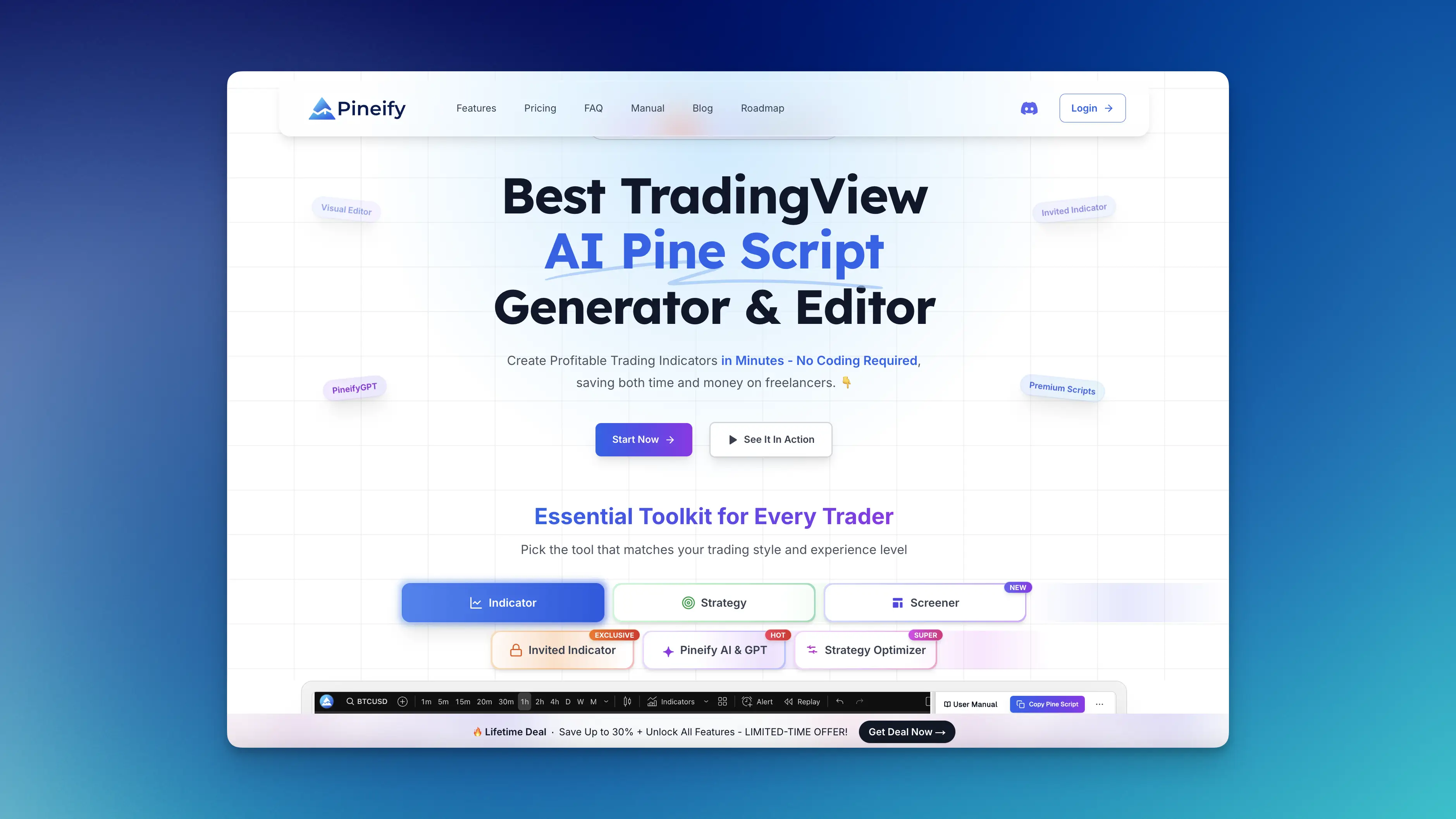
| Pineify | Traders who want to build, test, and automate strategies directly on TradingView without coding. | An all-in-one AI-powered suite featuring a Visual Editor, a specialized Coding Agent for Pine Script, and an AI Stock Picker. It allows you to create indicators, strategies, and screeners visually or through conversational AI, and includes professional tools for backtesting, journaling, and optimization. For those interested in TradingView, you might also want to check out our guide on ThinkScript Tutorial: From Zero to Trading Bot in One Weekend. |
The best choice really depends on what you need. If you want an all-in-one solution with tons of data, QuantConnect is a powerhouse. If you're attached to the exact Quantopian feel and want to self-host, QuantRocket is fantastic. For total control and customization, the open-source options like Backtrader or Zipline are perfect. And if raw speed for optimization is your goal, VectorBT is in a league of its own. For traders who primarily operate on TradingView and want to skip the complexity of Python or C# coding, Pineify offers a compelling bridge, turning visual ideas or simple prompts into executable, backtested Pine Script strategies in minutes.
Common Questions About Quantopian Backtesting
Is Quantopian still around? No, it's not. The Quantopian community platform was closed down in late 2020. You can't log in or use that original service anymore. The good news is that its core engine, Zipline, lives on as a free, open-source project that people continue to update and use.
So, can I still use Zipline for backtesting?
Absolutely. Zipline is alive and well. Since the official version can sometimes lag behind newer Python releases, many developers now use a maintained fork called zipline-reloaded. Also, commercial platforms like QuantRocket have built Zipline directly into their systems as a primary backtesting tool.
Where do I get data now that Quantopian's bundles are gone?
Quantopian provided free data through Quandl. Now, you need to get your own. Most people start with free sources like Yahoo Finance (using the yfinance library) or Alpaca. For more professional or complete data, you might look at Interactive Brokers or paid services like Refinitiv.
Here's a quick look at common data sources:
| Source | Typical Use | Cost |
|---|---|---|
yfinance / Yahoo Finance | Getting started, personal projects | Free |
| Alpaca | Trading & historical data for US stocks | Free tier available |
| Interactive Brokers | Professional trading & data | Requires account |
| Refinitiv, Bloomberg | Institutional-grade data | Paid, enterprise |
How does Zipline make sure my backtest is realistic? It's all about avoiding "look-ahead bias" — which just means your algorithm can't cheat by using data from the future. Zipline runs a strict, event-driven simulation. It feeds data to your code bar-by-bar, exactly as it would have happened in real time. At any given moment, your strategy only sees what was actually known at that point in history.
What's pyfolio, and should I still use it? Pyfolio is a helpful analysis tool that Quantopian originally made. It takes the results from your Zipline backtest and creates detailed performance reports called "tear sheets." These show your returns, risks, drawdowns, and a lot more. It's still available on GitHub and remains a very popular way for quant developers to understand their strategy's performance.
Getting Started After Quantopian
You've read this far, so you're probably serious about running actual backtests. I've been through this transition myself — migrating from Quantopian to other tools — and here's what I found actually works.
Start by getting Zipline running on your own machine. This is the same engine that powered Quantopian, and the community fork zipline-reloaded is actively maintained. Run:
pip install zipline-reloaded
Then grab some data from Yahoo Finance via yfinance. I prefer a local setup for prototyping because it's faster to iterate than uploading to a cloud platform every time you tweak a parameter. That said, I haven't tested Zipline with options or futures data — for multi-asset work, you'll want QuantConnect instead.
I've also used QuantConnect for larger projects. The built-in data library saves you the headache of sourcing and cleaning your own datasets. But one limitation I'll call out: the cloud IDE can feel sluggish compared to running Zipline locally on a decent machine. If you value speed during development, local Zipline with Jupyter is hard to beat.
Whichever path you pick, don't skip paper trading. I ran a mean-reversion strategy that looked fantastic in backtest — 18% annual return, Sharpe of 1.2 — then watched it lose 4% in the first month of live paper trading. The slippage and fills were nothing like the simulation. That experience taught me more than any tutorial ever could.
The spirit of open quant research that Quantopian started hasn't disappeared. The tools are better now, the community is still active, and you can build a professional-grade backtesting pipeline without spending a dime on software. And if you're looking for actionable day trading strategies, our guide on Day Trading Indicators That Actually Work: The Real Guide to Making Money in 2025 is a great next read.
What was Quantopian and why did it shut down?
Quantopian was a free, browser-based platform launched in 2011 that let anyone build and backtest algorithmic trading strategies using Python. It shut down in October 2020 because its core business model failed: the hedge fund it ran using community algorithms consistently underperformed, so investors pulled funding and the platform was closed with just two weeks of notice to users.
What is the Zipline backtesting engine and how does it work?
Zipline is the open-source Python backtesting engine that powered Quantopian. It simulates trading strategies against historical market data bar-by-bar, ensuring your algorithm only sees data available at each point in time (avoiding look-ahead bias). You define logic in two functions: initialize() for one-time setup and handle_data() for per-bar trading decisions.
Can I still use Zipline after Quantopian closed?
Yes. Zipline is alive and actively maintained by the community under the fork zipline-reloaded. You can install it with pip install zipline-reloaded and use it on your own machine. Commercial platforms like QuantRocket also embed Zipline as a core backtesting engine within a managed, production-ready environment.
What is the best Quantopian alternative for Python quants?
The top alternatives depend on your priorities. QuantConnect offers a full cloud-based environment with multi-asset support. QuantRocket mirrors the Quantopian workflow using Zipline and Moonshot with Docker deployment. Backtrader is ideal for open-source flexibility. VectorBT excels at fast, large-scale parameter optimization using vectorized computation.
How do I get historical market data now that Quantopian is gone?
Quantopian previously provided free data via Quandl. Now you must source your own. Free options include Yahoo Finance via the yfinance library and Alpaca for US equities. For professional-grade or institutional data, Interactive Brokers, Refinitiv, and Bloomberg are common choices, though they require accounts or paid subscriptions.
What is a pyfolio tear sheet and is it still useful?
A pyfolio tear sheet is a detailed, visual performance report generated from Zipline backtest results. It shows cumulative returns, drawdowns, Sharpe ratio, rolling risk metrics, and factor exposures. The pyfolio library is still available on GitHub and widely used by quant developers to evaluate strategy quality beyond simple profit/loss figures.
What key metrics should I analyze after running a backtest?
Focus on Sharpe Ratio (risk-adjusted return, target above 1.0), Max Drawdown (largest peak-to-trough loss), Annual Return (annualized CAGR), Sortino Ratio (downside risk), Alpha (excess return vs. benchmark), and Calmar Ratio (return divided by max drawdown). These metrics together reveal whether a strategy performs well on a risk-adjusted basis, not just in raw profit.