How to Debug Pine Script Code (The Easy Way)

· 10 min read

You know that sinking feeling when you've spent hours writing what should be perfect Pine Script code, only to hit run and watch error messages explode across your screen? Or worse - when your script actually runs but spits out completely wrong results that make no sense?

Trust me, I've been in that exact spot more times than I care to admit. After years of debugging Pine Script and helping other traders fix their broken indicators, I've figured out the debugging techniques that actually work - without all the technical jargon that makes your head spin.

Debugging TradingView Pine Script Code: Best Practices

Why Pine Script Debugging Is Different (And Why It Drives Everyone Crazy)

Here's what makes Pine Script debugging such a unique challenge: unlike other programming languages where you can just dump everything to a console and see what's happening, Pine Script works with live market data, time series, and constantly changing variables.

When your custom indicator starts drawing bizarre lines that look like someone sneezed on your chart, or when your trading strategy somehow loses money during the best bull run in history, you need a systematic approach to figure out what went wrong.

The frustrating part? Traditional debugging methods don't always work here. You can't just add a bunch of print statements and call it a day. But don't worry - there are specific techniques that work brilliantly for Pine Script, and I'm going to walk you through each one.

TradingView's Built-In Debugging Arsenal (Hidden in Plain Sight)

The Best Pine Script Generator

Before we dive into advanced debugging tricks, let's make sure you know about the tools TradingView actually provides. Most traders don't even realize these exist, which is why they struggle unnecessarily.

Pine Editor Error Messages: Your First Line of Defense

When your code breaks, Pine Script doesn't just shrug and give up. It tells you exactly what went wrong and where. The error messages are surprisingly helpful once you learn to read them properly.

For example, if you see "Cannot call 'plot' with arguments," it's not just being difficult - it's telling you that you're trying to use the plot function incorrectly. Maybe you're trying to plot inside an if statement (which isn't allowed), or you're mixing up data types.

Pay close attention to the line numbers in these error messages. They're your roadmap to fixing the problem.

Pine Logs: The Secret Weapon Most People Ignore

This is one of the newer features in Pine Script, and it's absolutely game-changing for debugging. You can use functions like log.info(), log.warning(), and log.error() to write custom messages that appear in the Pine Editor sidebar.

Think of it as having a conversation with your code. You can track exactly what's happening at each step of your script's execution.

The Pine Debugger: When You Need to Go Deep

The built-in debugger lets you step through your code line by line, examining what each variable contains at every step. It's a bit clunky compared to modern development tools, but when you're really stuck on a complex problem, it can be a lifesaver.

The Debugging Techniques That Actually Work

1. The "Plot Everything" Method (Your New Best Friend)

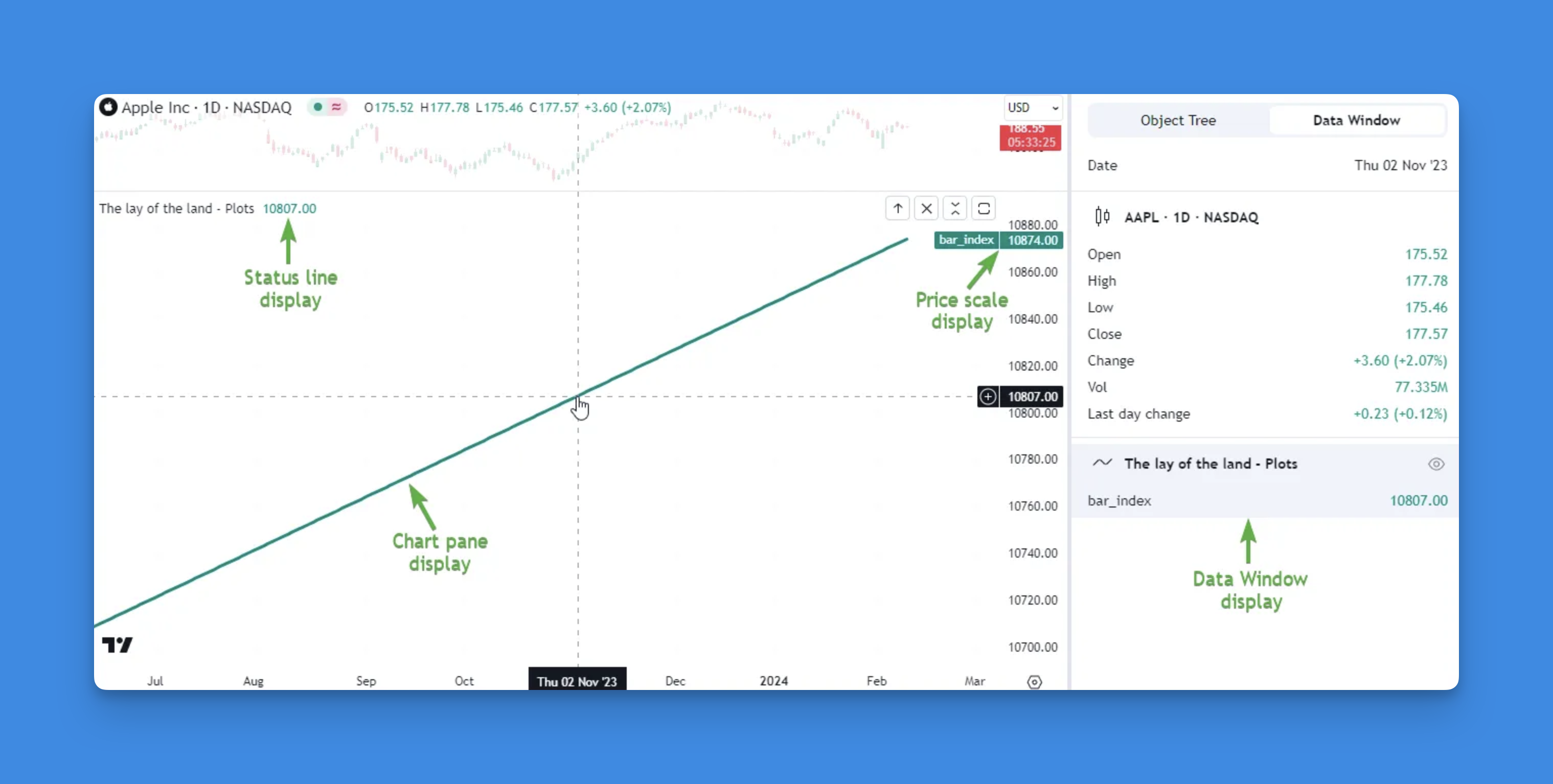
This is hands down the most effective debugging technique for Pine Script. When something's not working right, plot every important variable directly on your chart. You'll instantly see if values are way off from what you expected.

plot(my_variable, title="Debug: My Variable", color=color.red)
plot(another_variable, title="Debug: Another Var", color=color.blue)

Here's what I do: create a separate study just for debugging, plot 5-6 variables at once, and watch how they behave across different market conditions. You'll be amazed how quickly this reveals problems that would take hours to find otherwise.

If you're just getting started with Pine Script plotting techniques, I highly recommend checking out this complete guide to displaying values with Pine Script - it'll teach you all the different ways to visualize your data effectively.

2. Label Your Way to Success

Sometimes plotting lines isn't enough - you need to see the exact numerical values. That's where labels become your debugging superpower:

if barstate.islast
label.new(bar_index, high, "My variable: " + str.tostring(my_variable))

This technique puts a label on the last bar showing exactly what your variable equals at that moment. It's incredibly useful for debugging complex calculations where you need precise values.

For more advanced display techniques that can help with debugging, this comprehensive guide to conditional plotting covers tons of clever ways to show information only when specific conditions are met.

3. Master the Pine Logs (Your Secret Debugging Console)

One of the most underutilized debugging features in modern Pine Script is the logging system. It's like having a proper debug console, but specifically designed for trading indicators:

if barstate.islast
log.info("Close price: " + str.tostring(close))
log.info("My calculation: " + str.tostring(my_calculation))
log.warning("This value seems off: " + str.tostring(suspicious_variable))

These messages appear in the Pine Logs panel in the sidebar, giving you a chronological view of what your script was thinking at each step. It's incredibly powerful for tracking down logic errors and unexpected behavior.

4. The Systematic Isolation Method

When you're dealing with a complex script that's misbehaving, try this approach: comment out most of your code and get just the basic structure working. Then add one piece back at a time, testing after each addition.

This might seem tedious, but it's often the fastest way to pinpoint exactly where things go wrong. I've saved hours of frustration by taking this methodical approach instead of randomly tweaking things.

Why Visual Debugging Changes Everything

Here's the thing about traditional Pine Script debugging - you're essentially flying blind, trying to imagine what your logic looks like in your head. That's where visual tools like Pineify come in handy.

Pineify | Best Pine Script Editor

Website: Pineify

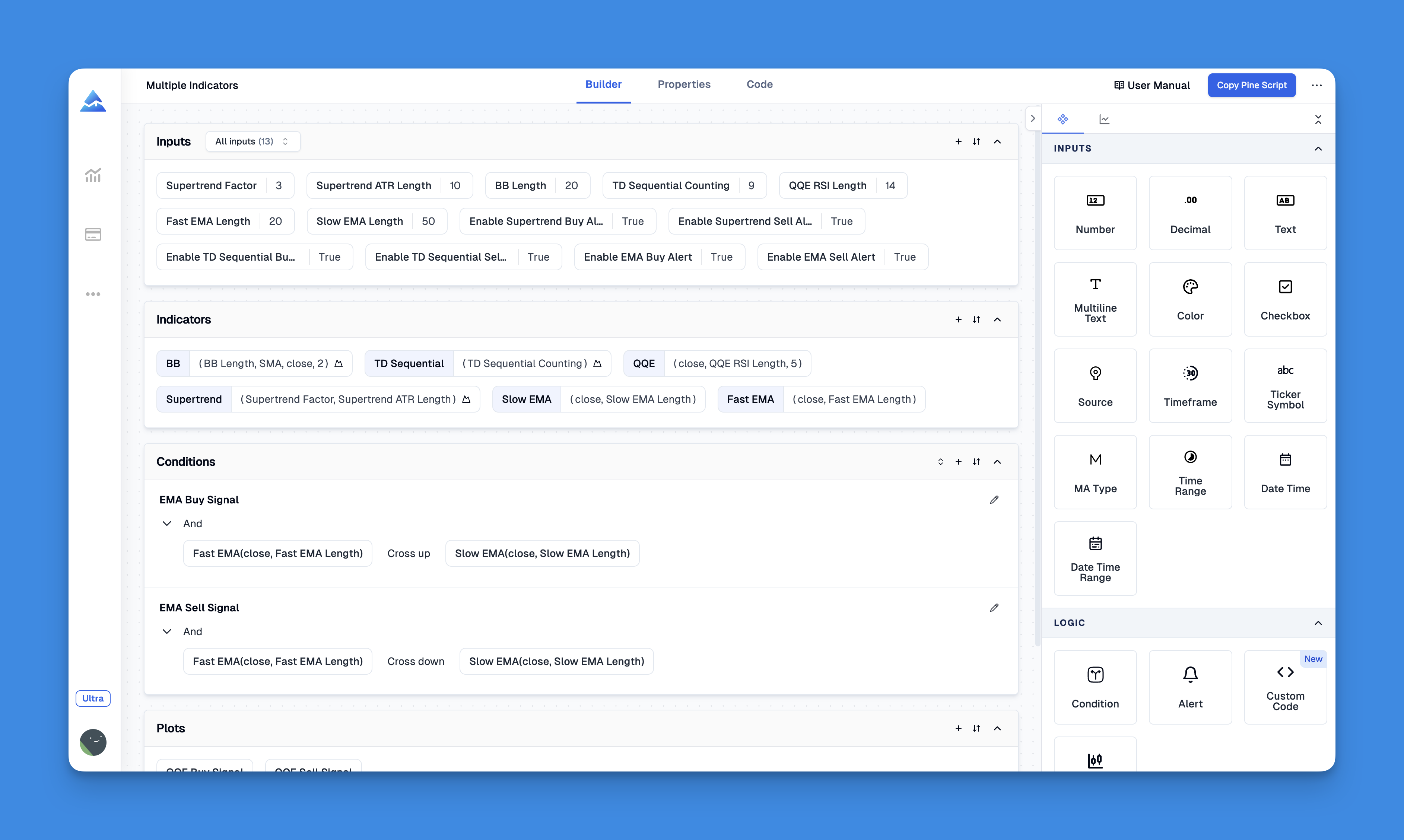
Instead of writing complex conditional logic and hoping it works, you can visually build your conditions and immediately see how they interact. No more wondering if your "RSI > 70 AND price > SMA AND volume > average" logic is actually doing what you think it is.

Pineify | Powerful Condition Editor

Plus, you can import existing Pine Script code and modify it visually, which makes debugging existing scripts much more intuitive than staring at walls of code trying to decode what the original author was thinking.

The Most Common Pine Script Debugging Traps (And How to Avoid Them)

Variable Scope Nightmares

One of the biggest headaches I see is when people declare variables inside an if statement and then try to use them outside. Pine Script won't let you do this, and the error messages can be confusing if you're not expecting it.

Data Type Mix-ups

Trying to plot a boolean value or use a string in a mathematical calculation will break your script faster than you can say "compilation error." Pine Script is pretty strict about data types, which is actually good for catching bugs early.

The Historical vs Real-time Trap

Here's something that catches everyone: your script might work perfectly on historical data but behave completely differently on real-time bars. Always test both scenarios, especially if you're building a strategy.

Off-by-One Index Errors

Using [1] when you mean [0], or vice versa, is probably responsible for more debugging headaches than any other single issue. These reference errors can make your entire logic shift by one bar, throwing off all your calculations.

If you're working with for loops in Pine Script, scope issues become even trickier. Understanding how loops handle variable scope can save you tons of debugging time and frustration.

My Step-by-Step Debugging Workflow

When I encounter a Pine Script problem, here's exactly what I do:

  1. Start with the basics - Comment out everything except the core structure and make sure that works
  2. Add complexity gradually - Uncomment one section at a time, testing after each addition
  3. Plot intermediate calculations - Don't just plot the final result; plot every step of your logic
  4. Use descriptive variable names - rsi_value tells you way more than x when you're debugging
  5. Comment everything - Your future self will thank you when you come back to this code

Advanced Debugging: When Nothing Makes Sense

Sometimes you'll hit a wall where your logic seems perfect, but the results are completely wrong. Here's my troubleshooting checklist for those moments:

Data Issues: Is the symbol you're testing actually active during your chosen timeframe? Some instruments have weird trading hours or gaps that can throw off your calculations.

Scale Problems: Are you plotting a tiny decimal (like 0.001) on the same scale as a large number (like 1000)? This can make one of your plots invisible and lead to wrong conclusions.

Timeframe Dependencies: Some bugs only appear on specific timeframes. Test your script on 1-minute, 1-hour, and daily charts to see if the problem is timeframe-specific.

Complexity Overload: When all else fails, strip everything down to the absolute minimum and rebuild step by step.

Here's a pro tip that's saved me countless hours: when you're really stuck on complex logic, try converting your Pine Script to Python to test your calculations outside TradingView. Sometimes running the same math in a different environment helps you spot issues you completely missed.

Making Debugging Easier: Tools and Techniques

Beyond the basics, there are some advanced techniques that can make your debugging life much easier:

For complex conditional logic, consider learning more about Pine Script's built-in functions - many debugging issues come from reinventing the wheel when TradingView already provides optimized solutions.

If you're building trading strategies, proper backtesting in Pine Script can reveal debugging issues that won't show up in regular indicators.

The Bottom Line: Debug Smart, Not Hard

Pine Script debugging doesn't have to feel like detective work. Use TradingView's built-in tools, plot everything that matters, and don't be afraid to simplify when things get complex.

The real secret is building good debugging habits from the start. Write clear, commented code with descriptive variable names. Test your logic in small pieces rather than building massive scripts all at once.

And remember - the goal isn't to write perfect code on the first try. The goal is to write code that works reliably and that you can understand and modify six months from now when you've forgotten why you made certain decisions.

If you find yourself spending more time debugging than actually analyzing markets, it might be worth exploring visual tools that can help you build and test your logic more intuitively. Sometimes the best debugging technique is preventing bugs from happening in the first place.