Best Algo Indicator TradingView: Top Tools Compared

Algorithmic trading indicators automate the signal-finding process on TradingView. An algorithmic trading indicator is a system that combines multiple technical analysis methods -- moving averages, RSI, MACD, Bollinger Bands, volume analysis -- into one unified tool. Instead of flipping between separate indicators, you get one panel that cross-references them and shows you setups. I've spent the last six months testing about a dozen of these tools on stocks like AAPL and TSLA, and the honest truth is most of them are fine but none are perfect. Here's what I found.
What Are Algorithmic Indicators on TradingView?
Think of an algorithmic indicator as a co-pilot that runs multiple checks before giving you a signal. Instead of relying on one data point -- say, a single moving average crossover -- these tools crunch price action, volume, and market structure at the same time.
Most aggregate 15 or more standard indicators behind the scenes. They look for confluence: multiple factors lining up before flagging a trade. The goal is to filter out noise and reduce false starts. This confirmation approach is the same logic behind the Trend Trigger Factor Indicator, which catches major reversals by combining momentum and trend analysis.
Top Algorithmic Tools for TradingView
SMRT Algo
SMRT Algo keeps your charts clean while still giving you precise signals. It automatically spots liquidity sweeps and order blocks -- moments when big players move in or out. The built-in Scalper Bot handles quick trades, and some users report high returns in short windows with it. You get automatic alerts, weekly strategy ideas, and VIP Discord access. I haven't tested this one on crypto, but for stock scalping it looks solid.
LuxAlgo
LuxAlgo is built for traders who want depth and customization. It includes chart overlays, trend detection, volume analysis, and institutional-level signals. The AI-powered backtesting is its standout feature -- I ran a quick test on SPY using their backtester and the results made me rethink my entry timing. It also maps fair value gaps, order blocks, and dynamic support and resistance. The downside: the learning curve is steep. You'll spend time figuring out which features matter for your style.
Infinity Algo
Infinity Algo adapts to news events instead of getting confused by them. It uses AI to track institutional positioning and earnings momentum, and it knows that tech stocks trade differently from utilities. Users report strong success rates on individual stocks, and it adjusts automatically whether the market is trending, ranging, or choppy. It's one of the few tools I've seen that actually handles sector rotation well. That said, I wouldn't use it for forex -- it's clearly built for equities.
UltraAlgo
UltraAlgo packs over 15 technical indicators into one interface. It scans for buy and sell signals across stocks, forex, and crypto, looking at institutional activity, volume spikes, VWAP, RSI, and moving averages. You can adjust the sensitivity to match volatility, and it plots real-time support and resistance. Alerts come through email, text, or in-app. My main complaint: the interface feels crowded. I prefer tools that hide complexity until you need it.
Syntium Algo
Syntium Algo mixes classic chart analysis with AI predictions and works on crypto, forex, and stocks. It's a plug-and-play indicator that runs on any TradingView chart and timeframe. Its AI engine learns from every trade -- wins and losses -- to refine its signals over time without you touching the settings. On the flip side, the "black box" nature bothers me. I like knowing why a signal appears, and Syntium doesn't always make that clear.
Pineify
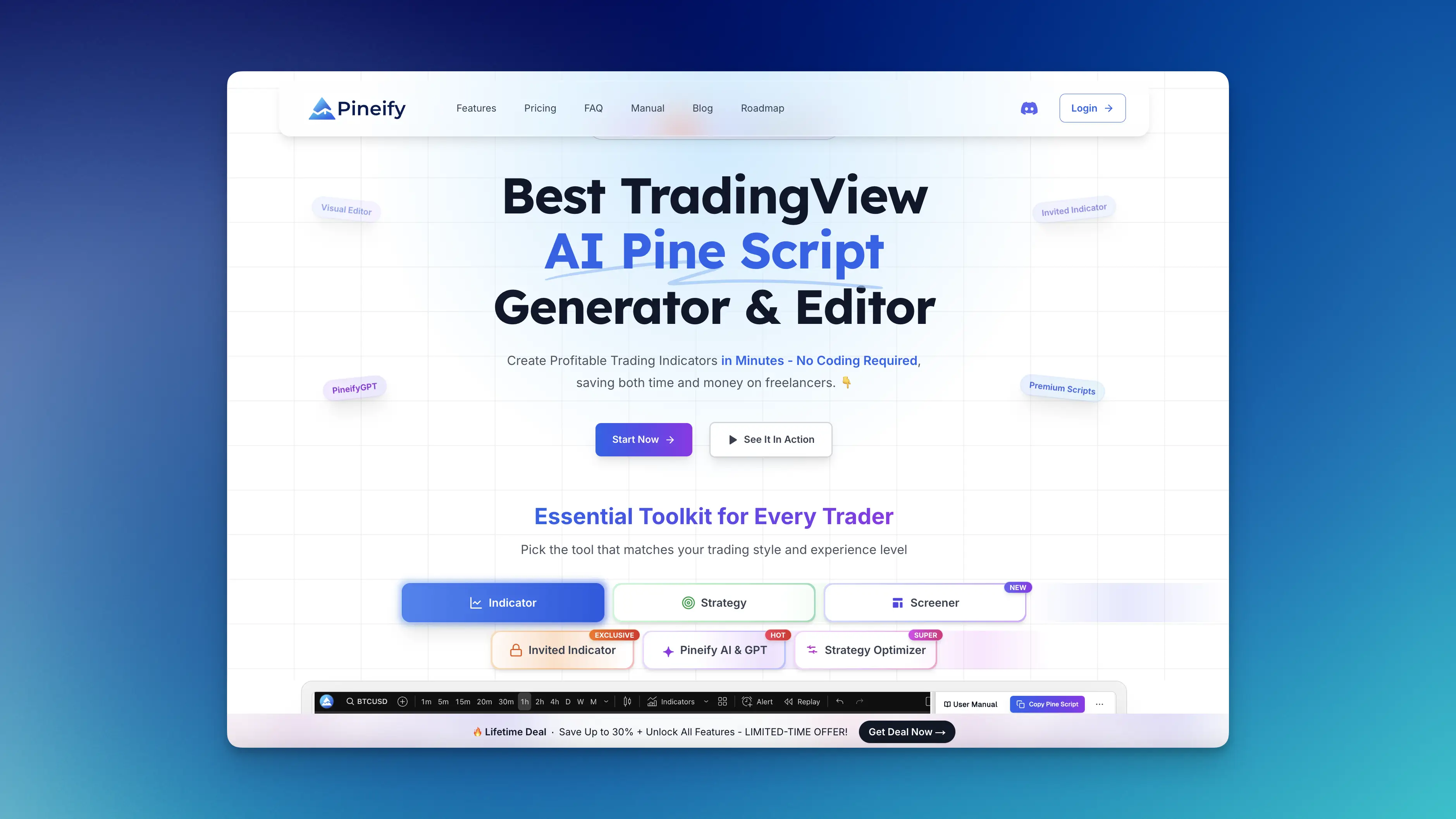
Where the tools above give you ready-made indicators, Pineify lets you build your own without writing code. It's an AI Pine Script generator and visual editor for TradingView. You can combine concepts from different algos, backtest a custom strategy, or create a personalized screener -- all by dragging and dropping. Its PineifyGPT feature handles complex Pine Script through conversation. This is useful if you have a specific edge in mind and can't find an off-the-shelf tool that fits. I've been using it for about three months, and the ability to iterate fast on a strategy idea is its biggest advantage. You can see some end-to-end examples in our guide to Pine Script v6 strategy examples.
What Makes a Strong Algorithmic Indicator?
Picking the right tool comes down to a few concrete factors. Here's what I look for.
Signal Confirmation
The biggest problem with most indicators is false signals. Good algorithmic tools avoid this by requiring multiple conditions before firing. Think of it like needing two sources to confirm a story before publishing. Some indicators let you toggle extra confirmation filters, so you decide how strict the system is. Many also draw supply and demand zones or VWAP levels on your chart, giving you visual context alongside the raw signal. If you want to dig into how to validate a strategy, our guide to backtesting and strategy validation covers the process.
Customization
Your trading style is different from mine. A good indicator lets you tweak parameters -- sensitivity, timeframes, stop-loss method -- without breaking the logic. The best ones let you mix strategies like building blocks: prioritize momentum over volume, or tighten entries for scalping versus swing trading.
Smart Alerts
You can't stare at charts all day. A modern indicator should send alerts when your conditions are met -- email, text, or app notification. Some can even connect to your brokerage through webhooks for automated execution, though I haven't set that up myself and it requires careful configuration.
How to Pick the Right Indicator
Match It to Your Trading Style
If you scalp, you want fast signals with minimal setup. If you swing trade, you want reliability over speed. If you trade stocks specifically, look for tools that understand sectors and earnings cycles. I trade mostly tech stocks, so Infinity Algo's sector awareness appeals to me, but for quick scalps I reach for SMRT Algo instead.
Be Realistic About the Learning Curve
Some tools take an afternoon to learn. Others take weeks. The community around a tool matters more than you think -- a good Discord or forum can cut the learning curve in half. I joined LuxAlgo's Discord early on and saw setups I would've missed on my own.
Consider the Full Cost
Prices range from a one-time fee to monthly subscriptions. One-off purchases feel cheaper upfront. Subscriptions often include updates, support, and community access. Neither is better -- it depends on whether you want ongoing guidance or just the tool.
Common Mistakes to Avoid
Overcomplicating Your Setup
Stacking indicators on top of each other creates conflicting signals and a noisy chart. Simple strategies built on one or two tools you understand outperform complex ones in most market conditions. I learned this the hard way after running five indicators at once on a 1-minute chart and getting whipsawed constantly.
Skipping Backtesting
An indicator is an ingredient, not a recipe. You have to test it against historical data before trading live. Run it across trending and ranging markets, on different timeframes, on the assets you plan to trade. I tested LuxAlgo's signals on 6 months of NVDA data before I trusted them enough to go live.
Ignoring Market Regime
No indicator works in every environment. Trend tools fail in sideways markets. Range-bound tools miss big breakouts. Check the current market conditions before acting on a signal. Sometimes the right move is to step back and wait.
Frequently Asked Questions
What makes algorithmic indicators different from standard TradingView indicators?
Standard indicators analyze one thing at a time -- a single moving average, RSI, or MACD. Algorithmic indicators combine 15 or more tools into one system, cross-referencing price action, volume, and market structure before generating a signal. They also include features like automatic alerts, backtesting, and market regime detection.
Can beginners use algorithmic trading indicators on TradingView?
Yes. Tools like SMRT Algo give you clean charts with clear buy and sell signals out of the box. That said, you'll get more value if you understand basic trading concepts first. Check out the educational resources on Pineify to build that foundation.
How much do algorithmic indicators for TradingView typically cost?
Prices range from about $100 to $500 for a one-time license, or $30 to $150 per month for subscriptions. Premium tools usually bundle updates, support, and community access with the recurring plans.
Do algorithmic indicators work across crypto, forex, and stocks?
Most do. Advanced indicators are built to handle multiple markets. Some, like Infinity Algo, are specialized for stocks and offer sector-level analysis. It's worth checking whether a tool has market-specific presets before buying.
Should I use multiple algorithmic indicators at the same time?
Running several at once usually gives you conflicting signals and a cluttered chart. Most people do better mastering one system. If you have experience, you can pair two complementary tools for extra confirmation, but understand how each behaves first.
What is signal confirmation in algorithmic trading?
Signal confirmation means the indicator requires multiple conditions to align before flagging a trade. Instead of acting on one data point, it cross-validates across momentum, volume, and price levels. This reduces false alarms and makes entries and exits more reliable.
Your First Steps
You have the overview. Now make it useful.
Pick one platform. Choose the tool that matches your trading style best. If there is a free trial, use it. Spend a few sessions just watching the signals.
Join the community. Most tools have a Discord or forum. Reading what other traders post will teach you more than the manual will.
Backtest before you trade. Run your chosen tool against historical data in a trending market, a ranging market, and high volatility. Note where it works and where it doesn't.
Keep a journal. Write down which setups win and which lose. Over 50 to 100 trades, patterns will appear. That's where real confidence comes from.
Paper trade first, then go small. Simulated money first. Then the smallest position size possible. Scale up only after 50-plus trades show consistent results.