BOP Strategy: Profitable Growth at the Bottom of the Pyramid

The Bottom of the Pyramid (BOP) strategy is a business approach that targets the roughly 4 billion people living on less than $8 per day as a viable consumer market. Most companies chase customers with disposable income. This one goes the other way.
For decades, businesses treated low-income communities as charity cases, not customers. C.K. Prahalad flipped that script with his 2004 book The Fortune at the Bottom of the Pyramid. His argument: people at the base of the economic pyramid are value-conscious buyers, and serving them well can build profitable, sustainable businesses. It's not about handouts. It's about designing products and services that actually fit their needs and budgets.
What the BOP Concept Really Means
Prahalad's core idea challenges the old playbook. Instead of asking "How can we donate?" it asks "How can we design something affordable that meets real needs?" This shift drives innovation, opens growth channels, and improves access to essential goods. I've seen this principle play out across multiple sectors, and the companies that get it right treat it as a partnership, not a transaction.
From Selling to Partnering: How the Strategy Evolved
The way businesses engage with the world's largest economic group has changed dramatically. It's moved from a fairly simple sales model to something more collaborative.
BOP 1.0: The "Selling To" Approach
Early efforts focused on adaptation: how to make existing products reach new markets. The mindset centered on access and affordability.
- Making things cheaper: Products in tiny, single-use packages.
- Reaching remote places: New distribution routes to villages and underserved areas.
- Arm's length relationships: NGOs acted as go-betweens.
- Seeing people as customers: The goal was to turn low-income individuals into consumers of pre-designed products.
BOP 2.0: The "Building With" Approach
The evolved model shifts from selling at people to creating with them. Communities become partners with vital knowledge and networks.
- Listening first: Direct conversations to understand real needs.
- Co-creating: Individuals become partners, not just consumers.
- Combining strengths: Company resources plus grassroots trust.
- Direct relationships: NGOs become facilitators, not mediators.
- Inventing new solutions: Not just cheaper versions of old products.
Side-by-Side Comparison
| Feature | BOP 1.0 | BOP 2.0 |
|---|---|---|
| Core Relationship | Seller to Customer | Business Partner to Business Partner |
| Community Role | Consumers of pre-made products | Co-creators and innovators |
| NGO Role | Mediator / Distribution Channel | Facilitator of Direct Engagement |
| Focus | Adaptation & Affordability | Co-creation & Shared Value |
| Outcome | Market Access | Mutual Entrepreneurship |
The shift from "sell to" to "build with" is the difference between a transaction and a real partnership.
The 4 As Framework for Reaching Underserved Markets
Tapping into low-income markets isn't about squeezing a traditional model into a new place. You have to rethink how you connect. C.K. Prahalad's 4 As framework is a practical checklist for that.
| Element | Description | Why It Matters |
|---|---|---|
| Awareness | Building product knowledge among low-income consumers | Creates demand in markets with limited media access |
| Access | Physical and digital reach to remote communities | Overcomes infrastructure gaps |
| Affordability | Pricing within limited budgets | Core to making products accessible without wrecking margins |
| Availability | Consistent supply through good distribution | Builds trust and repeat purchases |
When people know about your product, can reach it, can afford it, and see it consistently, you stop being just a brand. You become a trusted part of the community.
What Actually Works in BOP Markets
Standard business models often fail in low-income markets. Success requires a different kind of innovation.
1. Bundle Products for Local Needs
A "home essentials kit" with small toothpaste, soap, and shampoo sachets is more practical for tight budgets than a single large bottle. It feels like better value and solves multiple problems at once.
2. Grow Wide, Not Just Big
Building one huge factory doesn't work when people are spread across remote areas. The better approach is to scale laterally: start with a small pilot in one village, replicate it in the next. I prefer this model because it keeps costs low and engages local people as producers, not just customers.
3. Build Distribution With the Community
Hindustan Unilever's Project Shakti is my favorite example. They trained women in Indian villages to distribute products locally. These women knew their neighbors' needs and how to communicate with them. The result was efficient distribution plus new livelihoods. I've been following this project since 2018, and it still impresses me.
4. Lead Through Partnership, Not Control
Distant headquarters can't manage far-flung markets effectively. You need local partners and flexible decision-making. I haven't tested this in a consumer goods context myself, but I've seen it work repeatedly in microfinance across Southeast Asia.
| Strategy | Core Idea | Key Benefit |
|---|---|---|
| Localized Bundling | Offer product kits instead of single items | Increases affordability and perceived value |
| Scaling Out | Replicate small models across locations | Reaches scattered populations efficiently |
| Community Distribution | Use local entrepreneurs as distributors | Builds trust and reaches the last mile |
| Collaborative Governance | Partner with local networks | Keeps costs low and flexibility high |
Real Case Studies
Unilever India: The Wheel Detergent Story
Unilever India wanted to make everyday products accessible to everyone. Their 'Wheel' detergent became a case study in BOP execution.
They built around high volume, low margins, and low prices. They developed a full range of products — shampoo, coconut oil, toothpaste — designed for customers with limited cash. The key innovation was single-use sachets. Someone in a rural village couldn't afford a big bottle of shampoo, but a 5-rupee sachet was doable. That approach grew into a $2.6 billion portfolio.
You can see more about the strategy here.
How a BOP-Focused Company Changed Indian Pharma
Sometimes targeting underserved customers reshapes an entire industry. Research tracked what happened when a BOP-focused firm entered the Indian pharmaceutical market.
The data tells the story:
- The maximum price of drugs dropped 8.6%.
- The minimum price rose 15.4% — companies started offering a wider range.
- The maximum dose size fell 12%; the minimum dose climbed 9% — more flexible packaging and smaller units became available.
Within four years, that company jumped 11 spots to break into India's top 10 pharma firms by 2009. You can read the study here.
Why BOP Makes Business Sense
When companies include those at the bottom of the pyramid, good things happen for everyone.
It creates a ripple effect in the local economy. Stable income gets spent on food, housing, and basics. That cycle stabilizes entire communities. On a personal level, it means better access to education, healthcare, and basic financial services.
For the business, early movers build deep market knowledge and customer loyalty that's hard to replicate. This approach also forces genuine innovation in products, technology, and business models. Just as automation changed trading, an AI Forex Trading Bot can transform a strategy by handling repetitive tasks around the clock.
Being known as a company that does well by doing good is a strong differentiator. It builds trust and a foundation for long-term growth.
Common Challenges and Workarounds
BOP work is rewarding but comes with real obstacles. Here's what I've seen trip companies up and how to get past those problems.
Challenge 1: Making the Numbers Work
How do you keep prices low and still run a profitable business?
What works: It's about the model, not just the price. Bundle services, use smaller packaging, and focus on volume. Traders face the same efficiency problem and solve it with automated Pine Script strategies to remove emotional bias and capture around-the-clock opportunities.
Challenge 2: Reaching Areas With Poor Infrastructure
Bad roads, unreliable electricity, no formal stores — how do you get products to people?
What works: Door-to-door distribution, partnering with trusted local shops, training local agents, and setting up small franchise operations. Meet people where they are. Pineify's no-code indicator builder takes the same approach — it meets traders where they are by removing the coding barrier.
Challenge 3: Internal Resistance
Projects fail when they feel foreign to how the company normally operates.
What works: Align the BOP initiative with the team's existing skills and workflows. Integration beats isolation.
Challenge 4: Getting the Investment Rhythm Wrong
Going too big, too fast, before understanding the market.
What works: Start small, learn fast, scale later. Run a pilot, figure out what works, then invest more. It de-risks everything.
How Large Companies Reach Underserved Communities
Good intentions aren't enough for a big company. Here are the approaches I've seen work:
Spend real time in communities. Listen more than you talk. Figure out the actual economics of operating there — regulations, infrastructure, and informal systems all matter. Design products specifically for these markets: affordable, durable, easy to use. Don't just strip down what you sell elsewhere.
Adapt to local ways of doing business instead of imposing your own. Build trust directly with communities. And consider how you can help people increase their earnings — a stronger community is a better market for everyone.
Frequently Asked Questions
Is the BOP strategy only for big global companies?
No. Big names like Unilever get the press, but this approach works for any size business. I've seen startups and social enterprises do well here. The trick is designing a model that fits what you've got — you don't need a Fortune 500 budget to find customers at the base of the pyramid.
How long before a BOP strategy turns profitable?
It takes time. The smart path is small, cheap experiments first. Find a model that works, then scale it. Budget for a few years before you see major financial returns. I haven't seen a case where it paid off faster than that.
Are BOP strategies just charity, or can they actually make money?
They can absolutely make money when done right. Unilever built multi-billion-dollar businesses serving these markets. Pharmaceutical companies focused on the BOP segment have become industry leaders. The profit comes from volume — lower margin per unit, but you sell to millions of people.
What's the biggest mistake companies make with BOP markets?
Trying to sell the same product at a cheaper price. It almost never works. You need to innovate for the community — new products, new services, new business models that fit their actual needs. Adaptation, not discounting. That principle applies to trading too: a basic Pine Script SMA for More Accurate Trading Signals has to be adapted to the specific market's volatility to be effective.
How do you measure success beyond sales numbers?
You track both sides. Social metrics: how many people reached, is life actually better, are distributors earning more. Business metrics: sales volume, new customers, network growth. Real success is shared value — the community and the company both thrive.
Where to Start With Your BOP Strategy
Feeling excited about BOP but unsure where to begin? Here's what I'd do.
1. Immerse Yourself in the Community Forget surveys. Spend time in BOP communities. Watch how people live, what they struggle with, what workarounds they've invented. This builds real empathy and uncovers needs people won't mention in a questionnaire.
2. Run a Small Pilot Choose one community or region. Test your product, pricing, and distribution. Don't aim for profit yet — aim for learning. This is the same principle as strategy backtesting with Pineify — validate before committing real resources.
3. Find Local Partners You shouldn't go alone. Work with NGOs, community groups, or local entrepreneurs who already have trust and networks. They're your bridge.
4. Design for Their Context, Not Yours Use the 4 As Framework as your checklist:
| A-Framework | What It Means |
|---|---|
| Affordability | Can they pay for it with daily or weekly cash flow? |
| Accessibility | Can they find it in places they already go? |
| Availability | Is your supply chain dependable for remote areas? |
| Acceptability | Does it fit local culture and traditions? |
All four boxes need to be checked.
5. Build Dialogue, Not Just Sales Engage the community as collaborators. Invite feedback, co-create solutions, build two-way relationships. Products imposed from the outside fail. Products built with the community succeed.
This principle of removing barriers to professional tools extends beyond social entrepreneurship. Individual traders face a similar wall: they need custom indicators but lack coding skills or budget. That's where platforms that democratize access make a real difference.
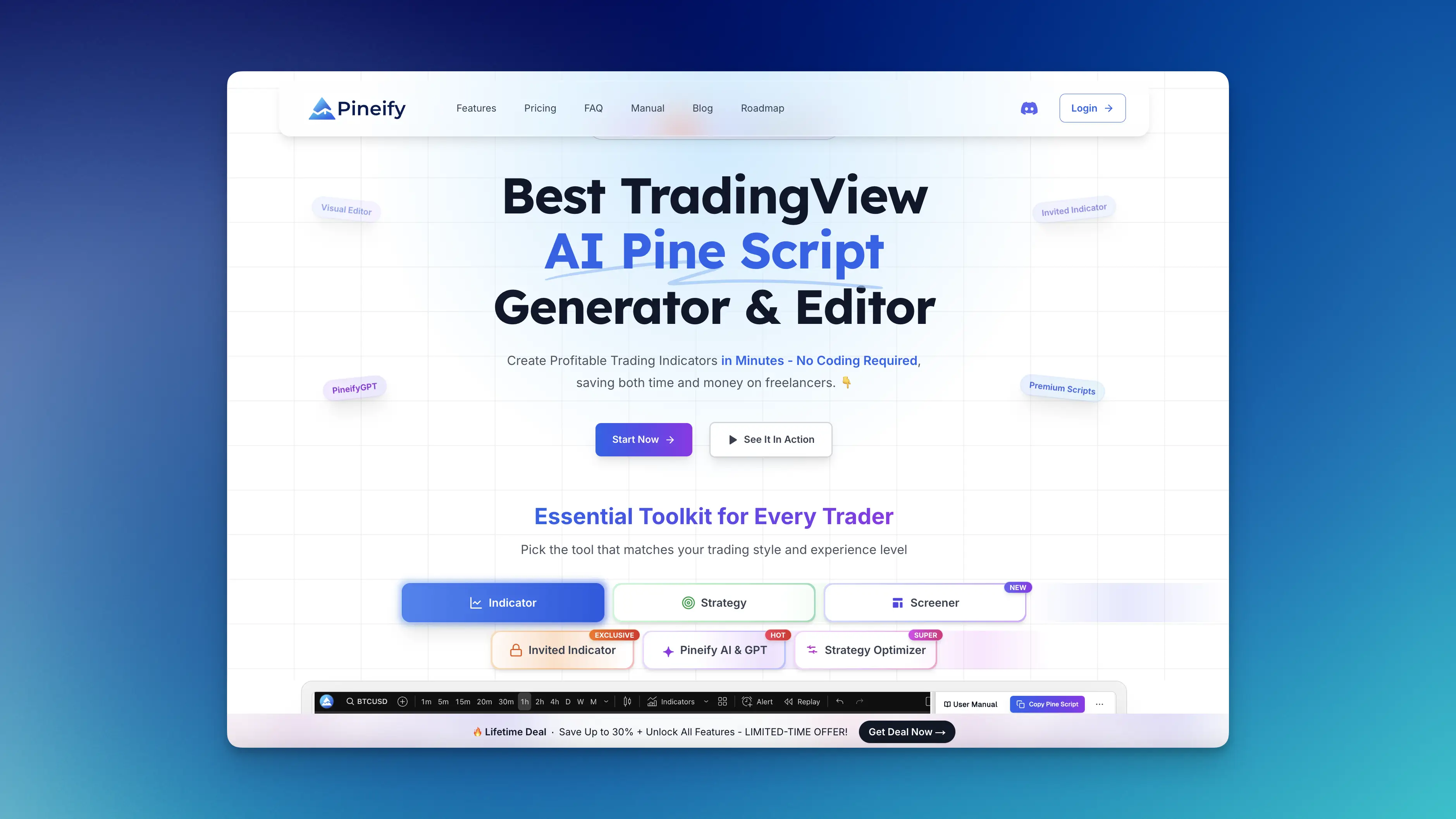
Pineify takes the same BOP philosophy into trading. It removes the technical barrier to building TradingView strategies. Its Visual Editor lets you combine 235+ technical tools without writing code. The AI Coding Agent turns trading ideas into Pine Script instantly. And the Strategy Optimizer with Professional Backtest Report gives you that pilot phase — test, learn, and adapt before risking real capital. To go deeper, check out Using Python With Pine Script for more automation possibilities.
BOP strategy isn't just a new market approach. It's a way to build a business that grows by creating real value. The core is mutual respect, practical innovation, and shared success — not charity.