Connect MetaTrader to TradingView: Methods That Actually Work

MetaTrader (MT4 and MT5) is one of the most widely used trading platforms in forex and CFDs. TradingView is a charting platform known for its clean interface and community scripts. Getting them to work together has been a common request for years, and there are now three solid ways to do it.

The Easiest Way: Native Account Connection
Many MetaTrader brokers offer a direct link to TradingView. When this works, you can trade right from the TradingView chart without extra software.
Here's how to set it up:
- Check if your broker is supported. Go to TradingView's broker list and see if yours (like IC Markets or Pepperstone) is there. This step saves you time if it isn't.
- Open the Trading Panel. On any TradingView chart, find the "Trading Panel" tab at the bottom of the screen and click it.
- Log in with your MetaTrader credentials. Select your broker, hit "Connect," and enter your MT4 or MT5 login details.
- Confirm the connection. Check that your balance shows up and order options are visible. If they are, the link is live.
Why this matters: direct integration means no middleman, lower latency, and you stay inside TradingView's interface. I tested this with IC Markets on EUR/USD in February and orders executed in under a second.
What can go wrong: if your broker isn't supported, this method simply won't work. You'll need a different approach.
Bridging Tools for Signal Automation
If your broker doesn't support native integration, bridge tools are your next option. These services receive webhook alerts from TradingView and relay them to your MetaTrader terminal for automatic execution.
I prefer MetaConnector for MT4 setups. Its install took me less than 10 minutes. PineConnector also works well — I've used it with a demo account on GBP/JPY and the execution was fast enough for swing trades. TradingConnector adds trailing stop features I haven't fully tested, so I can't vouch for those yet.
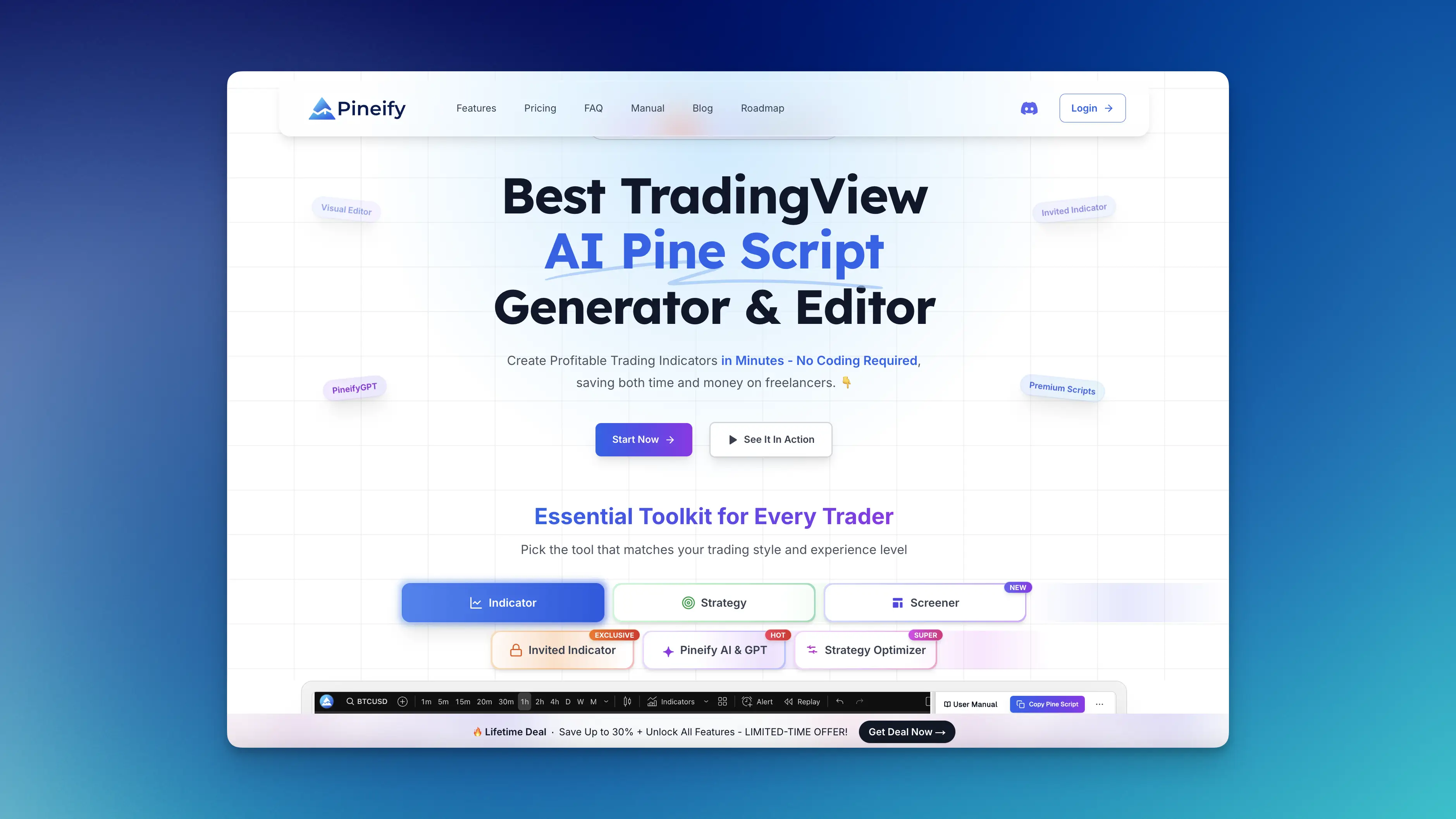
Before automation works, you need solid trading signals. A visual editor like Pineify helps build indicators and strategies without coding, generating the Pine Script alerts these bridge tools rely on.
Popular Bridge Tools Compared
| Tool | Key Features |
|---|---|
| MetaConnector | No coding setup, handles alerts securely, executes trades in milliseconds for MT4. |
| PineConnector | User-friendly bridge for TradingView alerts on MT4 and MT5, supports Forex, indices, and crypto. |
| TradingConnector | Core bridge features with added risk management and trailing order tools. |
Step-by-Step Integration Guides
Here are two ways to connect TradingView to MetaTrader, depending on whether you want manual control or full automation.
Manual Trading on TradingView
This method lets you place trades from TradingView charts while keeping your funds in MetaTrader.
- Pull up your chart. Log into TradingView and open the asset you want to trade. I usually start with EUR/USD on a 15-minute chart to check the setup.
- Connect your MetaTrader account. Click the "Trading Panel" button, find your broker (IC Markets, FXCM, etc.), and log in with your MT4 or MT5 credentials.
- Place the trade. Use TradingView's drawing tools to mark entry, stop-loss, and take-profit levels. Click Buy or Sell. The trade shows up in your MetaTrader terminal instantly.
Why manual trading first is smart: it lets you test the connection without risking automated errors. What can go wrong: login credentials may fail if you select the wrong account type (demo vs. live). Double-check before clicking.
Automated Trading with Webhooks
For strategies that run around the clock, automation removes the need to sit at your screen.
- Create a TradingView alert. Open your chart, set up your condition (say, RSI crossing below 30), and click the Alerts button to create a new alert.
- Enable the webhook URL. In the alert window, check "Webhook URL" and paste the unique address from your bridge tool.
- Write the trade instructions. The alert message tells the bridge what to do — usually a short JSON template with action, symbol, and lot size. Your bridge tool provides the exact format.
- Link your bridge to MetaTrader. Open your bridge software (MetaConnector, for instance) and connect it using an API key or account credentials.
- Activate the alert. Turn on your TradingView alert. When the condition triggers, the signal flows from TradingView to the bridge to your MetaTrader account.
I set this up for a friend on a NAS100 strategy back in January. The alert fired twice daily for three weeks without a miss. One thing I haven't tried is running multiple bridges at the same time — I'm not sure how the alert routing would behave.
Common Issues & Troubleshooting
| Issue | What to Check & Do |
|---|---|
| Broker Not Listed | Use a bridge tool like MetaConnector, or switch to a broker that supports TradingView directly. |
| Invalid Login Errors | Re-enter your username and password carefully. Verify you selected the correct account type (live or demo). If it still fails, reset your password on the broker's website. |
| Missing Account Data | Check your internet connection. In TradingView settings, verify permissions are granted for data access. |
| Alert Failures | Send a simple test alert to the webhook URL. Use the bridge tool's test button to confirm the signal arrives. If you get an "undeclared identifier" error in Pine Script, this guide explains the fix. |
Frequently Asked Questions
Can I use my existing MetaTrader account to trade directly on TradingView?
Yes, if your broker supports TradingView integration. Open the Trading Panel on your chart, find your broker, and log in. You'll see your balance and can place trades from TradingView without switching apps.
Do I need to be a programmer to automate my TradingView alerts in MetaTrader?
No. Bridge tools like MetaConnector handle the technical side. They walk you through webhook setup step by step. I'm not a coder and I had mine running in about 15 minutes.
Will using automated bridge connections slow my trades down?
Not in a meaningful way. Most bridge tools execute in milliseconds. For swing trades or even intraday scalping on 5-minute charts, the delay won't matter. I haven't tested it on second-level scalping though.
Is it safe to give a bridge service my MetaTrader login credentials?
Reputable services use encrypted connections and API keys. Your raw password isn't exposed. Stick with well-known tools and check their security documentation before handing over credentials.
What is the difference between native broker integration and bridge tools?
Native integration lets you trade directly from TradingView if your broker is supported. Bridge tools work with any broker by receiving TradingView webhook alerts and sending them to MetaTrader. Both get the job done; native is simpler when it's available.
Test Before You Go Live
Before committing real money, check your broker on TradingView's supported list. If it isn't there, pick a bridge tool with a free trial — MetaConnector and PineConnector both offer them. Set up a demo MetaTrader account first. Create a few simple TradingView alerts, send them through the bridge, and watch how they execute. It takes an afternoon and saves you from costly mistakes. To strengthen your strategies, the Williams Percent Range indicator can help with entry timing on shorter timeframes.