A Trading Journal Can Stop You Repeating Costly Mistakes

Every trader knows that feeling — that pit in your stomach when you realize you've just repeated last month's mistake. You sold too soon, again. You broke your own risk rules, again. A trading journal is a structured record of every trade you take: entry and exit prices, position size, emotional state, strategy used, and the lesson learned. Without this record, your blind spots stay invisible. It sounds basic, but it's the most underused tool a trader can own.
Why We Keep Falling Into the Same Trading Traps
Our brains are built to push ahead, not look back. After a losing trade, your instinct is to jump into the next opportunity, not to pore over what went wrong. This creates a blind spot. Without a clear record, your hidden patterns — the real reasons behind your wins and losses — stay buried under daily market noise. Maybe you're using a complex indicator incorrectly without realizing it; a guide on how to remove or hide TradingView indicators can help declutter your chart and focus on what matters.
The most expensive habits — overtrading, revenge trading, taking profits too early — are almost invisible in the moment. We see them clearly only in hindsight, if ever. The problem often isn't your strategy; it's your self-awareness. A trading journal fixes this. It turns gut feelings and vague memories into data you can actually learn from.
I started journaling seriously in March 2023, and by June I'd spotted that my TSLA trades had a 68% win rate while my AAPL swing trades were barely profitable. That single pattern changed how I allocated capital.
What a Trading Journal Actually Does For You
Think of a trading journal less like a spreadsheet and more like a personal trading coach. Its real power isn't just logging numbers — it's creating a clear feedback loop for your decisions. You make a trade, you record what happened and how you felt, and you use those insights to make smarter choices next time. It turns random experiences into actionable lessons.
Here's what you'll typically track to get that full picture:
- Where you got in and out – To see if your timing matches your plan.
- How much you risked – To catch if your biggest losses come from your most emotional bets.
- Your mood that day – To connect how you were feeling to the quality of your decisions. (Were you impatient? Overconfident?)
- The type of trade – To figure out which strategies actually work and which don't. If you're struggling to define a profitable approach, a guide to TradingView strategies for crypto can provide a framework to test and journal about.
- How well you stuck to your plan – To measure the gap between your rules and your real-time actions.
- The key lesson – To build your own playbook of what to do and what not to do next time.
Over weeks and months, this collection tells you a story that your P&L statement never can. It shows you why you win and why you lose. That's how you grow.
Spotting the Habits That Quietly Shrink Your Profits
Small slips feel like one-offs in the moment. Only when you look back over weeks does the real story emerge. A simple journal connects the dots you can't see in the heat of a session.
You might feel like Fridays are tough, but your journal could show a 35% win rate on Friday afternoons against 62% on Tuesday mornings. That's not a feeling — it's a fact you can act on. Or maybe you note your mood each day and see that every trade taken on a "low confidence" day ends in the red.
I've found that my worst days happen when I skip the pre-market notebook check. After losing $1,200 on SPY in a single afternoon last October, I traced it back to a morning where I didn't write down my max loss for the day. The journal made that connection obvious.
Here are the common patterns a good trading journal will reveal:
- Revenge Trading: Rushed, poorly thought-out trades cluster right after a big loss. The journal makes this reaction impossible to ignore.
- Shifting Stops Out of Hope: You widen your stop-loss, not because the chart changed, but because you really believe the trade will turn around. Your stop-adjustment log tells the emotional story.
- Leaving Money on the Table: Compare your logged exit with where the price went afterward. If you're consistently jumping off winners too early, it's right there in black and white.
- Overtrading Certain Days: Add up wins and losses by day. You might find you lose focus every Wednesday afternoon.
- Skipping Your Own Rules: If you rate your plan adherence each trade, a sudden drop in those scores is a red flag.
| Pattern | What Your Journal Shows | The Simple Fix |
|---|---|---|
| Revenge Trading | Clustered losses after a single big loss. | Mandatory break after a certain loss threshold. |
| Moving Stop-Losses | Stop adjustments that don't match your initial chart notes. | Stops only move in the trade's favor, never wider. |
| Exiting Winners Too Early | Exit price reached long before the market stops moving in your direction. | Test a trailing stop or partial-profit target. |
| Overtrading | High trade count on specific days leads to a net loss. | Set a strict max number of trades per session. |
| Breaking Your Checklist | A drop in your "plan adherence" score. | Print your checklist. Don't enter unless every box is checked. |
Once you see the pattern, you can build a simple rule to stop it. That's how you turn hindsight into a real edge.
How to Build a Trading Journal That Actually Makes You Better
Jotting down "bought AAPL, made $200" doesn't help you grow. The real value comes from recording the why behind every decision, not just the what.
A consistent structure makes all the difference:
| Field | Purpose |
|---|---|
| Date & Session | Identify timing patterns and best/worst windows |
| Setup/Strategy Tag | Compare performance across trade types |
| Entry & Exit Price | Evaluate execution precision against your plan |
| Risk Amount & R-Multiple | Assess whether risk was properly sized before entry |
| Emotional State / Mood | Correlate psychology with outcome quality |
| Plan Adherence | Measure the gap between rules and actual behavior |
| Chart Screenshot | Visual context for post-session review |
| Lessons Learned | Turn each trade into an actionable insight |
Fill this out for every single trade, not just the bad ones. It's easy to be diligent when you're losing, but skipping entries after wins creates the biggest blind spots. Gaps in your data are where the same old mistakes hide and keep repeating.
I prefer logging trades manually rather than using auto-import. The two minutes it takes to type my entry rationale forces me to slow down and think.
How Your Trading Journal Can Actually Help You Improve
Writing trades in a notebook or spreadsheet is a start, but it's slow. Pineify was built to solve that problem. It takes your raw trade data and turns it into clear insights through four key features.
1. Strategies: Know What Actually Works
Define your setups with rules and checklists. Tag each trade with the strategy you used. Later, you'll see the exact win rate and profit factor for each one. No more guessing if a setup is actually profitable.
2. Diary: Spot the Mind Game Patterns
Rate your confidence, note if you stuck to your plan, and jot down quick lessons. Over time, you might see that you take reckless trades every Friday afternoon, or that you get fearful after two losses in a row.
3. Sessions: Find Your Best Trading Windows
Group trades by time — "Asian Session" or "Power Hour" — and see your P&L and win rate for each window. If the data shows you consistently lose money after 2 PM, you have a solid reason to close your laptop.
4. Reports: Automated Performance Review
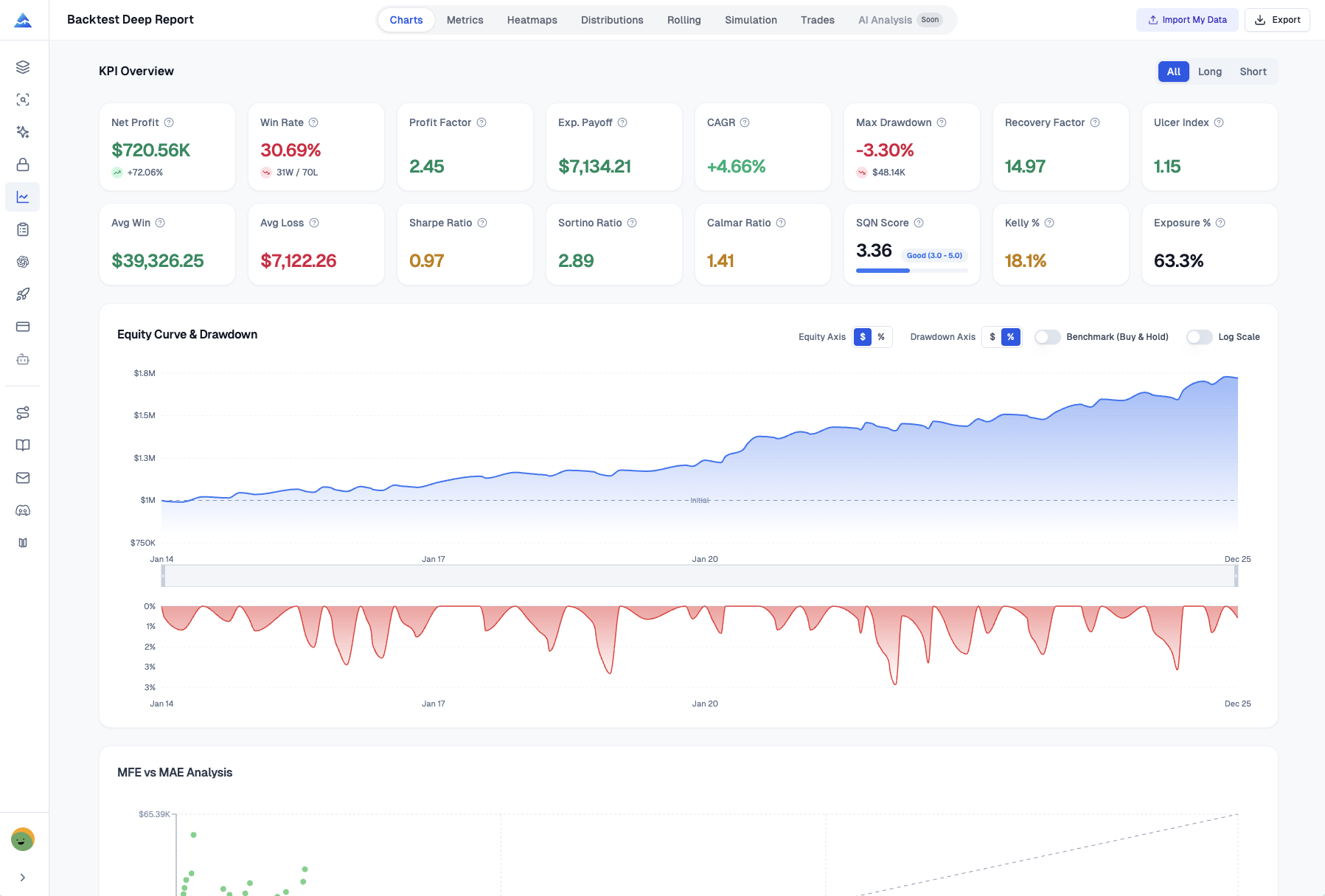
Pineify creates weekly and monthly reports that break down your performance by instrument, strategy, and direction. It highlights your best and worst trades and shows how your key metrics trend over time.
On top of these, Pineify tracks Win Rate, Profit Factor, Sharpe Ratio, Sortino Ratio, and Max Drawdown — the same metrics professionals use to separate solid strategies from lucky streaks.
I'm honest about one thing — Pineify doesn't connect directly to your broker. You enter your trade data manually. I've tested auto-import journals and found they skip the reflection step; writing it yourself is where the real insight comes from. But if full automation is what you need, you'll want to look for a broker-integrated solution.
Making Journaling a Natural Part of Your Trading Day
A trading journal only works if you actually use it. The traders who see real change aren't the ones who write only after a bad day. They show up after every session, win or lose.
Here's a sustainable habit broken into simple steps:
- Before You Trade — Glance at your strategy rules. Jot down why you're getting in.
- Right After a Trade — Within 30 minutes, log the hard facts: entry, exit, plan adherence. Note how you felt.
- At the End of Your Day — Write a short diary entry. What was the main lesson?
- Once a Week — Spend 20 minutes reviewing your logs. Is a pattern showing up? Understanding how backtesting complements journaling can add historical perspective.
- Once a Month — Compare this month's numbers to last month's. Are you improving? Pick one thing to work on next.
For your first week, focus on just three trades. Write everything down — entry, exit, how you felt, why you took the trade. After seven days, review your notes. Ask yourself: "What keeps showing up?" Then make it easy on yourself. Tools like the Pineify Trading Journal organize those notes and surface the patterns.
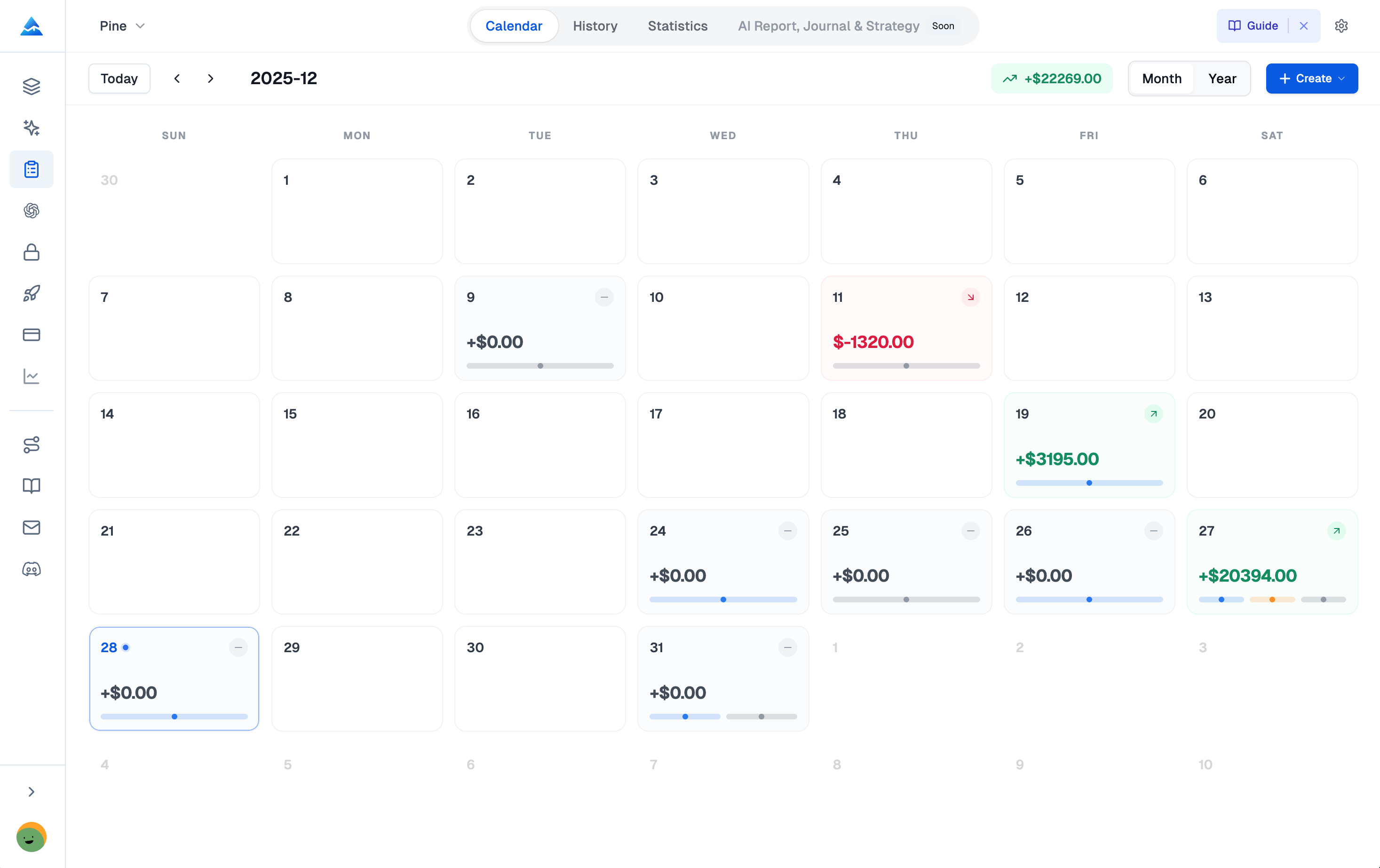
Stick with it for three months. Almost everyone who does can point to specific habits they've fixed — and those fixes directly help their bottom line.
Frequently Asked Questions About Trading Journals
Do I really need a trading journal if I am already making money?
I'd say yes. A journal shows you why the money is coming in, not just that it is. That's the difference between luck and knowing exactly what you're doing. Markets shift — when they do, that understanding keeps you from wondering where your edge went.
How long until I actually see a difference from journaling?
Small patterns show up in about a month if you log daily. The bigger shifts in performance — the ones that actually save you money — take more like two or three months of consistent weekly review.
What is the real difference between a trade log and a trading journal?
A log is a receipt — bought here, sold there. A journal is the full story: why you bought, how you felt, what you'd change. That context is what actually makes you a better trader.
Is it better to write trades down myself or use an auto-import tool?
I've tried both. Writing manually forces you to slow down, and that's where the learning lives. Pineify uses a manual-first approach for exactly that reason. I haven't found an auto-import tool that gives me the same insight.
Can keeping a trading journal help me stop emotional trading?
This is the one area where a journal beats everything else. Track your mood next to your trades and the pattern jumps out — confidence spikes and suddenly risk management disappears. Data beats willpower, every time.
What should I include in every trading journal entry?
At minimum: entry and exit price, position size, strategy used, your mood, whether you followed your plan, and the lesson you're taking away. Screenshot the chart if you can — it makes a big difference during weekly review.
How does tracking trading patterns in a journal improve long-term performance?
You log consistently, and over time you see the same things popping up — overtrading on certain days, exiting winners too soon. Once you see it, you build a rule to block it. That's how you turn mistakes into actual improvements.