Master Pine Script v6 Alerts for Effective Trading

Pine Script v6 is a powerful scripting language used on TradingView to create custom technical indicators and strategies. One of its key features is the ability to generate alerts based on specific conditions within these scripts. This capability allows traders to receive notifications when certain market conditions are met, enabling more timely decision-making.
What Are Alerts in Pine Script?

Alerts in Pine Script are notifications triggered by specific conditions defined within a script. These alerts can be set up to notify users via email, SMS, or app notifications when a predefined condition occurs on the chart. Pine Script provides two primary functions for creating alerts: alert() and alertcondition().
alert()Function: This function is used to send dynamic alerts from both indicators and strategies. It allows for complex alert messages that can include real-time data values and custom text.alertcondition()Function: Primarily used in indicators, this function creates static alert conditions that are listed in the "Create Alert" dialog box. It is less flexible thanalert()but useful for simpler alert setups.
Setting Up Alerts with Pine Script v6
To effectively use alerts in Pine Script v6, it's essential to understand how to implement these functions within your scripts.
Creating Alerts Using alert()
The alert() function is versatile and can be used in both strategies and indicators. Here's a basic example:
// This source code is subject to the terms of the Mozilla Public License 2.0 at https://mozilla.org/MPL/2.0/
// © Pineify

//======================================================================//
//                    ____  _            _  __                          //
//                   |  _ \(_)_ __   ___(_)/ _|_   _                    //
//                   | |_) | | '_ \ / _ \ | |_| | | |                   //
//                   |  __/| | | | |  __/ |  _| |_| |                   //
//                   |_|   |_|_| |_|\___|_|_|  \__, |                   //
//                                             |___/                    //
//======================================================================//

//@version=6
indicator("[Pineify - Best Pine Script Generator] Price Crossover Alert", overlay=true)
ma = ta.sma(close, 20)
if (ta.crossover(close, ma))
    alert("Price has crossed above the moving average!", alert.freq_once_per_bar)
In this script:
- A simple moving average (SMA) of 20 periods is calculated.
- An alert is triggered when the price crosses above this SMA.
- The alert message "Price has crossed above the moving average!" is sent once per bar when the condition is met.
Using alertcondition() for Static Alerts
The alertcondition() function is suitable for creating predefined alerts that users can select from the TradingView interface:
// This source code is subject to the terms of the Mozilla Public License 2.0 at https://mozilla.org/MPL/2.0/
// © Pineify

//======================================================================//
//                    ____  _            _  __                          //
//                   |  _ \(_)_ __   ___(_)/ _|_   _                    //
//                   | |_) | | '_ \ / _ \ | |_| | | |                   //
//                   |  __/| | | | |  __/ |  _| |_| |                   //
//                   |_|   |_|_| |_|\___|_|_|  \__, |                   //
//                                             |___/                    //
//======================================================================//

//@version=6
indicator("[Pineify - Best Pine Script Generator] Static Alert Example", overlay=true)
ma = ta.sma(close, 20)
alertcondition(ta.crossover(close, ma), title="Cross Above MA", message="Price crossed above the moving average")
This script sets up an alert condition that users can activate through the TradingView UI without needing to modify the script directly.
Advanced Alert Customization
Pine Script v6 allows for advanced customization of alerts, enabling traders to tailor notifications to their specific needs:
- Dynamic Messages: Using placeholders and variables, you can create dynamic alert messages that include real-time data values such as current price levels or indicator values.
- Multiple Conditions: Scripts can contain multiple alert conditions, allowing users to choose which specific conditions they want to be notified about.
Practical Applications of Alerts
Alerts are crucial for traders who need to monitor multiple markets or complex conditions without being glued to their screens. Here are some practical applications:
- Trend Confirmation: Alerts can notify traders when a trend reversal or continuation pattern occurs, such as a moving average crossover.
- Breakout Signals: Traders can set alerts for price breakouts above resistance or below support levels.
- Volatility Spikes: Alerts can be configured to trigger when there is an unusual increase in volatility, helping traders manage risk more effectively.
Best Practices for Using Alerts
When setting up alerts in Pine Script v6, consider these best practices:
- Limit Frequency: Use frequency settings like
alert.freq_once_per_barto avoid receiving too many notifications. - Test Conditions: Before deploying alerts on live markets, thoroughly test your conditions on historical data to ensure accuracy.
- Keep It Simple: Start with simple alert conditions and gradually add complexity as needed. Overly complex scripts can lead to missed signals or false positives.
Using Pineify to Create Alerts
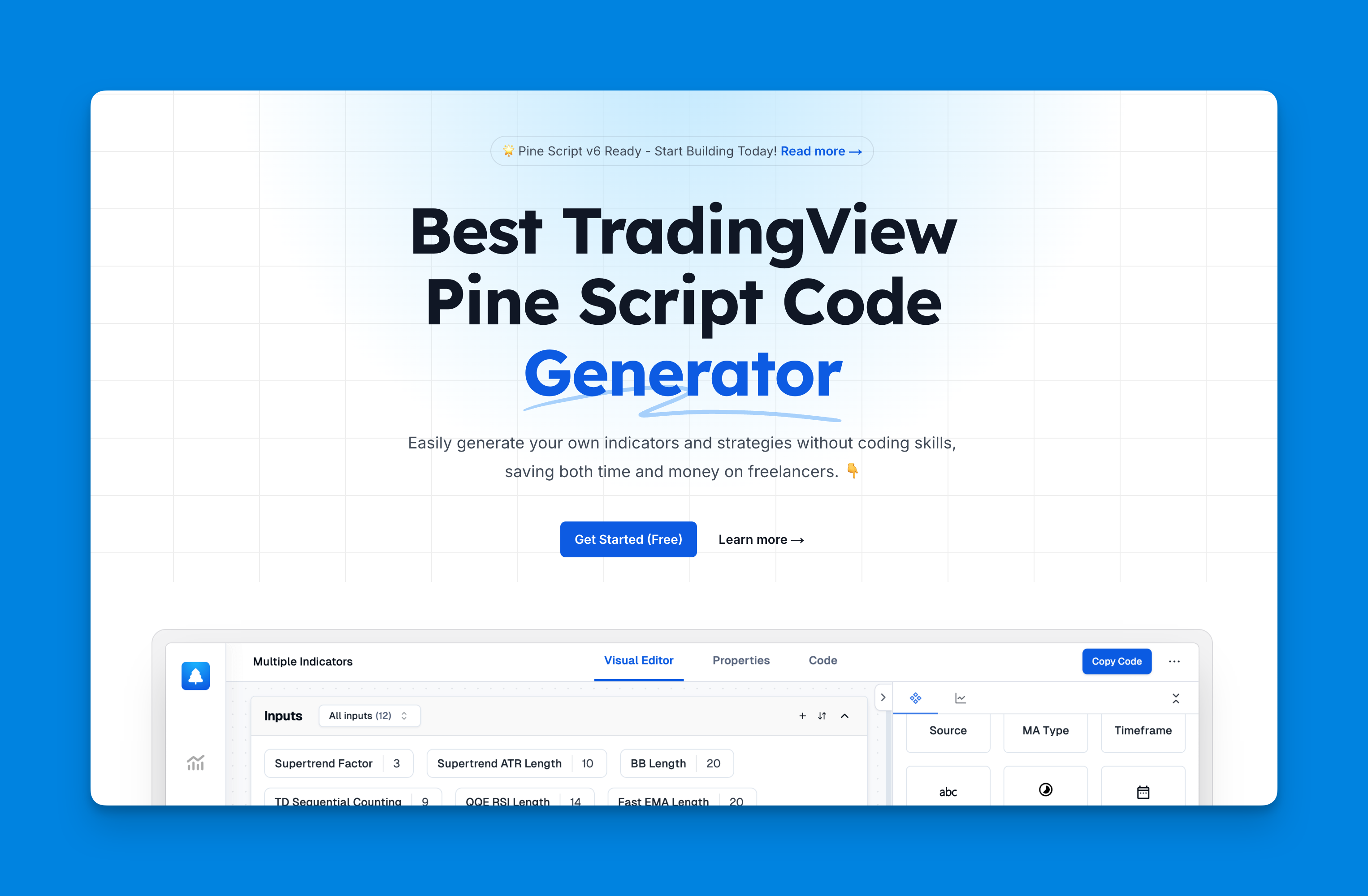
Pineify is a powerful tool designed to simplify the creation and management of trading indicators and strategies on TradingView without requiring any programming skills. This makes it particularly useful for traders who want to set up alerts based on complex conditions without delving into the intricacies of Pine Script coding.
Here’s how you can use Pineify to create alerts:
- Easy Setup with Visual Tools
Pineify provides an intuitive interface that allows users to visually construct trading indicators and strategies. This means you can set up alerts by simply selecting conditions and parameters from a user-friendly dashboard, bypassing the need for any coding.
- Unlimited Alerts
Unlike TradingView's standard limitations, Pineify allows you to set an unlimited number of alerts. This feature is crucial for traders who need to monitor multiple conditions or strategies simultaneously.
- Customizable Conditions
With Pineify’s powerful condition editor, you can combine multiple technical indicators and price data to create precise alert conditions. This flexibility ensures that your alerts are tailored to your specific trading strategies and market analysis.
- No Coding Required
One of the standout benefits of using Pineify is that it eliminates the need for coding knowledge. Traders can focus on strategy development and market analysis without getting bogged down by programming details.
In summary, Pineify offers a robust solution for creating and managing alerts in TradingView, providing traders with a competitive edge through its ease of use, flexibility, and unlimited alert capabilities.
Conclusion
Pine Script v6 offers robust tools for creating custom alerts that enhance trading strategies by providing timely notifications of market events. By mastering these tools, traders can improve their responsiveness and decision-making processes.
For those looking to dive deeper into Pine Script and enhance their trading strategies with advanced alerts, consider exploring additional resources or joining a community of Pine Script developers. Whether you're a beginner or an experienced trader, leveraging the full potential of Pine Script's alert functions can significantly impact your trading success.
References
- https://www.tradingview.com/pine-script-docs/faq/alerts/
- https://stackoverflow.com/questions/75674879/alert-in-pinescript
- https://www.tradingview.com/pine-script-docs/concepts/alerts/
- https://quantnomad.com/5-ways-to-send-alerts-from-tradingview/
- https://www.tradingview.com/pine-script-docs/v3/annotations/alert-conditions/
- https://www.youtube.com/watch?v=N1uKOa1HlBg