How to Convert TradingView Script to NinjaTrader: Step-by-Step

Converting a TradingView script to NinjaTrader means taking your Pine Script code and rewriting it in NinjaScript, which is C#-based. I've done this a few times -- first with a simple SMA crossover strategy for ES futures. It's not plug-and-play. You're translating logic from one environment to another, and the results won't match unless you account for the differences.
The goal is to access NinjaTrader's Order Flow tools and specialized chart types. I converted a Bollinger Bands strategy for CL crude oil contracts last year and it took three full passes before the backtest numbers lined up.
For an API-by-API migration map and a target-specific coding handoff, use the Pine Script to NinjaScript converter. This article remains the longer tutorial; the converter page owns the direct conversion intent.
How TradingView and NinjaTrader Compare
TradingView is the platform where you can spin up a custom indicator with Pine Script in minutes. It's fast for prototyping and sharing ideas with the community. If you're new, understanding what language is Pine Script helps frame the conversion work ahead.
NinjaTrader is the professional counterpart. It uses NinjaScript (C#) and is built for serious backtesting and automated trading. People migrate to tap into advanced charting -- Tick and Renko charts -- and the deeper automated trading engine. The trade-off: it's harder to learn and every conversion takes longer than you'd expect.
A bridge between these two platforms is never a perfect copy. Data feeds differ. Time handling on charts doesn't always match. I've seen a strategy that was consistently profitable on TradingView show a net loss after conversion on NQ futures. It happens.
| Feature | TradingView | NinjaTrader |
|---|---|---|
| Primary Language | Pine Script | NinjaScript (C#) |
| Ease of Use | Generally easier for beginners | Steeper learning curve |
| Advanced Features | Strong social/community features | Powerful Order Flow and Backtesting |
| Best For | Idea prototyping, social trading | Automated trading, deep market analysis |
Why Move from TradingView to NinjaTrader?
Most traders start on TradingView because it's approachable and has a large community with shared ideas. At some point you might want more horsepower, and that's where NinjaTrader fits.
It ships with over 100 built-in indicators and supports advanced order types. That matters if you trade futures. The Order Flow tools -- Volume Profile, Market Delta -- give you data that TradingView doesn't offer natively. I prefer NinjaTrader's backtesting engine for historical validation because it handles commission and slippage more realistically.
You don't have to abandon your TradingView strategies. The conversion is about translating the original logic so it runs inside NinjaTrader. I've seen traders on forums asking to convert a Bollinger Bands setup just so they could run it through NinjaTrader's backtester with realistic fees. For multi-platform work, converting Pine Script to MQL5 follows a similar pattern.
The Real Hurdles
You built a strategy in TradingView and want it in NinjaTrader? I feel you. It seems simple but it rarely is. Here's what trips people up.
The biggest wall is the language gap. Pine Script is concise. NinjaScript (C#) is more verbose and structured. You're going from writing a post-it note to writing a spec document. That fundamental difference is why strategies -- especially pivot-point-based ones -- behave differently after conversion.
Because of this, you can't trust identical results. The two platforms calculate things in slightly different ways, which means different trades and different outcomes. If your indicator has visual elements, techniques like how to plot dashed lines in Pine Script need manual recreation in NinjaTrader.
AI tools like ChatGPT can give you a start on the translation, but they mess up the details. I've caught ChatGPT misinterpreting stop-loss logic more than once. The subtle bugs show up in order management.
Then there's timing. A consistent 1-minute lag between the two platforms' charts will throw off your strategy's accuracy. I spent two days chasing a 45-second offset on YM futures before I found the root cause.
And not every Pine Script function has a NinjaScript equivalent. You'll rebuild tools from scratch. That's why the NinjaTrader forums are full of conversion questions -- it's a collective effort.
Step-by-Step Conversion Guide
Step 1: Understand Your Pine Script Inside Out
Before writing any NinjaScript, study your TradingView script. Identify the inputs, the core calculations, and how it plots on the chart. Why? Because NinjaScript structures things differently -- indicators can live in a separate panel from the price chart. If you skip this step, you'll rebuild the wrong logic. What can go wrong: you miss a subtle calculation order that changes the trade signal.
For a Bollinger Band strategy, TradingView has a built-in bb() function. NinjaTrader has its own Bollinger indicator class but the parameters map differently. Jot down how your variables and trade conditions work before you touch the editor.
Break complex scripts into pieces. Separate entry logic from drawing logic. This helps spot structural differences early.
Step 2: Set Up Your NinjaTrader Workspace
Make sure NinjaTrader 8 is installed and up to date. Import any add-ons via Tools > Import > NinjaScript Add-On. Find the NinjaScript Editor -- it's built into the platform and you'll live there.
Why match chart settings? Heiken Ashi in TradingView may not render the same way in NinjaTrader. What can go wrong: different bar types produce different signals for the same market data. Test a few built-in indicators first to understand how the platform handles data.
Step 3: Translate Pine Script to NinjaScript
This is the core work. Start with entry and exit rules. Pine Script's plot() typically becomes Draw.Line() in NinjaTrader. Loops and arrays work differently -- TradingView is vectorized (operates on whole data sets), while NinjaTrader processes one bar at a time. Understanding how to combine two indicators in TradingView Pine Script helps structure the conversion when multiple signals are involved.
Why this matters: the bar-by-bar approach in NinjaTrader means you can't reference future bars. What can go wrong: repainting logic from Pine Script won't work the same way, causing false signals.
Use the NinjaTrader forums for examples. Someone has probably converted a similar script. If your strategy uses bracket orders with profit targets, define those pieces explicitly in NinjaScript -- the order model is different from TradingView's.
Step 4: Test Your Converted Script
Apply the script to a chart and run a backtest on historical data. Why test both platforms side by side? Differences in fill prices, calculation order, and data feeds can produce different results even with identical logic. What can go wrong: a strategy that's profitable in TradingView may lose money in NinjaTrader due to subtle platform differences.
I tested my ES futures strategy on both platforms with identical date ranges and found a 0.25-point discrepancy in the stop-loss fill price. Run your script in NinjaTrader and your original in TradingView side by side on the same market data. Patience pays off here -- I've debugged differences for a full weekend before finding the issue.
Step 5: Add NinjaTrader-Specific Features
Once the core logic works, use NinjaTrader's unique features. Add Order Flow analytics to your entry signals. Build custom alerts. Add performance tracking that wasn't in the original script.
Why add these features? The platform has capabilities TradingView lacks, and using them improves your strategy. What can go wrong: adding features without proper testing can introduce new bugs. Add error handling so the strategy handles brief connection drops. This last step turns a working conversion into a reliable tool.
Getting Help with Your Conversion
If you hit a wall, professionals can handle it. Companies like Nordman Algorithms specialize in this conversion. They provide the full source code, offer lifetime guarantees, and can add optional improvements. It's a full-service option if you need certainty.
Budget option: freelancers on Fiverr, often starting around $100. Check reviews carefully. The final cost depends on complexity -- strategies with trailing stops or multiple contracts cost more.
I haven't used a paid conversion service myself, so I can't vouch for specific providers. But community forums can help with simpler scripts for free.
Tools and Resources
You don't need to be a programmer. Here's what I've found useful:
- AI Assistants: ChatGPT gives you a first draft. Treat it like a junior developer's work -- review everything. PineifyGPT is a private ChatGPT for Pine Script that generates more accurate code for TradingView, powered by advanced AI models.
- Forums and Communities: NinjaTrader user forums are active. People share code and offer free help.
- Add-Ons: CrossTrade lets you route TradingView webhook alerts to NinjaTrader with no code. It creates a hybrid setup.
- Video Tutorials: Search YouTube for "TradingView webhook NinjaTrader" for step-by-step integration guides.
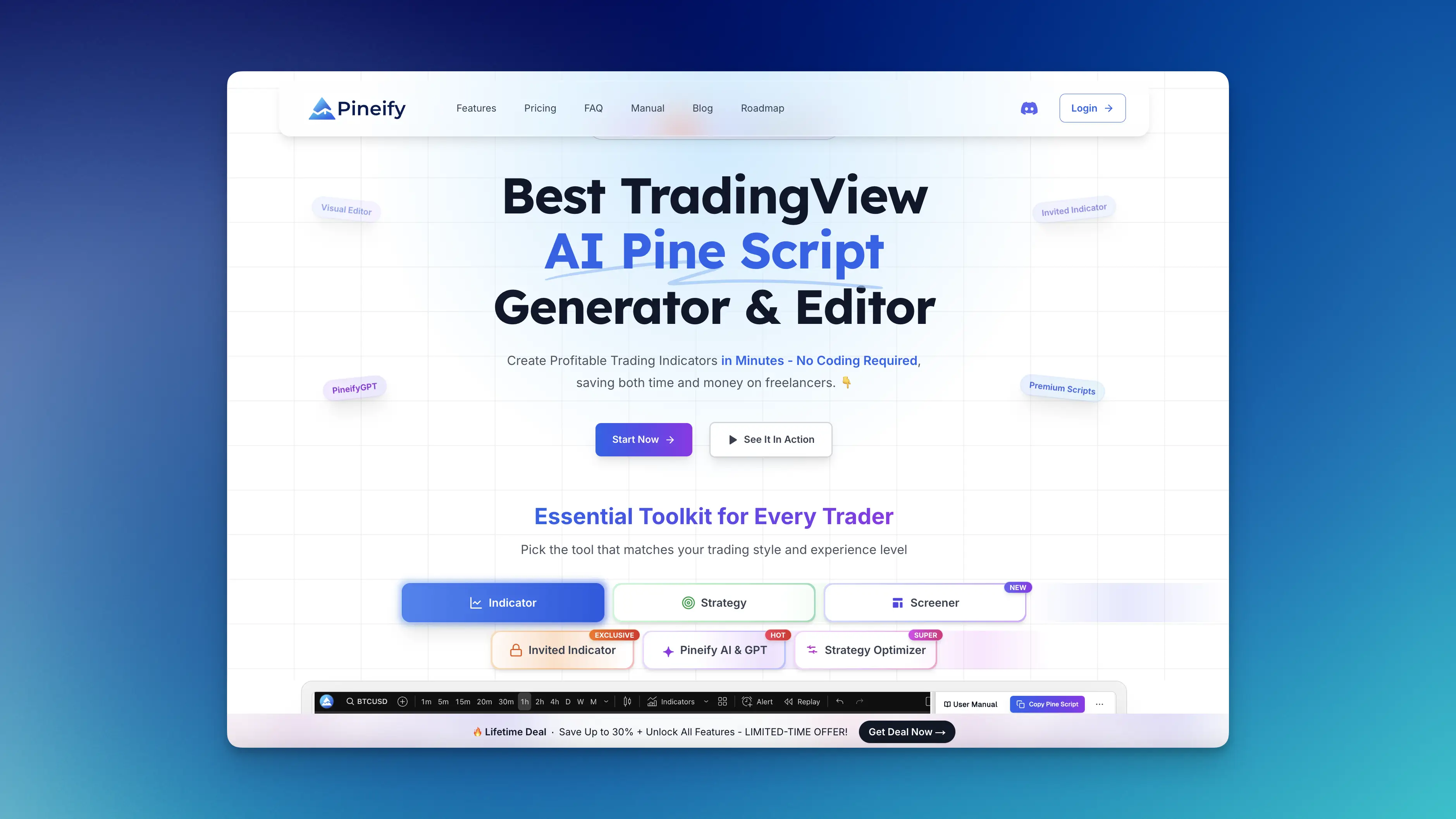
These resources make conversion more accessible. Pineify offers a visual editor and AI suite for building TradingView indicators without coding, which saves time before you even get to the NinjaTrader step.
Q&A Section
What is the difference between Pine Script and NinjaScript?
Pine Script is TradingView's native language -- it's lightweight and designed for quick indicator and strategy creation on that platform. NinjaScript is built on C# and runs inside NinjaTrader. It's more powerful but also more complex. Converting means rebuilding the logic and translating Pine Script's built-in functions into NinjaScript equivalents.
How much does it cost to hire someone to convert a TradingView script to NinjaTrader?
Freelancers on Fiverr start around $100 for a simple script. Complex strategies with bracket orders and trailing stops cost more. Professional services with guarantees charge higher fees but deliver clean source code and working results.
Can AI tools fully convert Pine Script to NinjaScript without errors?
AI gives you a rough first draft. It often misinterprets custom stop-loss logic or order execution. You still need human review and thorough backtesting inside NinjaTrader before going live.
Is it possible to connect TradingView directly to NinjaTrader without conversion?
What if the converted script doesn't match TradingView results?
Common issue. The two platforms have different data feeds, bar calculation times, and historical data handling. Start by aligning chart settings -- same timeframe, same bar type. Retest side by side. If differences persist, the NinjaTrader community forums have solutions from people who've hit the same problem.
What is the difference between Pine Script and NinjaScript?
Pine Script is TradingView's lightweight native language designed for quickly creating indicators and strategies on their platform. NinjaScript is built on C# and runs inside NinjaTrader, offering the full power of a professional programming language. Because they operate in different environments, converting a script means carefully rebuilding the logic and translating Pine Script's built-in functions into NinjaScript equivalents.
How much does it cost to hire someone to convert a TradingView script to NinjaTrader?
Freelancers on platforms like Fiverr typically start at around $100 for a simple script. More complex strategies with bracket orders, trailing stops, or multiple conditions cost more. Professional services that offer a lifetime guarantee charge a higher fee but provide clean source code and assurance that everything works correctly.
Can AI tools fully convert Pine Script to NinjaScript without errors?
AI assistants can generate a useful first draft, but they often misinterpret custom stop-loss logic or handle order execution differently than intended. Think of it as a rough starting point -- you still need a human review and thorough backtesting inside NinjaTrader to catch errors before going live.
Is it possible to connect TradingView alerts directly to NinjaTrader without rewriting code?
Yes. Tools like CrossTrade let you route TradingView webhook alerts into NinjaTrader, creating a hybrid setup where TradingView handles signal generation and NinjaTrader handles order execution. This avoids a full code rewrite and is a practical shortcut for traders who do not need deep NinjaTrader customization.
What if the converted script produces different results in NinjaTrader than in TradingView?
Minor differences are common because the two platforms can have slightly different data feeds, bar calculation times, and historical data handling. Start by aligning chart settings -- same timeframe, same bar type. Then retest side by side. If discrepancies persist, the NinjaTrader community forums are an excellent resource, as many traders have solved similar issues.
How long does it take to convert a TradingView strategy to NinjaTrader?
A simple indicator with a few conditions can take a few hours if you are familiar with both languages. A complex automated strategy with order management, multiple filters, and custom alerts can take several days. Hiring a specialist typically shortens turnaround to one to three business days depending on complexity.
Which NinjaTrader features are worth using after the conversion?
After converting, consider integrating NinjaTrader's Order Flow analytics (Volume Profile, Market Delta) to enrich entry signals, using its advanced backtesting engine with realistic commission and slippage settings, and adding custom ATM strategies for dynamic stop and target management -- all capabilities that go beyond what TradingView natively offers.
Your Next Steps
Don't rush. Open your TradingView Pine Script and read through it. Not to translate line by line but to understand the core logic -- the key conditions and calculations.
Once you understand the logic, build a minimal version in NinjaTrader. Get the entry condition working first. Compile it. You'll hit errors. That's normal. Fixing them one by one teaches you how NinjaScript works.
Stuck? The NinjaTrader community forums are active. Post a specific question. For complex scripts, Fiverr and Upwork have freelancers who specialize in code conversion.
I'd like to hear what trips you up. Was it the syntax difference? The indicator calculation mismatch? Something else? Drop your experience -- it helps the next person.
If this guide was useful, subscribe for more on trading platform integration.