How to Fill Areas Between Lines in Pine Script (Makes Charts Way Easier to Read)

· 8 min read
Pine Script Fill Function Tutorial - Visual Chart Enhancement

You know that feeling when you're staring at a chart with multiple lines, trying to figure out which one's on top or where the real action is happening? Yeah, me too. That squinting-at-the-screen thing gets old real quick. But here's something that changed my trading game completely - Pine Script's fill() function.

This little gem lets you shade the area between any two lines on your chart, and honestly, it's one of those "why didn't I learn this sooner?" moments. Once you start using fills, regular line-only charts start looking pretty boring.

What's the Fill Function All About?

Think of the fill() function like a highlighter for your charts. You know how you'd highlight important text in a book? This does the same thing, but for the space between lines on your trading charts.

The beauty of it is that you can use it between any two lines - moving averages, Bollinger Bands, horizontal support and resistance levels, trend lines, whatever you've got plotted. It's like adding color commentary to your charts, but literally.

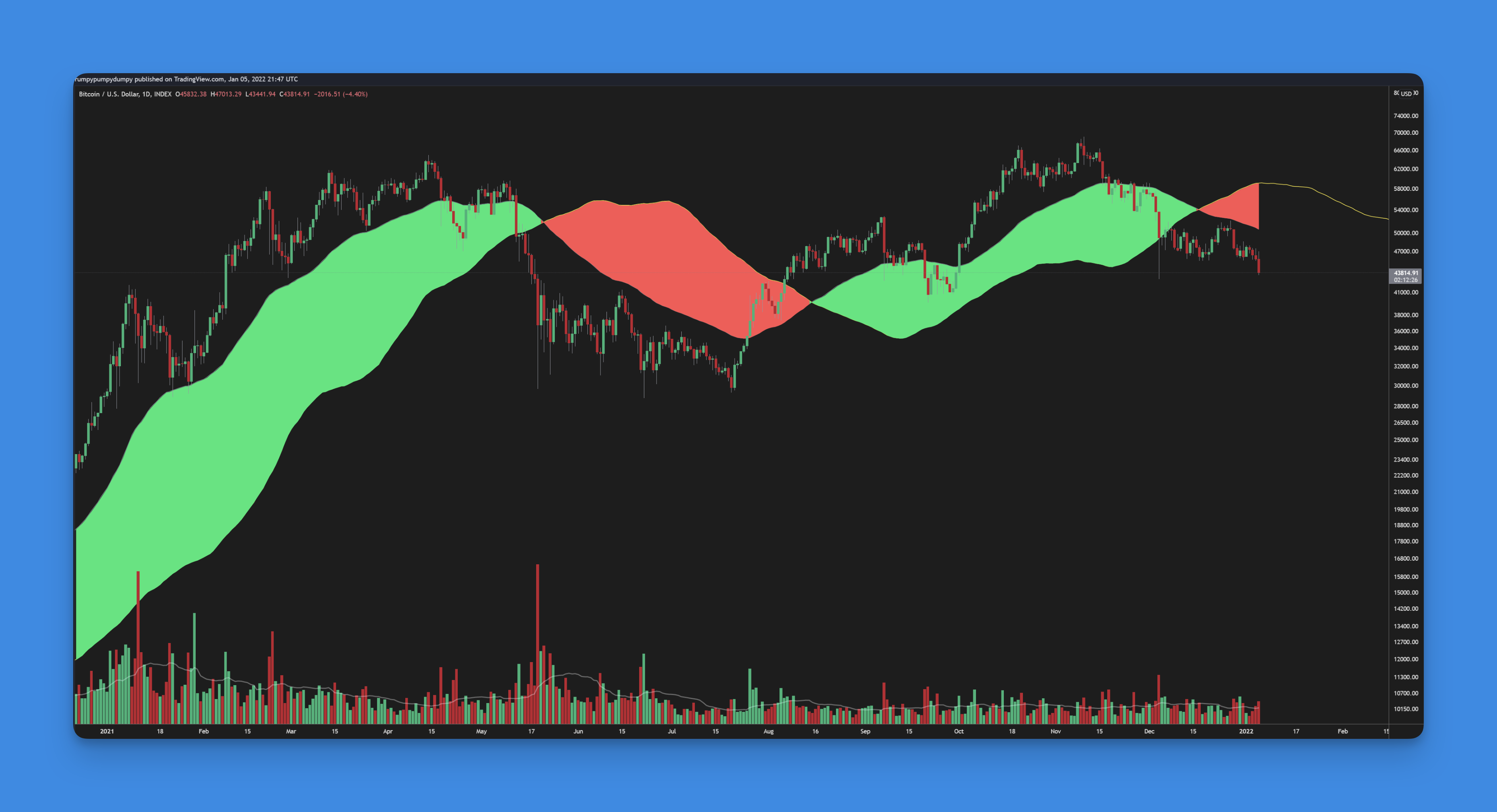
I remember the first time I saw a chart with filled areas between two moving averages. Instead of having to trace lines with my finger to see which MA was above the other, the colored area made it obvious at a glance. Game changer.

How the Fill Function Actually Works

Here's the thing - there are two main ways to use this function, depending on what you're working with:

For horizontal lines (hlines):

fill(hline1, hline2, color, title, editable, fillgaps, display)

For regular plot lines:

fill(plot1, plot2, color, title, editable, show_last, fillgaps, display)

Don't let all those parameters intimidate you. Most of the time, you'll only need the first three:

The Best Pine Script Generator
  • The two lines: These are just the IDs of whatever lines you want to fill between
  • Color: What color you want the fill to be (pro tip: use transparency so you can still see price action underneath)
  • Everything else: Optional stuff for fine-tuning

When This Actually Comes in Handy

Let me tell you about some real situations where I've found this super useful:

Moving Average Crossover Systems

You know how traders always talk about golden crosses and death crosses with moving averages? Instead of trying to spot tiny line crossings, just fill the area between your fast and slow MAs. When the fill changes color (or disappears entirely), boom - you've got your signal right there.

This works especially well with EMA crossover strategies, where the visual clarity really helps you spot trend changes faster.

Trading Channel Visualization

If you're into drawing support and resistance lines to create trading channels, filling between them makes it crystal clear when price is bouncing around in the middle, testing the boundaries, or breaking out completely. No more guessing games.

Oscillator Zone Identification

Got an RSI, MACD, or any other oscillator? Fill between the zero line and your oscillator line. Now you can instantly see when you're in positive or negative territory without having to trace lines across your screen.

Let's Look at Some Real Code

Here's probably the simplest example you can try right now:

//@version=5
indicator("Simple Fill Example", "", true)

// Create two horizontal lines
upper_line = hline(1.0, "Upper Level", color=color.gray)
lower_line = hline(0.0, "Lower Level", color=color.gray)

// Fill the space between them with a semi-transparent yellow
fill(upper_line, lower_line, color.new(color.yellow, 90), "Fill Area")

That's it! Copy this into TradingView's Pine Editor and you'll see a light yellow area between the 0 and 1 levels on your chart. Pretty cool, right?

Here's a more practical example using moving averages:

//@version=5
indicator("MA Fill Example", shorttitle="MA Fill", overlay=true)

// Calculate two moving averages
fast_ma = ta.sma(close, 20)
slow_ma = ta.sma(close, 50)

// Plot the moving averages
fast_plot = plot(fast_ma, color=color.blue, title="Fast MA")
slow_plot = plot(slow_ma, color=color.red, title="Slow MA")

// Fill between them - green when fast MA is above, red when below
fill_color = fast_ma > slow_ma ? color.new(color.green, 80) : color.new(color.red, 80)
fill(fast_plot, slow_plot, color=fill_color, title="MA Fill")

This creates a dynamic fill that changes color based on which moving average is on top. When the fast MA is above the slow MA, you get a green fill (bullish). When it's below, you get a red fill (bearish).

No-Code Alternatives (For Those Who Hate Coding)

Look, I get it. Not everyone wants to dive into code just to make their charts look better. If you're thinking "this sounds useful but I really don't want to learn Pine Script," there are visual tools out there that can help.

Pineify Visual Pine Script Editor Interface

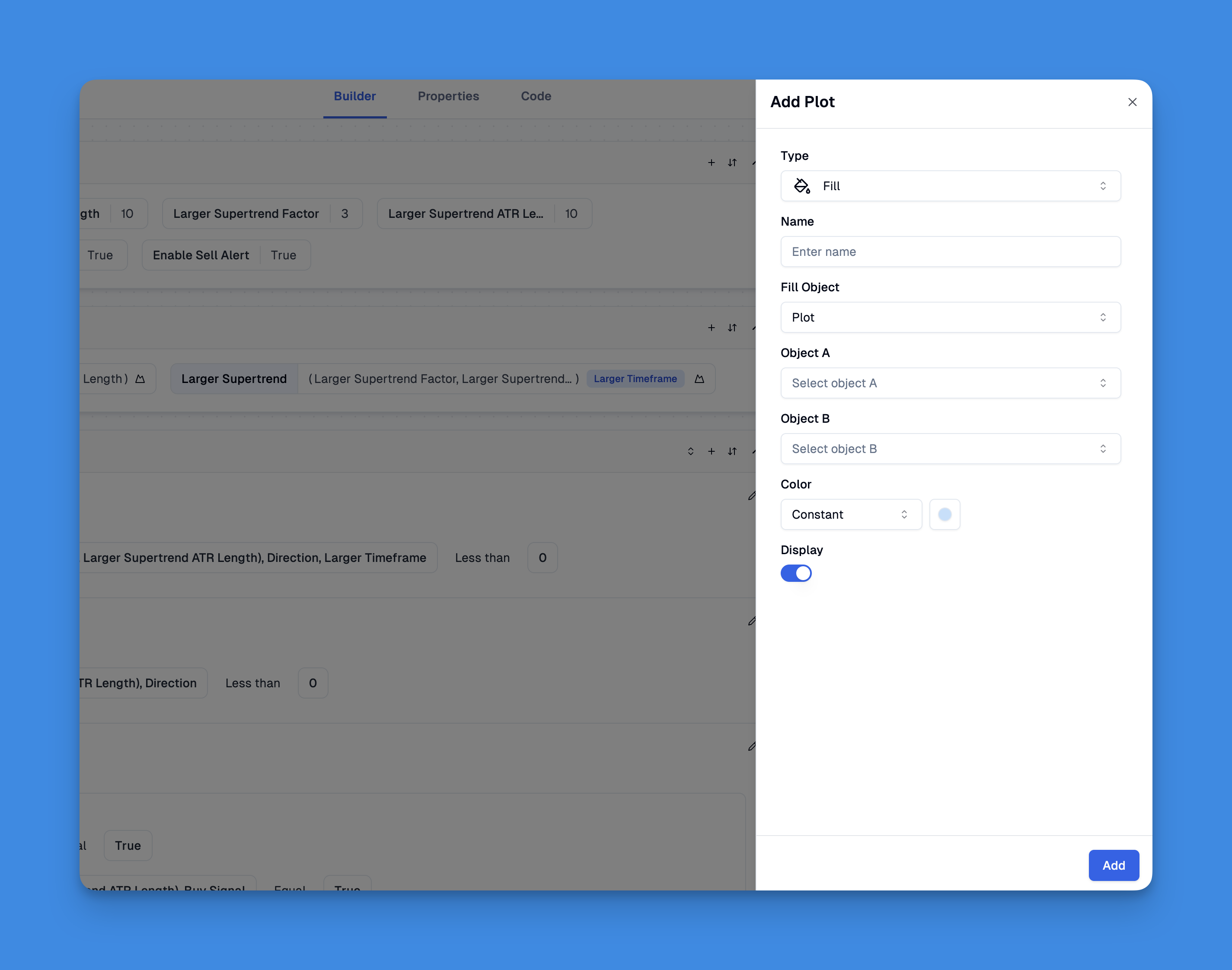
Tools like Pineify give you a drag-and-drop interface for creating these visual elements. You can set up fills, pick colors, adjust transparency, and it generates all the Pine Script code for you automatically. Pretty neat if you ask me.

If you're curious about what else you can do without writing code, check out this guide on Pine Script alternatives that covers different approaches to creating custom indicators.

Advanced Fill Techniques

Once you get comfortable with basic fills, there are some pretty cool advanced techniques you can try:

Conditional Fills

You can make fills appear only when certain conditions are met. For example, only show the fill when volume is above average, or when price is within a certain range.

// Only show fill when volume is above average
avg_volume = ta.sma(volume, 20)
show_fill = volume > avg_volume
fill_color = show_fill ? color.new(color.purple, 70) : na

Multiple Fill Areas

Nothing stops you from having multiple fill areas on the same chart. You could have one fill between your main moving averages, another between Bollinger Bands, and a third one highlighting a specific price zone.

Dynamic Color Changes

You can make the fill color change based on market conditions. Maybe it's green during uptrends, red during downtrends, and yellow during sideways movement.

For more ideas on conditional plotting in Pine Script, there are tons of creative ways to make your charts more informative.

Why Visual Clarity Actually Matters in Trading

Here's the thing that a lot of people don't talk about - when you're making trading decisions, especially in fast-moving markets, every second counts. The faster you can read your charts and understand what's happening, the better your timing will be.

I used to spend way too much time squinting at charts, trying to figure out if one line was above another or if price was breaking through a key level. With fills, that information jumps out at you immediately. Your brain processes colored areas much faster than it processes line relationships.

It's like the difference between reading a black-and-white technical manual versus one with color-coded diagrams. Both have the same information, but one is way easier to understand quickly.

Common Mistakes to Avoid

Making fills too opaque: If your fill color isn't transparent enough, it'll cover up the price action underneath. I usually keep transparency around 80-90%.

Using too many fills: Just because you can fill everything doesn't mean you should. Too many colored areas can make your chart look like a rainbow explosion.

Ignoring performance: Fills are generally lightweight, but if you're creating dozens of them with complex conditions, it can slow down your script. Keep it reasonable.

Forgetting about different timeframes: A fill that looks great on a 1-hour chart might be overwhelming on a 1-minute chart. Test your indicators across different timeframes.

Taking It Further

Once you've mastered basic fills, you might want to explore related Pine Script features. Drawing lines programmatically pairs really well with fills - you can create dynamic trend lines and then fill the areas between them.

For those interested in more advanced chart customization, learning about Pine Script colors can help you create more sophisticated visual schemes.

Wrapping Up

The fill function might seem like a small feature, but it's one of those tools that can significantly improve how you read and interpret your charts. Whether you're tracking moving average relationships, highlighting trading ranges, or just trying to make your indicators more visually appealing, fills are incredibly useful.

The best part? Once you start using them, you'll probably find yourself coming up with new creative ways to visualize market data. It's like having a whole new set of colors for your trading palette.

Give it a shot on your next indicator - I bet you'll find it more useful than you initially expected. And remember, if coding isn't your thing, there are visual tools out there that can help you create these effects without writing a single line of code.

The goal is to make your charts work better for you, however you choose to get there.