How to Round Numbers in Pine Script: The Complete 2026 Guide

· 7 min read

Ever stared at your TradingView chart and wondered why your Pine Script indicator shows Bitcoin at $43,567.8934567 instead of a clean $43,567.89? Yeah, me too. Those messy decimals aren't just ugly – they can mess with your trading logic and make your indicators look unprofessional.

After years of building indicators and helping traders clean up their code, I've learned that proper rounding isn't just about making numbers look pretty. It's about accuracy, performance, and creating indicators that actually work in the real world.

Why Pine Script Rounding Actually Matters

Before we dive into the how, let's talk about why this stuff matters. When you're building trading strategies, decimal precision can mean the difference between a profitable trade and a losing one.

Think about it: if you're calculating position sizes or stop losses, you need numbers that match what your broker actually allows. You can't buy 123.456789 shares – you need whole numbers. Similarly, if you're working with forex pairs that move in specific pip increments, your calculations need to respect those constraints.

Plus, clean numbers make your charts easier to read. Nobody wants to squint at a label showing "Take Profit: 1.23456789" when "Take Profit: 1.23" tells the same story.

The Foundation: Understanding math.round()

Pine Script's built-in math.round() function is your go-to tool for most rounding needs. Here's the syntax:

The Best Pine Script Generator
math.round(number, precision)

The number parameter is whatever value you want to round, and precision tells Pine Script how many decimal places to keep. If you skip the precision parameter, it rounds to the nearest whole number.

Here's a real-world example that rounds the closing price to two decimal places:

//@version=5
indicator("Clean Price Display", overlay=true)

// Round closing price to 2 decimal places
clean_close = math.round(close, 2)

// Display it on the chart
plot(clean_close, title="Rounded Close", color=color.blue, linewidth=2)

// Show the difference in a table
if barstate.islast
var table info_table = table.new(position.top_right, 2, 3, bgcolor=color.white, border_width=1)
table.cell(info_table, 0, 0, "Raw Close", text_color=color.black)
table.cell(info_table, 1, 0, str.tostring(close), text_color=color.black)
table.cell(info_table, 0, 1, "Rounded Close", text_color=color.black)
table.cell(info_table, 1, 1, str.tostring(clean_close), text_color=color.black)

This code does two things: it plots the rounded closing price and shows you the difference between the raw and rounded values in a neat table.

Advanced Rounding Techniques for Pro Traders

Sometimes the basic math.round() function isn't enough. Maybe you're building a sophisticated strategy that needs to round to specific tick sizes, or you want more control over the rounding behavior. Here are some custom functions I've developed over the years:

The Ultimate Tick Rounding Function

This function rounds any value to your symbol's minimum tick size – essential for realistic trade calculations:

roundToTick(value) =>
math.round(value / syminfo.mintick) * syminfo.mintick

Why is this useful? Let's say you're trading EUR/USD, which typically moves in 0.0001 increments (pips). If your calculation gives you 1.08567, this function would round it to 1.0857 – a price that actually exists in the real market.

Flexible Decimal Place Rounding

Sometimes you need to round to different decimal places dynamically. This function lets you specify exactly how many decimal places you want:

roundToDecimals(value, decimals) =>
factor = math.pow(10, decimals)
math.round(value * factor) / factor

Banker's Rounding (Round Half to Even)

For statistical accuracy, especially when dealing with large datasets, banker's rounding can be more precise:

bankersRound(value, decimals) =>
factor = math.pow(10, decimals)
scaled = value * factor
integer_part = math.floor(scaled)
fractional_part = scaled - integer_part

if fractional_part < 0.5
integer_part / factor
else if fractional_part > 0.5
(integer_part + 1) / factor
else
// If exactly 0.5, round to the nearest even number
is_even = integer_part % 2 == 0
(is_even ? integer_part : integer_part + 1) / factor

Real-World Pine Script Rounding Examples

Let me show you how I use these rounding techniques in actual trading indicators:

Position Size Calculator with Proper Rounding

//@version=5
indicator("Position Size Calculator", overlay=false)

// Inputs
account_size = input.float(10000, "Account Size ($)")
risk_percent = input.float(2.0, "Risk Per Trade (%)", minval=0.1, maxval=10)
entry_price = input.float(100, "Entry Price")
stop_loss = input.float(95, "Stop Loss")

// Calculate position size
risk_amount = account_size * (risk_percent / 100)
price_diff = math.abs(entry_price - stop_loss)
raw_shares = risk_amount / price_diff

// Round to whole shares (you can't buy fractional shares in most markets)
position_shares = math.round(raw_shares)

// Display results
if barstate.islast
var table calc_table = table.new(position.bottom_left, 2, 4, bgcolor=color.white, border_width=1)
table.cell(calc_table, 0, 0, "Raw Calculation", text_color=color.black)
table.cell(calc_table, 1, 0, str.tostring(raw_shares, "#.##"), text_color=color.black)
table.cell(calc_table, 0, 1, "Rounded Shares", text_color=color.black)
table.cell(calc_table, 1, 1, str.tostring(position_shares), text_color=color.black)
table.cell(calc_table, 0, 2, "Actual Risk", text_color=color.black)
table.cell(calc_table, 1, 2, "$" + str.tostring(position_shares * price_diff, "#.##"), text_color=color.black)

This indicator calculates how many shares you should buy based on your risk tolerance, then rounds to whole shares since you can't buy fractional shares in most markets.

Common Pine Script Rounding Mistakes (And How to Avoid Them)

After helping hundreds of traders with their Pine Script code, I've seen the same rounding mistakes over and over. Here are the big ones:

Mistake #1: Not considering market tick sizes Many traders use math.round(price, 2) for everything, but different markets have different minimum price increments. Always use tick-aware rounding for price-related calculations.

Mistake #2: Rounding too early in calculations Round at the end of your calculations, not in the middle. Intermediate rounding can introduce errors that compound over time.

Mistake #3: Forgetting about negative numbers The math.round() function works fine with negative numbers, but make sure your custom rounding functions handle them correctly.

When to Use No-Code Alternatives

Look, I love Pine Script – it's powerful and flexible. But sometimes you just want to get something done quickly without writing code. That's where visual indicator builders come in handy.

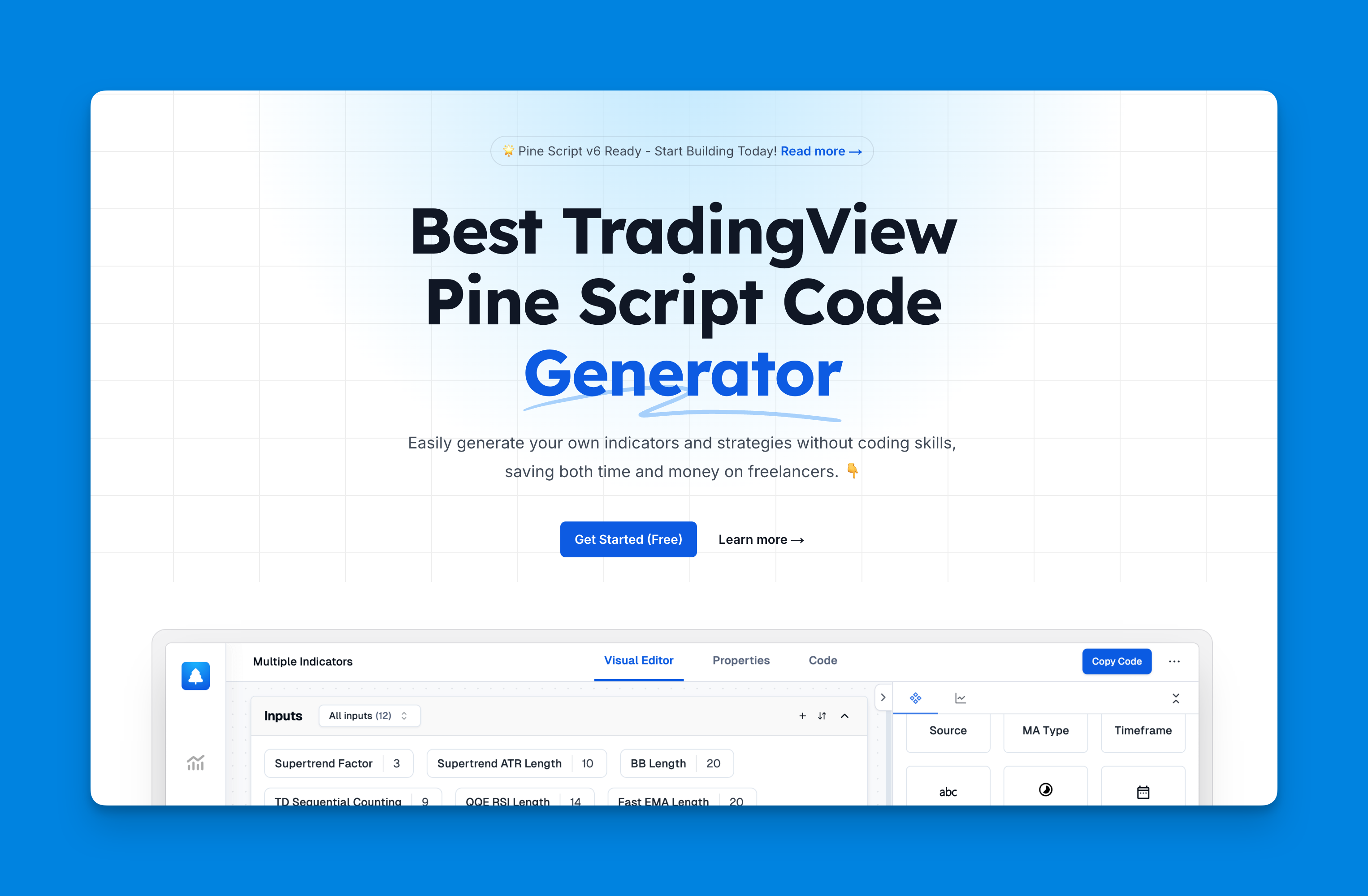
If you're more of a point-and-click person, or if you're building indicators for clients who don't code, tools like Pineify can be a game-changer. You can build sophisticated indicators with proper rounding and tick-size awareness without writing a single line of code.

Pineify | Best Pine Script Editor

Plus, if you're building multiple indicators, these visual tools often let you add way more indicators to your charts than TradingView's normal limits allow.

Integrating Rounding with Advanced Pine Script Features

Rounding becomes even more important when you're working with advanced Pine Script features. For example, if you're building multi-timeframe indicators, you'll want consistent rounding across all timeframes.

Similarly, when you're creating custom buy/sell signals, proper rounding ensures your signals trigger at realistic price levels that actually exist in the market.

For traders working with automated trading strategies, rounding becomes critical for position sizing and risk management calculations.

Testing Your Rounding Logic

Before you deploy any indicator with custom rounding, test it thoroughly. Here's a simple test function I use:

testRounding() =>
test_values = array.from(1.235, 1.245, 1.255, -1.235, 0.5, 100.999)
for i = 0 to array.size(test_values) - 1
original = array.get(test_values, i)
rounded = math.round(original, 2)
// Log results for verification
log.info("Original: " + str.tostring(original) + " Rounded: " + str.tostring(rounded))

The Bottom Line on Pine Script Rounding

Rounding isn't glamorous, but it's one of those fundamental skills that separates amateur Pine Script developers from professionals. Whether you're building simple price displays or complex trading algorithms, getting your rounding right ensures your indicators work correctly in real market conditions.

Start with the basic math.round() function for most use cases. When you need more control, use the custom functions I've shared. And remember – always consider your market's tick sizes and decimal conventions.

For those just starting their Pine Script journey, I recommend checking out our complete beginner's guide to get a solid foundation before diving into advanced techniques like custom rounding functions.

The key is to think about what your indicator actually needs to do. Are you just making display values cleaner? Basic rounding works fine. Building position size calculators? You'll need tick-aware rounding. Creating sophisticated algorithms? Custom rounding functions are your friend.

Most importantly, test everything. The difference between theory and practice in trading is often found in these small details – like whether your indicator rounds 1.235 to 1.23 or 1.24. Get it right, and your indicators will be more reliable, more professional, and more useful for actual trading.