How to Overlay Two Charts in TradingView for Correlation Analysis

Every time I open a new TradingView chart, I'm looking for relationships. Which asset is leading, which is lagging, and where the divergence might signal a trade. Flipping between tabs wastes time and buries patterns. A chart overlay solves that.
A chart overlay is exactly what it sounds like: a feature that places one asset's price chart directly on top of another's. It lets you compare two instruments on a single screen and spot correlation or relative strength at a glance. I've been using this daily for years, and it changed how I track sector rotation.
In October 2025, I overlayed SPY with XLK during a market pullback. The divergence told me tech was holding support better than the broad market — a signal that turned into a 4% swing over the next two weeks.
What a Chart Overlay Does
An overlay stacks two or more price series on the same set of axes. You're not flipping between tabs — you're watching AAPL and QQQ share the same time frame, the same grid, the same zoom level.
The whole idea is to see how assets move together or break apart. Are they in lockstep? Inverting? Diverging at a critical level? That's the kind of read you can't get from a correlation table alone.
| Use Case | What You Can Discover |
|---|---|
| Sector Correlation | Does a stock typically lead or lag its sector peers? |
| Market Comparison | How does an individual stock perform against the S&P 500? |
| Relative Strength | Which of two assets is showing more bullish or bearish momentum? |
Adjusting the scale matters. If the numbers don't line up, the comparison can mislead you. I'll cover that below.
Compare vs. Overlay: Know the Difference
TradingView gives you two ways to look at multiple assets: Compare and Overlay. They do different things.
The Compare function puts each asset in its own stacked panel and normalizes the view to percentage change. This works well when prices are far apart — comparing Bitcoin at $85,000 to a stock trading at $45, for example. Each asset keeps its own lane.
The Overlay function layers the second asset directly onto your main chart. Both share the same price scale (or a secondary one you control). This gives you a direct look at exact price movements. I prefer overlay when I'm comparing instruments in a similar price range, like two S&P 500 sectors or two large-cap tech stocks.
The wrong choice can produce a misleading chart. Pick Compare for big price gaps. Pick Overlay for similar-range assets.
Step-by-Step: How to Overlay on TradingView
Here's how I do it, and why each step matters.
Step 1: Open your base chart Pull up your primary asset in the Super Charts interface. This is your anchor. If you pick a low-volume ticker as the base, the overlay won't tell you much.
Step 2: Add the second symbol
Click the plus + icon next to the symbol name in the top toolbar. Type the ticker you want to compare and select it. TradingView draws the second line in a different color automatically.
Step 3: Check your scale By default, TradingView uses a percentage scale for the second symbol. Most of the time, I switch this to a new price scale (right-click the axis to change it). This keeps each asset on its own axis and prevents one chart from distorting the other.
What can go wrong: If you skip the scale check, the overlay can look stretched or compressed when you zoom in. I've had that happen plenty of times.
On mobile:
- Tap the settings icon (three dots or wrench).
- Tap "Add Symbol."
- Search and select your symbol.
Same logic, smaller screen. I don't use overlays on mobile for detailed analysis, but it's fine for a quick check.
Setting Up Price Scales for Accurate Comparisons
Scale configuration is where most overlay setups go wrong.
When you add a second symbol, TradingView asks: same % scale or new price scale? Here's what each option does:
- Same % Scale — Locks the percentage moves together. If SPY moves 1% and your overlay symbol moves 5%, the chart scales to fit both. This distorts the visual. I don't use this unless I'm checking momentum alignment.
- New Price Scale — Gives the second asset its own price axis on the right. Each instrument keeps its own levels. This is what I use by default. When I overlayed GOOGL on MSFT in March 2026, the new price scale made the divergence at the $190 level instantly visible.
Right-click any axis to:
- Move it to the left or right
- Invert it (useful for futures pairs)
- Switch to logarithmic scale (better for multi-year trend analysis)
Getting this wrong means your chart shows distortions, not patterns.
Advanced Overlay Techniques
Once you're comfortable with a basic two-asset overlay, a few upgrades can make the setup more useful.
The Move To option in TradingView lets you drag indicators like RSI or MACD directly onto your price chart. I stack RSI on top of my overlay when I want to see whether a relative strength divergence is confirmed by momentum. It cuts interpretation time in half.
If you're comfortable with code, Pine Script can automate higher-timeframe overlays. I wrote a script that overlays the daily chart onto my 1-hour chart, so I can see the trend context without switching tabs. The createStudy() method lets you add comparison symbols programmatically. If you want to build that, start with how to create new Pine Script on TradingView.
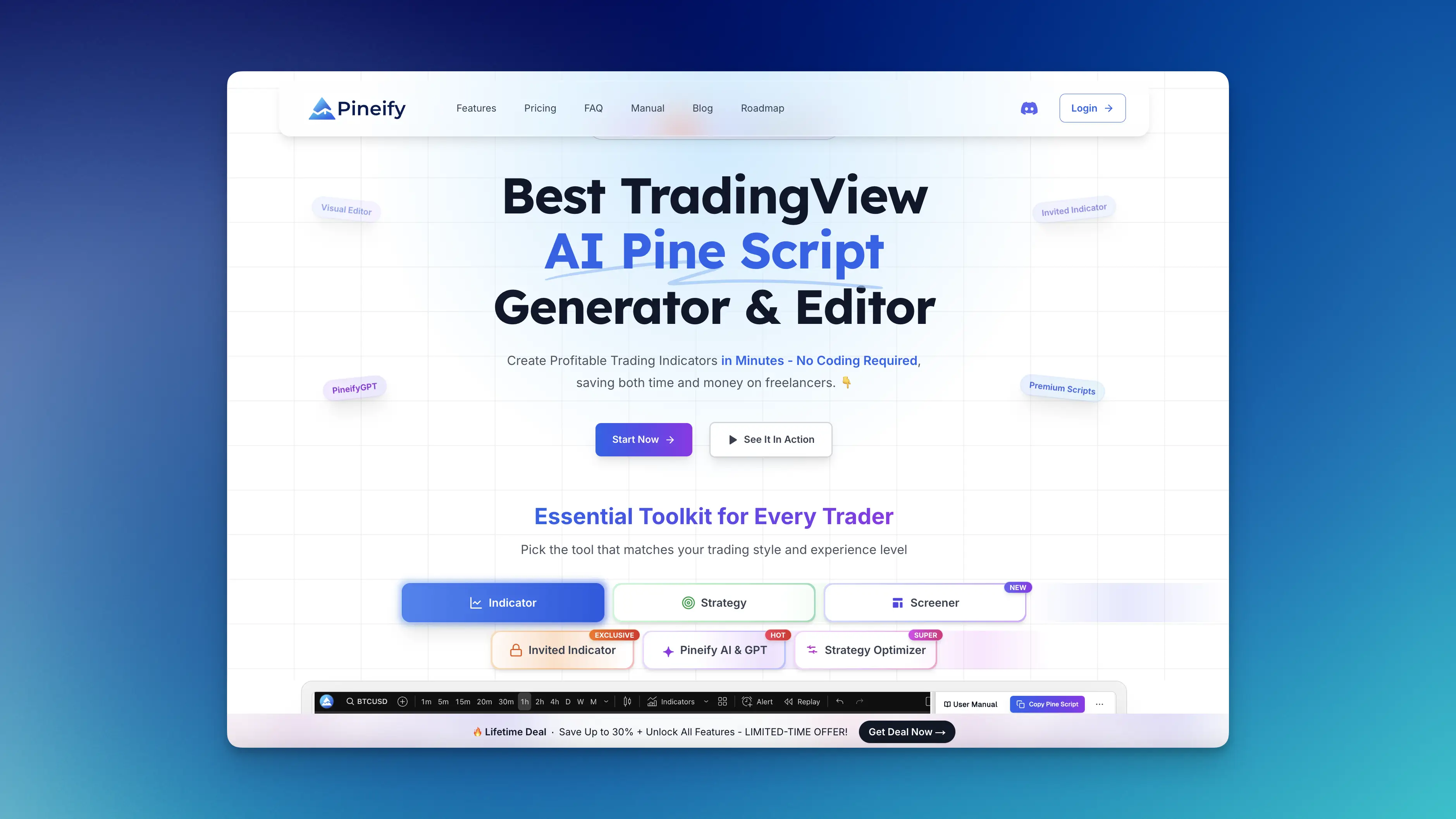
For traders who prefer visuals over code, Pineify's editor generates Pine Script for multi-indicator overlays and multi-timeframe setups without writing a single line. I've used it for scans where I needed RSI, VWAP, and a 200-day SMA all on the same panel.
Combine your overlays with drawing tools. After you set up the comparison, draw trendlines and support/resistance levels directly on top. I mark key levels before an earnings report so the overlay tells me instantly whether the stock is following the sector or breaking away.
How Traders Use Chart Overlays in Practice
Here are the setups I keep returning to.
Correlation analysis. I overlay gold miners like NEM on the spot gold chart. When the stock stops following the commodity, it's often a signal worth investigating.
Relative strength comparison. I compare individual stocks against their sector ETF. In January 2026, I overlayed AAPL on XLK. AAPL was underperforming the sector by 3% over two weeks. That divergence told me to wait before entering.
| Use Case | What It Helps You Do | Real-World Example |
|---|---|---|
| Correlation Analysis | See if related assets move in sync or diverge. | Overlay NEM on spot gold. |
| Relative Strength | Identify stronger or weaker stocks vs. benchmarks. | Overlay TSLA on XLK. |
| Sector Rotation | Spot which sectors gain or lose momentum. | Overlay XLF, XLV, and XLK on one chart. |
| Strategy Backtesting | Test how overlay signals would have performed. | Use Replay Mode with overlaid indicators. |
Sector rotation on a single chart: stack three sector ETFs and watch the rotation happen in real time. I run XLF, XLV, and XLK in one overlay panel and check it weekly.
Currency traders do the same with forex pairs. Overlaying EUR/USD on GBP/USD reveals divergence patterns that work for breakout entries.
Keeping Overlays Clean and Readable
Stick to two or three assets per chart. Beyond that, the lines blur together and the pattern disappears.
Compare things that belong together. Overlaying a tech stock on an oil ETF rarely tells a useful story. Overlaying that same stock on a competitor or sector fund actually reveals something.
Pro tip: link your overlay setup to a watchlist. TradingView saves the full chart layout — indicators, overlays, and all. When you switch to a different symbol from the watchlist, the overlay pattern follows. I have a watchlist of 12 tech stocks all running the same overlay against XLK.
Common Issues and How to Fix Them
Here are the problems I've hit and the fixes that worked.
Chart shifts when you zoom. This happens when the overlay uses the same percentage scale for two very different prices. Fix: switch to a new price scale for the second symbol. Each asset gets its own axis, and zooming one doesn't move the other.
Overlay looks compressed or stretched. The price ranges are too far apart. Right-click the axis and try regular view instead of percentage. You can also adjust the visible range manually.
| Problem | Why It Happens | The Fix |
|---|---|---|
| Chart shifts on zoom | Same % scale with mismatched prices | Select new price scale |
| Overlay looks compressed | Price ranges are far apart | Use regular view or adjust range |
Overlay symbol doesn't show. You're likely looking at the general exchange symbol instead of the broker-specific one. Double-check the symbol source. If you use a custom broker feed, search for their tagged symbols. If performance slows with too many overlays, our guide on TradingView lagging has optimization tips.
FAQ
Q: Can I overlay more than two charts? A: Yes. Keep using "Add Symbol" to layer more. I'd cap it at three to four. After that, the chart becomes a mess of overlapping lines. TradingView colors each new symbol differently so you can track which is which.
Q: What's the difference between Overlay and Compare? A: Compare gives each asset its own percentage lane. Pick it when prices are worlds apart — Amazon at $180 vs. Dogecoin at $0.17. Overlay stacks the lines on the same scale. I use it for assets in similar ranges, like two currency pairs or sector ETFs.
Q: How do I stop the chart from shifting when I zoom? A: This drove me crazy until I figured it out. When you add the second symbol, choose new price scale instead of same % scale. Each asset gets its own axis on the side. Problem solved.
Q: Can I save my overlay setup? A: Yes, and you should. TradingView saves the entire chart layout, overlays included. You can link a layout to a watchlist so every symbol in that list loads the same overlay. For more chart customization tips, check out how to edit TradingView chart.
Q: Does overlay work on mobile? A: It does. Tap the chart settings icon, then "Add Symbol." The mobile overlay works the same way as desktop. I don't use it for serious analysis — the small screen makes it hard to read multiple lines — but it's fine for a quick check.