Mastering ATR in Pine Script for Trading Success

The Average True Range (ATR) is a vital technical analysis tool used by traders to measure market volatility. In this article, we will explore how to implement the ATR indicator using Pine Script, a domain-specific language for coding custom indicators and strategies on TradingView. We will delve into the syntax, practical applications, and provide examples to help you effectively utilize the ATR in your trading strategies.
![[Pineify - Best Pine Script Generator] ATR Trailing Stop](https://r2.pineify.app/assets/f5c189f0af4c3a9854c5a8bf6dfcb21e.png)
What is Average True Range (ATR)?

ATR is a measure of volatility that was developed by J. Welles Wilder Jr. It reflects the degree of price movement over a specified period, typically 14 days. Unlike other indicators that may focus solely on price direction, ATR provides insights into market volatility, which can be crucial for setting stop-loss orders and determining position sizing.
How ATR is Calculated
The ATR is derived from the True Range (TR), which is calculated using the following formula:
Once the True Range values are calculated, the ATR is then computed as an exponential moving average of these values over a specified length.
Pine Script Syntax for ATR
In Pine Script, you can easily access the ATR function using ta.atr(). The basic syntax is as follows:
ta.atr(length) → series float
- length: This argument specifies the number of bars back to calculate the ATR.
Example of Using ATR in Pine Script
Here’s a simple example demonstrating how to implement the ATR in your script:
// This source code is subject to the terms of the Mozilla Public License 2.0 at https://mozilla.org/MPL/2.0/
// © Pineify

//======================================================================//
//                    ____  _            _  __                          //
//                   |  _ \(_)_ __   ___(_)/ _|_   _                    //
//                   | |_) | | '_ \ / _ \ | |_| | | |                   //
//                   |  __/| | | | |  __/ |  _| |_| |                   //
//                   |_|   |_|_| |_|\___|_|_|  \__, |                   //
//                                             |___/                    //
//======================================================================//

//@version=6
indicator("[Pineify - Best Pine Script Generator] Average True Range", overlay=false)
length = input(14, title="ATR Length")
atrValue = ta.atr(length)
plot(atrValue, color=color.blue, title="ATR")
![[Pineify - Best Pine Script Generator] Average True Range](https://r2.pineify.app/assets/6be9942345459e08481c9381f8d4e245.png)
In this example:
- We define an indicator named "Average True Range".
- The user can set the length of the ATR calculation through an input field.
- The calculated ATR value is plotted on the chart.
Adding the ATR Indicator and Generating Strategy on Pineify
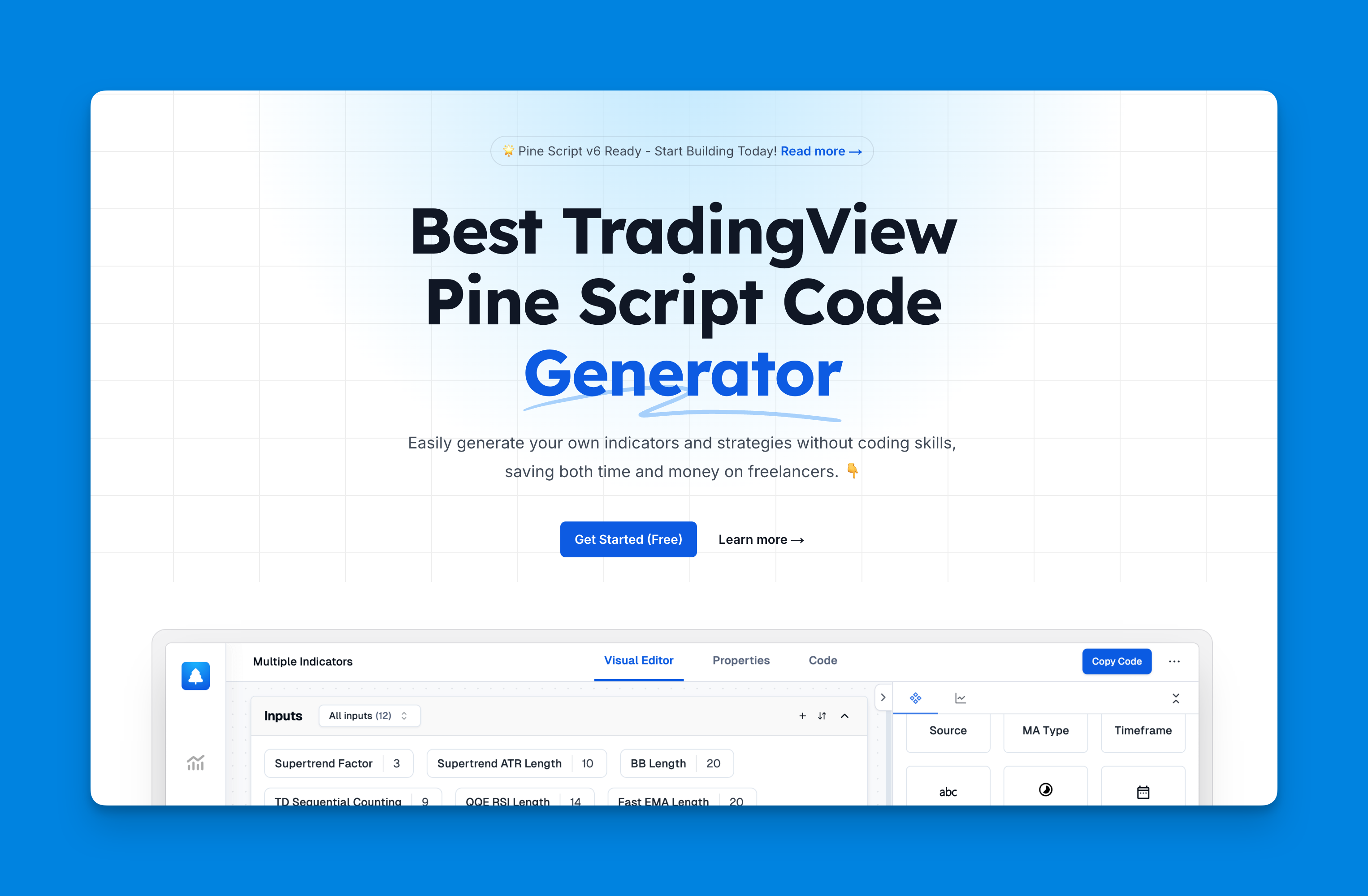
Website: Pineify
Incorporating the Average True Range (ATR) indicator into your trading strategy has never been easier, thanks to Pineify. This user-friendly online tool empowers traders to generate customized Pine Script codes without requiring any coding skills. With Pineify, you can seamlessly integrate the ATR indicator into your TradingView charts, circumventing the platform's standard limitations on the number of indicators.
The powerful condition editor allows for flexible combinations of the ATR with other technical indicators and price data, enabling you to craft nuanced trading strategies that include precise entry and exit points, alongside risk management tools like stop-loss and take-profit orders. By leveraging Pineify, you can quickly create and test your ATR-based strategies, significantly reducing the time and effort traditionally needed for such tasks, and ultimately enhancing your trading efficacy.
![[Pineify - Best Pine Script Generator] - Pineify ATR Indicator](https://r2.pineify.app/assets/c3c563fa763be5a8ffbed6a3d603e1c4.png)
Click here to view all the features of Pineify.
Practical Applications of ATR
The ATR can be utilized in various trading strategies:
- Volatility-Based Stop Losses: Traders often set stop losses at a multiple of the ATR below or above their entry point to account for volatility.
- Position Sizing: By assessing volatility through the ATR, traders can adjust their position sizes accordingly to manage risk effectively.
- Trailing Stops: The ATR can be used to create dynamic trailing stops that adapt to market conditions.
Creating an ATR-Based Trailing Stop Indicator
To create an ATR-based trailing stop indicator in Pine Script, follow this template:
// This source code is subject to the terms of the Mozilla Public License 2.0 at https://mozilla.org/MPL/2.0/
// © Pineify

//======================================================================//
//                    ____  _            _  __                          //
//                   |  _ \(_)_ __   ___(_)/ _|_   _                    //
//                   | |_) | | '_ \ / _ \ | |_| | | |                   //
//                   |  __/| | | | |  __/ |  _| |_| |                   //
//                   |_|   |_|_| |_|\___|_|_|  \__, |                   //
//                                             |___/                    //
//======================================================================//

//@version=6
strategy("[Pineify - Best Pine Script Generator] ATR Trailing Stop", overlay=true)

// User Inputs
atrLength = input.int(14, title="ATR Length")
atrMultiplier = input.float(1.0, title="ATR Multiplier")
barLookback = input.int(10, title="Bar Lookback")

// Calculate ATR
atrValue = ta.atr(atrLength)

// Determine Stop Loss Levels
longStop = low - atrValue * atrMultiplier
shortStop = high + atrValue * atrMultiplier

// Entry Conditions
if (ta.crossover(close, ta.sma(close, 14)))
    strategy.entry("Long", strategy.long)

if (ta.crossunder(close, ta.sma(close, 14)))
    strategy.entry("Short", strategy.short)

// Exit Conditions with Trailing Stops
strategy.exit("Long Exit", "Long", stop=longStop)
strategy.exit("Short Exit", "Short", stop=shortStop)
In this example:
- We calculate both long and short stop loss levels based on the current price and the ATR.
- The script enters long or short positions based on moving average crossovers and exits based on the calculated trailing stops.
Conclusion
The Average True Range is an essential tool for traders looking to gauge market volatility and manage risk effectively. By utilizing Pine Script to implement the ATR in your trading strategies, you can enhance your decision-making process and potentially improve your trading outcomes.
References:
- https://zenandtheartoftrading.com/pinescript/how-to-create-atr-trailing-stop-indicator/
- https://www.youtube.com/watch?v=8ajPXWe6puk
- https://courses.theartoftrading.com/pages/atr-trailing-stop-in-pine-script
- https://www.tradingview.com/support/solutions/43000501823-average-true-range-atr/
- https://docs.algotest.in/signals/pinescripts/atr_strategy/