StockGPT vs Pineify Finance Agent: Compare Research Workflows

StockGPT and Pineify Finance Agent can support financial research, but a useful comparison starts with the question you need answered. This guide compares documented workflows and Pineify's implementation. It is not a personal benchmark, a response-speed test, or a prediction of investment performance.
What StockGPT publicly describes
StockGPT's official site describes AI search over earnings releases, financial reports, and fundamental information for S&P 500 and Nasdaq companies. It lists transcript search, filters across companies and periods, industry research, and the addition of new transcripts as they become public.
That is not the same as a permanently frozen dataset. The site also lists a free search allowance and paid plans; check its current terms for limits. Features not established by the reviewed page remain unverified rather than being marked unavailable.
Do not conflate this commercial product with an academic model that happens to share the StockGPT name. A research paper's return forecast or backtest is not evidence of this website's capabilities.
What Pineify's tools establish
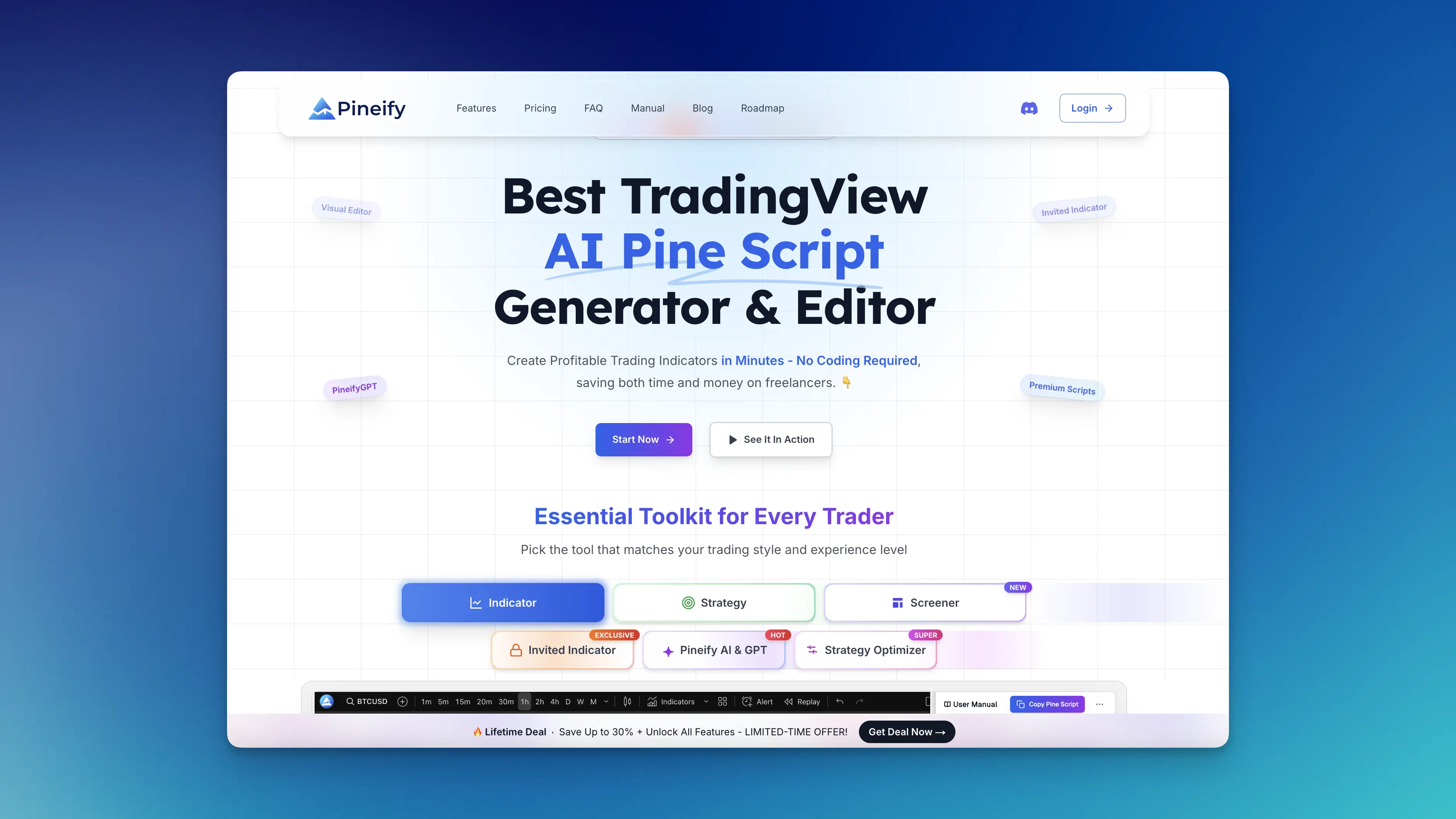
Pineify Finance Agent registers tools for quotes, financial statements, analyst estimates, transcripts, news, options, and other financial research categories. For example, its stock-quote tool calls a provider quote endpoint and returns fields including the symbol, exchange, price, and timestamp when available. The analyst-estimates tool requests a symbol and period and can return missing fields or no rows.
The financial-agent prompt asks the assistant to minimize unnecessary requests while obtaining the information needed. It does not call every registered tool on every question. A count of tools is also not a count of independent data providers.
Tool availability does not guarantee every ticker, exchange, field, or date is covered. A response can contain stale, missing, delayed, or incorrectly summarized information. Inspect the actual returned source and timestamp rather than inferring freshness from the word AI.
Compare by research task
| Task | StockGPT evidence | Pineify evidence | What to verify |
|---|---|---|---|
| Find a management statement | Official site describes transcript search and period filters | Transcript tool registered | Company, quarter, speaker, and source passage |
| Compare reported fundamentals | Official site describes financial and fundamental information | Statement and ratio tools registered | Fiscal period, currency, units, and restatements |
| Inspect a market quote | Not established by the reviewed public page | Provider quote tool implemented | Exchange, timestamp, delay, and missing fields |
| Review analyst estimates | Not established by the reviewed public page | Estimates and price-target tools registered | Forecast period, analyst count, update date, and dispersion |
| Extend into script research | Not established by the reviewed public page | Separate Coding Agent and Visual Editor workflows | Exact rule, compilation, testing environment, and access terms |
This table documents scope without treating an unverified competitor feature as absent. It also does not equate a registered Pineify tool with a successful result for every query.
Use a small acceptance test
Choose one company and a specific reporting quarter. Ask both tools for the same source-backed fact, then check it against the company's investor-relations release or filing. Record the requested period and distinguish management guidance from analyst consensus and realized results.
For Pineify, add a quote question that explicitly asks for the timestamp and exchange. If the result is missing or old, record that limitation. Do not substitute a plausible number from model memory. For estimates, check whether revenue and EPS analyst counts differ and whether the period is annual or quarterly.
A useful answer should separate retrieved facts, calculations, and interpretation. A fluent buy/sell conclusion is not proof of a calibrated forecast, and a provider's no-hallucination marketing claim should not replace source inspection.
Keep research, coding, and testing distinct
Pineify Finance Agent is a research entry point. Its Coding Agent can draft code in a separate workflow, while the Visual Editor supports configured indicators and conditions. Historical execution is evaluated in the applicable testing environment; Backtest Deep Report analyzes imported trade results. None of these steps automatically validates the preceding investment thesis.
This guide does not claim Pineify replaces every Bloomberg workflow or that general-purpose AI cannot access current information. Compare the specific integrations, data rights, audit trail, and output required for your task.
Check current access terms
Use Pineify pricing and StockGPT's published plans to confirm the applicable features, credits, renewal terms, and limits. A historical discount table is not a reliable description of current access, and one plan should not be described as granting every feature without restriction.
Is StockGPT limited to old transcripts forever?
Its official site says new transcripts are added as they become public. Check the actual company and period coverage for your question.
Does Pineify query every financial tool for every question?
No. The agent selects relevant tools, and its prompt encourages avoiding unnecessary requests. Registered tools do not imply a fixed number of requests or providers per answer.
Which product wins?
Choose based on verified coverage and output for your research task. This article provides no controlled benchmark establishing an overall winner.
