TradingView Screener Tutorial: Filter Stocks, Crypto, Forex

A stock screener is a filtering tool that scans thousands of instruments across stocks, crypto, and forex to find assets matching your specific criteria. TradingView's version does this in real time and updates its results as you adjust each filter. I use it every morning before the US open to find setups I'd miss scrolling through charts manually — last Thursday it flagged AAPL with a 50/200 SMA crossover that I'd have otherwise missed.
What Is the TradingView Screener?
Think of it as your personal market scout. Instead of flipping through hundreds of charts by hand, you tell the screener what to look for, and it returns a shortlist of candidates.
You can filter for almost anything:
- Technical conditions: Stocks where RSI is oversold below 30, or where the 50-day SMA crossed above the 200-day SMA last week.
- Fundamental data: Companies with year-over-year earnings growth above 20%.
- Market performance: Cryptocurrencies with a 50% volume spike in the last 24 hours.
The point is to shrink the full market down to a list that actually fits your strategy. I've found this cuts my daily scan time from about an hour to 15 minutes.
The screener covers stocks, crypto, forex, and ETFs, with specialized filters for each:
| Filter Type | What You Can Find |
|---|---|
| Market Cap | From small-cap under $2B to mega-cap over $200B. |
| Dividends | Stocks with dividend yields above 4%. |
| Sector Performance | How entire sectors like tech or healthcare are trending. |
Building a diversified portfolio means not putting everything into one sector. Last week I was scanning tech stocks and accidentally found a healthcare pick that moved 12% in two days — diversification works both ways.
Getting Started: Finding the Screener
Log into your TradingView account. If you don't have one, the free account takes about a minute to set up.
Once you're in:
- From the homepage: Look at the top menu. Click "Screener" to open the main hub, where you pick stocks, crypto, or forex.
- From a chart: Check the bottom of your chart window. There's a tab labeled "Screener." Click it, and the screener opens inline.
You'll see a table populated with different assets — ticker, price, change, volume. TradingView also bundles pre-made screeners for top movers and technical indicator scans, which are useful starting points.
The mobile app has a screener too. It works similarly, though the desktop version gives you more room to build custom filters.
How to Use the Stock Screener Step by Step
Let me walk through this like I'd show a colleague. Click "Stock Screener" in the menu. You'll see a long list of stocks sorted by market cap or daily performance.
Click the blue "Filters" button on the right. A side panel opens where you define your scan criteria. The filters are grouped into technical indicators, fundamentals, and descriptive data.
Step 1: Pick a time frame. Choose a period like 1 day or 1 week. Why this matters: the time frame determines the data range your filters evaluate. What can go wrong: using a 1-day chart for a long-term screen gives you noise from daily volatility, so your results will be unreliable.
Step 2: Add technical filters. Start with one or two conditions. A popular setup: 50-day SMA above 200-day SMA, which signals a healthy uptrend. Why this works: moving average crossovers smooth out price noise and highlight trend direction. What can go wrong: a single crossover on low volume can be a false signal. I always pair mine with a volume filter to confirm.
Step 3: Check fundamentals. Technicals show price action, but fundamentals reveal financial health. Add filters like P/E ratio below 15 for potentially undervalued stocks, or dividend yield above 3% for income. Why this matters: a stock can look great on a chart and still be a bad investment if the company carries too much debt. What can go wrong: fundamental data is less useful for short-term trades — it's built for position traders and investors holding weeks or longer.
Step 4: Review and refine. The results table updates as you adjust each filter. If you get too many results, add another filter. If you get zero, loosen one condition. I prefer starting with 3 filters max and narrowing from there rather than piling on conditions upfront.
Step 5: Save your setup. Click "Save" and give it a name like "Weekly Value Scan." This lets you rerun the same scan with one click. Free accounts can save some setups; Pro plans allow unlimited saved configurations.
Quick Reference: Sample Filters
| Filter Type | Example Goal | Sample Setting |
|---|---|---|
| Technical | Find stocks in an uptrend | 50-day SMA > 200-day SMA |
| Fundamental | Find potentially undervalued stocks | P/E Ratio < 15 |
| Fundamental | Find income-generating stocks | Dividend Yield % > 3 |
Once you're comfortable, mix filters to get more specific. An example: look for stocks with RSI below 30 (oversold) AND rising volume above the 20-day average. Some traders watch this combination for a potential bounce.
How TradingView's Crypto Screener Works
The crypto market runs 24/7 with thousands of coins moving at any time. The crypto screener helps you find the ones worth watching.
Find it under the "Screener" menu by selecting "Crypto." If you trade on Binance or Coinbase, the "CEX Screener" focuses specifically on centralized exchanges. I prefer the CEX screener when I want to check whether a coin's price differs between exchanges — that can signal an arbitrage opportunity.
Practical filters to try:
- 24-hour change: Filter for coins that moved up over 10% in the last day. This catches momentum quickly.
- Volume: Filter by minimum trading volume to avoid illiquid coins. I set a floor of $10M for mid-cap coins.
- 20-EMA trend: Filter for coins trading above their 20-day EMA to spot uptrending assets.
Adjust the time frame to match your style. Scalpers look at 1-minute bars; position traders check weekly or monthly data. I haven't tested the crypto screener with every exchange API, so if you trade on a smaller platform, verify the data feed matches your exchange.
Forex and ETF Screener Tips
For forex: Open the forex screener and sort by currency pair or pip change. The real value comes from technical oscillators. Try filtering for pairs where the Average True Range (ATR) is above its normal level. This flags pairs with above-average movement — useful for day traders looking for action. Why this works: ATR measures volatility directly, so high ATR means bigger price swings. What can go wrong: high ATR also means wider stop-losses, so size your positions accordingly.
For ETFs: The ETF screener filters by sector exposure and dividend yield. A trick I've found useful: pair the ETF screener with the heatmap (under the Screeners tab). The heatmap shows color-coded blocks — green for strong performers, red for weak ones — giving you a visual read on which sectors are leading within seconds.
Pro Tips
| Tip | Why It's Useful |
|---|---|
| Customize Your Columns | Add columns for your own Pine Script indicators. This tailors the screener to your specific strategy. |
| Set Up Alerts | Found a setup you like? Set an alert from the chart and get notified automatically instead of watching the screen. |
| Integrate with Charts | Click any ticker in screener results to open its full chart for deeper analysis. |
Customizing Your Screener and Connecting to Other Tools
The screener is a starting point, not the finish line. Its power grows when you link it with other TradingView tools.
Customize the results table. Add or remove columns, drag them to reorder, and set up the view so your most important data is front and center. You can also use Pine Script to create custom columns for metrics that don't exist by default — for example, a script that flags a specific candlestick pattern.
After the screener finds candidates, your next steps:
- Right-click any ticker and open its full chart. Apply your favorite indicators and drawing tools to double-check the setup before entering a trade. I got burned once by trusting a screener result without checking the chart — the stock had a hidden resistance level a few cents above the entry price.
- Save the results as a watchlist. This lets you track how those assets perform over days without re-running the scan.
- Set alerts directly from the chart. TradingView notifies you when price hits your target or an indicator triggers. No need to stare at the screen.
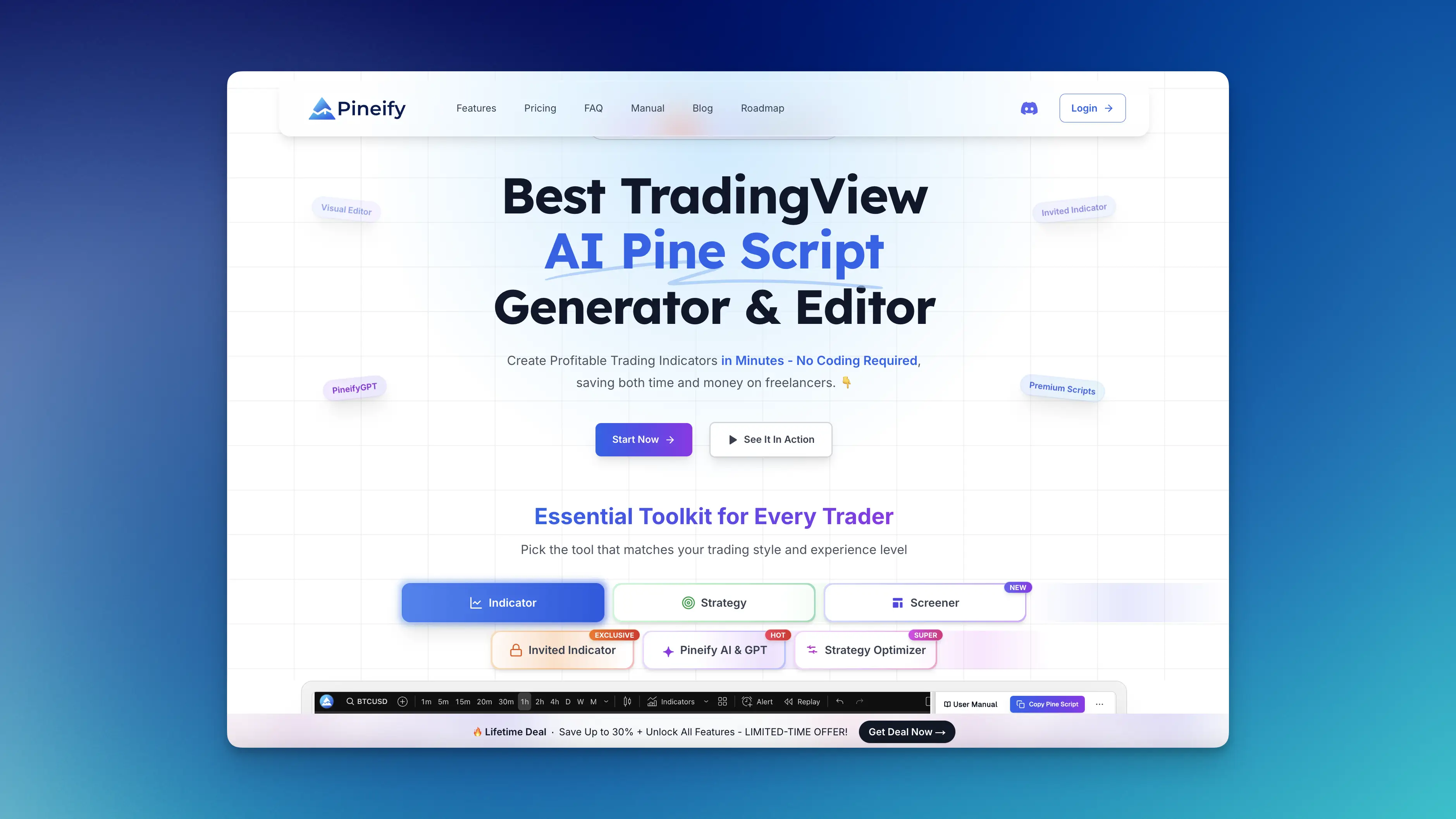
The Pine Screener takes customization further. It lets you use custom Pine Script code instead of the standard filter UI. You can scan by weekly trend while checking daily entry signals, or search for a candlestick pattern you scripted yourself. Platforms like Pineify extend this with a dedicated TradingView Pine Script Screener that scans multiple symbols and timeframes simultaneously using 235+ technical indicators with color-coded signals. I haven't tested Pineify's screener with futures data, so check compatibility if that's your primary market.
| Tool | How to Use It Together | Why It's Powerful |
|---|---|---|
| Charts & Analysis | Right-click a screener result to open its chart. | Validate a scan with deeper technical analysis before committing. |
| Watchlists | Save screener results as a new watchlist. | Track evolving performance without re-running the scan. |
| Alerts | Set price or indicator alerts from the screener or chart. | Automate monitoring so you never miss a move. |
| Pine Script | Use the Pine Screener for custom script-based scans. | Run complex multi-timeframe logic and unique strategies. |
Common Mistakes and How to Avoid Them
Over-filtering. Adding too many strict conditions is tempting, but narrow criteria can leave you with zero results — or worse, filter out good opportunities. I've done this more times than I want to admit. Start with 2-3 broad filters and tighten only when the result list is too long to review.
Ignoring time frame. The data your screener returns depends entirely on the time frame you select. A 1-day chart for long-term investing gives you mismatched data. Always match the screener time frame to your actual trading or investing horizon.
Skipping fundamentals. Technical indicators tell you where price has been, but they don't tell you if the company is solvent. I once found a stock with a perfect chart pattern, only to discover its debt-to-equity ratio was dangerously high. For holds longer than a few weeks, check at least P/E ratio and debt levels.
Trading without chart confirmation. Never place a trade based on a screener result alone. The screener generates ideas, not trade signals. Open the chart, look at the price action, check support and resistance. This is your best defense against false positives.
Frequently Asked Questions
What is a stock screener and how does TradingView's work?
It's a tool that filters the market by criteria you define — price, volume, RSI, or P/E ratio — so you see only assets matching your setup. TradingView's version applies these filters in real time across stocks, crypto, forex, and ETFs, and the results update as you change conditions.
How do I set up a basic stock screener scan on TradingView?
Open the Stock Screener from the top menu or the chart bottom tab, then click the blue Filters button. Pick a time frame, add technical and fundamental filters, and the table updates automatically. Save your setup by name to rerun it in one click later.
Can I use the TradingView screener for free?
Yes. The free plan includes a functional screener with a good range of filters for stocks, crypto, and forex. Paid plans add more filter options and unlimited saved setups, which helps if you run multiple strategies regularly.
How is the crypto screener different from the stock screener?
The stock screener focuses on company fundamentals like earnings, dividends, and market cap alongside technical data. The crypto screener is optimized for a 24/7 market, emphasizing trading volume, exchange availability, and short-term price momentum. The CEX Screener also lets you compare the same asset across exchanges like Binance and Coinbase.
What is the Pine Screener and when should I use it?
The Pine Screener runs scans with custom Pine Script code instead of the standard filter UI. Use it when you need logic the built-in filters can't express — for example, combining a weekly trend condition with a daily entry signal, or scanning for a candlestick pattern you scripted yourself.
How do I avoid over-filtering and getting zero results?
Start with two or three broad conditions and check the result count before adding more. If the list is already small, loosen one filter — widen a range or remove a condition — before tightening others. The goal is a manageable shortlist to analyze further, not a single "perfect" stock.
Can I set alerts from the TradingView screener?
Yes. Click a ticker in your screener results to open its chart, then set a price or indicator alert from there. You don't need to watch the screen continuously — TradingView notifies you when your conditions are met.
How do I add custom indicators to the screener?
Write your own filters using Pine Script, TradingView's programming language. Code your logic in the Pine Editor, save it, and the new indicator appears in the screener's filter list. It takes some scripting, but you get scans nobody else has.
Can I screen for pre-market data?
Yes. Adjust the screener's time frame settings to include the pre-market session. I use this before regular hours to spot stocks already moving — it gives a head start on the trading day.
How accurate is the real-time data on the screener?
TradingView pulls data from major exchanges and providers, so it's reliable for most traders. During high-volatility events, a small delay can occur. I always double-check the chart before entering a trade.