How to Add Another Chart in TradingView: Multi-Chart Setup Guide

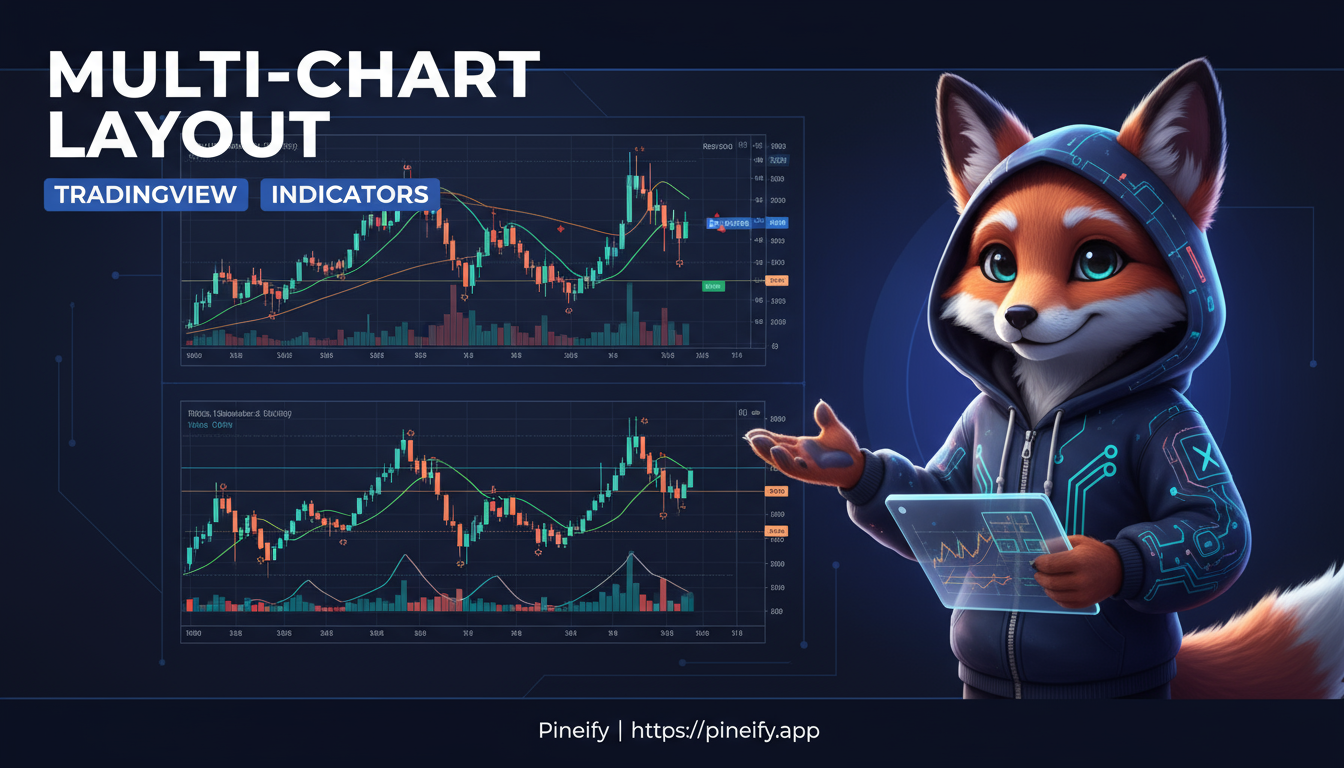
TradingView's multi-chart feature lets you display up to eight independent chart panes in a single window, each with its own timeframe, indicators, and drawing tools. Instead of overlaying one price line on another, you get clean, separate workspaces for comparing assets or watching multiple timeframes at once. I've been running a 3-pane layout -- SPY daily, QQQ 4-hour, and TSLA 15-minute -- for the past six months, and it's changed how I think about trade timing.
Why Multi-Chart Layouts Help
Each chart pane in a multi-chart layout stays independent. You can add different indicators, drawing tools, and timeframes to each one without anything overlapping or getting messy. This is useful when you want to see how Bitcoin's daily trend looks against Ethereum's 1-hour action, or compare AAPL's price movement with the broader market via SPY.
| Feature | Single Chart | Multi-Chart Layout |
|---|---|---|
| Analysis Type | Focused on one asset/ timeframe | Comparative across assets/ timeframes |
| Indicators & Tools | One shared set per chart | Unique sets for each chart |
| Visual Clarity | Can get cluttered with overlays | Clean, separate analysis windows |
| Ideal For | Quick check, basic analysis | Complex strategy, market context |
What You Need Before Starting
The built-in multi-chart feature requires a paid TradingView plan, starting at Pro. I pay for the Pro plan myself and use the 4-chart layout daily. If you're on the free plan, you can open multiple browser tabs or windows as a workaround -- each tab loads a separate chart. The downside is you set up each chart individually every time, and none of them sync with each other.
Upgrading to Pro or higher gives you integrated layouts, symbol sync across charts, and saved layouts that load exactly as you left them. I haven't tested the Premium plan's 8-chart layout on a small laptop screen -- I'd guess it gets cramped past six panes.
Step-by-Step: Adding Charts to Your Layout
Here's the process I follow to add more charts. Each step includes why it matters and what can trip you up.
1. Open the layout panel. It's in the top menu, next to your chart's title (usually shows "Unnamed"). Why: this is the control center for all layout changes. What can go wrong: clicking the wrong button here can reset your current single-chart view to a different layout, so take a second to find the right icon.
2. Click Select Layout. A menu pops up with grid options ranging from 2 to 8 charts. Why: TradingView gives you pre-built arrangements so you don't have to manually drag and resize panes. What can go wrong: selecting a layout replaces your current setup immediately -- there's no undo for layout switching.
3. Pick a layout that fits your screen. Two charts side-by-side works well on a 13-inch laptop. I use a 2x2 grid on my external monitor. Why: more charts isn't always better -- too many makes each pane too small to read comfortably.
4. Click each empty pane and enter a ticker. Type the symbol manually or start typing for autocomplete. Why: each pane starts blank until you assign an asset to it. What can go wrong: if you enter an invalid ticker or one that TradingView doesn't have data for, the pane stays empty -- no error popup, just a blank screen.
5. Repeat until every pane shows the asset you want. Take your time here. Why: rushing through this step means you might accidentally load the same ticker in two panes when you meant to compare different ones.
Once your layout is set, TradingView arranges everything automatically. No manual resizing needed.
With your multi-chart layout ready, you can add custom indicators to each pane. I use Pineify's visual editor to build indicators without writing code -- handy when I want different studies on my SPY chart versus my TSLA pane.
Customizing Each Chart Pane
Each pane in a multi-chart layout is its own workspace. You can configure them independently without affecting the others. Here's what I typically adjust:
- Chart type: Switch between candlestick, line, or bar charts per pane. I keep candles on my main chart and use a line chart for the higher timeframe pane.
- Indicators and strategies: Add moving averages, RSI, or custom studies to individual panes. My daily SPY pane has a 200-day SMA; the 15-minute TSLA pane uses VWAP and volume. I've also been testing the KAMA indicator on the 4-hour QQQ pane as an alternative to standard moving averages.
- Timeframes: Set one pane to 1-hour and another to daily to see both short-term moves and the long-term trend. I run hourly on my QQQ pane and weekly on the SPY pane.
- Chart settings: Right-click any pane, select Settings, and adjust bar spacing or visible history range.
The independence means you can experiment with one pane while keeping your main setup untouched. I've accidentally broken a layout before by messing with settings on the wrong pane -- now I turn off Autosave first.
Saving and Managing Your Layouts
You don't want to lose a carefully arranged multi-chart setup. Here's how I save mine:
- Click the layout name in the top menu (it usually says "Unnamed").
- Select Rename, type something memorable like "Swing Trading Main," and confirm.
- Click Save layout or press Ctrl+S to lock in the configuration.
- If you turn Autosave on, every change saves automatically. I keep Autosave off by default and save manually -- that way, I can test new indicator combinations without worrying about overwriting my working layout.
- To load a saved layout, press the . (dot) key or go to Load layout from the dropdown.
Saved layouts live in your TradingView profile, not on your local machine. You can access the same layout from your desktop, laptop, or any browser login. I've switched between three computers this week using the same setup without reconfiguring anything.
Practical Tips I Use
Running multiple charts can get chaotic if you're not deliberate about it. Here's what works for me.
-
Keep charts related. Compare assets in the same sector or market. Looking at AAPL next to wheat futures probably won't tell you anything useful. I keep my panes within equities or crypto, never mix the two in one layout.
-
Mix timeframes on purpose. I use one daily chart for the big picture (identifying the trend) and one 15-minute chart for entries. Seeing both at once helps me avoid buying into a short-term pullback that's actually against the daily trend.
-
Sync symbols to save time. The chain-link icon in the toolbar lets you link charts so changing the ticker in one updates the others. I sync my crypto layout -- when I switch from BTC/USD to ETH/USD on one pane, the other panes follow automatically.
-
Save indicator templates. If you have a combination of indicators you like for a specific timeframe, save it as a template. I have a "4-hour momentum" template with RSI, MACD, and volume that I apply to any new pane in one click. If you're refining your momentum strategy, the Ultimate RSI Indicator pairs well with multi-chart setups.
-
Clean up old layouts. I delete layouts I haven't used in a month. A dozen forgotten layouts clutter the dropdown and slow down finding the one you actually need.
Placing Orders in Multi-Chart View
You can place orders directly from any chart pane using the Trade button. This means you don't need to switch screens or apps.
Order types available from the chart include trailing stops, stop-loss orders, and bracket orders (setting profit target and stop-loss together). I don't use bracket orders much -- I prefer to manage exits manually -- but they're useful if you want to walk away after entering a trade.
You can also display live bid and ask price lines on your chart for precision entries. I keep these visible on my 15-minute pane and hide them on the daily view to reduce visual noise.
The practical benefit: you can watch a higher timeframe chart for context while executing on a shorter timeframe. I've placed trades on my 15-minute ES chart while keeping the daily SPY pane open to confirm the broader trend direction. You can read more about combining analysis tools in our guide on Using Python with Pine Script for Trading Automation.
Free Alternative: Browser Tabs
If you're not ready for a paid plan, browser extensions can tile multiple TradingView tabs on one screen.
| Browser | Recommended Extension |
|---|---|
| Chrome | Tile Tabs WE |
| Firefox | Tile Tabs WE |
- Install Tile Tabs WE from your browser's extension store.
- Open the extension and create a tiled layout (2 or 4 sections).
- Load TradingView in each tab with the chart and indicators you want.
- Arrange which ticker appears in each section.
I haven't tested this myself -- I use the Pro plan -- but I've seen it recommended in TradingView forums. The limitations are worth knowing: charts don't sync when you zoom or pan, and layouts don't save automatically. It's a stopgap, not a replacement.
Frequently Asked Questions
Q: Do I need a paid plan to add another chart? A: Yes. The multi-chart layout feature requires at least the Pro plan. On the free plan, your only option is opening separate browser tabs.
Q: How many charts can I display at once? A: Up to eight in a single layout. The actual number depends on your subscription level and screen size -- I wouldn't go past six on a 13-inch laptop.
Q: Can I sync symbols across charts? A: Yes. Click the chain-link icon and select Symbol from the menu. After that, changing the ticker in one chart updates all synced panes automatically.
Q: How do I switch between saved layouts? A: Press the . (dot) key on your keyboard for the fastest switch. You can also use the layout dropdown menu to load any saved setup.
Q: How do I test new settings without losing my layout? A: Turn off Autosave from the layout dropdown before making changes. You can experiment freely, and your original layout stays intact.