TradingView Premium Plans: Pricing, Features, and Plan Comparison

TradingView Premium plans are the top-tier subscription option for traders who need maximum charting power. They bump the limits to 25 indicators per chart, 8 charts per tab, 400 second-based alerts, and 20,000 historical bars for backtesting. Whether you trade stocks, crypto, or forex, Premium gives you tools that the free and mid-tier plans do not offer.
I have tested all four TradingView tiers over the past two years, and the differences become obvious fast. If you are moving beyond the basics, the paid plans—especially Plus and Premium—are where the real power sits. Let me walk you through each option, what you actually get, and where I think each plan falls short.

Overview of TradingView Subscription Tiers
TradingView structures its offerings into four levels: Basic (Free), Essential, Plus, and Premium. Each one adds more capacity and features for different types of users.
The free Basic plan gives you the essentials—three charts per tab and two indicators per chart. It is fine for checking prices and getting familiar with the platform. The main trade-offs are the ads and very limited alerts.
Moving to a paid plan removes ads and opens up more indicators, charts, and historical data. Here is how the paid plans compare:
| Plan | Starting Price (Monthly) | Key Features at a Glance | Best For |
|---|---|---|---|
| Essential | €12.95 | 5 indicators per chart, Volume Profile, faster data | Beginners getting serious |
| Plus | €24.95 | 10 indicators per chart, 4 charts per tab, custom charts | Active traders developing complex strategies |
| Premium | €49.95 (approx.) | 25 indicators per chart, 8 charts per tab, 20k historical bars | Power users and professionals needing maximum tools |
The Essential plan is your first step into serious trading. It adds more indicators and specialized tools like Volume Profile.
The Plus plan is where things get interesting. With 10 indicators per chart and four charts per tab, you can build much more sophisticated setups. I used Plus for about six months before I hit its limits on alerts—100 just was not enough during high-volatility days on SPY and QQQ.
Then there is Premium. This is the top tier, built for traders who need maximum capacity. Twenty-five indicators per chart, eight charts in a single tab, and deep historical data for backtesting. If you are learning tools like the Ehlers Stochastic CG Oscillator, Premium gives you room to layer indicators without hitting limits.
A practical tip: annual billing saves you roughly 16% compared to month-by-month. That is about two months free, which makes the jump to a higher tier more manageable. I have not seen TradingView run major discounts outside Black Friday, but when they do, the savings can be another 20-30%.
What Premium Features Actually Do for You
If you are deciding whether Premium is worth it, here is what the features look like in practice.
More Indicators and Chart Space
Premium lets you run 25 indicators on a single chart. I have tested setups with 15-18 indicators—multiple moving averages, RSI, MACD, volume profile, and custom Pine Scripts—and the platform stayed responsive. The 8-chart layout is where it really shines for me. I keep SPY, QQQ, BTC/USD, and a few sector ETFs open in one tab to watch correlations in real time.
Twenty thousand bars of historical data means you can backtest strategies over much longer periods. The free plan's 5,000 bars cover roughly 2-3 years on daily charts. Premium's 20,000 bars go back 8+ years—a meaningful difference for anyone building long-term strategies.
Alerts and Automation
You get up to 400 custom alerts with second-based precision. I use about 200 for my daily scanner—breakout alerts on NVDA, volume spikes on small-cap biotech, and RSI divergences on major forex pairs. The precision matters: a one-minute delay on a fast-moving stock like TSLA can mean missing the entry entirely.
Auto Chart Patterns is a feature I find genuinely useful. It scans your charts and marks formations like head-and-shoulders, flags, and wedges automatically. I do not rely on it alone—it misses some patterns and flags others that are not there. But as a starting point for scanning 50+ charts, it saves me about an hour each morning.
Volume Footprint and Screening
Volume Footprint Charts are Premium-only and show you exactly how much traded at each price level. I use this most for ES futures to see where the big participants stepped in. The stock screener with 400+ filters is overkill for most retail traders, but if you screen across global markets, the depth is impressive. I have not tested all 400 filters—many are niche—but the ones I use for momentum and volume consistently find candidates I would have missed scrolling watchlists.
Broker Integration and Support
Premium connects with 70+ brokers. I use it with Interactive Brokers for stock trades and Bybit for crypto. The order flow from chart to broker is one less context switch during the day. Priority support has been hit-or-miss in my experience—most ticket responses come within a few hours, but complex issues can take a day.
| Feature | Free Plan | Premium Plans |
|---|---|---|
| Indicators per Chart | 3 | Up to 25 |
| Historical Data Bars | 5,000 | 20,000 |
| Price and Technical Alerts | Limited | 400 |
| Multi-chart Layouts (per tab) | 4 | 8 |
TradingView Premium Pricing: What You Actually Pay
The Premium plan costs €49.95 per month. The annual option is €449.40, which works out to about €37.45 per month.
Paying annually saves you €119.40 compared to month-to-month. That is roughly 2.5 months free. In USD terms, figure about $55/month, though exchange rates shift it.
| Plan Type | Monthly Cost (EUR) | Annual Cost (EUR) | Savings |
|---|---|---|---|
| Monthly Billing | €49.95 | - | Flexible cancellation |
| Annual Billing | Effectively €37.45 | €449.40 | Save €119.40 per year |
Compared to other platforms, TradingView's Premium pricing is competitive. I checked alternatives like TC2000 ($89.95/month for similar bar count) and Bloomberg Terminal (thousands). For what Premium offers, €49.95 is fair. But I would not call it cheap for a retail trader.
Free Trial
TradingView offers a 30-day free trial for Premium. You get full access to all features. No credit card required in some regions—though I have heard from users in the UK that they had to enter payment details upfront. Your mileage may vary.
Team Plans
For groups, TradingView has custom Enterprise plans. I have not used these, so I cannot speak to pricing or feature differences.
Plan Comparison: Which One Fits Your Trading Style
Choosing a plan is not about picking the "best" one. It is about matching the limits to how you trade.
| Feature | Basic (Free) | Essential (€12.95/mo) | Plus (€24.95/mo) | Premium (€49.95/mo) |
|---|---|---|---|---|
| Indicators per Chart | 2 | 5 | 10 | 25 |
| Charts per Tab | 3 | 2 | 4 | 8 |
| Historical Bars | 5,000 | 10,000 | 10,000 | 20,000 |
| Alerts (Price/Technical) | 1 each | 20 each | 100 each | 400 each |
| Ads | Yes | No | No | No |
| Exclusive Tools | No | Limited | Some | All |
| Priority Support | No | No | Yes | Yes |
Basic (Free)
Good for checking prices and learning the platform. You will hit the 2-indicator limit fast if you do any real analysis.
Essential (€12.95/month)
Solid starting point for casual traders. Removes ads, adds 5 indicators and Volume Profile. I started on Essential and stayed there about three months before needing more charts.
Plus (€24.95/month)
The sweet spot for most active traders, in my opinion. Ten indicators, 4 charts per tab, 100 alerts. I used Plus for six months and only upgraded because I needed more alerts during earnings season. If you trade fewer than 10 instruments actively, Plus is probably enough.
Premium (€49.95/month)
For traders who need the max. High-frequency traders, multi-asset portfolio managers, and anyone running heavy indicator setups. The 400 alerts and 8-chart layout are the main reasons to upgrade from Plus. I made the switch and have not looked back, but I also know traders on Plus who see no reason to move up.
Pros and Cons of TradingView Premium
Where Premium Excels
- No ads. Obvious, but the clean workspace makes a real difference during the day.
- Maximum chart capacity. 25 indicators and 8 charts per tab let you build the kind of setups that would crash lower-tier plans.
- Deep backtesting data. 20,000 bars and Bar Replay are essential if you develop and test strategies seriously. I backtested a mean-reversion strategy on QQQ using 15 years of data before I felt confident enough to run it live.
- Community scripts. Full access to the public library of Pine Script indicators. Some are excellent; many are broken or abandoned. But the good ones make the subscription worth considering.
- Broker integration. Direct trading from charts removes friction. I use it daily with Interactive Brokers.
Where Premium Falls Short
- The price. €49.95/month is a real commitment. If you are not using most of the features, you are overpaying.
- No built-in automated trading bots. TradingView is a charting platform first. If you need automated execution, you will need third-party connectors.
- Add-on data costs. Most major asset data is included, but niche futures and some international exchanges require extra subscriptions. I ran into this with Singapore Exchange futures.
- Pattern recognition is not perfect. Auto Chart Patterns is helpful but flags false positives regularly. I never trade a pattern without verifying it manually.
Q&A: Common Questions About TradingView Premium Plans
What do you actually get with a Premium plan that you do not get for free? The main differences are capacity and exclusives. Premium gives you 25 indicators per chart (2 on free), 8 charts per tab (3 on free), 400 alerts (1 on free), and 20,000 historical bars (5,000 on free). You also get Volume Footprint Charts, Auto Chart Patterns, and the full filter set in the stock screener.
Can I try Premium before paying? Yes. TradingView offers a 30-day free trial. Some regions require a credit card upfront; others do not. I recommend using the trial during a busy market week to stress-test the features.
Is it easy to cancel? Yes. Monthly subscribers cancel anytime and lose access immediately. Annual subscribers get a prorated refund for unused months. I cancelled once to switch back to Plus for a month, and the process took about two clicks.
Does Premium include real-time data for everything? For most major assets—stocks, forex, crypto—yes. Specialized instruments like certain futures or OTC markets may need a separate data feed. Real-time CME futures data, for instance, costs extra on top of Premium.
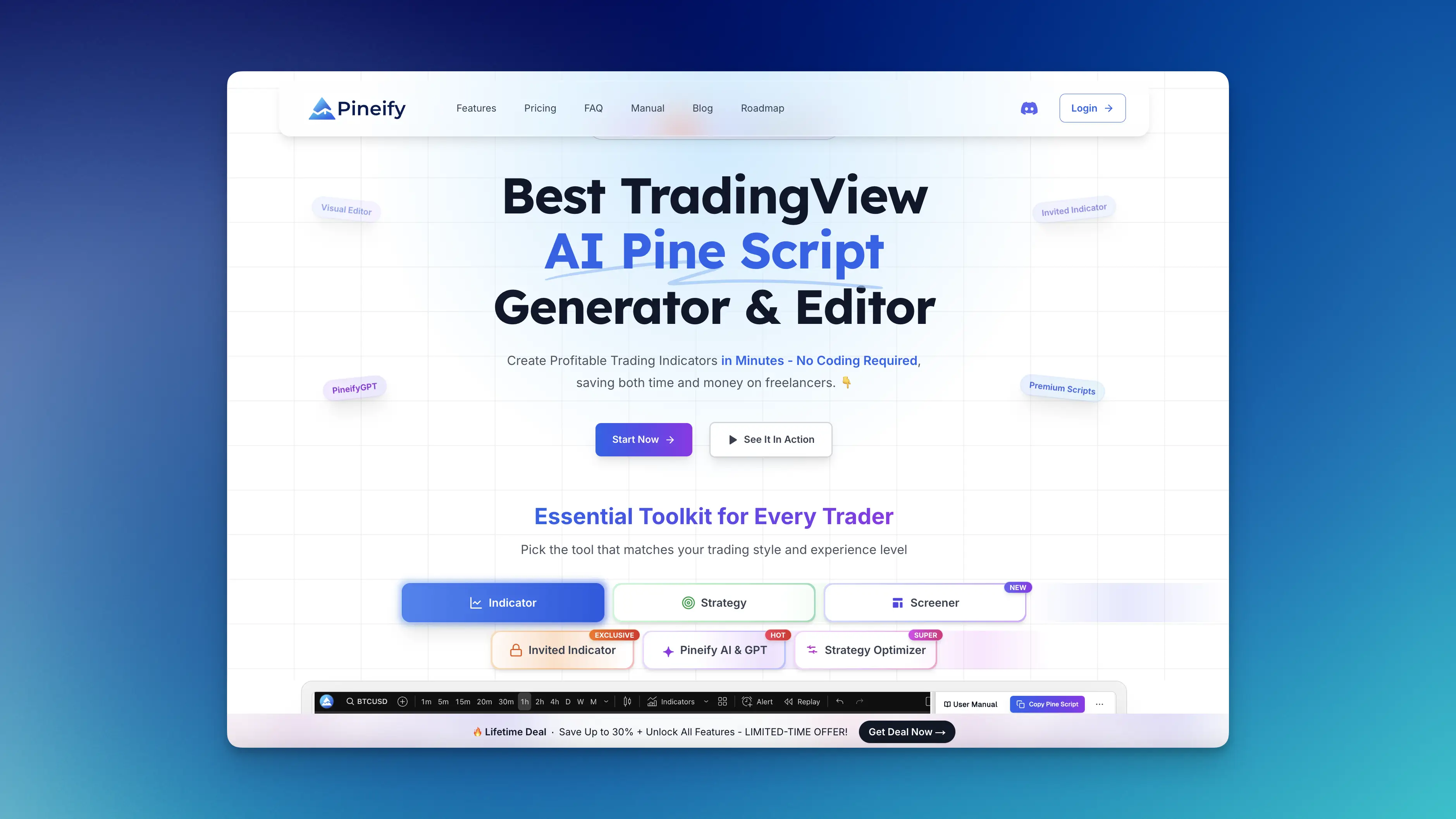
How does Premium help with backtesting? You get 20,000 historical bars and the Bar Replay tool. This lets you step through market action second-by-second on past data. I used this to validate a trend-following strategy on ETH/USD across the 2021-2022 cycle before running it with small capital. For building strategies without writing code, tools like Pineify's Visual Editor and Strategy Builder let you construct and test complex logic in minutes. And for measuring trend strength, the ADX guide covers the complete approach.
Is Premium worth it for crypto traders? In my experience, yes. You get data from 70+ crypto exchanges, heatmaps for momentum, second-based alerts, and a DEX pair screener. The speed matters on volatile assets. I caught a SOL breakout in March 2025 that triggered and filled within the same second—something the free plan's slower alerts would have missed. For advanced momentum analysis, the Rank Correlation Index (RCI) is worth studying.
Practical Next Steps
If you are hitting limits on your current plan, here is what I suggest:
- Take the 30-day Premium trial during a period of active trading. Run your full daily workflow on it for two weeks. Compare alert speed, chart load times, and whether the extra indicators change how you analyze.
- If Premium fits, go annual. The 16% savings is real money over a year.
- Connect your broker if you have a supported one. The direct trading workflow is one of the few features that genuinely saves time.
- Spend time in the community scripts library. Some of the best indicators I use came from other traders sharing their work.
- If Premium feels like too much, try Plus first. Most traders I know operate comfortably on Plus. I stayed there longer than I probably needed to.
What is the one limit on your current plan that frustrates you most? That is usually the best signal for which upgrade makes sense.