Master Funding Rate Strategies for Consistent Crypto Trading Profits

· 19 min read

Let's talk about a way to trade crypto futures that's less about guessing where the price will go and more about collecting consistent, built-in payments. It's called a funding rate strategy, and for many, it's become a go-to method for seeking returns in both up and down markets.

This approach takes advantage of the unique mechanics of perpetual futures contracts. Instead of worrying about market direction, it focuses on the regular fee exchanges between traders, aiming to profit from those flows directly. Understanding how to automate and test such market-neutral concepts can be streamlined with a dedicated TradingView Strategy Tester Script, allowing for fast and reliable back-testing before risking capital.

Master Funding Rate Strategies for Consistent Crypto Trading Profits

What Is a Funding Rate Strategy?

In simple terms, it's a trading method built around the "funding rate." This rate is like a periodic fee that traders in perpetual futures contracts pay each other. Its main job is to tether the futures price close to the actual spot price of the crypto.

Here’s how it usually works:

  • If the futures price is higher than the spot price, traders holding long positions pay those holding short positions. This is a positive funding rate.
  • If the futures price is lower than the spot price, the shorts pay the longs. This is a negative funding rate.

These payments happen every few hours (like every hour or eight hours, depending on the exchange), creating a regular pulse of opportunity.

The core idea of the strategy is to set up a balanced position. By carefully managing both long and short exposures, you aim to neutralize the risk of the market moving against you (this is the "delta-neutral" part). Your primary goal becomes collecting those funding payments, rather than hoping the price moves your way. This can be especially appealing when the market is choppy or moving sideways without a clear trend.

Whether you're looking to diversify or explore more stable income streams in crypto, understanding this mechanism opens up a different perspective on trading.

What Goes into a Funding Rate? Breaking Down the Math

If you're trading perpetual contracts, you've seen funding rates. But what actually goes into that number? It's not random—it's a specific calculation. Once you get how it's put together, you can make much smarter trading decisions.

Most exchanges use the same basic formula. Think of it like a simple recipe with two main ingredients:

Funding Rate = Premium Index + Interest Rate

Let's break down what each part means in plain terms:

  • The Interest Rate: This is usually the steady, predictable part. It's like a small, fixed fee set by the exchange. It often sits around 0.01% and doesn't change much.
  • The Premium Index: This is the part that moves, sometimes a lot. It measures the gap between the price of the perpetual contract and the actual spot price of the asset. If the perpetual is trading higher, this index is positive. If it's lower, the index goes negative.

So, the funding rate constantly adjusts to either encourage more longs or more shorts, pulling the contract price back toward the spot price.

A Real-World Example

Let's say the exchange's interest rate is that steady 0.01%. Now, imagine the perpetual contract is trading a bit high compared to the spot market, leading to a premium index of 0.02%.

You just add them together: 0.01% (Interest Rate) + 0.02% (Premium Index) = 0.03% Funding Rate

This 0.03% is paid or received every hour. How does that feel in your account?

If you're holding a $10,000 long position with that rate, you'd pay about $3 per hour in funding fees ($10,000 * 0.0003). Over a full day, that adds up to roughly $72.

It’s like a small, recurring cost (or credit) for holding your position open, nudging the market back into balance. Understanding this math helps you anticipate costs and spot when the market sentiment might be shifting.

Making Sense of Funding Rate Strategies

Funding Rate Arbitrage: Profiting from the Difference

Think of funding rate arbitrage as a way to earn a return by playing the gap. It's the most common approach. Traders look for markets where the funding rate (the periodic fee paid between traders) is unusually high or low. They then set up opposite positions to capture that difference, all while trying to stay neutral to the market's price swings.

Here’s a simple example: Let’s say DOGE perpetual contracts on one platform have a funding rate of +0.01% every hour. A trader might short that DOGE contract on that platform and, at the same time, buy actual DOGE (the spot asset) or go long on a different platform. By holding both sides through the funding periods, they pocket the funding payments as profit. Over a day, that 0.01% per hour can add up to about 0.24%, which can mean significant annualized returns.

Cross-Exchange Arbitrage: Shopping for the Best Rate

This strategy takes the basic idea and expands it across the entire market. Instead of just looking at one or two platforms, traders monitor real-time funding rates on multiple exchanges—like Binance, OKX, and various decentralized ones. The goal is to spot moments when the same asset has a much higher funding rate on one exchange compared to another.

The big benefit here is simple: more chances to find a good deal. Different exchanges have different user bases and trading activity, so their funding rates for the same cryptocurrency often don’t match up. This creates more opportunities to step in and take advantage of the gap.

Market Timing: Waiting for a Cheaper Entry

Some traders don’t like to keep complex hedged positions open all the time. Instead, they use a market timing strategy. This means they watch the trends in funding rates and adjust when they enter the market.

The logic is straightforward: they prefer to open long positions when funding rates are low or even negative (meaning they might get paid to hold the position). They avoid opening positions when rates are very high, as that becomes an expensive cost. It’s a way to reduce overhead and keep more of the trading profits.

How to Set Up a Funding Rate Strategy

Step 1: Finding Good Opportunities

Start by keeping an eye on funding rates across different exchanges. You can use tools like ArbitrageScanner or the built-in dashboards on your exchange. You're looking for assets where the funding rate is consistently high compared to its own history—these tend to be the best chances to earn.

A quick tip: don't jump at every sudden, extreme spike. Those often disappear fast and can leave you in the red. It's better to focus on steady, higher-than-usual rates that are backed by real trading activity and market mood.

Step 2: Setting Up Your Trade (Without the Price Risk)

After you spot a solid opportunity, you'll open two opposite positions at the same time. This "delta-neutral" setup cancels out your price risk. Here’s how it typically works:

If the funding rate is positive (meaning traders holding long positions are paying those with short positions), you would:

  • Short the perpetual futures contract.
  • Buy an equal dollar amount of that same asset on the spot market.

The goal is to make the dollar value of both sides match. This way, whether the price goes up or down, your overall position is protected, and you can just collect the funding payments. For those looking to automate such precise entries and exits, exploring a 3Commas TradingView strategy can provide a framework for connecting these signals to automated execution bots.

Step 3: Keeping an Eye on Things and Making Changes

Funding rates aren't set in stone—they can shift quickly as trader sentiment changes. You need to watch your open trades and be ready to tweak them or close out if the funding rate flips or evens out, which kills the profit chance.

It’s smart to set up price alerts for big moves in the funding rate. Also, always make sure you have enough collateral so a wild price swing doesn’t trigger a liquidation. A lot of people use automated bots for this strategy, as they can grab opportunities day and night without you having to stare at the screen.

Why Funding Rate Strategies Are Worth Considering

Imagine finding a way to potentially earn from the crypto markets without having to guess if prices will go up or down. That’s the core idea behind a funding rate strategy. It's a different approach that comes with a unique set of advantages. Let's break down why traders find it appealing.

  • Earnings Independent of Price Swings: This strategy aims to generate returns based on market mechanics, not price predictions. Since you’re not betting on a directional move, it can significantly reduce the stress of wondering "will Bitcoin go up or down tomorrow?" It’s designed to work in sideways, up, or down markets, focusing on a specific, recurring market event.

  • A Stream of Regular Payments: Funding payments are exchanged between traders on a set schedule—often every 8 hours or hourly. This creates the potential for a predictable and consistent income stream, much like earning periodic interest, which can be appealing for managing cash flow.

  • Smoother Ride Through Market Storms: By using a delta-neutral setup, the strategy’s value isn’t tightly tied to the wild ups and downs of the underlying asset's price. This means your portfolio might experience less dramatic fluctuation compared to simply buying and holding or making directional trades, leading to a potentially less volatile equity curve.

  • Grows with Your Capital: The mechanics of this approach are inherently scalable. The funding payments you receive or pay are proportional to your position size. Simply put, deploying more capital typically means the core strategy can operate more effectively, allowing it to scale in a straightforward manner.

  • A Built-In Market Thermometer: The funding rate itself is a powerful piece of data. It directly reflects the sentiment and positioning of traders in the perpetual swaps market. A persistently high positive or negative rate can act as a crowd-sourced signal, hinting at over-leveraged conditions that sometimes precede a market reversal or a trend continuation. Smart traders watch this not just for the strategy, but for broader market insight.

BenefitIn Simple Terms
Market-Neutral ReturnsProfit from market mechanics, not price predictions.
Consistent IncomeReceive scheduled payments, creating a potential cash flow stream.
Reduced Volatility ExposurePortfolio value is less tied to the asset's daily price swings.
ScalabilityStrategy effectiveness can increase directly with more capital.
Market Sentiment IndicatorThe funding rate acts as a real-time gauge of trader sentiment.

Understanding the Risks and Challenges

While funding rate strategies can be a useful tool, they’re not without their pitfalls. It’s like any sophisticated tool—if you don’t handle it with care, you can get hurt. Before diving in, it's smart to be aware of a few key challenges that can trip you up.

Navigating Entry and Exit. Simply putting on or taking off your trade isn't always smooth. In markets with low activity, the price you want and the price you get can be different (this is called slippage). Those small differences add up and can eat right into your potential gains.

When the Weather Changes Suddenly. Funding rates are based on market mood. That mood can flip in an instant. A rate that was paying you can suddenly start charging you, turning what looked like a winning position into one that costs you money. It’s a reminder that these aren't "set-and-forget" trades.

The Threat of Getting Liquidated. This strategy often involves borrowing or using collateral. If the market makes an extreme move or you don’t have enough buffer, one side of your trade can get automatically closed (liquidated). This blows up your careful "neutral" balance and can lead to significant losses.

The Trade-Off. The money you have tied up in this strategy is busy working there. That means it’s not available to jump on other, possibly more straightforward, trading opportunities that might come along. It's an important cost to consider.

Relying on the Platform. You're putting a lot of trust in the exchange you use. Technical glitches, sudden withdrawal freezes, or new regulatory steps can happen. In a worst-case scenario, you might not be able to adjust your positions when you need to, or access your capital. It’s a risk that’s outside the market itself.

Here’s a quick look at these challenges:

ChallengeWhat It Means For You
Slippage on TradesYour actual fill price can be worse than expected, reducing profits.
Funding Rate FlipsThe rate can switch from positive to negative, creating costs.
LiquidationA sharp price move can trigger a forced close on one leg of your trade.
Opportunity CostYour capital is committed and may miss other market moves.
Exchange IssuesPlatform problems or rules changes can trap your funds or positions.

Setting Yourself Up for Success

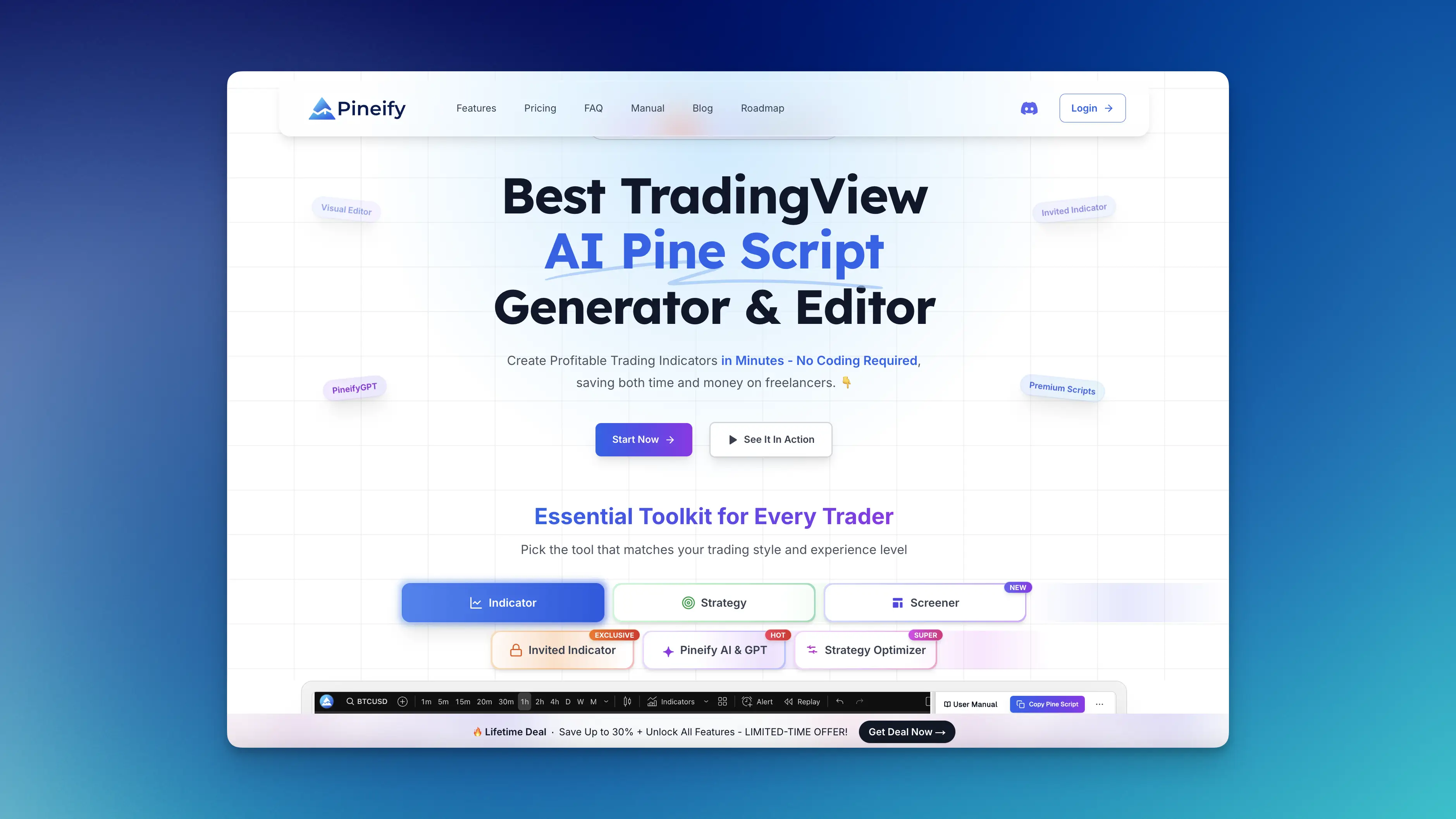
Getting the most out of funding rate strategies is less about complex tricks and more about solid, disciplined habits. Think of it like setting up a workshop before building something—you want all your tools organized and your safety gear on. For traders looking to build their own analytical edge, having the right tools is paramount. Platforms like Pineify provide a comprehensive suite for creating, testing, and automating trading strategies without needing to code from scratch, allowing you to focus on strategy refinement rather than implementation hurdles. Here are some straightforward ways to build that foundation.

Pineify Website

Do Your Homework First Before you jump into any position, take a moment to shop around. Funding rates can differ from one exchange to the next, so comparing them is like checking gas prices on different corners. It ensures you’re getting the best possible deal from the start.

Use Your Capital Smartly Many platforms offer features that let you use your collateral more efficiently. For example, using portfolio margining on an exchange like OKX can free up capital, similar to how a line of credit works. Just remember, with great power comes great responsibility—always understand the terms.

Give Yourself a Safety Buffer Volatility is a given. A simple but crucial rule is to always maintain more collateral than the absolute minimum required. This extra cushion can be the difference between a stressful dip and a catastrophic liquidation when the market moves suddenly.

Stick to the Well-Trodden Path Especially when you're starting out, focus on assets with deep liquidity like Bitcoin (BTC) and Ethereum (ETH). Trading these is like driving on a major highway—execution is smoother, and you’re less likely to experience significant “slippage” (the difference between your expected price and the fill price).

Know Your True Costs The profit you see on paper isn’t the profit you keep. Always factor in all the little costs:

  • Trading fees on the exchange
  • Fees to withdraw your earnings
  • Network gas fees if you’re using a decentralized platform (DEX) Adding these up tells you if a trade is actually worth it.

Start Small, Learn, Then Scale This might be the most important advice: begin with position sizes you’re completely comfortable with. Use these first trades as a live test of your strategy, your risk management, and your own emotional responses. Once that process feels reliable, you can confidently increase your size. Tools that facilitate rapid prototyping and backtesting, such as Pineify's Visual Editor and AI Coding Agent, are invaluable here, enabling you to translate your ideas into testable strategies in minutes.

Keep a Journal and Review It Finally, make notes on what you did and why. Did a trade go well? Did one go poorly? Regularly looking back at this log is your single best tool for improvement. It helps you spot repeating mistakes, confirm what’s working, and genuinely grow as a trader. Integrating this with a dedicated platform can streamline the process; for instance, Pineify includes a professional Trading Journal feature designed to track performance and uncover insights systematically.

Success here is built on preparation, patience, and continuous learning. By following these steps and leveraging powerful tools to automate the heavy lifting, you’re not just chasing profits—you’re building a sustainable and informed approach. To deepen your understanding of the tools at your disposal, consider reading our comparison of Tradestation vs Tradingview to evaluate which platform best suits your analytical and execution needs.

Your Questions on Funding Rate Strategies, Answered

Q: How much money can you actually make with a funding rate strategy?

It’s one of the most common questions, and the answer isn't a single number. Traders with experience in this space often cite an average annual return (APR) around 34% for a well-managed, delta-neutral approach. But that’s an average under good conditions.

In reality, your returns will swing. They depend heavily on how volatile the market is, the size of your positions, and how smoothly you can open and close them. For a real-world example, one trader began with $25,000 USDC in April and saw a 7.74% gain after three months. That’s a helpful data point, but your results will vary month-to-month.

Q: What are the best exchanges for funding rate arbitrage?

Different exchanges have different strengths, and many traders use more than one.

ExchangeWhy It's Useful
BinanceOffers the deepest liquidity and tightest spreads. This is typically the go-to for deploying larger amounts of capital, as it's easier to enter and exit big positions without moving the price against you.
OKXExcels in capital efficiency because of its portfolio margining system. This can allow you to put up less collateral for the same position, freeing up capital.
General TipDon't limit yourself to one. Tools like ArbitrageScanner can track real-time funding rates across multiple platforms, helping you spot where the best opportunity is at any given moment.

Q: How often do funding payments happen?

This varies by platform, so you’ll always want to double-check the rules on the exchange you’re using. The most common schedules are:

  • Every hour: This is the standard on exchanges like Coinbase Advanced Trade.
  • Every 8 hours: This is a traditional schedule used by Binance, Bybit, and others for many of their perpetual contracts.

Q: Is it possible to lose money even with a "delta-neutral" position?

Absolutely. Calling it "delta-neutral" makes it sound risk-free, but it's not. Here’s where things can go wrong:

  • Slippage: The cost of entering and exiting your trades can eat into your profits.
  • Sudden Reversals: If the funding rate flips direction quickly, you might pay out instead of receiving.
  • Liquidation Risk: While your overall position is market-neutral, one leg (like your short futures position) can still be liquidated if the price moves sharply before the other leg adjusts.
  • Fees: Trading fees can sometimes outweigh the small funding rate gains, especially in calm markets.

Constant monitoring and solid risk management aren't just suggestions—they're requirements.

Q: Do I need to be a programmer to run these strategies?

Not necessarily. You can execute this manually if you’re dedicated, but it’s tedious. Most people who do this successfully use some level of automation because the opportunities are 24/7.

The good news is you have options:

  • Manual Tracking: Possible, but time-consuming.
  • Automated Bots: These are popular for consistently capturing opportunities, even while you sleep. Basic programming knowledge helps if you want to customize one.
  • User-Friendly Tools: Several platforms and dashboards now exist that visually track funding rates and can sometimes help with execution, no code required.

What to Do Next

So you're thinking about putting a funding rate strategy to work? Here’s a straightforward way to get started, without feeling overwhelmed.

First, set up accounts on a few trusted exchanges. Having access to more than one platform opens up more opportunities, as funding rates can differ from place to place. If you're new to TradingView, a common question is Can You Trade on TradingView Without a Broker?—understanding its role as an analysis versus execution platform is a key first step.

Before risking real money, get a feel for it. Use a demo account (paper trading) or start with very small amounts. This lets you practice the actual mechanics of placing trades and see how funding rates move throughout the day in real time.

Helpful Tools & Community:

  • Spend some time learning a funding rate monitoring tool or website. Set up alerts so you’re notified when compelling opportunities pop up.
  • Look for online communities or forums where traders discuss funding rate strategies. Learning from others’ experiences and seeing what they’re watching can be incredibly valuable.

The Most Important Habit: Start tracking your trades and results from your very first one. Keep a simple log of what you did, why, and the outcome. Consistent success here comes from looking at your own data and tweaking your approach over time.

As you get more comfortable, you can slowly increase your position size. Never let this step outpace your risk management—always decide in advance how much you’re willing to lose on any trade.

A quick reality check: this isn’t about getting rich overnight. It’s a steadier approach aimed at consistent returns that aren’t tied to whether crypto prices are rising or falling. With some upfront learning, a disciplined process, and patience, it can become a sustainable part of your trading strategy in all market conditions.