AI Genius Trading Bot 5.0: Claims, Risks, and Due Diligence

In 2024, O&C Investment Alliance promoted AI Genius Trading Bot 5.0 as an AI-driven tool for market analysis and trade suggestions. Its current availability, live features, and trading performance cannot be independently verified. Before connecting any automated trading tool to a brokerage or exchange account, you need to verify who operates it, what permissions it requests, and how its rules handle risk.
This guide separates unverified marketing claims from how automated trading software actually works, then gives you a practical checklist to evaluate any AI trading bot safely.

What Is AI Genius Trading Bot 5.0?
AI Genius Trading Bot 5.0 was marketed as software that uses artificial intelligence to scan financial markets and generate trade ideas. Publicly accessible documentation does not verify its live brokerage integrations, audited track record, or ongoing maintenance.
When evaluating any product promoted under a similar name, treat every advertised capability as separate and verify each one independently:
- Which exchanges, brokers, and asset classes are actually supported
- Whether the tool only sends alerts or has permission to place live orders
- How market data is sourced and how much delay exists between price updates and signals
- Whether historical results come from live audited accounts or unverified backtests
What Automated Trading Bots Actually Do
Automated trading software executes predefined logic without manual order entry. Most systems fall into two categories: rule-based bots that follow explicit conditions, and statistical or machine-learning systems that generate signals from historical data.
Rule-Based and Model-Driven Execution
Rule-based bots check conditions such as moving average crossovers, price thresholds, or volatility filters and submit orders when those rules trigger. Model-driven tools train on historical price, volume, or text data to score setups. In both cases, execution quality depends on data freshness, broker routing, and network latency, and models can degrade when market regimes shift.
Multi-Instrument Monitoring
A script or bot can watch dozens of symbols simultaneously as long as its data feed covers them. Update intervals and trading hours still follow the underlying exchange and API limits. For a concrete look at how chart signals connect to backtesting and execution workflows, see our guide on automated trading in TradingView and how Pine Script fits into algorithmic trading.
Common Automated Trading Strategies
| Strategy | How It Operates | Key Execution Risk |
|---|---|---|
| Arbitrage | Buys and sells the same asset across venues to capture small price gaps. | Latency and transfer fees can erase thin spreads. |
| Scalping | Places frequent short-term trades on small price moves. | Slippage and commissions compound quickly. |
| Grid Trading | Places layered buy and sell orders at fixed price intervals. | Strong one-way trends can accumulate large losing inventory. |
| Trend Following | Enters in the direction of an established move using breakout or momentum rules. | Sideways markets produce repeated whipsaw losses. |
| Dollar-Cost Averaging | Buys fixed dollar amounts on a schedule regardless of price. | Exposure grows if an asset declines persistently. |
Before trusting any platform with live capital, confirm which strategy types it genuinely supports and how it handles rejected orders, market closures, and maximum exposure limits.

How Automated Trading Differs From Manual Trading
Automation changes execution consistency, not market uncertainty. Understanding the trade-offs helps you decide where software adds value and where manual oversight remains necessary.
| Factor | Automated Trading Bots | Manual Trading |
|---|---|---|
| Execution speed | Reacts to incoming price updates as fast as the feed and broker API allow | Limited by human chart monitoring and manual order entry |
| Rule consistency | Applies the same entry and exit rules in calm and volatile sessions | Vulnerable to hesitation, fatigue, and emotional overrides |
| Market coverage | Tracks multiple symbols and timeframes at once | Constrained by how many charts one person can watch |
| Operating hours | Runs continuously across sessions, including 24/7 crypto markets | Limited to the trader's waking hours |
| Primary failure modes | Software bugs, API disconnects, bad configuration, credential leaks | Manual entry errors, missed exits, undisciplined sizing |
| Maintenance effort | Requires testing, logging, and periodic rule reviews | Requires active screen time during market hours |
Automation removes hesitation during order placement, but the trader still defines the rules, sets position limits, and decides when to pause the system during abnormal market conditions.
How AI Trading Technology Works Under the Hood
Many trading products use "AI" as a marketing label for standard technical indicators. Genuine machine-learning systems typically rely on three components, each with clear limits.
Pattern Recognition With Machine Learning
Supervised and statistical models search historical price and volume series for recurring relationships. Because financial data is noisy, a model can easily fit past randomness instead of durable structure. Any claimed edge must be tested on out-of-sample data that was held back from training, with realistic transaction costs included.
Natural Language Processing (NLP) for News and Filings
NLP pipelines classify headlines, earnings releases, and public posts into sentiment or event scores. Those scores can be combined with price and volume inputs. However, sentiment labels are noisy, headlines often lag price moves, and the link between a sentiment score and future returns must be validated separately.
Model Retraining and Drift
Unlike fixed rules, some systems periodically retrain models or recalibrate thresholds as new market data arrives. Retraining can help adapt to changing volatility, but it can also degrade performance if the system overreacts to a short-lived regime. Every updated model should be validated on simulated runs before receiving live order access.
Key Risks to Verify Before Connecting an Account
Automated trading introduces operational and security risks that manual traders rarely face. Review these five areas before funding or linking any tool.
| Risk Area | What Can Go Wrong | What to Verify |
|---|---|---|
| API and account security | An exposed or over-permissioned API key can allow unauthorized trades or withdrawals. | Disable withdrawal permissions, enable 2FA, and restrict IP addresses if supported. |
| Technical failures | Outages, rate limits, or software bugs can leave orders unfilled or positions unhedged. | Confirm error alerts exist and reconcile bot logs against broker order history. |
| Market gaps and slippage | Fast news moves can push fills far past stop-loss triggers in thin liquidity. | Test how the strategy behaves under wide spreads and sudden price gaps. |
| Regulatory status | Unregistered operators may offer investment advice or custody funds illegally. | Verify company identity and registration with the relevant financial regulator. |
| Unverified claims | Fabricated screenshots and guaranteed-return pitches are common in bot scams. | Demand verifiable documentation, clear fee structures, and independent user reports. |
Checking Regulatory Warnings
Registration requirements depend on your jurisdiction and whether a provider gives investment advice, manages accounts, or only sells software. U.S. readers should review the SEC's Investor.gov alert on artificial intelligence and investment fraud, which outlines common red flags in AI-branded trading pitches.
Safer Steps to Start With Automated Trading
If you want to test rule-based automation without exposing live capital to an unverified black-box bot, follow a staged rollout.
1. Test Rules in Paper Trading First
Start in a simulated or paper trading environment whenever available. Check which instruments the system trades, how it handles volatile sessions, and what the logs record when an order is rejected. Remember that simulated fills are usually cleaner than live fills, so review our guide on validating trading strategies before going live.
2. Define Hard Risk Guardrails
Automation should enforce your risk limits, never replace them. Before enabling any live connection, configure explicit stop-loss rules, a strict maximum position size per trade, and a daily or total drawdown cap that halts new entries automatically. Never allocate more capital to an automated account than you can afford to lose.
3. Build Transparent Rules You Can Inspect
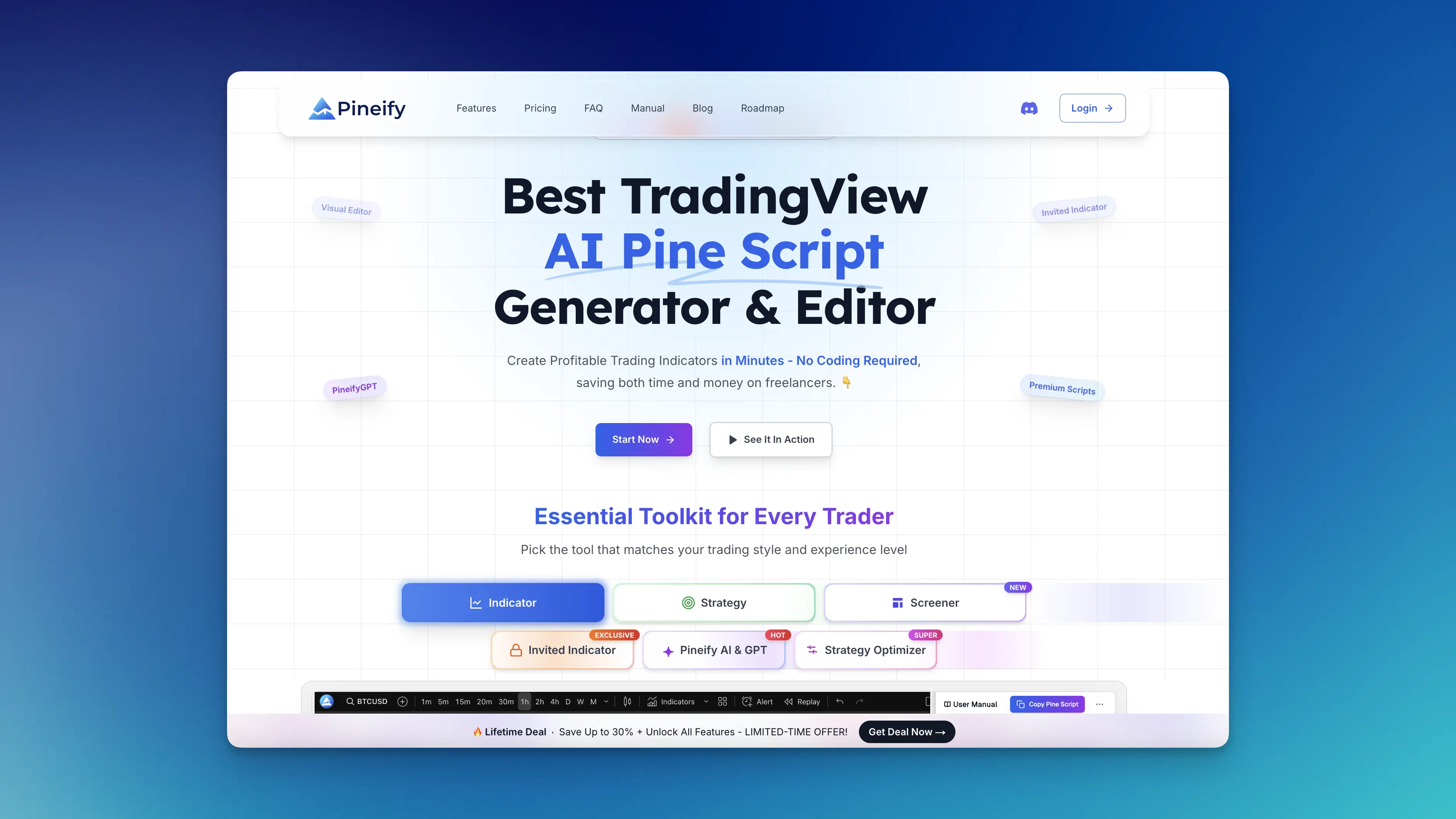
Instead of relying on opaque "AI" claims, many traders write or assemble explicit rules they can backtest and audit line by line. You can use Pineify to build and modify TradingView strategy rules, then inspect simulated trades, drawdown, and fill assumptions in TradingView's Strategy Tester.
4. Lock Down API Credentials
Treat exchange and broker API keys like account passwords. Apply the minimum permissions required for execution and review them regularly:
| Security Practice | Why It Matters |
|---|---|
| Restrict key permissions | Enable trade execution only; keep withdrawal and transfer permissions disabled. |
| Enable two-factor authentication (2FA) | Protects the underlying exchange or brokerage login from credential theft. |
| Rotate API keys on a schedule | Limits the exposure window if a key is ever compromised on a third-party server. |
| Keep secrets private | Never share login passwords or API secrets over chat, email, or support tickets. |
5. Monitor Live Behavior Regularly
Even a well-tested system requires ongoing supervision. Check open positions, execution logs, and broker statements regularly, and re-verify behavior after every software update, rule edit, or broker API change.
Frequently Asked Questions
Is AI Genius Trading Bot 5.0 verified or regulated?
Its live availability, feature set, and performance history cannot be independently verified from public documentation. Before depositing funds or connecting an account to any service marketed under this name, confirm the legal entity behind it and check registration records with your local financial regulator.
Can an AI trading bot guarantee profits?
No. Financial markets change unpredictably, and no algorithm, model, or software can guarantee returns. Treat any promise of fixed or guaranteed trading profits as a major fraud warning sign.
How can I evaluate whether an automated trading platform is legitimate?
Verify the operating company, check whether it holds custody of funds or connects only via restricted API keys, review its full fee structure, and look for independent user reports outside the vendor's website. Legitimate tools document their limitations and risk controls clearly.
What is the difference between a rule-based bot and an AI trading bot?
A rule-based bot executes fixed logic such as indicator crossovers or price levels. An AI trading bot uses statistical or machine-learning models trained on historical market or text data to score setups and may periodically retrain as new data arrives. Both require out-of-sample testing and strict risk controls.
What is the safest way to test an automated trading strategy?
Start by backtesting transparent rules with realistic commissions and slippage, then run the strategy in a paper trading account to verify order handling and logs before risking a small amount of live capital.