Free Forex Backtesting Software: Test Trading Strategies Risk-Free Before Live Trading

· 15 min read

Want to test a forex trading idea without risking a single dollar of real money? You should. Whether you're just starting out or have years of experience, checking your strategy against historical data is one of the most valuable habits you can build. The best part? You don't need an expensive subscription. Some of the most powerful free forex backtesting software is used by traders at every level.

This guide will walk you through finding the right free tool, running your first test, and making sense of the results—all in plain language.


Free Forex Backtesting Software: Test Trading Strategies Risk-Free Before Live Trading

What Is Forex Backtesting? A Simple Explanation

Imagine you have a theory about how the market moves. Instead of trying it out with your hard-earned cash right away, you can "rewind time" and see how that idea would have played out over the past months or even years. That's backtesting in a nutshell.

You feed your trading rules into a software platform, and it simulates placing those trades on old price data. It shows you what would have happened: how much you might have made or lost, how often you'd win, and how bumpy the ride would have been.

Doing this gives you a clear picture before you ever place a real trade. You'll see important numbers like your win rate, your average profit versus your average loss, and your maximum drawdown (the biggest peak-to-valley drop in your simulated account). This isn't about predicting the future, but about understanding the past behavior of your strategy.

Why bother? It comes down to a few simple things:

  • Test safely: You get to see how your strategy holds up in different markets—bull runs, crashes, sideways grinds—without any real risk.
  • Find out if you really have an edge: It helps you answer, "Does this idea actually work, or am I just guessing?"
  • Learn faster: You can compress years of hypothetical trading experience into an afternoon.
  • Trade with more confidence: Going live is less scary when you've already seen how your strategy has behaved through history.

Top Free Forex Backtesting Software in 2026

1. MetaTrader 4 (MT4) Strategy Tester

Think of MT4 as the old reliable workhorse for forex traders. Its built-in Strategy Tester is a seriously powerful free tool that’s stood the test of time. It lets you automatically test trading strategies using “Expert Advisors” (little programs you can write or find online in a language called MQL4).

How to get started:

  1. Hit Ctrl+R to open the Strategy Tester.
  2. Pick your trading robot (Expert Advisor), the currency pair, and the chart timeframe you want to test.
  3. Set a spread (the cost of the trade) and choose your date range.
  4. Click Start. You can even use the Visual Mode to watch the trades play out on the chart like a movie.
  5. When it’s done, check the Report tab for all the key stats: Profit Factor, Win Rate, and your biggest Drawdown.

The Good: It’s completely free, comes with tons of past price data, gives you detailed reports, and has a huge community where you can find and share strategies.

What to Keep in Mind: It tests using a fixed spread (real spreads jump around during the day), you need to learn some MQL4 to build your own tests, and honestly, the interface looks a bit old-school.


2. MetaTrader 5 (MT5)

MT5 is the next-gen version of MT4. Its free Strategy Tester is a big step up, especially if you want to test a strategy across multiple currency pairs and timeframes all at once. This is perfect for seeing how a strategy holds up in different market conditions.

What makes it stand out:

  • A visual backtester so you can see your strategy in action.
  • Uses MQL5, a more advanced programming language for building strategies.
  • Powerful optimization tools to run your strategy hundreds of times with slightly different settings to find the best ones.
  • Incredibly detailed performance reports and equity graphs.
  • Access to deep historical data down to the individual tick.

MT5 is a fantastic free option if you’ve moved past the basics and want more sophisticated, algorithmic testing.


3. TradingView (Bar Replay + Pine Script)

If you hate downloading software, TradingView is your best friend. It runs right in your browser. For manual testing, their Bar Replay Tool is genius: you pick a past date on the chart and replay the market, bar by bar, placing trades manually as if you were really there.

For automated testing, you use Pine Script. It’s their own, fairly straightforward coding language for building strategies. You write your script, run it on historical data, and it spits out a full performance report for you. To get the most out of it, understanding core concepts like bar_index is crucial for precise logic in your backtests.

Note on the free plan: The free tier limits how many scripts you can save and how much historical data you can use in Bar Replay. It’s still super useful for starting out, but if you get serious, you might outgrow it and look at a paid plan. You can explore the features available in different TradingView Premium Plans to see if an upgrade is right for your backtesting needs.

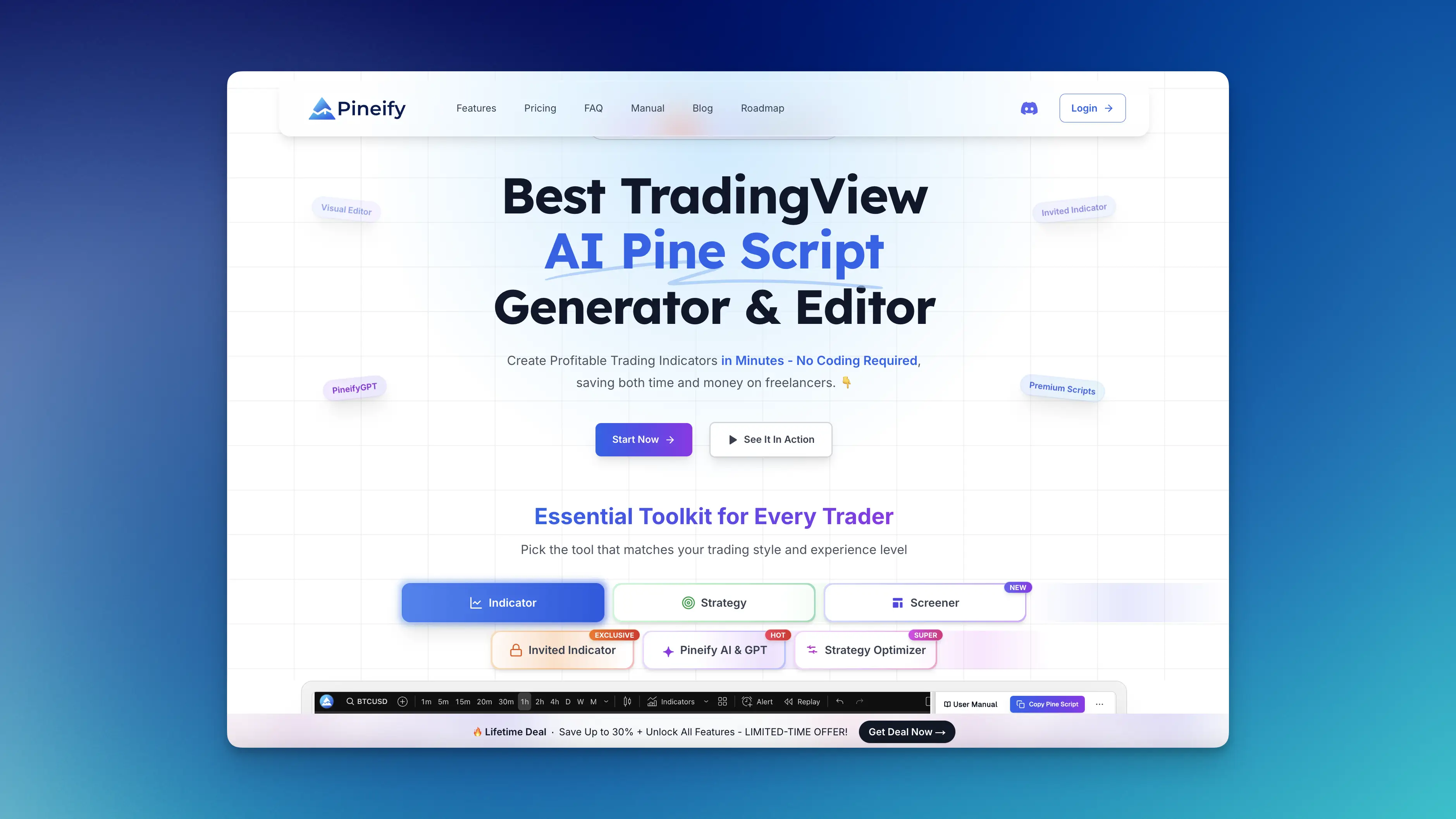
Speaking of Pine Script, if you want to create and backtest strategies without the steep learning curve of coding, there's a powerful solution that bridges the gap. Pineify is an AI-powered platform that acts as both a visual editor and a coding agent for TradingView. It lets you build complex indicators and strategies using a drag-and-drop interface or by simply describing your idea to an AI. You can then instantly backtest your creation, generate professional reports, and even use its AI Stock Picker for new ideas—all without needing to write a single line of code yourself. It's designed to save you the time and money you'd otherwise spend on freelancers or months of learning to code.

Pineify Website

4. Forex Tester (Free/Demo Version)

Forex Tester is built from the ground up to feel like a trading simulator, great for testing your gut instincts and manual strategies. The free demo version lets you get a real feel for its clean and intuitive interface.

A major heads-up: the free version only includes one month of historical data. That’s not enough to trust any long-term results. Think of it strictly as a hands-on trial to see if you like the platform before considering the paid version with full data.


5. QuantConnect (Free Tier)

This one is for the coders. QuantConnect is a cloud-based platform with a generous free tier that lets you backtest forex (and stock/crypto) strategies. It uses professional, open-source engine called Lean that you program in C# or Python.

It’s built for traders who have some programming experience and want access to institutional-grade testing tools without the institutional price tag. The free tier gives you plenty of data and computing power for regular research.


6. Python with Backtrader (Open-Source)

This is the ultimate DIY, have-it-your-way option. If you know Python, Backtrader is an open-source library that gives you total control. You can feed it data from almost anywhere—CSV files, Excel, live feeds—and model real-world factors like slippage and commissions with precision.

Because it’s all code, it’s the most flexible and customizable tool here. The trade-off is that you need to build more yourself, but your tests can be incredibly realistic.

Trying to find a free platform to test your forex trading ideas can feel overwhelming. There are a lot of options, and it's hard to know which one actually fits how you like to work. Are you a coder, or do you prefer clicking around manually? Do you need to test a complex algorithm or just practice your chart reading?

To make it easier, here’s a straightforward comparison of some popular free tools. Think of it as a quick reference guide to help you narrow down your choices.

PlatformTypeBest ForProgramming RequiredData Depth
MetaTrader 4DesktopAutomated EA testingYes (MQL4)Years of data
MetaTrader 5DesktopAdvanced algo testingYes (MQL5)Extensive tick data
TradingViewBrowserManual + script testingOptional (Pine Script)Limited on free plan
Forex Tester (Free)DesktopManual backtestingNo1 month only
QuantConnectCloudAlgo + quant researchYes (Python/C#)Extensive
Python/BacktraderCodeFull custom testingYes (Python)Depends on source

The best choice really comes down to your own style. If you want to keep things simple and just practice on charts, the manual tools are great. If you have a specific automated strategy in mind, you'll likely need to dive into one of the platforms that supports coding. Hopefully, this table gives you a clearer starting point for your next test.

How to Get Honest Answers from Your Forex Backtesting

Think of backtesting like a dress rehearsal for your trading strategy. You want that rehearsal to be as true to a live performance as possible, so you can trust what you see. To get reliable results from free backtesting software, it’s less about complex settings and more about good old-fashioned diligence. Here’s how to set up your tests for truthfulness.

  • Start with clean, high-quality data. This is the foundation. If your historical price data is full of gaps or errors, your test results will be too. This is especially crucial if you’re testing on shorter timeframes, where bad data can completely distort the story. If you use TradingView, you may need to import chart data to supplement what's available.

  • Don’t ignore the real costs of trading. It’s easy to get excited by a profitable backtest, only to find it loses money in real life. Always tell your software to include the spread (the difference between buy and sell prices), a bit of slippage, and swap fees. This adds a layer of reality that pure price charts don’t show.

  • See how your strategy handles different moods. A strategy that works beautifully in a calm, trending market might fall apart in a choppy range or during a high-volatility news event. Make a point to run your tests through various market environments—quiet periods, strong trends, and economic announcement days.

  • Resist the urge to over-optimize (curve-fitting). This is a common trap. If you tweak your strategy rules endlessly until they fit the historical data perfectly, you’ve likely created a strategy that only works on that specific past period. It will almost certainly fail on new, unseen data. A robust strategy is simple and holds up over time, not just on one chart.

  • Validate with a walk-forward test. This is a powerful step for building confidence. First, train and optimize your strategy on a segment of historical data. Then, run it without changes on a following segment of data it hasn’t “seen” before. If it performs well on both, you’re onto something much more trustworthy.

  • Keep a simple testing journal. Write down what you were testing, the assumptions you made (like “used a 2-pip fixed spread”), and the outcome. This saves you from repeating the same tests weeks later and helps you spot patterns in what works and what doesn’t.

Following these steps turns backtesting from a box-ticking exercise into a genuine confidence-building tool. The goal isn’t to create a perfect historical scorecard, but to build a strategy you can truly trust when real money is on the line.

Don’t Let These Backtesting Pitfalls Sink Your Strategy

It happens all the time—a strategy looks unbeatable in testing, then falls apart when real money is on the line. Often, it’s not the idea that’s flawed, but how it was tested. Here are the most common slip-ups to watch out for, even when using great free tools.

  • Overlooking the spread: Most backtesters, like MT4’s default mode, use a fixed spread. The real market doesn’t work that way. Spreads widen during news and volatility, which can turn a string of simulated wins into real-life losses. If your test didn’t account for that, its results are too optimistic.

  • Not testing enough data: Running a strategy on just a month or two of charts isn’t enough. You’re basically judging it by a lucky streak or a bad week. To see how it holds up through different market moods—quiet trends, wild swings, stagnation—you need a longer story. Aim to test across at least 2–5 years of data.

  • Trusting the same data twice (Overfitting): This is a big one. You tweak and optimize your strategy until it’s nearly perfect on your historical data. But if you don’t validate it on a fresh, unseen chunk of data (out-of-sample testing), you’ve just memorized the past, not prepared for the future. It’s like practicing with a quiz answer key—your score will be inflated.

  • Forgetting the human element: A backtest runs mechanically, but you don’t. It won’t show you the gut-churn of a three-trade losing streak or the temptation to skip a signal. If a strategy requires perfect, emotionless execution, it’s fragile. The best backtested strategy is worthless if you can’t stick to it in real time.

Forex Backtesting Software Free: Your Questions Answered

Q: Is MetaTrader 4 Strategy Tester really free? Yes, it genuinely is. You can download the entire MT4 platform for free from pretty much any forex broker's website. The Strategy Tester is just sitting there inside it, ready to use, with no hidden fees or subscriptions.

Q: Can I backtest manually without coding? For sure. Tools like TradingView's "Bar Replay" mode let you step through the market, candle by candle, to test your ideas. Another great option is the demo version of Forex Tester. Both let you get a feel for your strategy without needing to learn how to code first.

Q: How much historical data do I need for reliable backtesting? Think of it like this: the more market "weather" you've seen, the better. Most experienced traders suggest at least 2 years of data. If you can get 5 years or more, that's even better because it's more likely to include different trends, calm periods, and volatile spikes.

Q: Is TradingView's free plan sufficient for backtesting? It's a fantastic starting point for beginners to test basic concepts. The catch is that the free plan limits how far back in time you can look (the "bar history") and how many indicators you can use at once. If your strategy gets more complex, you'll likely find the completely free MT4 or MT5 platforms give you more room to work.

Q: What is the difference between manual and automated backtesting? Here’s the simple breakdown:

  • Manual Backtesting: You control the replay, making each hypothetical trade decision yourself. It’s slower but great for strategies that rely on your gut feeling or visual patterns like those identified with Bar Pattern TradingView analysis.
  • Automated Backtesting: You write a set of rules (an Expert Advisor or script), and the software tests it against years of data in seconds. It’s incredibly fast and thorough, but you need to know how to code or hire someone who does.

Q: Does backtesting guarantee future profits? This is the most important point: No, it absolutely does not. Backtesting shows you how your strategy would have performed in the past. The future is a different story. It's a crucial tool for spotting obvious flaws, but it's not a crystal ball. Always take a strategy for a spin in a demo account with live prices (forward-testing) before you risk real money.

Ready to Start Backtesting? Here’s How to Begin

Honestly, the perfect time to start backtesting your forex strategy isn’t someday soon—it’s today. Getting started is much easier than it seems, and you don't need to make it complicated. Here’s a simple, practical way to dive in.

  1. Grab MetaTrader 4 or 5. Just download it free from a regulated broker's website. Once it's installed, poke around the "Strategy Tester" feature to get a feel for it.
  2. Try TradingView's free account. Their "Bar Replay" tool is a game-changer for visual learning. Pull up a currency pair you're familiar with and test your idea move by move.
  3. Jot down your first results. Note your win rate, the drawdown, and the profit factor. Don't worry if the numbers aren’t pretty—this first run is just about getting a baseline.
  4. Ask questions in real communities. Places like the r/Forex subreddit or public chats on TradingView are full of traders who've been where you are. Share what you found and ask what they think.
  5. Tweak and try again. Nobody nails it on the first try. The real win is getting into a rhythm of testing, reviewing, and gently improving your approach over time.

Your best next step? Pick one of those free tools and run your strategy through at least 200 past trades. Let the historical data tell you a story. When you finally take the strategy live, you'll be trading with much more clarity and a lot less guesswork.