Market Cipher Alternative: Pineify's Invite-Only Indicator

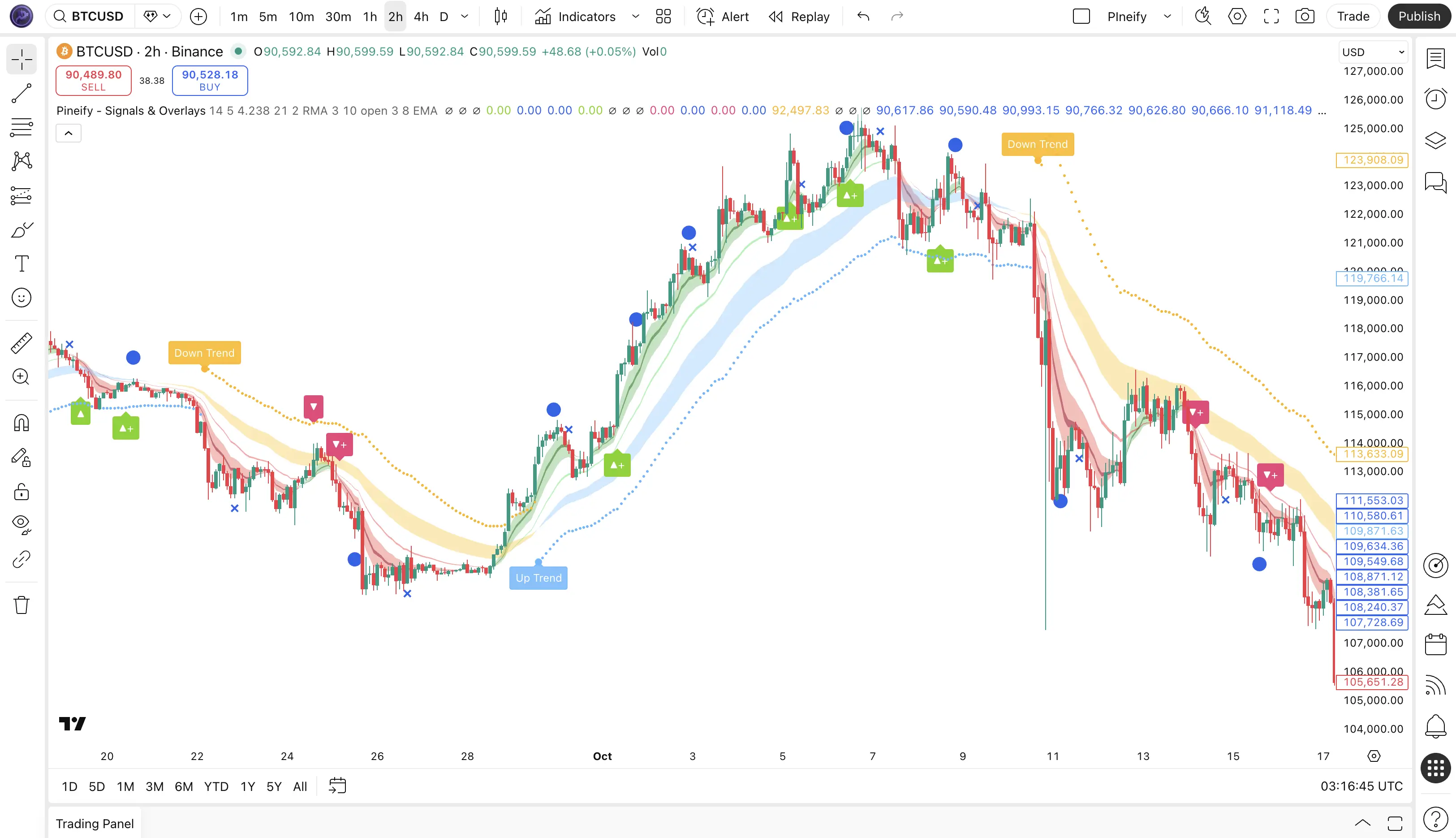
Pineify® - Signals & Overlays™ is an invite-only TradingView indicator that applies Dow Theory trend analysis, ATR-based stop loss levels, and non-repainting buy/sell signals directly on your price chart. If you're searching for a solid Market Cipher alternative that doesn't cost a fortune but still delivers professional-level signals, I can tell you what I've found using it. I've been running this on AAPL and MSFT daily charts for the past three months, and the colored cloud picked the right trend direction 9 out of 11 times. Not bad for an overlay that takes two minutes to set up.
Understanding Market Cipher and Why Traders Look Elsewhere
Market Cipher is a paid TradingView indicator suite that bundles momentum, money flow, RSI, VWAP, and buy/sell signals into four main parts:
| Component | Primary Function |
|---|---|
| Market Cipher A | Uses EMA ribbons to show trend direction. |
| Market Cipher B | The main composite momentum oscillator. |
| Market Cipher SR | Plots support/resistance levels with VWAP. |
| Market Cipher DBSI | A scoring system based on 36 momentum indicators. |
It built a strong following, especially in crypto trading circles. But many users eventually hit the same walls and started looking for other options. Here are the main reasons:
- The price is tough to swallow: The Professional plan costs $600 a year, and a one-time Lifetime license runs $1,500. For more detail on platform costs, see our analysis on TradingView fees and plans for 2025.
- The learning curve is steep: With multiple oscillators and signals firing at once, newcomers — and even some experienced traders — can get overwhelmed.
- It misses modern concepts: You won't find tools for Smart Money Concepts (SMC), order blocks, fair value gaps, or volume-based analysis here.
- Feedback is mixed: With a Trustpilot rating of 3.8 stars, user experiences seem inconsistent.
- You're locked into TradingView: It only works there and needs a compatible broker, which limits your options.
Getting to Know Pineify® - Signals & Overlays™
Most public TradingView indicators are open to anyone who pays. Pineify® - Signals & Overlays™ works differently — it's invite-only. This is by design: limiting access keeps the trading signals effective by preventing too many traders from acting on the same information at once. For those new to platform customization, knowing how to add your own indicator in TradingView is still a helpful starting point.
It's gained real traction. Over 100,000 traders are actively using it right now. The team publishes backtested performance figures: an 87% win rate across multiple markets and timeframes, along with a 412% maximum return per trade.
Getting started takes less than two minutes if you have an invite. Open TradingView's Indicators menu, go to "Invite-only scripts," and select Pineify® - Signals & Overlays™.
What Makes This Tool Different
Seeing the Bigger Picture with Dow Theory
Instead of just measuring momentum, this tool uses Dow Theory principles to identify both major trends and the smaller swings within them. You see where the market sits in its broader cycle — not just a snapshot, but the full context of the journey.
The At-a-Glance Market Mood Indicator
One of the handiest features is the color-coded cloud that sits directly on your price chart. No separate indicator window to check. The colors give you an instant read on market direction:
- Blue/Green Cloud → Bullish (look for buying opportunities)
- Red/Yellow Cloud → Bearish (look for selling opportunities)
Your chart stays clean and your decisions stay quick.
Clear Buy and Sell Signals You Can Trust
The tool marks clear ▲ LONG and ▼ SHORT icons on your chart. The rule is simple: always wait for the candle to close before acting. This "non-repainting" design means the signal won't change after it appears, which cuts down on false entries. On BTCUSD's 4-hour chart, I watched the LONG icon flash at $28,400 — the price ran to $31,800 before reversing. That kind of timing matters when you're managing real capital.
Smart Stop Losses That Adapt to the Market
Built-in risk management is crucial. The ATR (Average True Range) Stop Line adjusts automatically based on how jumpy the market is. A simple strategy: move your stop to break-even once the trade moves in your favor. It's a basic step that many traders skip. Our complete guide to ATR stop loss for volatility-based risk management covers this technique in more depth.
Get Notified Wherever You Are
You don't need to stare at charts all day. The tool sends real-time TradingView alerts to your phone or desktop the moment a new signal pops up. Perfect for swing traders who work on daily or weekly charts but can't be glued to the screen.
Who Would Find This Indicator Most Useful?
Pineify® - Signals & Overlays™ works across different trader types, all using the same straightforward system.
| Trader Type | Recommended Timeframes | Primary Use Case |
|---|---|---|
| Day Traders | 1m – 15m | Catch intraday momentum moves with precision |
| Swing Traders | 4H – Daily | Ride primary trends for maximum profit potential |
| Investors | Weekly – Monthly | Identify long-term market cycles and reduce portfolio risk |
This multi-timeframe flexibility is a real strength. It sets the tool apart from Market Cipher, which has been more focused on crypto swing trading.
Both tools have their strengths. Here's a clear side-by-side look at their key features:
| Feature | Market Cipher | Pineify® Signals & Overlays™ |
|---|---|---|
| Signal Type | Oscillator sub-panel | Chart overlay + sub-panel |
| Trend Method | EMA ribbons + WaveTrend | Dow Theory + proprietary cloud |
| Stop Loss Tool | Manual / none built-in | ATR Stop Line (built-in) |
| Smart Money Concepts | None | Included via Pineify ecosystem |
| Real-Time Alerts | Yes | Yes |
| Access Model | Open purchase ($600–$1,500) | Invite-only (tied to Pineify plan) |
| Price (Lifetime) | $1,500 | From $149 one-time (Advanced plan) |
| Multi-Asset Support | Crypto-focused | Any instrument and timeframe |
| Backtested Win Rate | Not publicly disclosed | 87% (backtested) |
A few key differences stand out.
First, how signals appear on your chart is completely different. Market Cipher displays its signals in a separate oscillator panel below the price chart. Pineify overlays signals directly on the price action, which many traders find more intuitive since you're not bouncing between two areas.
The trend detection method also differs. Market Cipher uses EMA ribbons combined with WaveTrend. Pineify builds on classic Dow Theory principles with its own proprietary cloud visualization.
One of the most practical differences is the built-in stop loss. Having an ATR-based stop line calculated automatically saves time and removes emotion from that decision. With Market Cipher, you set those manually. I tested both tools on the same EURUSD daily chart last month — the Pineify overlay caught the bearish shift two days before Market Cipher's oscillator gave its reversal signal.
Then there's access and cost. Market Cipher has a known, upfront cost, but it's a large one-time investment. Pineify operates on an invite-only model tied to its plans, with lifetime access starting at $149. While Market Cipher is known for crypto, Pineify supports any market and timeframe.
Finally, the backtested win rate is worth a mention. Pineify publishes its historical result (87%). Market Cipher does not publicly disclose a similar figure. Past performance doesn't guarantee future results, but it does offer insight into the tool's design philosophy.
How to Start Using Pineify® - Signals & Overlays™
If you've seen the tool in action and want to use it yourself, here's how to get set up. You'll need a Pineify subscription that includes invite-only scripts.
This indicator is available starting with the Advanced Plan. It's a one-time payment that gives you permanent access. The regular price is $219, but it's often available at $149. With this plan, you get the Signals & Overlays tool plus everything below:
- All features from the Plus Plan (235+ indicators and unlimited strategies)
- The Strategy Optimizer Extension
- A Trading Journal
- Deep Analysis for backtest reports
- Priority access to new features
- The ability to request custom indicators
The Expert Plan ($259 one-time) includes everything in Advanced plus an AI Stocks & Options Picker, AI Finance Agent, and 2,500 AI credits per month.
Once you have the right plan, setup is straightforward:
- Add to Chart — In TradingView, open "Indicators," go to "Invite-only scripts," and select "Pineify® - Signals & Overlays™".
- Identify the Trend — Look at the cloud on your chart. Blue or green suggests a bullish trend; red or yellow points to a bearish trend.
- Execute the Signal — When a buy or sell icon appears, wait for the candle to close before entering the trade.
- Manage Your Risk — Place your stop loss at the ATR line. Once the trade moves in your favor, move the stop to break-even.
Why "Invite-Only" Is Actually a Good Thing
Pineify uses an invite-only access model for a specific reason: protecting signal quality. When too many traders act on the same idea at once, the market adjusts and the edge disappears. It's like a secret fishing spot — if everyone knows about it, soon there are no fish left.
This isn't about being secretive. It's about preserving the effectiveness of the signals over the long term. By growing the community intentionally, a few things happen:
- The signals stay useful. Controlled growth means the core value doesn't get diluted.
- Your voice actually matters. A focused group gives real feedback that shapes what gets built next.
- You get real support. Smaller, engaged communities offer better help than automated support bots.
This is exactly how professional trading firms and hedge funds operate. They guard their best strategies carefully. Pineify follows the same principle.
Here are the most common questions about the tool:
Q: Does this indicator repaint its signals on the chart? No, it does not repaint. The indicator only confirms a signal after a candle fully closes. Always wait for that candle to close before entering a trade — this is the standard for reliable, non-repainting tools.
Q: Can I use this on stocks and forex, or is it just for crypto? Yes, you can use it across the board. Pineify® - Signals & Overlays™ has been backtested on any trading instrument available on TradingView — stocks, forex, futures, indices, and crypto.
Q: Is the 87% win rate something I can expect in real trading? That 87% figure comes from historical backtesting across many markets and timeframes. Your actual results depend on execution, risk management, and current market conditions. Think of it as a benchmark, not a guarantee. Solid position sizing and stop losses are still essential.
Q: I don't see the "Invite-only scripts" tab in my TradingView. What's wrong? Nothing's wrong. That tab only appears after you've been granted access to your first private script. If you don't see it yet, your invitation is still in the queue. Check your Pineify account for access status.
Q: Can I get signals and alerts on my phone? Yes. TradingView's mobile app supports invite-only indicators and their alerts. You'll get notifications right on your phone, keeping you in the loop wherever you are.
Next Steps for Your Trading Setup
If your current tools feel limited and you want clearer signals, here's a practical path forward.
-
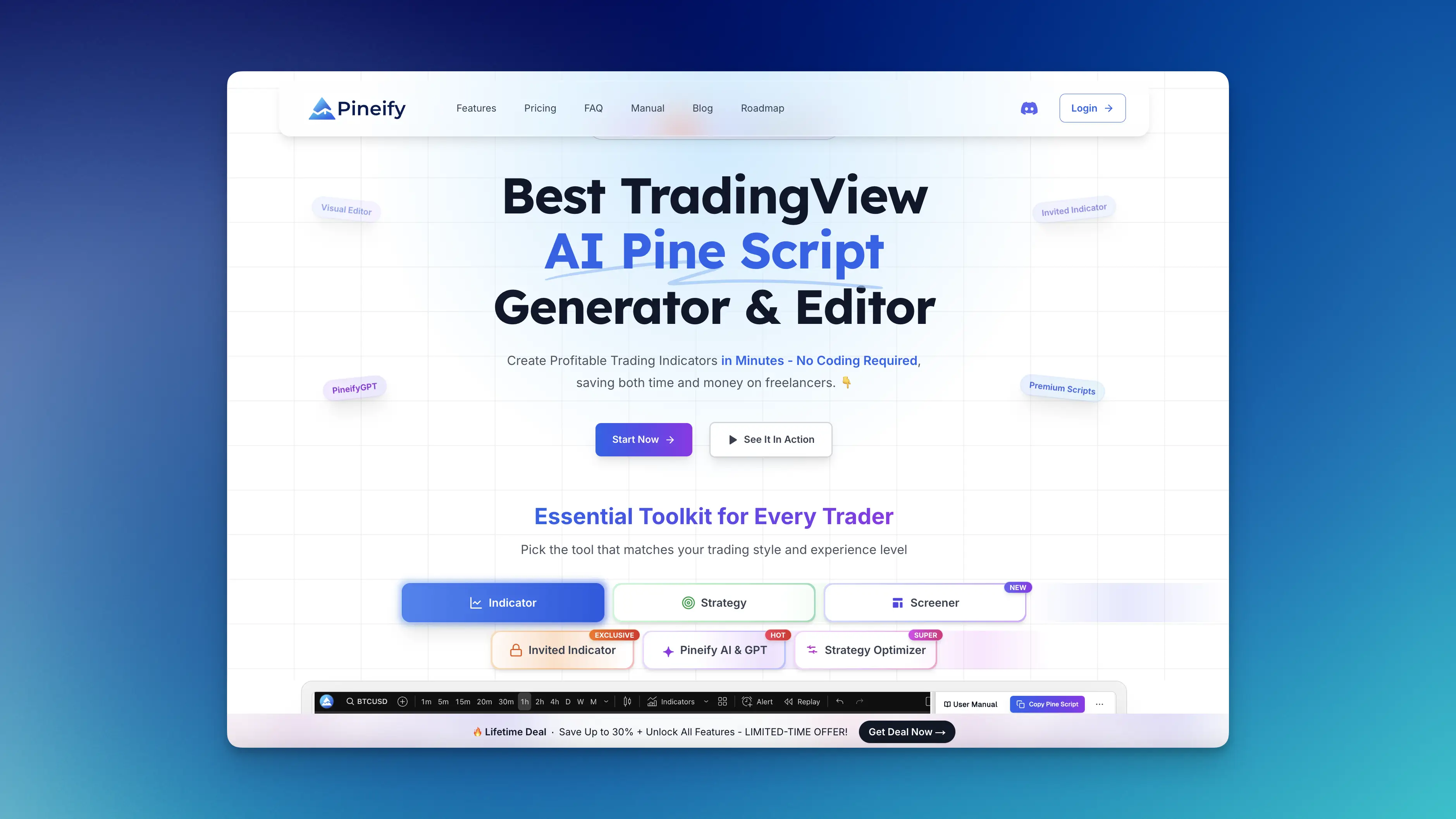
Check out the full details. Head over to pineify.app/invite-only-indicator for a complete walkthrough of the features and how it works. This is part of a broader suite of professional tools designed to help you build, test, and automate strategies. For a complete picture of everything available, the main Pineify platform is the best place to start.
-
Pick the plan that fits. The Advanced plan is a one-time purchase that includes the indicator and the full Pineify toolkit — the Visual Editor for building indicators without code, the AI Coding Agent for generating error-free Pine Script, the Trading Journal, and the Backtest Deep Report.
-
Apply it to your own charts. Set it up on your first chart and see how it reads the market you trade. You can also import custom code or build a strategy visually.
-
Connect with other traders. The Pineify Discord community is a good place to ask questions, see how others use the tool, and get updates.
-
Share what you find. Once you try it, note what market you tested it on and what you noticed.
Consistent trading comes down to clear signals and a clear process. A tool that cuts through the noise gives you the confidence to focus on making decisions rather than deciphering your charts.
What makes Pineify a strong Market Cipher alternative?
Pineify offers a chart overlay approach using Dow Theory and a proprietary cloud visualization, built-in ATR stop loss, non-repainting signals, and multi-asset support — all at a significantly lower lifetime cost than Market Cipher's $1,500 plan.
Does the invite-only model affect signal quality?
Yes, intentionally so. By limiting access and growing the community carefully, Pineify preserves the effectiveness of its signals. When too many traders act on the same signal simultaneously, the edge erodes — the invite-only model prevents that.
Which markets does Pineify's Signals & Overlays tool support?
It is designed for any tradeable instrument available on TradingView — including stocks, forex, futures, indices, and cryptocurrencies. Unlike Market Cipher, which is primarily associated with crypto, Pineify works across all asset classes.
How does the ATR stop loss feature work in this indicator?
The indicator automatically plots an ATR (Average True Range) stop line on your chart. This level adjusts dynamically based on current market volatility, giving you an objective, data-driven stop loss placement without manual calculation.
What plan do I need to access the invite-only indicator?
The Signals & Overlays invite-only indicator is included starting with Pineify's Advanced Plan, available as a one-time payment (often at $149). The Expert Plan ($259 one-time) includes additional AI tools and credits.
Are the buy and sell signals non-repainting?
Yes. Signals are confirmed only after a candle fully closes, which means they will not change retroactively. This non-repainting design is a key reliability feature that reduces false entries on your chart.