Bookmap TradingView: Order Flow Heatmaps for Real-Time Trading

Bookmap is a real-time order flow visualization platform that displays live market depth as a color-coded heatmap. TradingView is the charting tool for multi-asset analysis, strategy backtesting, and custom Pine Script indicators. My take: TradingView wins for planning, Bookmap wins for execution. You don't pick one—you pair them.
I've run this combo for over two years on ES futures, NQ, and NASDAQ stocks. The heatmap shows where limit orders accumulate; TradingView gives me the context and alerts. Not every trade works—I've had plenty of fakeouts—but the workflow is consistent, and consistency matters more than any single indicator.
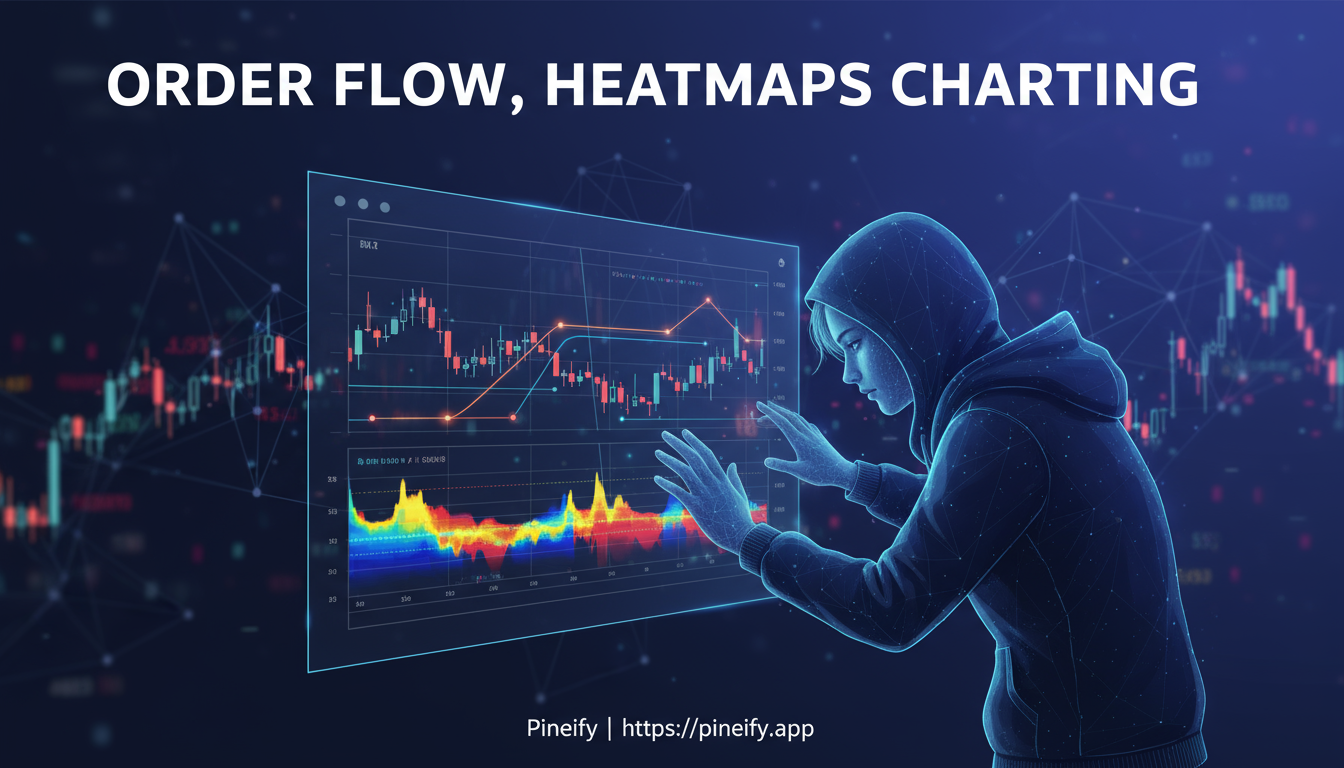
Bookmap vs TradingView: What Each One Does Best
Deciding between them is like choosing between a microscope and a map. Both are useful, but for different things.
Bookmap
- Sees market depth in real time. It renders the live order book as a heatmap, updating up to 40 times per second. You watch buying and selling pressure build up and vanish.
- Shows every trade as a dot. Each execution appears as a dot or bubble on the chart. The size tells you how aggressive the trade was. The delta tells you who's in control.
- Catches hidden orders. It detects icebergs, tracks large lots, and shows when the market absorbs or aggressively sweeps orders.
- Best for: Scalpers, futures traders, crypto traders who base execution on live depth.
TradingView
- All-in-one charting hub. Charts for any asset, multiple timeframes, screeners, alerts, paper trading, broker integration.
- Custom indicators via Pine Script. The public library is massive, and you can code your own. If you want to see how custom indicators work in practice, the Anchored VWAP indicator guide walks through a complete setup with parameters and chart examples.
- Best for: Strategy planning, trend analysis, backtesting ideas before you risk capital.
| Feature | Bookmap | TradingView |
|---|---|---|
| Core Strength | Real-time order flow visualization | Multi-asset charting and community indicators |
| Data Presentation | Heatmap of liquidity, volume dots and bubbles | Classic candlestick and bar charts, drawing tools |
| Unique Tools | Iceberg detection, large lot tracker, absorption | Pine Script, extensive backtesting, social network |
| Ideal For | Scalping, DOM-aware execution | Structural analysis, strategy testing |
Verdict: TradingView gives you the map. Bookmap gives you the live traffic. You need both.
When to Use Bookmap vs TradingView
Use Bookmap when your goal is to understand what's happening in the order book right now.
You want Bookmap when:
- You need to see hidden buyer-seller battles—limit order liquidity getting absorbed, icebergs being filled, large orders appearing and vanishing.
- You care about sub-second timing on entries and exits around key levels like VWAP or the day's high and low.
- You want to distinguish between resting liquidity (orders sitting in the book) and executed aggression (market orders sweeping through them).
Use TradingView when your goal is analysis and planning.
You want TradingView when:
- You're mapping out trend direction, support and resistance over multiple timeframes.
- You rely on custom alerts, stock screeners, and scanning your watchlist quickly.
- You backtest strategies or learn from the community.
| Tool | Best For... |
|---|---|
| Bookmap | Real-time order flow analysis and precise trade execution |
| TradingView | Charting, multi-timeframe analysis, strategy planning, community features |
Can You Bookmap and TradingView Together?
Yes. Pairing them is one of the most common setups among serious intraday traders. I've talked to maybe a dozen traders who run this exact stack.
Here's the workflow:
- Sync your setup. Both platforms need to track the same instrument (say, E-mini S&P 500 futures or ES), the same trading session, and the same timezone.
- Mark the same levels. Draw your key zones—prior day high and low, session open, VWAP—on both platforms.
- Use a fast data feed for Bookmap. Latency kills the whole point of order flow. Without low-latency data, the heatmap lags and timing goes out the window.
Quick tip: If your broker connects directly to Bookmap, execute through that same connection. If it doesn't, mirror the price levels from Bookmap and execute on your broker's platform. I do the latter—it's an extra step but hasn't cost me meaningful slippage.
A Trader's Workflow for Finding High-Probability Setups
Here's the process I follow on most trading days.
1) Map the Trade on TradingView
I start with the big picture.
- Check the trend and key levels. Is the market trending or ranging? Where are the higher-timeframe support and resistance zones?
- Mark your zones. I draw the prior day's high and low, the initial balance from the first hour of today's session, VWAP bands, and any price levels where the market stalled before.
- Set alerts. I place alerts for when price touches a key zone, when volume spikes, or when price makes a liquidity sweep and reverses.
I don't stare at the screen all day. Alerts do the watching.
2) Confirm on Bookmap
When an alert fires, I switch to Bookmap to read what's actually happening.
- Watch the heatmap at that level:
- Absorption: Aggressive orders hit a resting limit order that won't budge. Price stalls. This often means the move is losing steam.
- Spoof or Pull: A big order appears, then disappears before price reaches it. Classic trap. I look to fade the false signal or wait for confirmation.
- Icebergs: Repeated trades at a level but the visible book is thin. A hidden order is being filled piece by piece.
- Delta divergence: Price pushes higher but buying pressure (delta) doesn't confirm it. The move is weak.
- Heatmap flips: A cold level suddenly gets hot with orders, or vice versa. Attention is shifting.
3) Execute
I only enter when Bookmap confirms what TradingView suggested.
- Enter on confirmation. The tape matches my chart thesis.
- Stops beyond liquidity. I place my stop just past the liquidity cluster where the spoof failed. If I'm wrong, the structure has to break first.
- Scale out. I don't exit the whole position at once. I take partial profits as price reaches opposing liquidity or momentum slows.
4) Review
The review is where you actually improve.
- Screenshot both platforms at entry and exit.
- Tag the trade type. Absorption break? Iceberg hold? Liquidity sweep?
- Log the numbers. R-multiple, slippage, heatmap behavior observations. Over time, patterns emerge.
I keep a spreadsheet with about 200 trades now. The entries I forced without Bookmap confirmation have a noticeably lower win rate.
Core Bookmap Concepts
Think of Bookmap as X-ray vision for the market. Here's what to watch.
- Heatmap intensity: Bright, hot-colored bands show where limit orders accumulate. These act as support, resistance, or price magnets.
- Volume dots and bubbles: Each trade appears as a dot. Brighter, larger dots mean more aggressive trades. A cluster of big dots means a serious fight at that level.
- Cumulative Volume Delta (CVD): Running tally of whether market buyers or sellers are in control. When price makes a new high but CVD doesn't follow, that's a divergence—and often a reversal signal.
- Liquidity shifts: Big orders appearing, stacking up, then getting pulled or flipping from bid to ask. This shows you what the larger players are doing.
- Absorption vs. exhaustion: Absorption is price hitting a level and getting stuck—aggressive orders swallowed by resting ones. Exhaustion is the aggressive side running out of steam. Together they form a reversal setup I've taken dozens of times.
| Concept | What It Tells You |
|---|---|
| Heatmap | Where limit orders cluster (potential support and resistance) |
| Volume Dots | Where and how aggressively trades execute |
| CVD | Net buying vs. selling pressure from market orders |
| Liquidity Shifts | How large resting orders move and change |
A TradingView Setup That Works with Bookmap
Getting your charts to complement Bookmap is half the setup. You want enough context to know where price is without overloading your screen.
Here's what I plot:
- Anchored VWAPs: I run several—one from the session open, one from a major high or low, one from the CPI or FOMC candle. Each gives a different reference for fair value. If you want the exact parameters and anchor choices, the Anchored VWAP indicator guide has the full breakdown.
- Session range markers: Horizontal lines for Asia, London, New York sessions, plus the initial balance. Tells me at a glance if price is breaking its normal rhythm.
- Liquidity pools: Equal highs and lows, prior day range edges, consolidation zone boundaries. These are where stops cluster.
- Volume Profile: Shows where most trading happened. When Bookmap shows absorption at a high-volume node, it's meaningful. At a low-volume node, maybe less so.
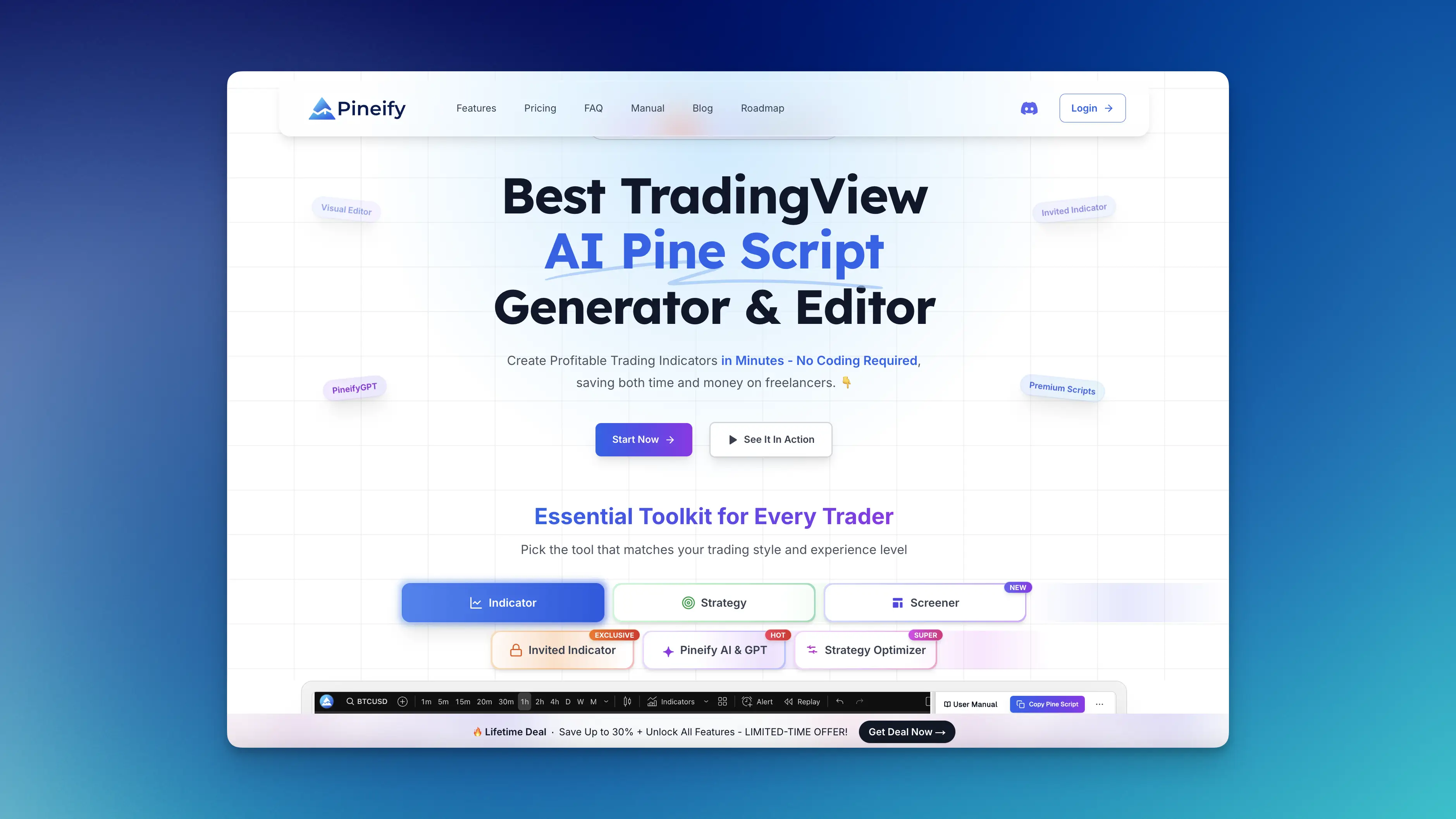
The best part? You can build all of this into a single indicator using a visual editor like Pineify—no Pine Script required. Saves you from stacking six separate scripts on one chart.
One more thing: chart theme matters. When you're flipping between Bookmap and TradingView all day, a high-contrast theme reduces eye strain. I run a dark background with crisp yellow and white elements. Small change, big difference in focus.
| Tool and Indicator | What It's For |
|---|---|
| Anchored VWAP | Trend and average price from a specific market event |
| Session Markers | Identifying which market hours are active, spotting breakouts |
| Liquidity Pools | Price targets and reversal zones where stops cluster |
| Volume Profile | Context for whether Bookmap activity is in a significant area |
Five Trading Plays That Actually Work
1) The Liquidity Grab and Reversal
- On the chart: Price sweeps through a prior high or low, grabbing stop orders.
- In the heatmap: That level is hot. Orders get absorbed, delta stalls, spoofs appear and get pulled.
- What to do: Short the failure if price can't hold above the swept level. Stop above the sweep high. Profit target at VWAP or the opposite liquidity shelf.
2) The Iceberg Defense
- On the chart: Price tests the top of a range repeatedly and gets rejected.
- In the heatmap: Large trades print at the same price, but the visible book shows no massive sell wall—a hidden iceberg is defending the level.
- What to do: Fade it. Sell into the defense. Stop beyond the iceberg level. Take partial at the range midpoint and at the opposite band.
3) Trend Continuation with Pullback
- On the chart: Clear uptrend with higher lows. Price pulls back to VWAP or support.
- In the heatmap: The pullback lands on a hot bid shelf. Selling pressure is light (weak negative delta). Orders get absorbed, heatmap flips to show support.
- What to do: Go long with the trend. Stop below the support shelf. Trail as the trend continues.
4) The Spoof Trap Fade
- On the chart: Price climbs toward known resistance.
- In the heatmap: A massive sell order appears on the ask—then vanishes right before price touches it. Price pokes above, gets rejected, and delta reverses.
- What to do: Short the failure. Stop above the spoof zone. Quick profit at the first opposing liquidity level below.
5) Trading the Post-News Breakout
- On the chart: A major data release produces a big candle and a new range.
- In the heatmap: Watch for liquidity stacking behind the breakout (supporting the move), not in front of it (which would act as resistance).
- What to do: Enter only if behind-price stacking confirms the breakout. Exit at the first sign of absorption or opposing pressure ahead.
Getting Your Data and Setup Right
Your heatmap is only as good as the data feeding it.
Use quality data. Full order book depth is non-negotiable for Bookmap. For CME futures (ES, NQ), you want CME Group data. For stocks, a consolidated exchange feed. For crypto, exchange-specific feeds from Binance or Coinbase.
| If you trade... | Use data from... |
|---|---|
| CME Futures (ES, NQ, etc.) | CME Group or a CME-authorized provider |
| NASDAQ and NYSE Stocks | Exchange direct or a consolidated feed |
| Cryptocurrencies | The specific exchange (Binance, Coinbase, etc.) |
Sync your clocks. If Bookmap and TradingView use different timezones, data won't line up. Set both to UTC or your local exchange timezone.
Give Bookmap enough resources. It's rendering a real-time heatmap at high frequency. CPU and GPU matter. I close extra Chrome tabs and keep heavy apps shut during session hours.
Check your symbols. ESM4 differs from ESU4. A contract month mismatch between platforms means you're looking at different instruments. I've made this mistake—it's frustrating to catch mid-trade.
Align your sessions. Regular trading hours versus extended hours produce different volume profiles. If your platforms reference different session templates, your levels won't match.
Size your positions around volatility. For position sizing, the ATR pips indicator guide shows how to convert ATR into pip-value stop distances, which works well with the order flow context Bookmap provides.
Managing Risk and Sticking to Your Plan
| Concept | In Practice |
|---|---|
| Define invalidation mechanically | Have a clear rule for when you're wrong. If price moves against your level, exit. Don't wait for a turnaround. |
| Cap attempts | Maximum two tries on one idea. Two stops hit means you're missing something. A third attempt is chasing. |
| Size adaptively | During news events, markets get jumpy. Trade smaller. |
| Use limit orders | Slippage happens on fast days. A limit order sets your max price. A market order takes whatever's available. |
| Record every trade | Screen record your decision point. Reviewing what the market looked like when you entered builds pattern recognition faster than memory alone. |
Common Mistakes to Avoid
Drawing lines at every hot band. Not every heatmap cluster is meaningful support or resistance. Has price respected this level before? If not, it's noise.
Focusing only on static levels. A big liquidity stack that moves or gets pulled tells you more than a fixed line. The shift in attention is the real signal.
Trusting delta divergence away from key levels. A divergence between price and delta signals something only when it happens at a significant support or resistance zone. In the middle of nowhere, it's just noise. I've learned this the hard way.
Chasing breakouts without confirmation. Price screaming through a level triggers FOMO. Check what's behind the move first. Is there order flow supporting the breakout? If not, it's probably a trap.
Mixing data sources. Real-time data on one platform and delayed data on another gives you contradictory signals. Make sure all your feeds are synchronized.
Your Bookmap and TradingView Questions, Answered
Can I get a Bookmap-style heatmap directly in TradingView?
TradingView has some order flow indicators via Pine Script, but nothing close to Bookmap's full order book heatmap. For real-time depth and liquidity mapping, you need both tools running side by side.
Is a premium data feed worth it?
For futures and stocks, definitely. A full-depth feed improves heatmap accuracy and iceberg detection. For crypto, exchange built-in depth is decent, though quality varies between venues.
Is there latency between the two platforms?
Small timing differences are normal. Data takes different routes through different servers. Minimize it by syncing instruments, sessions, and timezones. For final execution timing, trust Bookmap.
What indicators work best on each platform?
On TradingView: anchored VWAP, session highs and lows, volume profile. On Bookmap: the heatmap itself, CVD, large lot tracker, iceberg detection.
Should I place trades from inside Bookmap?
If your broker connects directly, yes. It saves split seconds and mental switching. If it doesn't, mirror levels from Bookmap and execute on your broker platform. I do the latter and it works fine.
How do I test an order flow strategy?
Two steps. Backtest the structure on TradingView first—entry and exit rules, overall viability. The advanced TradingView backtesting guide covers the key metrics to watch. Then forward-test with Bookmap on a demo account to verify how the order book behaves in real time.
Is Bookmap only for scalpers?
No. Swing and position traders use it too, for precision entries and exits around higher-timeframe levels. Watching liquidity clusters at key support and resistance improves timing even on longer holds.
Advanced Tips
1. Adjust heatmap normalization. Don't use the same color settings for every instrument. Tune the scale per symbol and session. This prevents the heatmap from turning into a solid block and keeps subtle shifts visible.
2. Watch the reaction after news, not the spike itself. The first impulse is the headline. What happens next matters more—does fresh liquidity step in to support the move, or does price absorb and reverse?
3. Cross-check crypto exchange order books. If you trade crypto, compare liquidity across Binance and Coinbase. Discrepancies between exchanges can reveal spoofing or venue-specific traps.
4. Use replay mode. Load old sessions into Bookmap's replay tool and annotate them. Mark where signals worked and where they didn't. It trains your eye faster than live trading.
Your Action Plan
- Set up your top 3 instruments on TradingView. Clean charts, session templates visible, anchored VWAP and prior day levels plotted.
- Get Bookmap running with one data feed. Pick the market you trade most and configure it properly. Don't try to do everything at once.
- Practice one strategy at a time. Pick one playbook—say, the liquidity grab and reversal—and run it in a simulator for at least 20 sessions. Screenshot every trade. Follow the checklist.
- Track your results. A simple spreadsheet with trade type, R-multiple, and notes will show you what's working and what isn't faster than gut feel.
Frequently Asked Questions
What is the difference between Bookmap's heatmap and TradingView's Volume Profile?
Bookmap's heatmap shows real-time limit order liquidity across price levels, updating 40 times per second. TradingView's Volume Profile shows historical volume distribution. I use Bookmap for live execution timing and TradingView for planning the structure.
How do I sync Bookmap and TradingView for the same trading session?
Set both to the same instrument (e.g., ESM4 futures), timezone, and session template. Mark VWAP, prior day high and low, and session open on both. Make sure your data feed covers full order book depth.
What data feed do I need for Bookmap?
A low-latency feed with full order book depth. CME Group data for futures, exchange-specific feeds (Binance, Coinbase) for crypto. TradingView's standard data works for charting but won't support Bookmap's heatmap.
Is Bookmap useful for swing trading?
Yes. I've used it to find better entries on multi-day positions. Watching liquidity clusters and absorption at higher-timeframe levels improves timing even on slower trades.
What is Cumulative Volume Delta (CVD)?
CVD tracks the net difference between aggressive buying and selling volume. When price hits a new high or low but CVD doesn't follow, it signals a potential reversal. This works best at a key technical level. You can build a CVD indicator for TradingView with Pineify's visual editor without writing code.
Does TradingView have a native order flow heatmap?
No. TradingView supports order flow analysis through Pine Script indicators, but it doesn't have Bookmap's full order book heatmap. For real-time market depth and liquidity mapping, run Bookmap alongside TradingView.
Want a helping hand with your specific setup?
If you want a tailored workflow with platform-specific settings, exact indicator parameters, and a risk management template, just let me know your asset class (e.g., Forex, Futures, Stocks) and broker. I'll provide a custom stack to get you started.