Bollinger Bands in Pine Script: A Comprehensive Guide

Bollinger Bands are a popular technical analysis tool developed by John Bollinger in the 1980s. This versatile indicator helps traders identify market volatility and potential price reversals by using statistical calculations. The bands adapt dynamically to market conditions, making them valuable for both trending and ranging markets.
![[Pineify | Best Pine Script Editor] - Bollinger Bands](https://r2.pineify.app/assets/e110748aaa93274caf92a95083f3d434.png)
Understanding Bollinger Bands

Bollinger Bands consist of three lines:
- Middle Band: This is typically a simple moving average (SMA) of the closing prices over a specified period.
- Upper Band: This is calculated by adding a multiple of the standard deviation to the middle band.
- Lower Band: This is calculated by subtracting a multiple of the standard deviation from the middle band.
The formula for calculating the upper and lower bands is as follows:
Middle Band – 20 Day Simple Moving Average
Upper Band – 20 Day Simple Moving Average + (Standard Deviation x 2)
Lower Band – 20 Day Simple Moving Average - (Standard Deviation x 2)
Why Use Bollinger Bands?
Bollinger Bands provide valuable insights into market conditions:
- Volatility Measurement: The distance between the bands indicates market volatility. Wider bands suggest higher volatility, while narrower bands indicate lower volatility.
- Trend Identification: Price movements towards the upper band may indicate overbought conditions, while movements towards the lower band may suggest oversold conditions.
Getting Started with Pine Script
Pine Script allows traders to create custom indicators on TradingView. To implement Bollinger Bands in Pine Script, follow these steps:
Step 1: Setting Up Your Environment
- Open TradingView and create a new chart.
- Access the Pine Editor located at the bottom of your screen.
- Start a new script by clicking on "New."
Step 2: Writing Your Bollinger Bands Script
Here’s a basic example of how to code Bollinger Bands in Pine Script:
// This source code is subject to the terms of the Mozilla Public License 2.0 at https://mozilla.org/MPL/2.0/
// © Pineify

//======================================================================//
//                    ____  _            _  __                          //
//                   |  _ \(_)_ __   ___(_)/ _|_   _                    //
//                   | |_) | | '_ \ / _ \ | |_| | | |                   //
//                   |  __/| | | | |  __/ |  _| |_| |                   //
//                   |_|   |_|_| |_|\___|_|_|  \__, |                   //
//                                             |___/                    //
//======================================================================//

//@version=6
indicator("[Pineify - Best Pine Script Generator] Custom Bollinger Bands", overlay=true)

// Input parameters
length = input(20, title="Length")
mult = input(2.0, title="Multiplier")

// Calculate Bollinger Bands
basis = ta.sma(close, length)
dev = mult * ta.stdev(close, length)
upperBand = basis + dev
lowerBand = basis - dev

// Plotting
plot(basis, color=color.yellow, title="Middle Band")
plot(upperBand, color=color.green, title="Upper Band")
plot(lowerBand, color=color.red, title="Lower Band")
Explanation of the Code
- Version Declaration:
//@version=6specifies that this script uses version 6 of Pine Script. - Indicator Declaration:
indicator("Custom Bollinger Bands", overlay=true)declares a new indicator that will be plotted on top of the price chart. - Input Parameters: The
inputfunction allows users to customize the length and multiplier for the bands directly from the TradingView interface. - Calculations:
basiscomputes the simple moving average (SMA).devcalculates the standard deviation multiplied by the user-defined multiplier.upperBandandlowerBandare derived from the middle band and standard deviation.
- Plotting: The
plotfunction visualizes each band on the chart with specified colors.
Advanced Customization
You can enhance your Bollinger Bands script with additional features:
- Alerts: Set alerts when prices cross above or below specific bands.
alertcondition(cross(close, upperBand), title="Price Crosses Upper Band", message="Price has crossed above the upper Bollinger Band!")
alertcondition(cross(close, lowerBand), title="Price Crosses Lower Band", message="Price has crossed below the lower Bollinger Band!")
- Dynamic Adjustment: Allow users to adjust parameters dynamically through inputs.
Add Bollinger Bands Indicator and generate strategy on Pineify
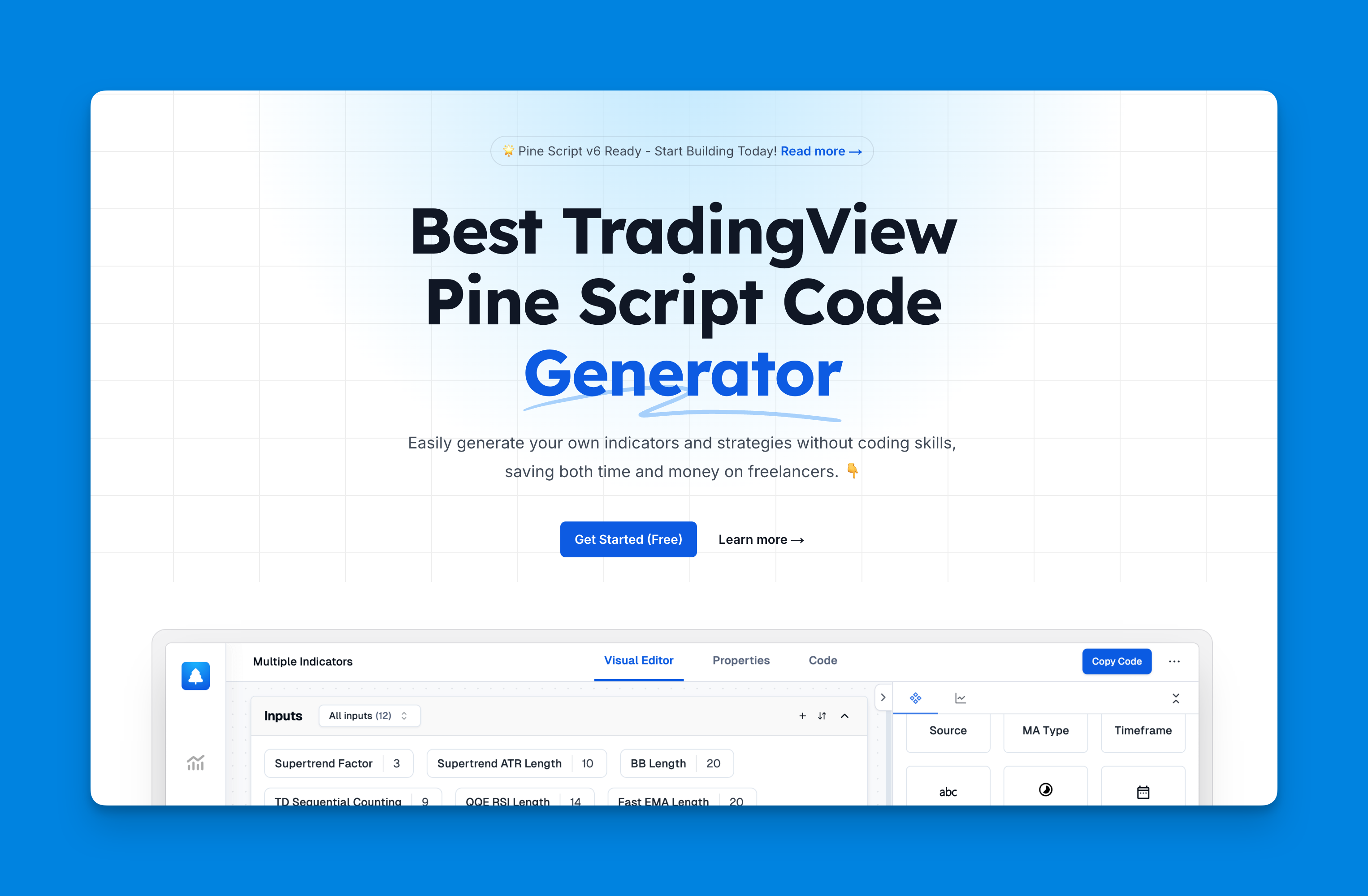
Website: Pineify
To effectively incorporate the Bollinger Bands indicator into your trading strategies, consider utilizing Pineify, a powerful tool designed for traders who want to create and manage indicators without any coding skills.
Pineify allows you to easily add the Bollinger Bands indicator alongside unlimited other technical indicators, bypassing TradingView's typical limitations. With its intuitive interface, you can customize inputs, set up complex conditions for entry and exit strategies, and even backtest your strategies to optimize performance.
This means you can generate robust trading strategies that align with your personal trading style quickly and efficiently, all while saving time and money compared to traditional coding methods.
Whether you're a beginner or an experienced trader, Pineify streamlines the process of building and refining your Bollinger Bands strategies, making it a valuable asset in your trading toolkit.
![[Pineify | Best Pine Script Editor] - Add Bollinger Bands Indicator and generate strategy on Pineify](https://r2.pineify.app/assets/72feab2ef9297475aaccb87088fcb1a2.png)
Click here to view all the features of Pineify.
Common Strategies Using Bollinger Bands
Traders often use Bollinger Bands in various strategies:
- Bollinger Bounce: Buy when prices touch or bounce off the lower band and sell when they reach or bounce off the upper band.
- Breakout Strategy: Enter trades when prices break out above or below the bands, anticipating strong price movements.
Conclusion
Bollinger Bands are a versatile tool that can help traders identify market conditions, volatility, and potential price reversals. By incorporating Bollinger Bands into your trading strategies using Pine Script, you can gain valuable insights and make informed trading decisions.
With Pineify, you can streamline the process of creating and managing Bollinger Bands strategies, allowing you to optimize your trading performance effectively.
References
- https://www.tradingview.com/chart/BTCUSDT/n8FUcrhW-2nd-Pine-Script-Lesson-Coding-the-Entry-Logic-Bollinger-Band/
- https://www.tradingview.com/chart/BTCUSDT/ksy00EGu-1st-Pine-Script-Lesson-Coding-an-Indicator-Bollinger-Band/
- https://github.com/TravisLeeRichardson/Bollinger-Bands
- https://pinewizards.com/technical-analysis-functions/ta-bb-function/
- https://www.youtube.com/watch?v=ne4mfAHteaM