Trading Backtesting: Validate Your Strategy Before Live Trading

Trading backtesting is the process of running your trading rules against historical market data to see how a strategy would have performed. Instead of guessing if an approach works or risking real money to find out, you can test it against years of past data. It shows you, in hard numbers, how your strategy would have done — win rate, drawdown, total return. Think of it as a dress rehearsal before you step onto the live market stage.
No matter your style — day trading, swing trading, or running automated systems — backtesting is how you build real conviction before committing capital.
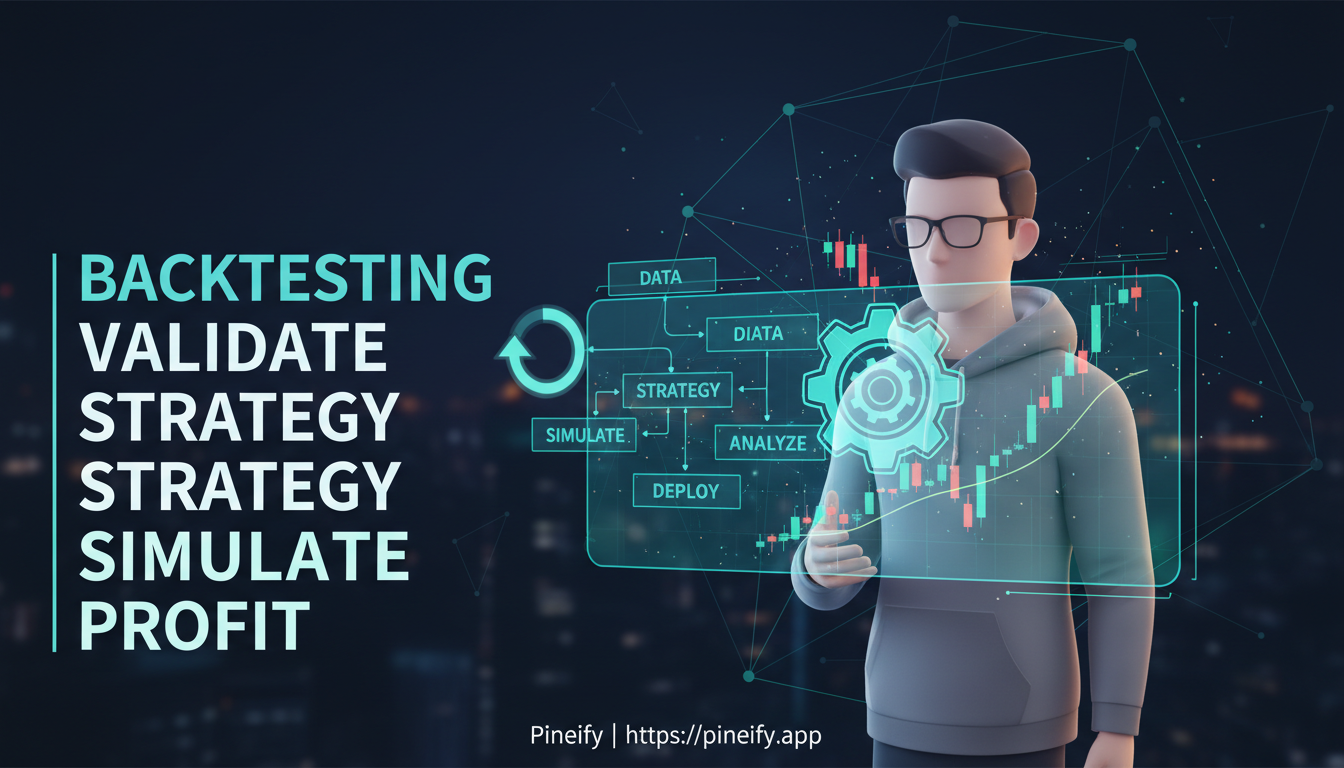
What Is Trading Backtesting? A Simple Explanation
Trading backtesting is running a simulation. You take your specific trading rules and apply them to old market data to see what would have happened. It answers practical questions: How often would I have won? What was my biggest losing streak? What would my total profit or loss have been?
Here's a straightforward example. Say your strategy is to buy the S&P 500 whenever its 20-day moving average crosses above its 50-day average. Backtesting software can take that rule, run it through every single day of data from 2015 to 2023, and spit out a report. You see the hypothetical results — the good, the bad, and the ugly — without ever placing a real trade.
The critical thing is that markets change. A strategy that printed money in a steady bull market might crumble in a volatile, news-driven environment. Because the market of 2020 is not the market of 2025, regular backtesting isn't just a good practice — it's essential for staying relevant. It helps you see if your edge is fading before your real account pays the price.
Manual vs. Automated Backtesting: Which Approach Is Right for You?
You've got a trading idea. How do you know if it actually works? Two main paths exist: doing it by hand or letting software handle it.
| Approach | How It Works | Key Benefits | Things to Keep in Mind |
|---|---|---|---|
| Manual Backtesting | You go through historical charts, bar by bar or candle by candle. You visually spot your entry and exit signals, then record each hypothetical trade and its result in a spreadsheet. | Builds incredible market intuition. You feel every price swing and decision, which deepens your understanding of how your strategy behaves. | It's very slow. Testing over a long period or across many assets can take forever. It's also easy to let personal bias slip in. |
| Automated Backtesting | You code your strategy's rules into software (or use a platform with a visual builder). The program then scans years of historical data in seconds, executing trades mechanically and spitting out a performance report. | It's fast, objective, and scalable. You can test a strategy on decades of data or a whole portfolio of assets in minutes. It eliminates human error and emotion from the analysis. | You need clear, unambiguous rules. The "gut feeling" you develop manually doesn't translate. Garbage in = garbage out. |
Most seasoned traders don't pick just one. They use a blend of both.
They often start manually. Scrolling through charts by hand is the best way to flesh out a new idea and get a gut feel for its rhythm. Once the core logic is solid, they automate it. This lets them stress-test the strategy rigorously across different market conditions and get those solid, statistical results you can really trust.
Think of manual backtesting as the sketch on a napkin and automated backtesting as the final blueprint. You usually need both to build something worthwhile. For a deeper dive into the platforms that make this possible, our comparison of MetaTrader vs TradingView breaks down the pros and cons of each for systematic testing.
How to Backtest a Trading Strategy, Step-by-Step
Trying out a trading idea on past data is a practice run before the real thing. Doing it in a structured way makes all the difference.
-
Write down your strategy rules, clearly. Start by getting everything out of your head and onto paper. What exactly has to happen for you to enter a trade? How do you decide when to get out, whether you're winning or losing? What's your stop-loss and profit target? Vague ideas here give vague, useless results.
-
Pick your market and chart type. Are you testing this on stocks, forex, or crypto? And what chart are you looking at — the fast-moving 1-hour chart or the slower daily chart? This focuses your test.
-
Find good historical data. You need accurate price history (the open, high, low, close, and volume). If your data has gaps or errors, your test results will be misleading. This is one of the most common reasons a backtest fails.
-
Choose your backtesting tool. You can use anything from a simple spreadsheet to advanced software. Pick something that matches your skill level and what your strategy needs.
-
Run the simulation. Let the software or your system walk through the historical data, trade by trade, following your rules. Most folks recommend testing at least 2–3 years of data to see how the strategy holds up in different market moods — bull runs, crashes, and sideways grinds.
-
Look beyond just profit. Don't just check if you made money. Dig into the details:
- Win Rate: What percentage of your trades were winners?
- Profit Factor: Did your winning trades bring in more money than your losers cost you?
- Maximum Drawdown: What was the biggest peak-to-valley drop in your account? This tells you about the rough patches.
- Sharpe Ratio: A measure of risk-adjusted return — higher is generally better.
- Expectancy: The average amount you can expect to win (or lose) per trade over time.
-
Tweak and test again. Based on the results, you might make small, logical adjustments to your rules. Then run the backtest again. The big trap here is "overfitting" — twisting your strategy so perfectly to fit past data that it fails miserably in the real, unpredictable future. Be conservative with changes.
Picking the right tool to test your trading ideas can make a real difference. A good platform lets you see if your strategy might work in the real world, while a clunky one can leave you with false confidence.
Here's a look at some of the most trusted platforms out there right now.
| Platform | Best For | Key Features |
|---|---|---|
| MetaTrader 4/5 | Forex & algorithmic trading | Built-in Strategy Tester, EA testing, historical simulation |
| TradingView | Charting + scripting | Pine Script, user-friendly, suitable for all levels |
| Forex Tester | Forex manual/automated | Accurate historical data, real market simulation |
| NinjaTrader | Scalping & day trading | Level 2 data, simulated trade execution |
| AmiBroker | Advanced quant traders | AFL scripting, high-speed processing |
| ProRealTime | Institutional-grade testing | Desktop/online access, realistic lifelike testing |
| cTrader | Forex & CFD automation | Visual step-by-step mode, tick-level precision |
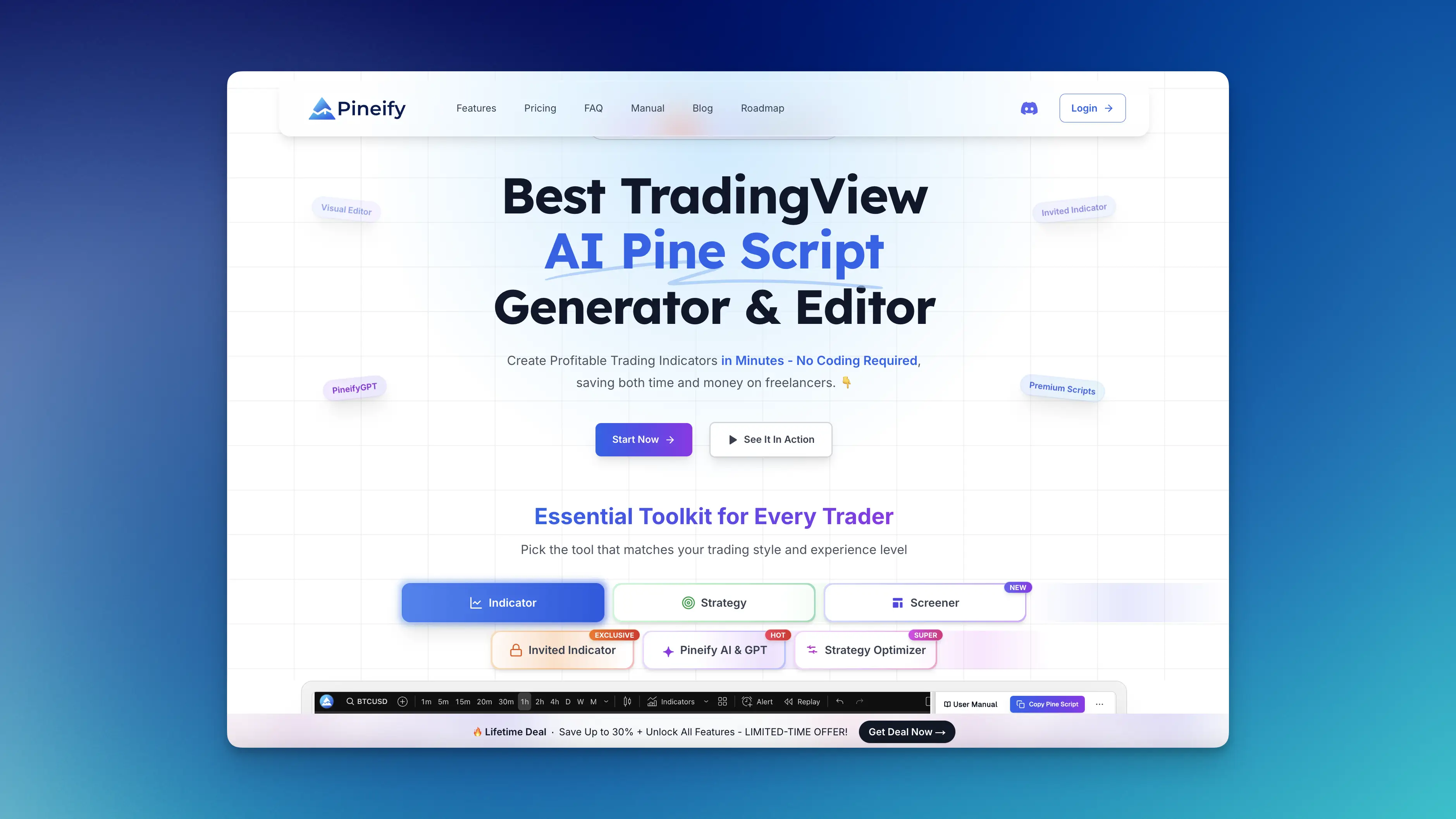
So, which one might be for you? If you're just getting started or love working directly on charts, TradingView is incredibly popular. Its Pine Script language feels less like hardcore programming and more like writing simple instructions, making it easy to test and share ideas. TradingView's Pine Script is my preferred tool for quick backtests — I can iterate in minutes instead of hours. For traders who want to use TradingView's capabilities without the coding hurdle, platforms like Pineify act as a bridge. It provides a visual editor and an AI coding agent specifically for Pine Script, allowing you to build, test, and optimize complex indicators and strategies in minutes, directly for the TradingView environment you're already using. To master the language behind these tests, our guide on Understanding Global Variables in Pine Script is essential reading.
For forex traders who want to practice manual trading as if it were live, Forex Tester is built specifically for that feel, with very accurate historical data.
When your strategies get more complex and you need extreme speed or granular tick-by-tick data, that's where tools like AmiBroker and NinjaTrader shine. They're the go-to for many serious systematic traders because of their power and depth.
In the end, your choice comes down to what you trade and how deep you need to go. Sometimes, the best move is to start with a simpler, more visual tool to get the hang of the process, and then graduate to the heavier platforms as your strategies evolve.
How to Know If Your Trading Strategy Actually Works: Reading Backtest Results
Running a backtest feels great — you've got all this data! But the real skill isn't in running the test; it's in understanding what the numbers are telling you. Think of it like a doctor's check-up for your strategy.
Here are the key metrics to focus on.
| Metric | What It Tells You | A Good Sign Looks Like |
|---|---|---|
| Win Rate | The percentage of trades that made money. | Don't fixate on this alone. A 40% win rate can be hugely profitable if your winning trades are much bigger than your losers. |
| Profit Factor | Total profits divided by total losses. Shows efficiency. | Above 1.5 is solid. It means you're making 50% more than you're losing. Below 1.0 means the strategy loses money. |
| Max Drawdown | The biggest drop from a peak to a low point in your account. | This is your risk gut-check. A huge drawdown might be profitable on paper, but can you stomach watching your account drop that much in real life? |
| Sharpe Ratio | How much return you're getting for the risk you're taking. | Above 1.0 is decent (reward outweighs risk). Above 2.0 is excellent. It helps compare strategies with different returns. |
| Expectancy | The average amount you'd win (or lose) per trade over time. | A positive number is non-negotiable. It's the foundation. It tells you the strategy should make money in the long run. |
Win Rate is the most obvious stat, but it can be misleading. A high win rate feels good, but if your losses are gigantic, you'll still lose money. Conversely, a strategy that only wins 4 out of 10 trades can be a champion if those 4 wins are home runs. I've tested a trend-following strategy on SPY that had a 38% win rate but a profit factor of 2.1 over 5 years — the losers were small, the winners ran.
Profit Factor is my go-to for a quick health check. It cuts through the noise. A Profit Factor of 2.0 is beautiful — it means for every dollar you lost, you made two. It directly tells you if the math works in your favor.
Maximum Drawdown is about psychology as much as money. It answers: "What's the worst rough patch I might have to sit through?" If your strategy has a 25% historical drawdown, you must be prepared for your account to potentially drop by a quarter during a bad run. If that thought keeps you up at night, the strategy isn't right for you, no matter how good the final profit looks. I don't trust any strategy with a drawdown over 20% — I've seen too many traders abandon solid systems during the drawdown, not the recovery.
The Sharpe Ratio helps you compare apples to apples. Two strategies might have the same total return, but one might have achieved it with wild, nerve-wracking swings, while the other was smooth. The smoother one will have a higher Sharpe Ratio, meaning it delivered those returns with less drama and risk.
Finally, Expectancy is the ultimate bottom line. It's the average dollar amount you can expect to make per trade. You calculate it by taking your win rate, average win size, and average loss size. A positive expectancy is the absolute bare minimum for a viable strategy. It confirms that, statistically, the edge is real.
Looking at these metrics together gives you the full picture. One number alone can't tell the story. A strategy with a great Profit Factor but a horrific Max Drawdown might be a ticking time bomb for your nerves. Use these tools not to find a "perfect" strategy, but to understand exactly what you're signing up for.
Watch Out for These 7 Backtesting Blunders
Backtesting is a powerful tool, but it's surprisingly easy to trip up and create a strategy that looks amazing on paper but falls apart in real trading. Even seasoned traders run into these common mistakes.
-
Overfitting (or Curve-Fitting)
This is when you tweak your strategy's rules so precisely to fit past data that it essentially "memorizes" history. It will show a perfect track record in your test, but it has no flexibility to adapt to new, unseen market conditions. It's like designing a key that only opens one specific, old lock. -
Using Sketchy or Low-Quality Data
Garbage in, garbage out. If your historical data is full of errors, missing chunks, or isn't detailed enough (like using daily bars for a scalp strategy), your results will be misleading. Always double-check your data source and resolution. -
Letting Hindsight Bias Creep In
This is a sneaky one. It happens when you accidentally use knowledge of what happened after an event to set your entry or exit rules. In a real trade, you never have that future knowledge, so a strategy built with it is doomed from the start. -
Forgetting About the Cost of Trading
It's easy to get excited by a backtest's profit line and forget that every real trade has a price tag. Commissions, the bid/ask spread, and slippage (the difference between your expected price and your fill price) can completely erase profits. A strategy that wins in a vacuum might lose money in reality. -
Messing Up Time Zones
If your market data and your news/event data are in different time zones, you can accidentally create "look-ahead bias." Your simulated strategy might see an event before the market reacts, giving it an unfair, impossible advantage. This often shows up as an unrealistically high Sharpe ratio. -
Overlooking Dividends, Swaps, and Carry Costs
If your strategy holds positions for more than a day, you need to account for the ongoing costs or benefits. Forgetting to include dividend payments on stocks or the swap/rollover costs in forex and futures paints an inaccurate picture of your true profit and loss. -
Testing in a Perfect, Unrealistic World
Assuming you get perfect order fills with zero delay and no slippage is a fantasy. Markets have microstructure — other traders, order books, and latency. A backtest that ignores these factors isn't simulating real trading; it's just running a theoretical exercise. For a critical look at the accuracy of one popular platform's tester, see our analysis: Is TradingView Strategy Tester Accurate?.
Walk-Forward Testing: Your Strategy's Real-World Exam
Think of standard backtesting like studying for a test using last year's exam. It's useful, but it doesn't guarantee you'll ace this year's new questions. Walk-forward testing is like taking a series of practice exams under real conditions. It's the crucial next step to see if your trading strategy can actually adapt and perform over time, not just in the past.
Here's how it works:
- Slice Your History: You take your chunk of historical market data and divide it into multiple, overlapping segments.
- Study & Optimize (In-Sample): For the first segment, you tune and optimize your strategy's rules. This is your "study period."
- Take the Test (Out-of-Sample): You then immediately test that optimized version on the next period of data, which it hasn't "seen" before. This is the practice exam.
- Repeat the Process: You slide this window forward in time and do it all again: optimize on a new "in-sample" period, then test on the following "out-of-sample" period.
| Phase | What Happens | Why It Matters |
|---|---|---|
| In-Sample | You adjust your strategy rules to find what worked best in that specific historical window. | It's like finding the best way to answer known questions. |
| Out-of-Sample | You lock those rules and test them on fresh, unseen data that comes right after. | This reveals if your "best setup" was just lucky for that old data or has real potential. |
By repeating this walk-forward process, you mimic the real experience of taking a strategy live — constantly adjusting based on recent history and then facing the unknown immediate future.
A strategy that passes multiple walk-forward tests is far more trustworthy. It shows it can hold up across different market environments, not just fit perfectly to one static set of past data. It's the difference between a strategy that looked good once and one that might actually stand a chance going forward. I haven't seen a single strategy that passed multiple walk-forward windows turn out to be a fluke in live trading.
Trading Backtesting Questions
Q: How much historical data do I actually need for a good backtest? At least 2–3 years. The real goal is to see how your strategy holds up across different environments — a roaring bull market, a tough bear market, and those frustrating sideways periods where nothing seems to happen. More data usually means more reliable results, but watch out for data so old that the market's basic rules have changed since then.
Q: If my backtest is profitable, does that mean I'll make money in the future? Not at all. This is the most important thing to remember. The past never perfectly repeats itself. A strategy that crushed it in 2020 might struggle in today's market. Think of backtesting as a way to check if your trading idea makes sense on paper and to spot obvious flaws. It's a tool for reducing risk, not a guarantee of profits.
Q: Are the free backtesting tools any good, or do I need to pay? For most people starting out or trading as a side gig, the free tools are perfectly capable. Platforms like TradingView (with Pine Script) or MetaTrader's built-in tester get the job done. You might only need to look at paid software (like AmiBroker or Forex Tester) if you're running complex strategies across many markets or need ultra-fast, institutional-grade analysis. Wondering if the platform is worth your time? Our review, Is TradingView Worth It in 2025?, helps answer that.
Q: What's the real difference between backtesting and paper trading? They're two different, but crucial, steps.
- Backtesting is like a history exam. You test your strategy against recorded past data, and it gives you an answer instantly.
- Paper trading (or forward testing) is like a practice simulation. You run your strategy with fake money in real-time, live markets.
You need both. Backtest to see if the logic works. Then paper trade to see if you can work it — dealing with execution, delays, and your own emotions.
Q: How can I tell if my strategy is just "overfitted" to past data? Be suspicious of results that look unbelievably perfect. Major red flags are:
- A win rate above 80%
- Almost no losing periods (near-zero drawdown)
- A Sharpe ratio that seems unrealistically high (above 3.0)
If it looks too good to be true, it probably is. The best practice is to save a chunk of your historical data that you never used during development. Test your final strategy on that "out-of-sample" data. If it still performs well there, you can have a bit more confidence in it.
Start Backtesting Today
Pick one strategy you already use or want to try. Write out its rules clearly: "Buy when the 20-day moving average crosses above the 50-day, sell if price drops 2% below entry."
Get hands-on with TradingView. Their free plan works perfectly to start. Use Pine Script to code your strategy and test it over at least three years of market history.
Keep a simple log of your results. For every test, note down three key numbers:
| What to Track | Why It Matters |
|---|---|
| Win Rate | Percentage of trades that were profitable. |
| Profit Factor | Total gains divided by total losses. Shows if wins outweigh losses. |
| Max Drawdown | Largest peak-to-valley drop in your equity. Tests your stomach for risk. |
Run a walk-forward test. Backtest on a chunk of data, then test those rules on unseen data. It's the best way to spot strategies that only worked in the past.
Paper trade before going live. When your backtest results look steady and believable, switch to paper trading. See how the strategy feels in real-time without risking a dime.
Start with one strategy this week. Got a result or a stumbling block? Drop it in the comments below.
What is trading backtesting and why does it matter?
Trading backtesting is the process of applying your trading rules to historical market data to simulate how the strategy would have performed in the past. It matters because it lets you identify flaws, estimate realistic returns, and build confidence in your approach — all without risking real capital.
How much historical data do I need for a reliable backtest?
Aim for at least 2–3 years of data covering different market conditions: a bull run, a bear phase, and a sideways period. More data generally improves reliability, but avoid data so old that market structure has fundamentally changed.
What is the difference between in-sample and out-of-sample testing?
In-sample data is used to develop and optimize your strategy rules. Out-of-sample data is a separate, unseen period used to verify whether those rules hold up. A strategy that performs well on both sets is far more trustworthy than one optimized only on historical data.
What backtesting metrics should I focus on beyond win rate?
Win rate alone is misleading. The most important metrics are Profit Factor (total profits divided by total losses), Maximum Drawdown (largest peak-to-valley equity drop), Sharpe Ratio (risk-adjusted return), and Expectancy (average expected profit or loss per trade).
What is overfitting in backtesting and how do I avoid it?
Overfitting — also called curve-fitting — happens when you adjust a strategy so precisely to past data that it loses the ability to adapt to new market conditions. Avoid it by keeping rules simple, limiting the number of parameter changes, and always validating on out-of-sample data before going live.
What is the difference between backtesting and paper trading?
Backtesting runs your rules against recorded historical data and produces results instantly. Paper trading runs your strategy in real-time with simulated money in live markets. Both steps are essential: backtest to validate the logic, then paper trade to practice real execution without financial risk.
Do I need paid software to backtest a trading strategy?
Not necessarily. Free tools like TradingView with Pine Script or MetaTrader built-in tester are sufficient for most traders. Paid platforms such as AmiBroker or Forex Tester become valuable only when you need institutional-grade speed, tick-level precision, or highly complex multi-asset testing.