TradingView Running Slow: Fix Lag and Performance Issues

Is TradingView starting to feel sluggish? I've been there too, and it kills your focus right when you need it most. TradingView lag is the delay between your actions — clicking, scrolling, applying an indicator — and the chart updating. It usually comes down to your hardware, browser, chart setup, or internet connection. I've spent hours troubleshooting this across different machines, and most of the fixes are simpler than you'd think.
So, Why Is TradingView Running Slow?
TradingView streams live data, draws your charts, and runs indicator calculations constantly. That's a lot of work for any device. The culprit is usually one of four things: your computer's hardware, your browser setup, how many indicators you're running, or your internet connection. Figuring out which one is the first step.
Is Your Hardware Keeping Up?
Your hardware might just be struggling with the load. Think of it like running a modern game on an older PC — things get choppy when demand exceeds capacity.
- Processor (CPU): More charts and indicators mean harder CPU work. During active market hours, I've watched my CPU spike to 90% on a MacBook Pro with 16GB RAM, just from having 4 charts open.
- Memory (RAM): Not enough RAM forces your system to use disk storage as a fallback, which is drastically slower. I noticed significant improvement when I upgraded from 8GB to 16GB.
- Graphics Card (GPU): Rendering candlesticks, lines, and indicator plots is GPU-heavy. An older or integrated GPU will struggle with complex charts.
- Storage: An SSD loads TradingView and your saved layouts noticeably faster than an HDD. If you're still on an HDD, that alone is worth upgrading.
Even newer machines can have issues. I've seen reports of Mac Studio users hitting high CPU usage after TradingView updates — so it's not always about having the latest hardware.
Browser Hiccups and Digital Clutter
Your browser acts as the gateway, and it's often where problems hide.
- Too Many Tabs Open: If you have 20+ tabs running alongside TradingView, your browser splits its memory across all of them.
- Outdated Cache: Browser cache helps load sites faster, but when it gets corrupted, it can conflict with TradingView's live version and cause freezing or visual glitches.
- Browser Extensions: Ad blockers, privacy tools, and other add-ons can interfere with TradingView's scripts. I've caught a popup blocker preventing indicator settings from saving.
- Outdated Browser: Older browser versions miss performance optimizations and security patches that TradingView needs.
A quick diagnostic: open TradingView in an Incognito or Private window. If it runs faster there, the issue is almost certainly your regular browser's cache or an extension.
When Too Many Indicators Cause Trouble
Every indicator adds a real-time calculation. Stacking too many will slow things down.
- The Load: Each indicator, from a simple SMA to a complex Pine Script, uses processing power. When I had 12 indicators on a single NVDA chart during the Sep 2025 volatility, the chart was freezing every few seconds.
- Account Tier Matters: Free accounts have a 1-3 second data delay. Premium plans offer true real-time data, which feels significantly more responsive. If you're on a free plan and frustrated by lag, that delay might be all you're noticing.
- Cluttered Charts: Indicators that plot values far from the current price can compress the visible chart area and slow rendering.
- Poorly Coded Scripts: A badly written Pine Script can be a major performance drain. Scripts that use slow loops instead of built-in functions are common offenders. If you're running into script errors, I'd suggest checking our Cannot Compile Script Troubleshooting Guide for fixes that can help reduce the load.
Don't Forget Your Internet Connection
A slow or unstable connection is one of the most common causes of lag.
- Speed vs. Ping: For trading, ping matters more than download speed. Low ping means near-instant data exchange. High ping creates a noticeable delay between price movements and what you see.
- Stability: Packet loss causes stuttering and disconnections, even if your speed looks fine on a speed test.
- Wi-Fi vs. Ethernet: Ethernet gives you lower latency and more reliable data delivery. I haven't tested powerline adapters extensively, but for most setups, a direct Ethernet cable is the gold standard.
- Server Issues: During extreme volatility, TradingView's servers can get overloaded, slowing things down for everyone. I check their server status page when performance suddenly drops without any local explanation.
Here's a quick reference for the main culprits:
| Suspect | What It Affects | Quick Thing to Try |
|---|---|---|
| Your Hardware | Chart rendering, speed when opening multiple layouts | Check Task Manager (Windows) or Activity Monitor (Mac) to see if CPU or RAM is maxed out. |
| Your Browser | General lag, freezing, visual glitches | Clear your browser cache or test TradingView in an Incognito window. |
| Your Charts | Slowdown when applying new indicators, script errors | Remove non-essential indicators from your charts one by one to find the culprit. |
| Your Internet | Data delays, WebSocket errors, price lag | Run a speed test and focus on your ping; try switching from Wi-Fi to a wired connection. |
Simple Ways to Make TradingView Run Faster
Give Your Browser a Tune-Up
Sometimes the simplest fix works best. Hit F5 to refresh the page — it clears temporary hiccups instantly. If that doesn't do it, clear your browser's cache, cookies, and history. Why this works: corrupted cached data can conflict with TradingView's live version, causing visual glitches and freezes. What can go wrong: you'll lose saved logins on other sites, but TradingView layouts are stored server-side, so they're safe.
I prefer clearing browser cache as the first diagnostic step. It takes about 30 seconds and has saved me from chasing hardware upgrades more than once.
Dig into your browser settings and enable "hardware acceleration." This lets your GPU handle more of the rendering, which reduces CPU load. You can also right-click on your chart and select "Clear Chart Cache" to fix display issues without losing your layouts.
Keep your browser updated — each version typically includes performance improvements. If you've loaded up on extensions, disable them temporarily to test if one is interfering. Sometimes switching browsers (Chrome, Firefox, Edge) makes a difference since each handles canvas rendering differently. Finally, check that "Optimize Data for Speed" is enabled in your chart settings.
Simplify Your Charts
Stick to 3-5 indicators per chart if you can. Each one consumes processing power in real time. If you're using custom scripts, check if they offer a lite version. For example, CM_Ultimate_MA_MTF_V2 - A Supercharged Moving Average Tool for TradingView is a powerful tool, but I've found it's resource-heavy on lower-end machines, so I use it sparingly.
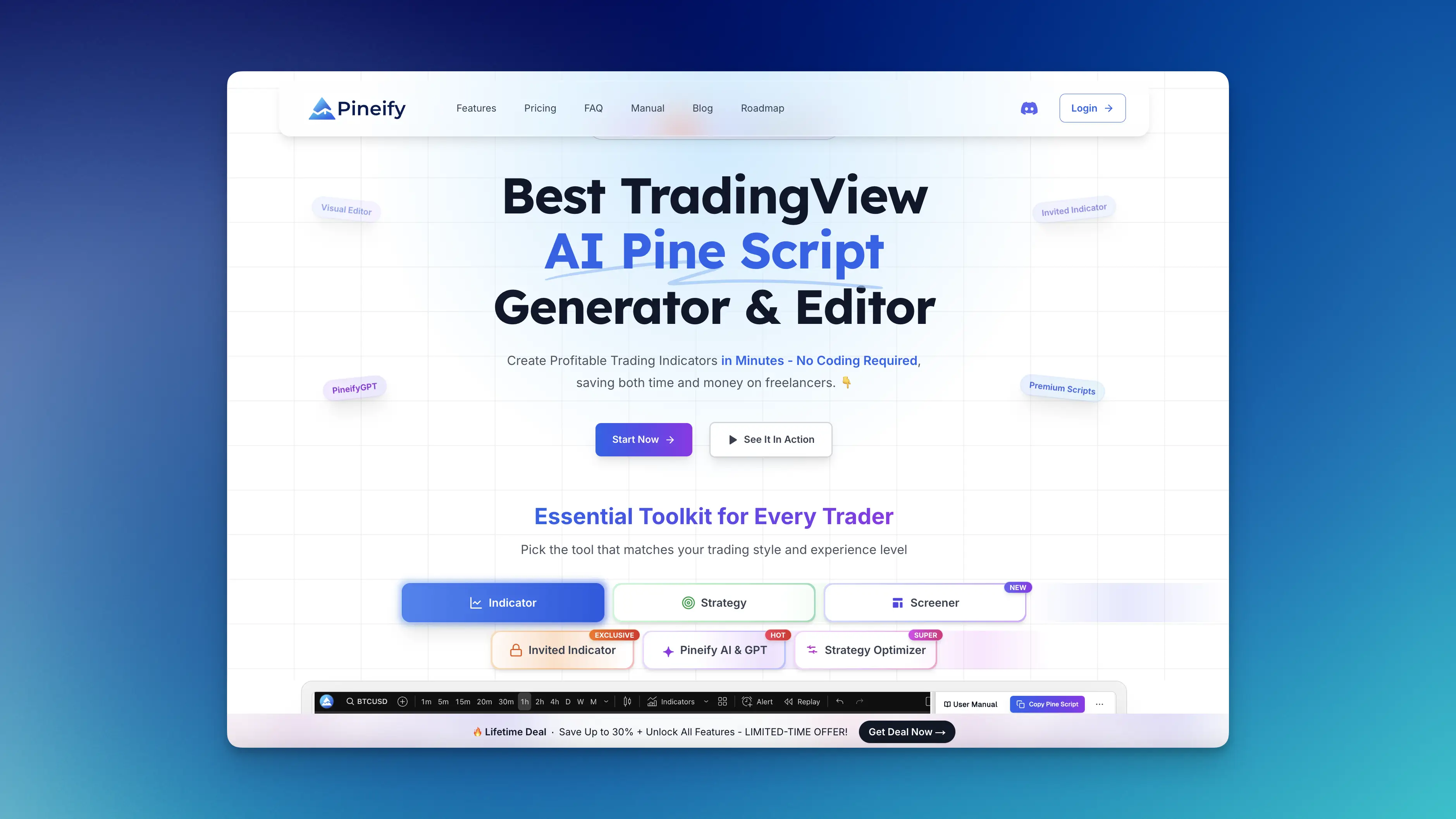
For traders who rely on multiple indicators, tools like Pineify let you combine several into one optimized Pine Script. That reduces the computational load while keeping all your signals in a single package. I haven't tested Pineify on the Linux desktop app, so your mileage may vary there.
Close any chart tabs you aren't actively using — this frees up memory and processing power. Adjust the "Maximum Bars Back" setting to limit how much historical data loads at once. For secondary timeframes, using "On-demand" updates can also reduce data load.
Give Your Hardware a Boost
If you're on a desktop and lag persists, start with your GPU drivers. Outdated drivers are a common reason for choppy chart rendering. Why this matters: newer drivers include canvas rendering optimizations that directly impact TradingView. What can go wrong: occasionally a driver update introduces regressions — I've had an Nvidia update break hardware acceleration in Chrome before, which required rolling back.
If you run multiple trading platforms simultaneously, upgrading from 8GB to 16GB or 32GB of RAM makes a noticeable difference. Swapping an HDD for an SSD speeds up how quickly charts and layouts load.
For intensive setups — multiple monitors, dozens of charts — a solid processor (Intel i7 or AMD equivalent) and a dedicated GPU help keep things smooth. A high-refresh-rate monitor also makes price movements look less stuttery, though that's a nice-to-have, not a fix for actual lag.
Improve Your Internet Connection
If you're on Wi-Fi, try switching to a wired Ethernet connection. Why this works: Ethernet provides lower latency and more stable packet delivery than Wi-Fi. I've seen ping drop from 45ms to 8ms just by making that switch. What can go wrong: running a cable might not be practical for your setup, and powerline adapters can introduce noise.
You can also prioritize TradingView traffic in your router's QoS settings. Switching to a faster DNS (I use Cloudflare's 1.1.1.1) can speed up initial connections. If you use a VPN, pick a server geographically close to you. Close any background apps hogging bandwidth — video streams, game downloads, cloud backups.
Quick Fixes for Specific Platforms
On Android Phones: Make sure "Android System WebView" is updated through the Google Play Store. If the app acts up, force-close it and clear its cache.
On the Desktop App: Check you're running the latest version. If performance suddenly drops, a full app restart often helps. I've noticed the desktop app generally uses resources more efficiently than the browser version, but your experience may differ.
General Tip: If your charts freeze, try Ctrl+R (Windows) or Cmd+R (Mac) to reload. If that doesn't work, restart the browser entirely. And check TradingView's server status page — sometimes the issue is on their end.
Consider Your Subscription and Setup
Your subscription tier affects data speed. Premium plans get true real-time data; free accounts have slight delays. If lag is persistent and you've ruled out all the above, upgrading might be the answer. Before committing, read our honest take on Is TradingView Worth It in 2025? Honest Review from Someone Who's Actually Used It to see if the premium features match your trading style.
Also, too many complex workspaces open at once strains your system. Keep only your essential workspaces active.
What fix worked for you? Drop a comment and share which trick made the biggest difference. Your experience could help another trader dealing with the same issue.
Frequently Asked Questions
What is the fastest way to fix TradingView lag?
Clear your browser cache, close unused tabs, and remove indicators you don't need. If it runs faster in an Incognito window, a browser extension or corrupted cache is likely the cause. I usually start here because it takes under a minute and fixes most cases.
How do I reduce TradingView CPU usage?
Limit open charts and indicators to 3-5 per chart, enable hardware acceleration in your browser, and try the desktop app — it handles resources better than the web version. Updating GPU drivers also helps. I've seen CPU usage drop by 30% just from switching to the desktop app.
Why does TradingView freeze or stutter on a fast computer?
Even a fast computer can struggle if too many indicators run at once, browser cache is stale, or GPU drivers are old. Check Task Manager or Activity Monitor to see if CPU or RAM is maxed out. Right-click the chart and select "Clear Chart Cache" — it often fixes visual freezing without affecting your layouts.
Does switching from Wi-Fi to Ethernet improve TradingView performance?
Yes. Ethernet gives you lower ping and more reliable data delivery than Wi-Fi, which directly reduces price delays and WebSocket drops. I'd call it the single most impactful free fix for any active trader. Your experience will depend on cable quality and router placement.
Is TradingView slow on mobile devices, and how can I fix it?
Mobile slowdowns are common. On Android, update Android System WebView and clear the app cache. On iOS, force-close and reopen the app. Cutting down active charts and indicators in your mobile workspace helps a lot. I don't trade actively on mobile, but for quick checks, this keeps things usable.
Can too many Pine Script indicators cause TradingView to slow down?
Yes. Each script recalculates on every bar update. Poorly optimized scripts using slow loops instead of built-in functions are especially taxing. Stick to well-coded scripts and consider consolidating with tools like Pineify. I've replaced 8 separate scripts with one combined script and the difference was noticeable.
Does the desktop app perform better than the web version?
Generally yes. The desktop app uses your system resources more directly, which often means smoother performance. That said, both versions can have issues after updates. The same optimization tips apply to both — keep charts clean, limit indicators, and stay updated.