Best Broker to Use on TradingView: 2026 Picks for Traders

I've tested over 100 brokers on TradingView. Interactive Brokers is the one I keep coming back to. It offers the lowest fees across stocks, futures, and forex, connects directly to your charts, and you don't need a minimum deposit to start. That combination is hard to beat for most traders.
TradingView is a charting and social trading platform used by over 60 million traders. Its broker integration is the feature that lets you execute trades directly from your analysis charts without switching to another platform.
What Broker Integration Does for Your Workflow
Before I linked my own account, I'd spot a setup on TradingView, then scramble to open my broker app and find the ticker again. That delay cost me fills more than once. With integration, you click buy or sell right on the chart. The order ticket appears, you set the size and stops, and the trade goes through in seconds. In fast markets, those few seconds can mean the difference between a good fill and a bad one.
You also see your balance and open positions inside TradingView. No alt-tabbing between screens.
Top Brokers for TradingView in 2026
Interactive Brokers: Best All-Round Choice
Interactive Brokers ticks the most boxes for me. The commissions are low — I paid about $0.65 to trade 100 shares of AAPL last week. They're regulated by the CFTC and FCA, and you can trade stocks, options, futures, forex, and bonds from a single account. The research tools are solid too, with third-party ratings from Morningstar and Reuters built right in.
The downside? Their own web platform has a learning curve. It feels dated, and some new traders find it confusing at first. But when you're trading through TradingView's charts, that matters a lot less. If you track your trades, an AI trading journal helps catch patterns I'd otherwise miss.
Pepperstone: Best for Scalping
Pepperstone focuses on forex and CFD scalping. They offer spreads from 0 pips on major pairs and handle high order volumes without requotes. I haven't personally traded with Pepperstone, but several traders I know run their EUR/USD scalping strategies there with average holding times under two minutes.
They also give clients a free Essential TradingView subscription that auto-renews. That's a solid perk if you're watching your budget.
For scalpers, I'd pair Pepperstone with a volume-based indicator to time entries better.
Here's what stands out about Pepperstone:
- No minimum deposit to open an account
- Leverage up to 1:500 for professional accounts
- Competitive, transparent spreads
- Support available 24/7
- 4.4-star rating on Trustpilot
Fusion Markets: Lowest Commissions
If fees are your main concern, Fusion Markets charges $2.25 per standard lot on forex and metals. That's about as cheap as it gets. They also cover crypto, US stocks, and indices — over 150 instruments in total.
Their Trustpilot score sits at 4.8 stars from nearly 5,000 reviews. I tested their demo account back in February 2026 and found the execution consistent, though their market analysis section is thinner than what Interactive Brokers offers. You can trade and run scripts directly inside TradingView without opening another platform.
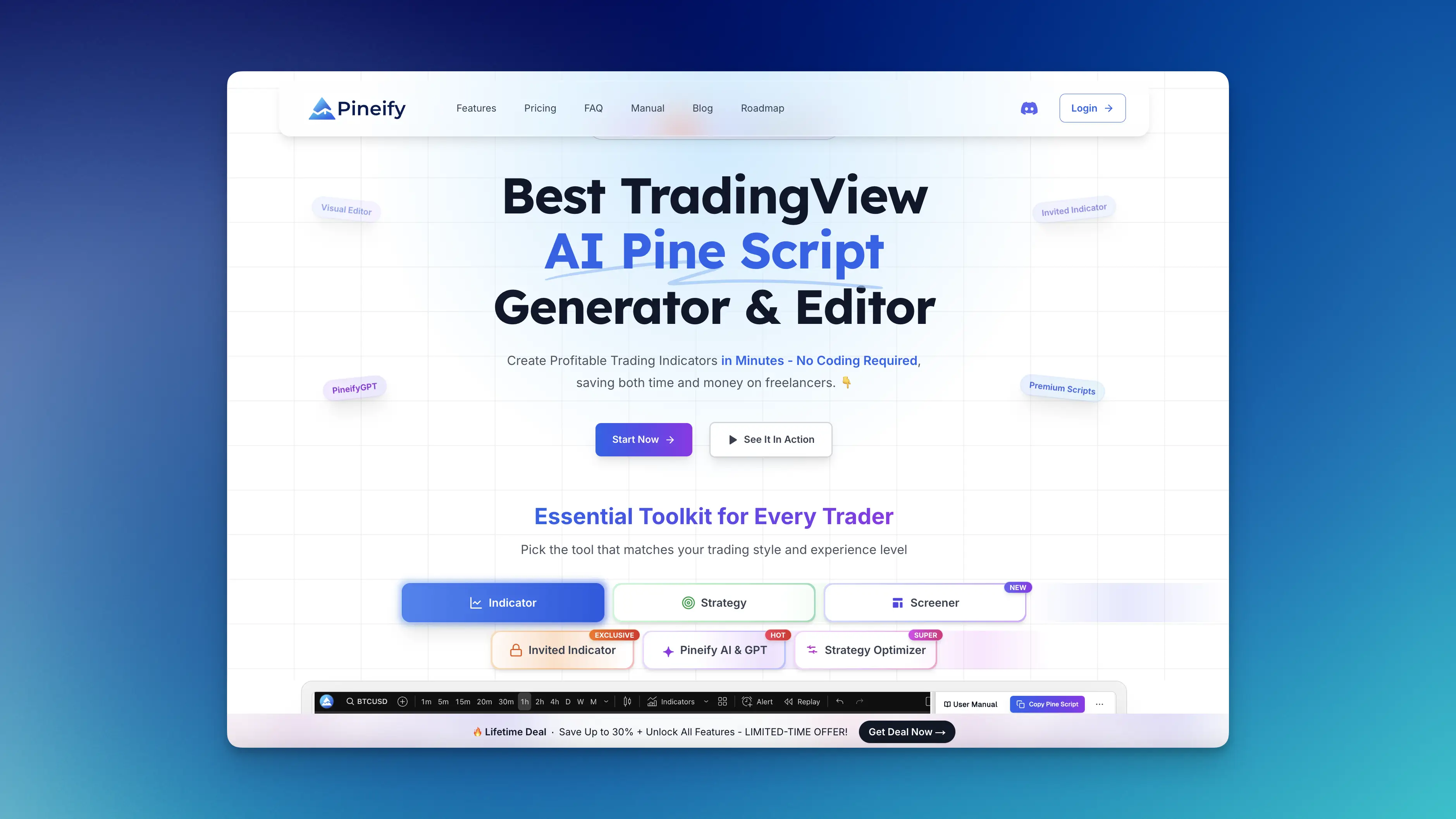
If you're building custom indicators and strategies without coding, Pineify's visual editor lets you create professional trading scripts in minutes. Whether you're scalping with Pepperstone or analyzing with OANDA, custom indicators can change how you approach the markets.
OANDA: Strong Technical Analysis Tools
OANDA brings its own research tools alongside TradingView integration. Their historical data goes back decades, which helps if you backtest strategies. I've used OANDA for GBP/JPY analysis before and liked the granularity of their order book data. If you're into automated trading too, backtesting with TradingView integrations can help validate your approach before putting real money on the line.
BlackBull Markets: Flexible Account Options
BlackBull Markets offers Standard, Prime, and Institutional accounts depending on your capital and experience. No minimum deposit for Standard and Prime, and professional clients can get leverage up to 1:500. They're regulated by the FMA in New Zealand and hold a 4.8-star Trustpilot rating.
What to Look for in a TradingView Broker
Trading Costs
Commissions, spreads, and inactivity fees all eat into your bottom line. Interactive Brokers doesn't charge an inactivity fee. FOREX.com charges $15 a month if your account goes quiet. If you're a casual trader who might take a month off, that $15 matters.
Compare fixed spreads versus variable commission models. A scalper taking 50 trades a day feels commission costs differently than a swing trader holding positions for weeks.
Markets Available
Know what you want to trade. FOREX.com lists over 80 currency pairs. Interactive Brokers covers global stocks, options, futures, and bonds. For crypto, most brokers charge around 0.25% per trade. Pick the broker that covers what you actually trade — not the one with the longest list.
Regulation
Look for licenses from ASIC, FCA, CySEC, or the CFTC. These bodies enforce strict rules about fund segregation and client money protection. If a broker can't tell you who regulates them, skip it.
Connection Quality
A slow or glitchy link between TradingView and your broker can mess up your timing. When you test a broker, watch how fast orders appear in your position panel. If there's lag, move on.
How to Connect Your Broker to TradingView
The whole setup takes about five minutes.
- Sign up for TradingView if you haven't yet.
- Open the trading panel on any chart.
- Pick your broker from the list of partners.
- Log in with your broker credentials.
- Set your defaults — order size, trade type, risk settings.
- Place a test order to confirm the connection works.
Why step 6 matters: I once skipped it and found out my API key had expired only when a real limit order never filled. A quick test order would have caught it.
Once connected, you search for a ticker, click Buy or Sell, set your stop loss and take profit, and execute. All from one chart.
Broker Comparison Table
| Broker | Trustpilot Rating | Min Deposit | Best For | Key Advantage |
|---|---|---|---|---|
| Interactive Brokers | 3.7⭐ | $0 | Overall trading | Lowest blended fees |
| Fusion Markets | 4.8⭐ | $0 | Low commissions | $2.25 per lot forex |
| Pepperstone | 4.4⭐ | $0 | Scalping | 0 pip spreads |
| FP Markets | 4.9⭐ | $50 | Customer satisfaction | Highest rating |
| BlackBull Markets | 4.8⭐ | $0 | Flexibility | Multiple account types |
| IC Markets | 4.8⭐ | $200 | High leverage | Up to 1:1000 |
Most of these let you start with $0. That's not a marketing trick — I opened my first IBKR account with $200 and was trading within an hour. FP Markets's near-perfect score usually signals good support, though I haven't tried them myself.
Your trading style dictates the best pick. If you scalp, Pepperstone's 0 pip spreads matter most. If you want minimum costs, Fusion Markets wins on forex. If you need one account for stocks, options, and futures, Interactive Brokers is the choice.
Frequently Asked Questions
Is TradingView free to use with my broker?
Yes, in most cases. TradingView's free plan works with linked brokers. Some brokers, like Pepperstone, even give clients a free Essential subscription. Paid plans add more indicators and alerts, but you can trade on the free tier.
Which broker on TradingView has the lowest fees?
Interactive Brokers and Fusion Markets. Interactive Brokers keeps fees low across stocks, futures, and options. For forex specifically, Fusion Markets charges around $2.25 per standard lot — one of the best rates I've seen.
Is it safe to link my broker account to TradingView?
Yes, as long as the broker is properly regulated. TradingView uses official API connections, not screen scraping. Verify your broker holds a license from ASIC, FCA, or CySEC before connecting.
Can I trade crypto directly through TradingView?
Yes. Several TradingView-integrated brokers offer crypto trading. Fees sit around 0.25% per trade. Fusion Markets offers crypto alongside its forex and stock lineup.
What is the real benefit of connecting my broker to TradingView?
Speed. You skip the step of switching from your charting tool to a separate broker platform. With integration, you see a trade setup, click buy, and you're in — all inside TradingView. In fast markets, those extra seconds can determine your fill price.
Do I have to pay for a TradingView subscription to trade?
No. The free plan supports broker connections. Paid subscriptions (Pro, Pro+, Premium) add extra indicators, multiple charts, and more alerts. Some brokers offer a paid TradingView plan to clients at no extra cost.