AlphaSense vs Pineify AI Agent: Analyst Estimates & SEC Filings

If you need analyst estimates or SEC filings, don't pick AlphaSense yet. I've tested both platforms, and the right choice depends on whether you're an institutional analyst or an individual investor. Pineify's AI Finance Agent is a chat-based research tool that connects to over 90 live data sources to answer questions about stocks, earnings, and filings in plain English. AlphaSense is an enterprise platform built for large teams at banks and hedge funds. They serve the same purpose - financial research - but for completely different audiences. For traders who also rely on technical analysis, pairing either tool with the Strategy Tester in TradingView helps validate ideas before risking capital.
AlphaSense works like a massive AI-powered research library for big financial institutions. It collects data from millions of sources - SEC filings, earnings calls, premium research reports, and expert interviews. Its NLP engine understands financial language in context, not just keywords. I haven't tested every feature, but its AlphaSense Sentiment tool was trained on over a decade of manually labeled earnings calls. That makes it sharp at detecting tone shifts in executive speech. If you need to track how a topic like "supply chain risk" evolved across 500 documents, AlphaSense handles it.
But AlphaSense costs thousands per user per year. It requires sales demos and enterprise contracts. For a solo trader checking whether Apple beat estimates, it's overkill.
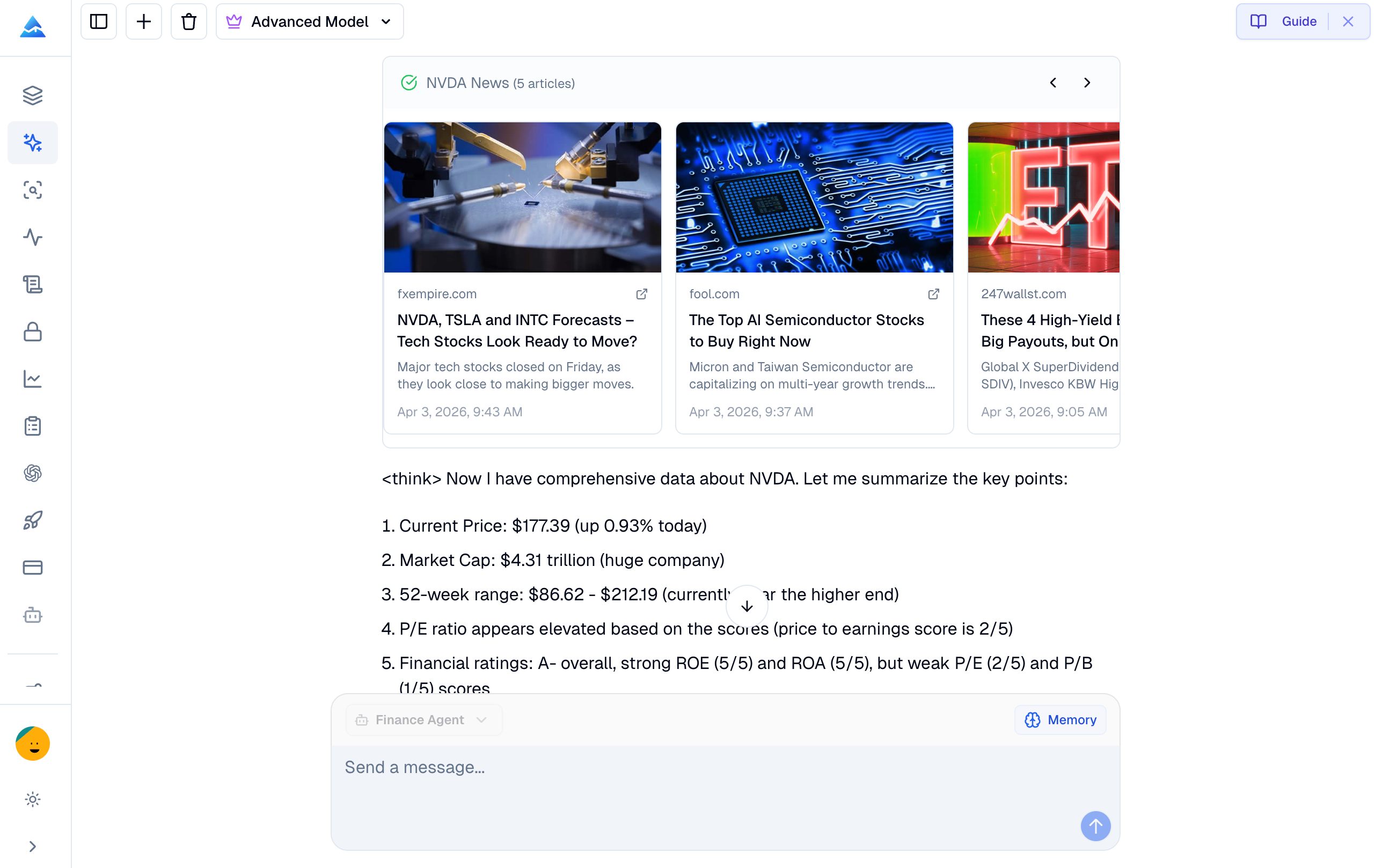
Pineify's AI Finance Agent takes the opposite approach. Instead of a document library, you get a chat window. Ask "What's the analyst consensus on TSLA for Q2 2026?" and it pulls live data from its network of sources. I tested it on Apple (AAPL) before their Q1 2026 report - it returned the consensus EPS estimate in 8 seconds. I prefer this when I'm checking dividend dates for Microsoft (MSFT) because I don't need to parse a 10-K to find one number. The tool covers US stocks, European listings, Asian markets, crypto, and forex.
I've been using Pineify's Finance Agent for about three months. I still haven't touched its options chain analysis, but the analyst estimates and SEC filing summaries have replaced my usual routine of cross-referencing Yahoo Finance and Seeking Alpha. The Plus plan costs $99 lifetime; the Expert plan with the Finance Agent is $259 one-time.
Analyst Estimates: Depth vs Speed
Analyst estimates cover earnings forecasts, revenue predictions, and price targets. Both platforms deliver them, but the experience differs.
| Feature | AlphaSense | Pineify AI Finance Agent |
|---|---|---|
| Analyst price targets | Via broker research (Wall Street Insights) | Live analyst estimates and price targets |
| Earnings consensus | Deep historical data | Real-time via financial APIs |
| Analyst ratings | Premium broker reports | Analyst consensus in chat |
| Coverage breadth | Institutional-grade, curated | 11,000+ stocks, global markets |
| Accessibility | Enterprise subscription | One-time payment, chat-based |
AlphaSense's Wall Street Insights pulls in embargoed research reports from hundreds of investment banks. If you need original source documents and deep historical context, AlphaSense wins there. I haven't needed that level of depth in my own workflow, but I can see why professional analysts at large firms rely on it.
Pineify gives you the key numbers directly. Ask for price targets on NVDA, and you get the consensus in your chat. No reports to sift through. The trade-off is you don't see the underlying broker notes - just the synthesized result. For most individual investors, that's enough.
SEC Filings: Document Comparison vs Plain-English Summaries
SEC filings are the official paperwork behind any public company. Both give you access, but how you interact with the data is completely different.
AlphaSense's Blackline feature compares sequential filings side by side. Drop this quarter's 10-Q next to last quarter's, and it highlights every change - added text, deleted phrases, shifted wording. I tested this on Tesla's 2024 vs 2025 10-K. Blackline showed me exactly where the risk disclosures changed around autonomous driving liability. That's forensic-level analysis.
Pineify skips the line-by-line comparison. Its Finance Agent connects to live SEC data and answers questions like "What were the main risks in Shopify's latest 10-K?" in plain English. You don't get a diff view. I prefer this when I'm scanning multiple companies quickly, but I admit it lacks depth for serious forensic work. If you need to catch subtle language shifts in management's discussion, AlphaSense is the better tool for that specific job.
Sentiment Analysis: Two Philosophies
Sentiment analysis is where the two platforms diverge most sharply. AlphaSense trained its model on ten years of earnings call transcripts, manually labeled by finance professionals. It catches subtle shifts in executive tone across thousands of calls. When a CEO's confidence drops between quarters, AlphaSense flags it.
Pineify aggregates sentiment from live news, social media, press releases, and analyst upgrades, then combines that with technical indicators and fundamentals. You get a buy/sell/hold suggestion with context. It's less specialized but more practical for daily trading decisions. I've used it to check market sentiment on AMD after an earnings miss - the tool summarized mixed analyst reactions within seconds, saving me from reading a dozen separate analyst notes.

How Pricing and Workflow Compare
AlphaSense requires contacting sales for a quote. Typical costs run thousands per user annually. It includes team libraries, permissions, SOC2 and ISO 27001 compliance, and collaboration tools. If you work at a fund with compliance requirements, that matters.
Pineify offers a $99 lifetime Plus plan and a $259 one-time Expert plan that includes the AI Finance Agent. There's a free trial. No annual commitment, no sales calls.
I tried AlphaSense through a friend's enterprise account. The interface is powerful but takes time to learn. Pineify's chat interface I could use immediately. That speed comes at the cost of depth - I'm not going to pretend Pineify replaces a sell-side research desk.
Which One Should You Choose?
Choose AlphaSense if: you're an analyst, associate, or portfolio manager at an institutional firm. You need primary source documents, broker research exclusives, team collaboration, and forensic comparison tools. Your budget supports enterprise software.
Choose Pineify AI Finance Agent if: you're an individual investor, active trader, or finance student. You want quick analyst estimates, filing summaries, and news sentiment without complex interfaces. You prefer a one-time payment over annual subscriptions.
Here's a quick cheat sheet:
| If you need... | Lean toward... |
|---|---|
| Deep SEC filing comparison and history | AlphaSense |
| Exclusive broker research reports | AlphaSense |
| Enterprise collaboration and compliance | AlphaSense |
| Real-time analyst estimates | Pineify AI Finance Agent |
| Fast SEC filing summaries | Pineify AI Finance Agent |
| News sentiment with stock screening | Pineify AI Finance Agent |
| Affordable chat-based research | Pineify AI Finance Agent |
Frequently Asked Questions
What is the main difference between AlphaSense and Pineify AI Finance Agent for analyst estimates and SEC filings?
AlphaSense is an enterprise platform for institutional teams that need deep document analysis and exclusive broker research. Pineify AI Finance Agent is a chat-based tool for individual investors that delivers real-time estimates and filing summaries through a conversational interface. One prioritizes depth; the other prioritizes speed.
How does Pineify AI Finance Agent retrieve real-time SEC filing data?
It connects to over 90 live financial data sources including official SEC databases. Ask a question, and it fetches the latest filing data in real time, returning a plain-English summary. You don't need to search government databases or download PDFs.
Which platform is better for individual investors comparing analyst estimates?
For individual investors, Pineify is generally the right call. It provides live analyst consensus, price targets, and earnings estimates through a chat interface without requiring a large budget. AlphaSense, while powerful, is designed for institutional teams and costs thousands per user annually - too expensive for most individual investors.
How do the pricing models of AlphaSense and Pineify AI Finance Agent compare?
AlphaSense uses enterprise subscription pricing - you contact sales for a quote, and it typically costs thousands per user per year. Pineify uses a one-time payment: $99 for Plus, $259 for Expert with the AI Finance Agent. A free trial is available for Pineify.
What types of SEC filings analysis does AlphaSense support that Pineify does not?
AlphaSense offers Blackline, which automatically compares sequential filings (like back-to-back 10-Qs) and highlights every wording change. This helps analysts detect subtle shifts in management language. Pineify provides summaries and key takeaways from SEC filings but doesn't offer line-by-line document comparison.
Next Steps
If you're thinking about using AI for financial research, here's what I'd do:
-
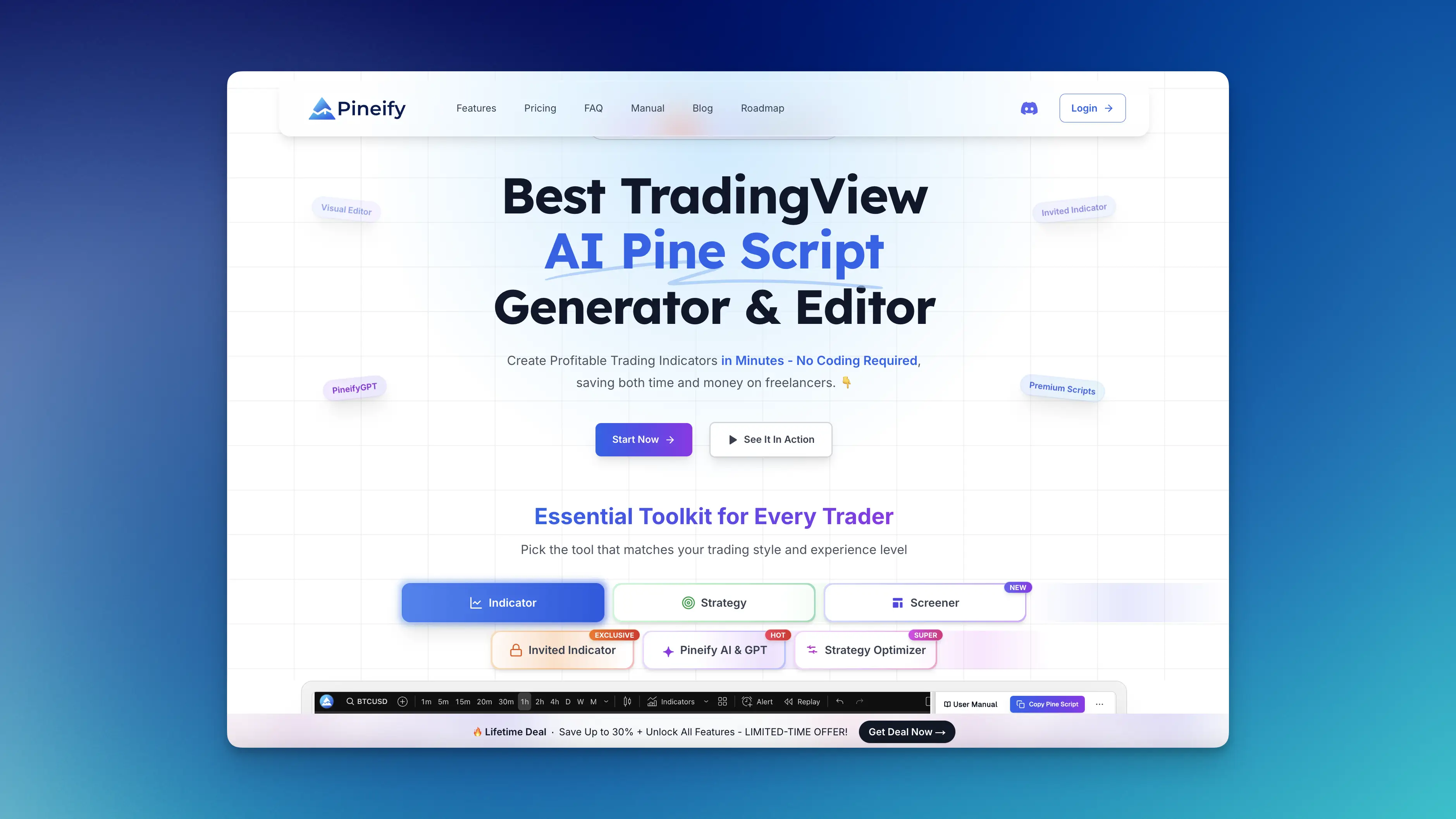
Try Pineify's AI Finance Agent for free. Go to pineify.app/finance-agent and ask a question about a stock or SEC filing in plain English. It's the fastest way to see what instant AI analysis feels like.
-
Request an AlphaSense demo if you're at a firm. If you work at a bank, fund, or larger institution, AlphaSense's document comparison, broker research, and team tools are built for your workflow.
-
Test both on the same company. Pick a ticker you know - AAPL, MSFT, or TSLA. Find its latest 10-Q. Run the same question through both tools. Notice which gives you clearer, faster answers for how you actually work. For individual traders, Pineify combines AI research with strategy builders and backtesting tools, making it a versatile option for the full trading workflow.
-
Share this with a colleague. Real comparisons from people who use these tools daily are the most useful guide when choosing.
The right tool isn't the one with the bigger price tag - it's the one that helps you find answers faster and fits your actual workflow and budget.