Best Order Flow Indicator TradingView: Spot Trades With Volume Data

Order flow trading is a method that reveals the live battle between buyers and sellers behind every price movement. Instead of relying on lagging indicators that tell you what already happened, order flow shows you who's being more aggressive at each price level in real time. Most traders look at candles and think they see the story. But those candles are summaries — order flow is the raw footage. Understanding the imbalance between buying and selling pressure gives you a clearer read on where price might go next.
What Order Flow Trading Really Means
Order flow combines three things: price, time, and volume. It tracks how much was bought and sold at each specific price, moment by moment. A candle might close higher, but order flow can tell you if that move had strong buying behind it or just a lack of sellers.
The core idea is spotting imbalances. When buyers are more aggressive and persistent than sellers at a certain price, price tends to push up. When sellers overwhelm buyers, you get downward pressure. These imbalances often show up before a big move, which is why traders watch them closely. I've been tracking CVD on ES futures since January and the divergences have saved me from chasing at least four false breakouts already.
Understanding Key Order Flow Indicators on TradingView
Cumulative Volume Delta (CVD)
CVD tracks the running difference between buy orders (trades at the ask price) and sell orders (trades at the bid price). It adds up that difference over your chart session.
When the CVD line rises, more volume is hitting the ask — buyers are aggressive and there's underlying buying pressure. A falling line means sellers are in control. The real edge comes from watching for divergences. If price makes a new high but CVD flattens or drops, buying momentum is fading. That's a potential reversal signal.
I prefer using CVD on 5-minute charts for intraday moves. On AAPL during March 2026, a clear CVD divergence appeared three bars before a 3% pullback — the price kept climbing but the delta went flat. That's the kind of signal you don't get from a simple RSI or MACD.
Volume Profile & Order Flow Profile
A regular chart shows price over time. Volume Profile shows you price over volume. It answers: at which prices did the most trading happen?
The indicator splits a period (day, week, or session) into horizontal levels and calculates how much volume traded at each one. It also shows whether that volume was mostly buying or selling. The result is a histogram on the side of your chart that highlights high-volume nodes (points of control) and low-volume areas (gaps).
High-volume nodes often act as support or resistance because so many trades happened there. When price moves through a low-volume area quickly, it means there's little friction. I prefer Volume Profile over horizontal support/resistance lines for ES futures — the high-volume nodes feel more grounded in actual market activity, not just where someone drew a line.
Footprint Charts
Footprint charts zoom into a single candlestick and show the exact buyer-seller battle that formed it.
Each bar divides into individual price increments (ticks). Within each increment, you see numbers for volume traded and colors (green/red) showing whether a buyer or seller initiated the trade. You can spot order imbalances instantly — a lot of green at the low of a bar means aggressive buying stepped in to stop a drop.
This is useful for fast markets like crude oil or NQ futures. It shows you not just what price did, but how it moved. I haven't tested footprint charts on low-cap crypto pairs, so I won't claim they work the same there.
Advanced Tools: CVDΔ and Multi-Timeframe Context
For a fuller picture, combine signals. CVDΔ (CVD Change) focuses on the order flow of the current bar — net buying or selling right now.
Pair it with VWAP (Volume Weighted Average Price). Is price above or below VWAP? Is the VWAP line sloping up or down? That tells you the short-term trend context.
Adding Previous Day Confluence highlights key zones. This tool measures how far current price is from yesterday's high, low, close, and VWAP, expressed in ATR units. These levels are watched by many traders and algorithms, making them likely areas for a price reaction or a pause in the trend. On NQ 5-minute charts, I've seen CVD divergences signal pullbacks about 70% of the time over the past three months when combined with previous day VWAP.
How to Use Order Flow Indicators on TradingView
Getting Your Charts Ready
TradingView has built-in tools for volume analysis. To get the basic footprint chart (called "Cluster"), right-click on your chart. Look for "Volume Analysis" and click it. This unlocks the footprint view.
A quicker way: select "Show toolbar" from that same right-click menu. A toolbar appears at the bottom of your chart, and you can click the "Cluster" option there.
For more specialized tools, the TradingView community has free scripts. Click the Indicators button and search for:
- "Volume Orderflow Profile" — shows where volume clusters at different prices.
- "Cumulative Volume Delta" — tracks buyer vs seller aggression over time.
- "Volume Delta" — snapshot of buying vs selling pressure on each bar.
If you get serious about this, TradingView's Premium plans offer advanced footprint tools and real-time data. For a broader comparison, check out TradingView vs TC2000: Which Trading Platform Is Right for You?.
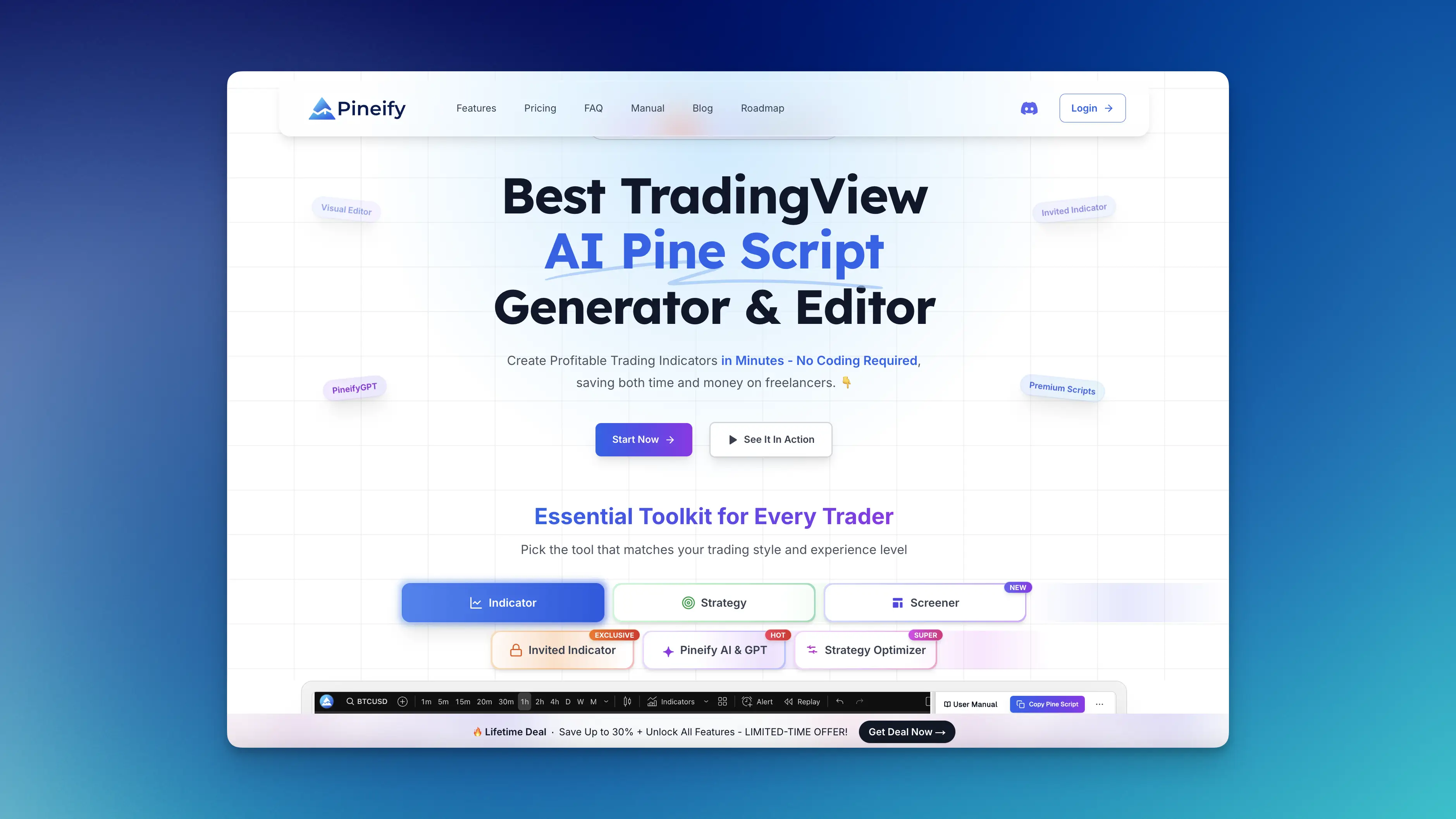
The real edge is creating your own custom indicators that match your strategy. A tool like Pineify lets you build a custom Volume Delta or Order Flow Profile indicator using a visual editor — no coding required. You can combine multiple volume-based signals into one clean script instead of cluttering your chart with a dozen community indicators. For a deeper look at building scripts without code, see How to Add Custom Script in TradingView.
Reading the Signals: What to Look For
The real power comes from combining tools. Use the big picture to find the area, and the details to find the entry.
- Find the Important Zones First. Start with Volume Profile. It draws a histogram on the side of your chart showing price levels where a lot of trading happened. These are like magnet zones for price.
- Pinpoint Your Timing. Switch on the footprint chart. Inside each candle, look for big imbalances — a bar where buying volume vastly outweighs selling, or vice versa. That can signal a turning point or a continuing move.
- Get Confirmation. Watch the Cumulative Volume Delta (CVD). If price rises and CVD rises, it confirms strong buying. If price falls but CVD is flat or rising, selling pressure might not be as strong as it looks.
Pro Tip: The heatmap feature shades areas of high activity. These shaded zones often become solid support or resistance. It's one of the easiest ways to spot where price might pause or reverse.
Not every breakout is real. A price might push above resistance, but without strong volume behind it, it can fail fast. Before jumping into a breakout, check:
- Volume Profile: Is the breakout happening from a high-volume node?
- CVD: Is the delta confirming the move with strong buying or selling?
Volume-based confirmation helps you avoid false moves. To test how your signals would have performed, you can use a strategy builder to backtest them. Pineify's Strategy Editor lets you visually set rules like "Enter long when CVD rises above a key level and price breaks a high-volume node," then backtest across years of data without writing Pine Script. Understanding data timing is also important — see our guide on How Delayed Is TradingView Data: A complete Guide.
Building Your Practice Routine
Before trading with real money, practice on old data. Scroll back through historical charts on your favorite asset and look for order flow imbalances. Try to see how they lined up with big price jumps or drops. Timeframe guide: use Volume Profile on 1-hour or daily for big-picture zones. CVD works best on 5-minute charts for timing entries. Footprint charts shine on 1-minute or tick charts for precision scalping.
| Your Practice Step | The Goal |
|---|---|
| Start with Volume Delta | Understand basic buying/selling pressure. |
| Add Volume Profile | Identify key support/resistance price levels. |
| Backtest on Historical Charts | Spot patterns without risking capital. |
| Keep a Detailed Journal | Connect order flow patterns to price action. |
Join TradingView communities that focus on order flow. There's a lot to learn from watching how experienced traders talk about what they're seeing. Share your own charts and observations. For more on order block theory, check out Best Order Block Indicator TradingView Free.
Why Order Flow Indicators Can Help Your Trading
If you're used to regular charts and indicators, order flow tools feel like turning on the lights in a dark room. They give you a different kind of insight.
You get a heads-up, not a history lesson. Most indicators tell you what already happened. Order flow shows buying and selling pressure as it builds, often before it pushes the price noticeably.
You see the strength behind the move. It's one thing to see price go up. It's another to see if that rise has strong, aggressive buying or just thin, hesitant volume. Order flow helps you tell the difference.
You can spot reversals earlier. When intense buying or selling starts to dry up, you can sense a trend running out of steam. That gives you an earlier signal that a move might be about to change direction.
I don't think order flow replaces good risk management or higher-timeframe analysis. It adds a layer of context — it helps answer the "why" behind a price move. If you're interested in heatmap-style visualization, Bookmap TradingView: The Guide to Order Flow Heatmaps covers another way to see the same data.
Trading Smarter: What to Watch Out For
Order flow indicators are useful, but it's easy to fall into common traps. Think of them as one tool in a larger toolbox.
1. Don't Use Order Flow Alone You might see what looks like massive buying pressure at a certain price. But is it strong hands accumulating? Or a wave of stop-loss orders getting triggered? You can't tell from order flow alone.
Always zoom out first. Check the broader market structure on a higher timeframe. Look for confirmation from other areas — simple price action or momentum indicators — before you enter a trade.
2. Volume Isn't a Simple Signal High volume grabs your attention, but it doesn't have a single meaning. It's not an automatic "reversal here" sign.
Sometimes heavy volume means the market is pausing to catch its breath before continuing the trend. Always pair volume clusters with what price is actually doing. Is it struggling to break through? Is it bouncing decisively? That combination is what helps you spot genuine support and resistance, not just noisy levels.
3. Start Simple Don't overload your chart. Add one indicator at a time. Start with Volume Delta to get a clear picture of buyer vs seller control. Once you're comfortable, layer in the Volume Profile to spot crucial price levels.
For more on volume-based analysis from a Pine Script angle, Pine Script Volume Profile: A Powerful Tool for Traders covers building custom volume tools.
Thinking about trying order flow on TradingView? It looks intimidating at first, but it's really about understanding the tug-of-war between buyers and sellers. A few common questions get asked a lot.
Frequently Asked Questions
What is order flow trading?
Order flow trading analyzes the real-time battle between buyers and sellers by looking at price, time, and volume data together. Instead of relying on lagging indicators, it shows you who's being more aggressive at each price level, helping you spot imbalances before they show up on the price chart.
What is the difference between Volume Profile and CVD?
Volume Profile shows total volume traded at each specific price level over a set period — a horizontal histogram that helps identify key support and resistance zones. CVD (Cumulative Volume Delta) tracks the running total of buying versus selling pressure over time as a line on your chart. Volume Profile tells you where trading happened; CVD reveals the ongoing flow of that pressure.
How do I set up order flow indicators on TradingView?
Right-click your chart and select "Volume Analysis" to enable the basic footprint chart (called Cluster). For more tools, click the Indicators button and search for community scripts like "Volume Orderflow Profile," "Cumulative Volume Delta," and "Volume Delta." Premium TradingView plans offer advanced footprint tools with real-time data for deeper analysis.
Are order flow indicators free on TradingView?
A lot of solid order flow tools are free through TradingView's community scripts library. But advanced features like real-time footprint charts and institutional-grade volume tools need a paid Premium or Pro+ plan. You can do a lot with free tools, but premium options give you deeper data.
Can order flow indicators predict price movements?
No, they can't predict. They reveal real-time evidence of who's winning the battle between buyers and sellers. That gives you a high-probability insight into what might happen next, especially when you combine it with support and resistance levels and good risk management. They're an edge, not a crystal ball.
What timeframe works best for order flow indicators?
They work best on shorter timeframes like 1-minute or 5-minute charts, where instant imbalances between buyers and sellers are clearest. A common approach is to use a higher timeframe (like the 1-hour) for overall trend direction, then drop to a lower timeframe to find precise entry points using order flow signals.