Best Indicators on TradingView for Enhanced Trading Decisions

Trading can feel overwhelming when you're staring at a blank chart. That's why I've put together this guide on the best TradingView indicators that actually make a difference in your trading decisions. After years of testing different tools and watching what works in real market conditions, these are the indicators I rely on daily.
Understanding Trading Indicators: Your Chart Reading Companions
Trading indicators are like having experienced traders whispering insights in your ear. They analyze price and volume data to reveal patterns that might not be obvious at first glance. Some indicators excel at spotting momentum shifts, others help identify overbought or oversold conditions, and some simply make market trends crystal clear.
The secret isn't using every indicator available – it's finding the right combination that matches your trading style and gives you confidence in your decisions.
Essential TradingView Indicators Every Trader Should Know
RSI: Your Market Temperature Gauge
The Relative Strength Index remains one of my go-to tools for understanding market momentum. When RSI climbs above 70, it often signals that an asset might be overbought and due for a pullback. Below 30? That could indicate oversold conditions and a potential bounce.
What makes RSI particularly valuable is its reliability across different timeframes. Whether you're day trading or swing trading, this indicator provides consistent insights into market psychology. For traders wanting to dive deeper, I've found that combining RSI with other indicators creates even more powerful signals – check out this comprehensive guide on Bollinger Bands RSI combo strategies that shows exactly how these indicators work together.
MACD: The Momentum Detective
The Moving Average Convergence Divergence indicator might look complicated initially, but it's actually quite intuitive once you understand what it's showing you. MACD reveals the relationship between two moving averages and helps spot when momentum is shifting.
When the MACD line crosses above the signal line, it typically indicates building upward momentum. A cross below might suggest the start of a downtrend. The histogram shows the strength of these signals, making it easier to time your entries and exits.
Bollinger Bands: Reading Market Volatility
Bollinger Bands create a dynamic channel around price action, expanding during volatile periods and contracting when markets are calm. The beauty of this indicator lies in its adaptability to changing market conditions.
When price touches the upper band, it often signals potential resistance. Touch the lower band, and you might be looking at support. The squeeze and expansion patterns help anticipate major moves before they happen. For those interested in the technical calculations behind these bands, this comprehensive Bollinger Bands guide breaks down everything you need to know.
Volume Profile: Where the Real Action Happens
Volume Profile shows you exactly where the most trading activity occurred at different price levels. These high-volume areas often become significant support and resistance zones in future price action.
Think of it this way: if thousands of traders bought shares at $100, that level becomes psychologically important. When price returns to $100, those traders might defend their position (creating support) or sell to break even (creating resistance).
Understanding volume patterns helps you identify where smart money is positioned. The Chaikin Oscillator guide explores similar volume-based concepts that complement Volume Profile analysis perfectly.
Advanced Indicators for Sophisticated Analysis
ADX: Measuring Trend Strength
The Average Directional Index doesn't tell you which way the market is moving – it tells you how strongly it's moving in any direction. ADX readings above 25 typically indicate a strong trend, while readings below 20 suggest a ranging market.
This distinction is crucial for choosing the right trading strategy. Trend-following indicators work best in strong trending markets, while oscillators perform better in ranging conditions. For detailed insights on trend analysis, the ADX and DI indicator guide provides practical applications for different market scenarios.
Stochastic Oscillator: Fine-Tuning Your Entries
The Stochastic Oscillator helps identify overbought and oversold conditions with remarkable precision. Unlike RSI, which looks at price changes, Stochastic compares the current closing price to the price range over a specific period.
This subtle difference makes Stochastic particularly effective for timing entries in trending markets. When combined with other trend indicators, it can significantly improve your success rate.
Building Custom Indicators Without Coding
Traditional indicator development required learning Pine Script or hiring expensive developers. That's changed dramatically with visual indicator builders that let you create sophisticated trading tools without writing a single line of code.
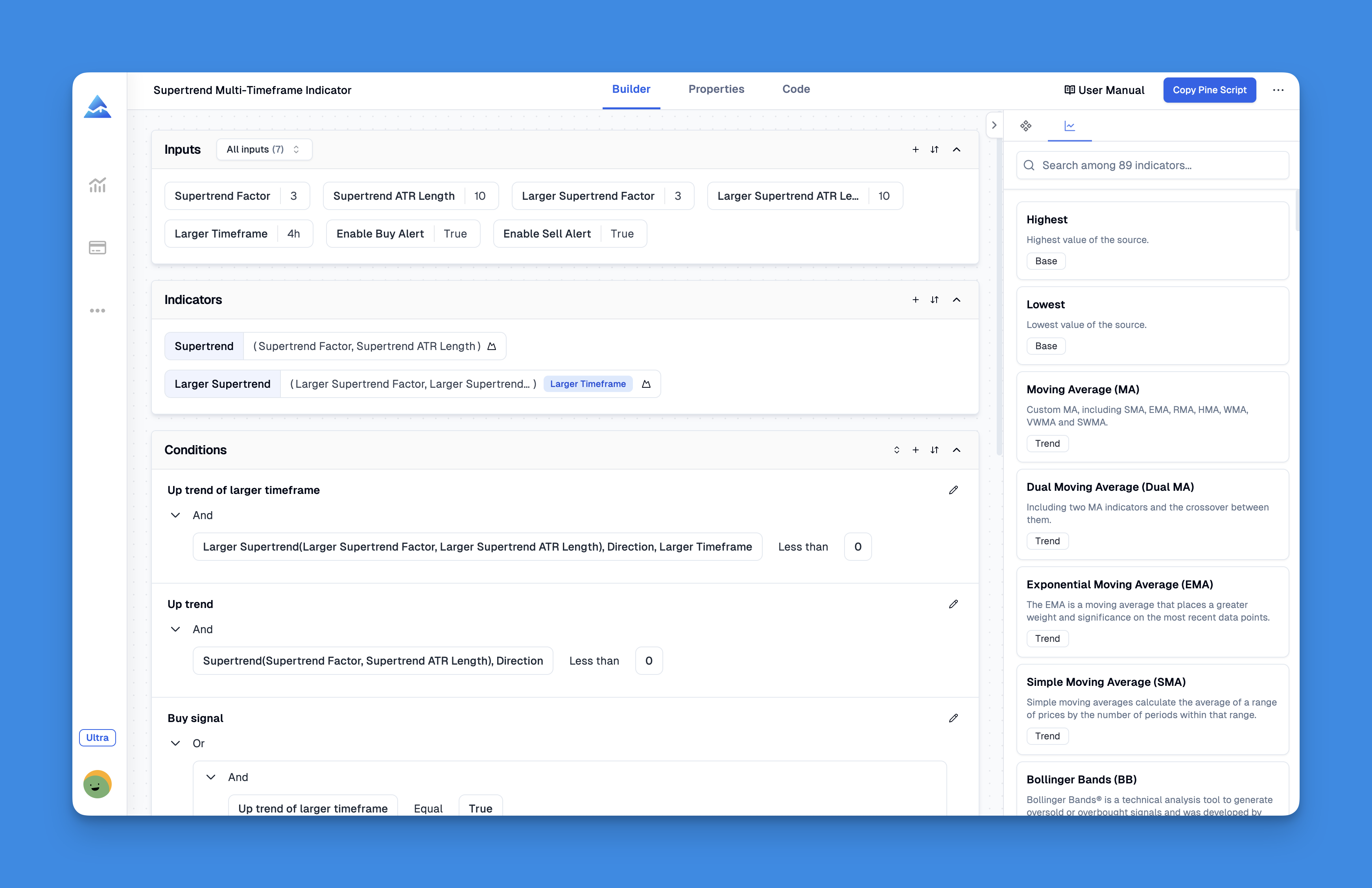
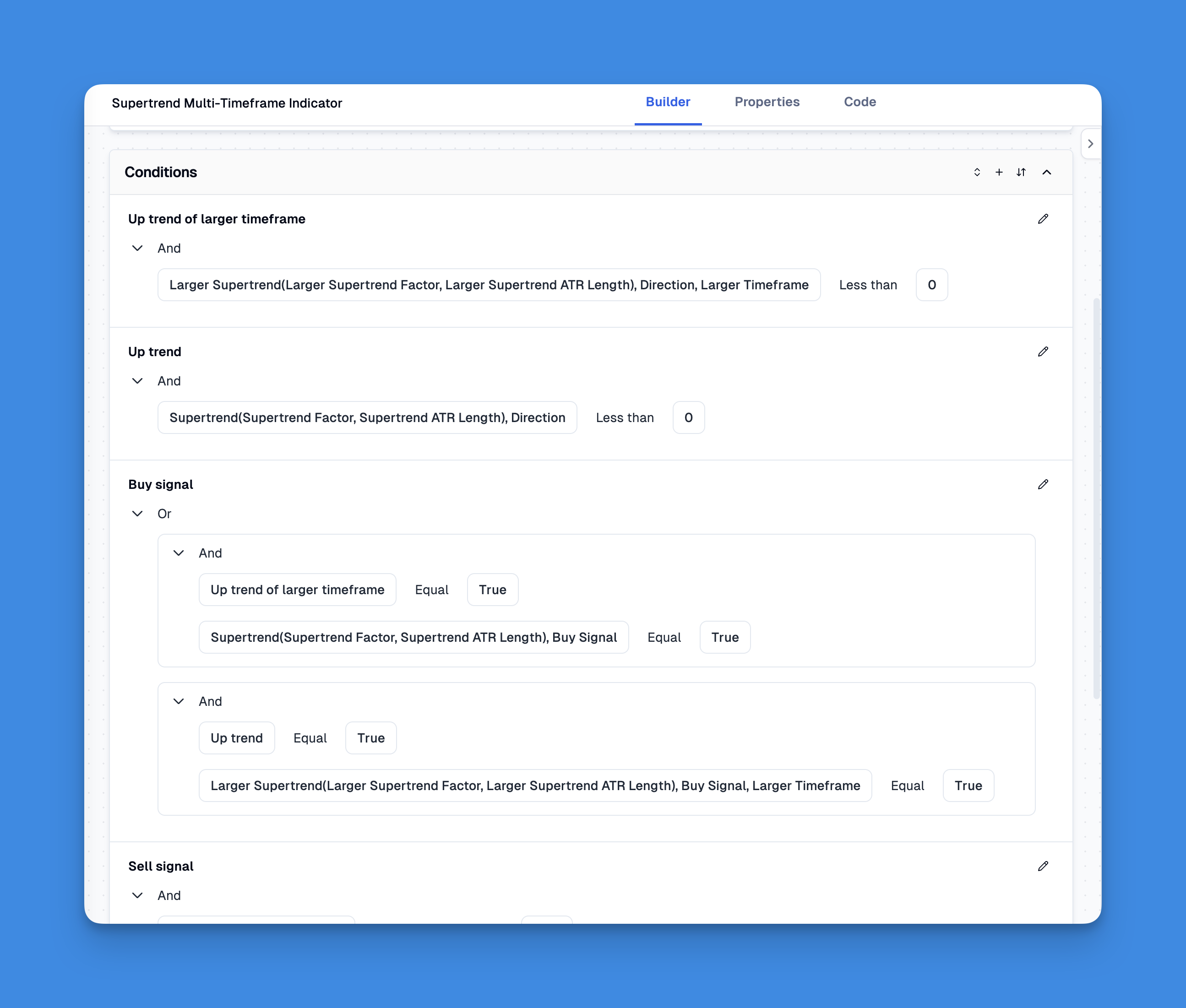
I've been using Pineify for creating custom indicators, and it's transformed how I approach technical analysis. The drag-and-drop interface makes it simple to combine multiple indicators, test different parameters, and optimize strategies based on historical data.
What's particularly impressive is how it bypasses TradingView's indicator limits. Even free TradingView accounts can load unlimited custom indicators when using these tools. You can explore all available features here.
Combining Indicators for Maximum Effectiveness
The real power emerges when you start combining indicators strategically. Here's how I approach multi-indicator analysis:
Trend Confirmation: Use ADX to confirm trend strength, then apply RSI or Stochastic for precise entry timing. If ADX shows a strong trend but RSI indicates oversold conditions, you might wait for RSI to turn upward before entering.
Volume Validation: Always check volume patterns when price reaches key levels identified by Bollinger Bands or Volume Profile. High volume at these levels adds credibility to potential reversals or breakouts.
Momentum Divergence: Watch for divergences between price and momentum indicators like MACD or RSI. When price makes a new high but MACD doesn't confirm, it often signals weakening momentum and potential reversal.
Practical Application Tips
Start with one or two indicators and master them completely before adding more. I recommend beginning with RSI and MACD since they complement each other well and work across various market conditions.
Test your indicator combinations on historical data before risking real money. What works in trending markets might fail during sideways periods, so understand how your chosen indicators perform in different environments.
Remember that indicators are tools, not crystal balls. They help interpret market data, but they can't predict the future with certainty. The best trading decisions combine indicator signals with proper risk management and market context.
Looking Beyond Basic Indicators
Once you're comfortable with fundamental indicators, consider exploring more specialized tools. Moving average ribbons can provide clearer trend visualization, while oscillators like the True Strength Index offer alternative momentum perspectives.
The key is finding indicators that align with your trading personality and timeframe. Day traders might prefer faster, more responsive indicators, while swing traders often benefit from smoother, less noisy signals.
Final Thoughts
The best indicators are the ones you understand thoroughly and can apply consistently. Rather than chasing the latest indicator or trying to use everything available, focus on mastering a core set of tools that work well together.
Start simple, test thoroughly, and gradually build complexity as your experience grows. Remember, successful trading isn't about having the most indicators – it's about making better decisions with the information you have.
The indicators I've covered here form a solid foundation for technical analysis on TradingView. Combined with proper risk management and a clear trading plan, they can significantly improve your market timing and decision-making process.