The best TradingView strategy for a particular task is one whose rules, execution assumptions, and risks can be evaluated. A MACD/RSI combination does not have an inherent win rate, and a timeframe does not come with a return target. Start with one testable hypothesis, then compare it with a simpler baseline under identical conditions.
TradingView's Strategy Tester reports simulated orders from a Pine Script strategy. A useful test needs explicit trading rules, appropriate data, and an execution model that matches the question you are asking. No profit-factor threshold or optimizer can establish those conditions for you.
A support or resistance indicator is a rule for selecting reference prices. To compare tools, ask which data they require, when each level becomes available, and what causes it to change. Pivots, VWAP, Volume Profile, and Fibonacci retracements can disagree because they summarize different inputs rather than because one is necessarily wrong.
A take profit indicator draws a proposed exit level from rules you choose. It does not discover an optimal price, guarantee a fill, or automatically close a brokerage position. On TradingView, distinguish four separate things: a displayed level, an alert, a strategy's simulated order, and an actual broker order.
TradingView chart colors control the distinction between candles, indicators, drawings, and the background. A useful palette makes each object identifiable in your actual display and lighting conditions. No single color scheme establishes a trading edge, and the palettes below are examples rather than tested health or performance recommendations.
What are the best TradingView signal indicators to combine? Start by treating a signal as a condition calculated from data, such as a line crossing another line. It is not automatically a probability estimate, a complete trading strategy, or an executed order. Choosing an indicator starts with understanding its calculation and the event you want to observe.
A list of strategies advertised as the “best of 2025” is only useful if the results can be reconstructed. This article does not establish a verified winner or a live trading record for the named systems in earlier versions of this page. It provides concrete strategy candidates and a way to assess 2025 claims without treating hindsight as evidence available at the time.
A TradingView Pine strategy simulates orders using a broker emulator. It can help compare explicit crypto trading rules, but a chart signal is not a live exchange order and a favorable historical result is not proof that a setup will remain profitable. Start by fixing the exact market, rules, and assumptions you intend to test.
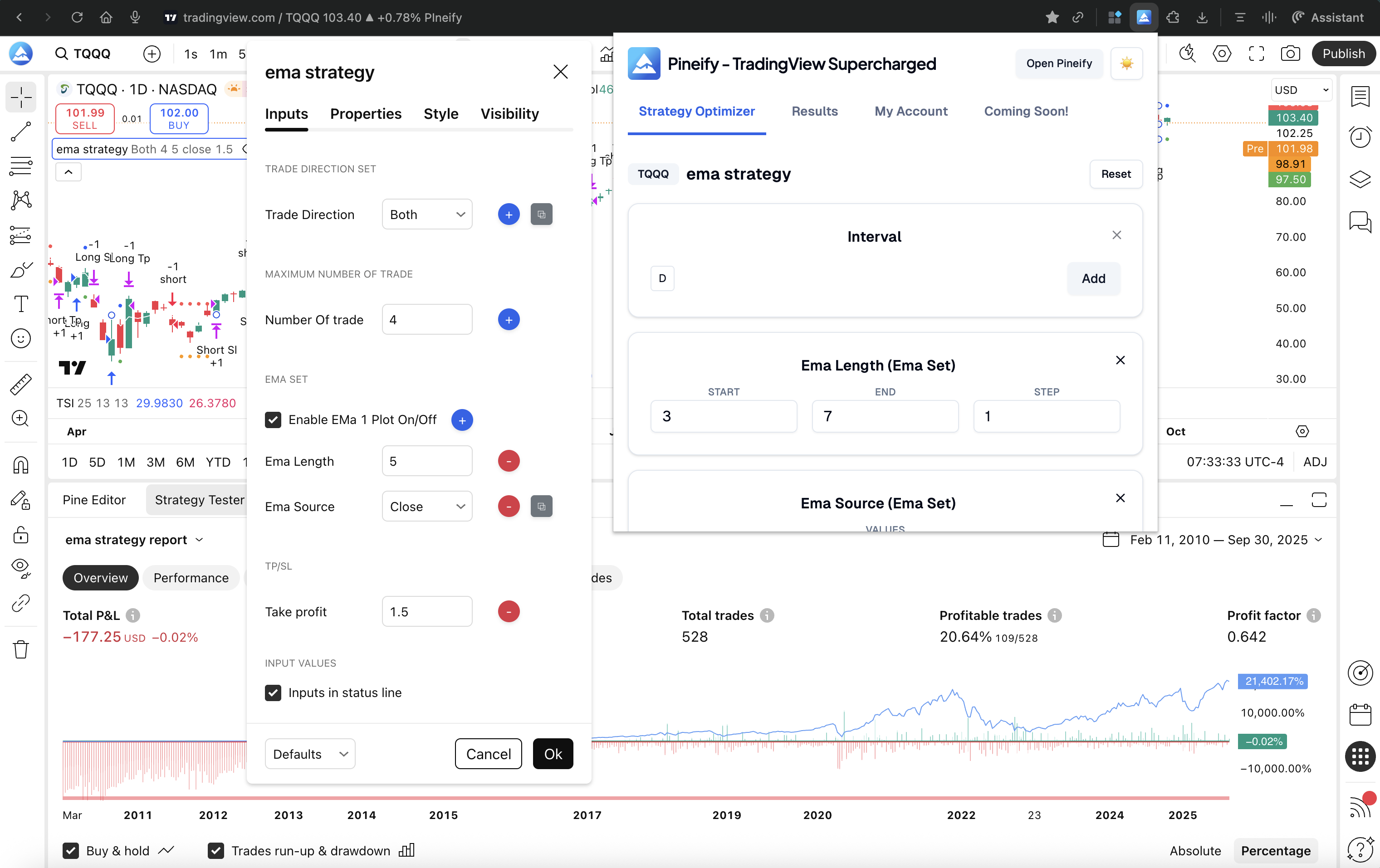
A strategy optimizer searches a specified set of inputs and records historical results. Its highest-ranked row is the best result among the tested combinations under the selected assumptions, not a proven best strategy. Compare tools by the execution engine, supported inputs, and records they leave for independent review.
This guide is published by Pineify. The product descriptions below are based on documented functions, not a personal test ranking or an observed improvement in returns.
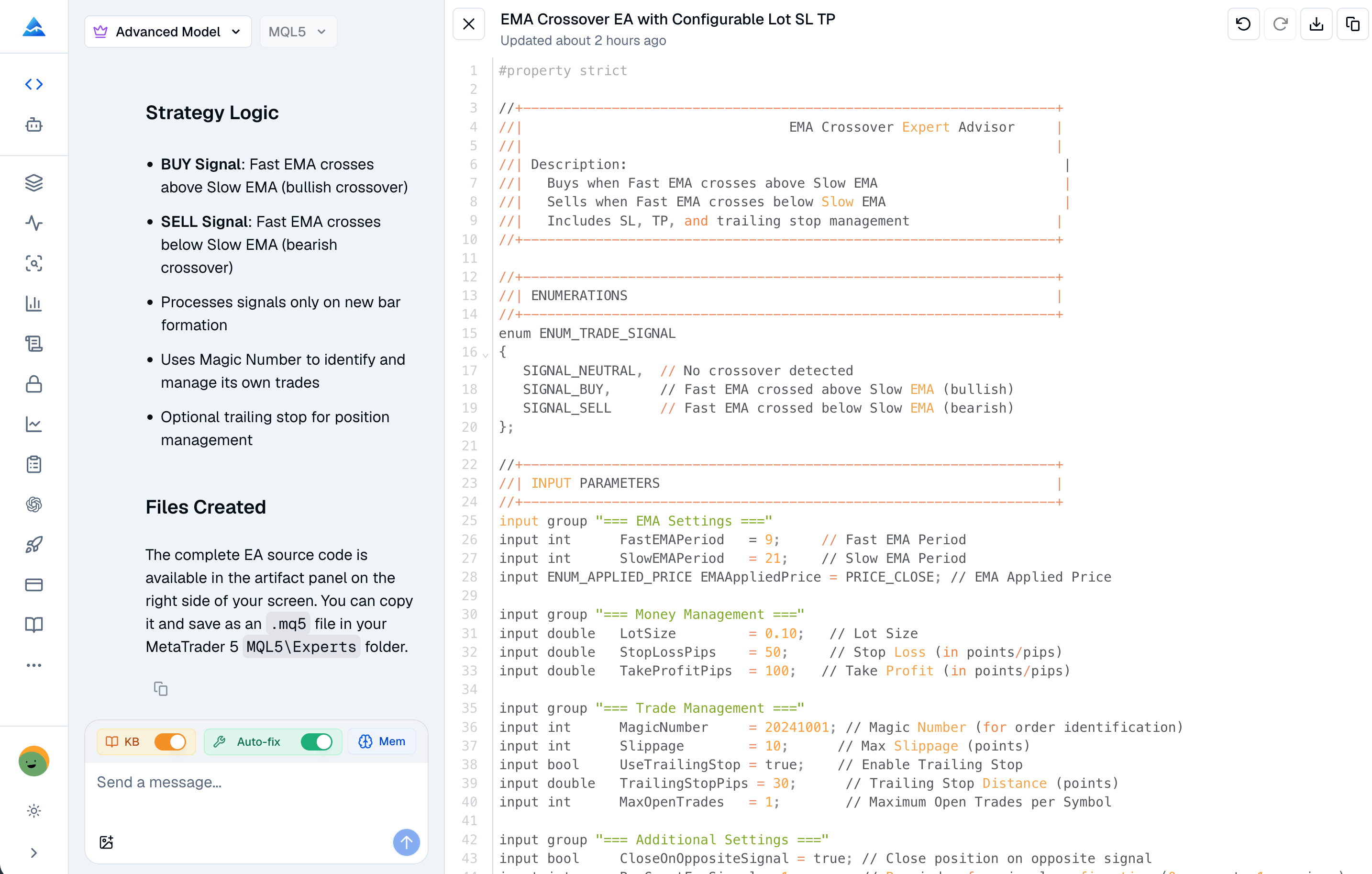
An MQL4 coding AI can draft an MT4 Expert Advisor, indicator or utility script from a written specification. The useful output is a reviewable source file and a repeatable test process. A generated file is not automatically compilable, equivalent to your intended rules or ready to trade live.