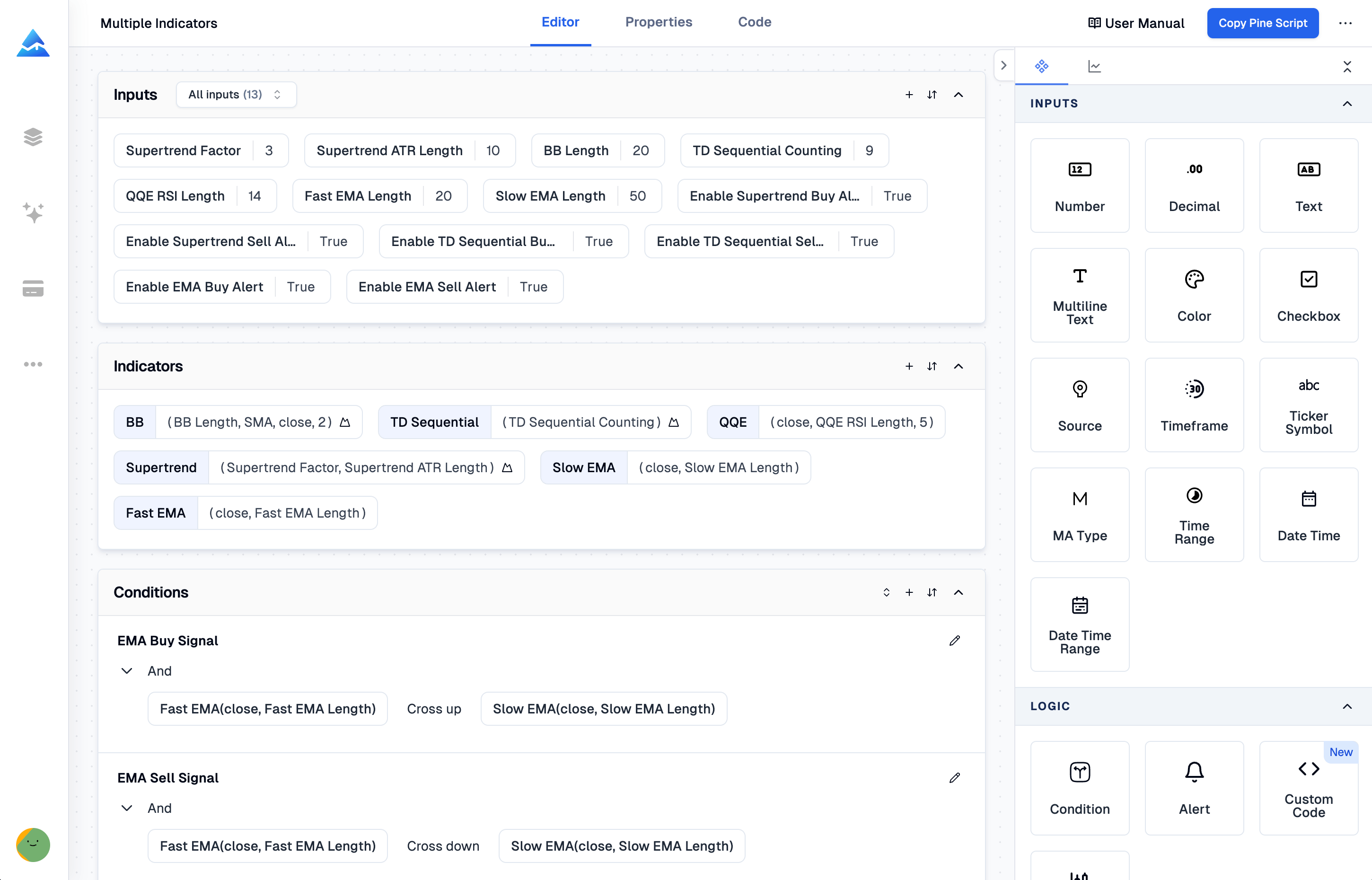
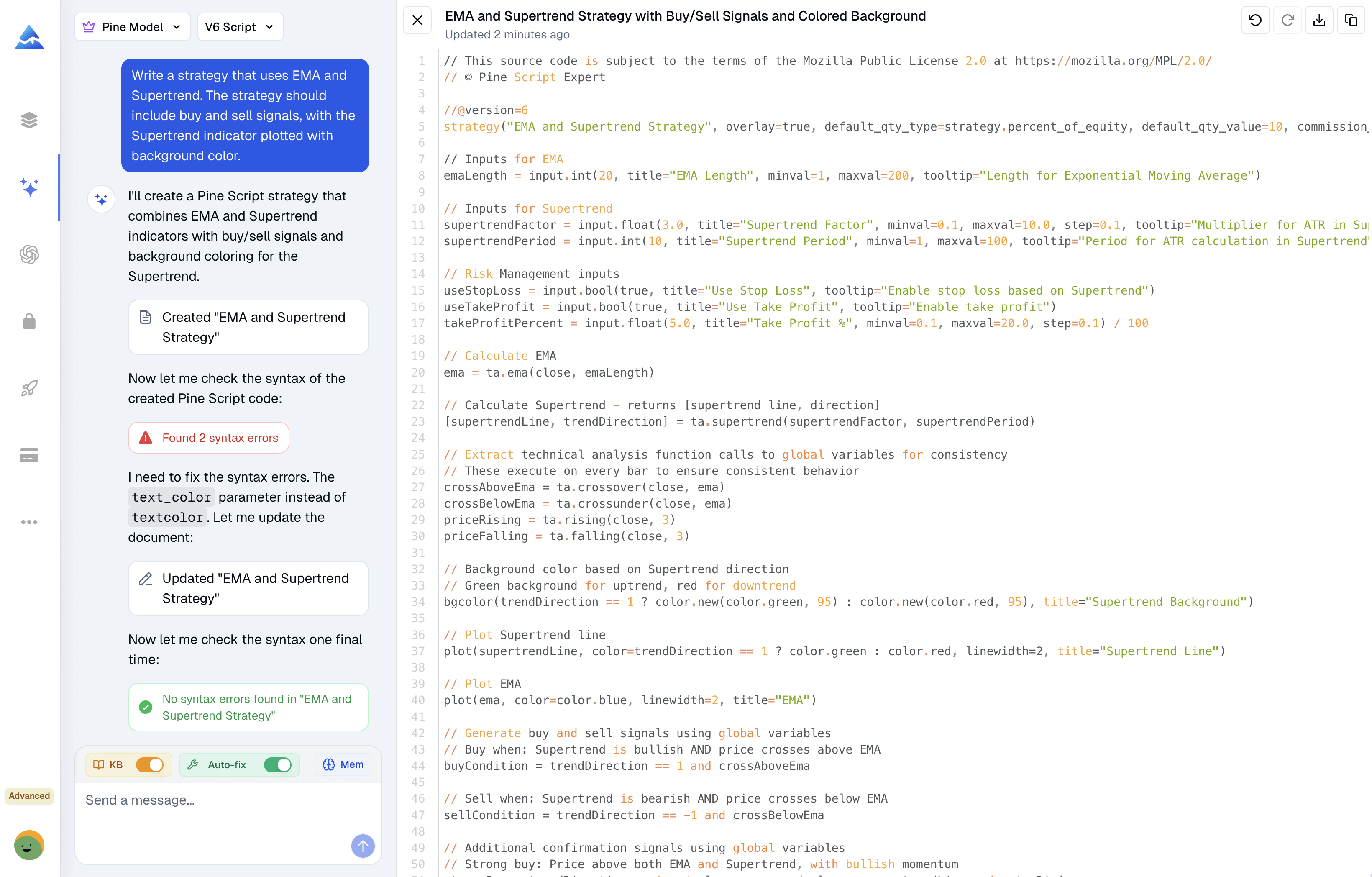
A no-code Pine Script editor is a workflow that replaces some source editing with configuration controls or natural-language requests. It can make supported rules easier to express, but the output still needs compilation and behavior checks. The key selection question is whether the workflow represents the rule you intend to test.
A pullback is a move against a prevailing trend that later resumes. While the move is developing, that continuation is uncertain: the same decline may become a larger reversal. Indicators can define an observable candidate, but they cannot establish in advance that the move is temporary.
TopstepX embeds TradingView charts inside its own trading environment. That is not a login to a personal TradingView account: current TopstepX help says custom indicators and external TradingView connections are unavailable. Chart controls can look familiar while the script library, data entitlement, fees, and order path stay different.
A TradingView alert can send a message to an external execution service. A trade copier for TradingView is a service that replicates supported orders or account activity across eligible accounts. These are separate steps: receiving a signal does not guarantee that every account submits, accepts, or fills the same order.
TradersPost receives trading signals and can route supported orders to a connected brokerage account. TradingView supplies the alert; TradersPost applies the configured strategy and account settings; the broker determines acceptance and execution. Saving an alert alone does not prove that the full path is ready for live trading.
Trading backtesting applies specified rules to historical data under a simulated execution model. It can expose implementation mistakes and describe historical outcomes. A positive result does not prove that the strategy has a persistent edge or that a live account could have obtained the same fills.
An “AI indicator” can mean a model that calculates signals, a conventional indicator written with an AI assistant, or a marketing label. These are different claims. A generated RSI script still uses the RSI calculation; generating it with an LLM does not make the deployed indicator learn from new trades.
TradingView AI Copilot can now create Pine Script indicators and strategies inside TradingView. A separate coding agent such as Pineify offers another drafting and revision workflow. The useful comparison is how each fits your task, not an unsupported claim that one always compiles faster or produces profitable code.
A TradingView algorithm is a rule-based calculation or strategy written in Pine Script. It can display signals, simulate orders, and trigger configured alerts. A Pine strategy does not automatically turn those simulated trades into live broker orders.
“TradingView API” can refer to several different products. Advanced Charts is a library you embed with your own datafeed; a hosted widget is an embeddable display; broker integration is a separate trading workflow. Start by choosing the product that matches your application.