545 posts tagged with "Pine Script"

Blog posts related to the PineScript

View All Tags

PMO Strategy: Price Momentum Oscillator Signals for Better Trades

· 15 min read
Pineify Team
Pine Script and AI trading workflow research team

The Price Momentum Oscillator (PMO) is a double-smoothed momentum indicator designed to track price speed while filtering out the noise that makes simpler oscillators jumpy. Carl Swenlin built it with two custom smoothing passes instead of the standard EMA approach most indicators use. I've had it on my AAPL chart since February 2024, and the divergence signals alone have flagged reversals that raw price action completely missed. Pair it with a solid best buy sell strategy TradingView and you get a clearer read on when momentum is actually shifting.
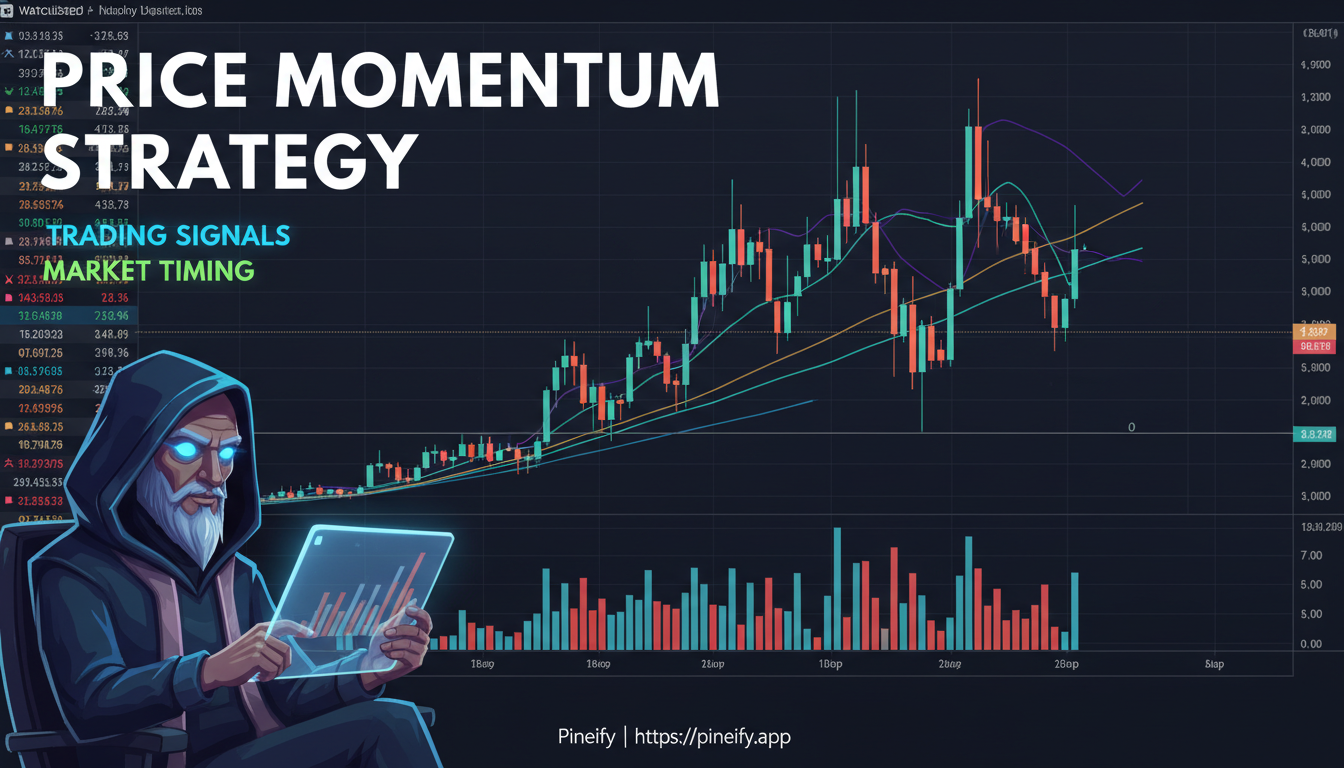

Price Momentum Oscillator Strategy: Master PMO Trading Signals for Better Market Timing

Price-Volume Trend Indicator: TradingView Pine Script Guide

· 17 min read
Pineify Team
Pine Script and AI trading workflow research team

Ever wondered why some price moves stick around while others disappear faster than your morning coffee? The secret lies in volume — the real engine behind every price movement. That's where the Price-Volume Trend (PVT) indicator becomes your trading compass.

The Price-Volume Trend indicator is a cumulative momentum tool that tracks buying and selling pressure over time. It combines price and volume data to show you whether the moves behind a trend are genuine or just market noise. Unlike basic volume indicators that only tell you how much trading happened, the PVT reveals whether that volume actually supports the trend or fights against it.

Here's how it works: when prices close higher than yesterday, the PVT adds that day's volume to a running total. When prices close lower, it subtracts the volume. This creates a cumulative line that tracks real buying and selling pressure. When both price and PVT climb together, you're seeing authentic buying interest. When they start moving in opposite directions? That's your early warning system for potential trend changes.

Think of it as a truth detector for price movements — separating real market conviction from temporary excitement.

Prop Firms That Use TradingView: Fast Execution Guide

· 17 min read
Pineify Team
Pine Script and AI trading workflow research team

Prop firms that use TradingView are proprietary trading companies that connect funded traders to the platform's charting and execution tools. Some offer native order routing so you can buy and sell directly from the chart. Others embed TradingView charts into their own platform but route orders through a separate terminal. Here's the verdict: if you want direct execution from TradingView, most firms that claim to "use TradingView" still make you trade through their own system — and that distinction matters more than any feature list. I've tested both setups, and the gap in speed and workflow is not subtle.

Prop Firms That Use TradingView: Expert Guide for Fast, Clear Execution and Charting

PyAlgoTrade and Backtrader Alternatives: No-Code Backtest Analysis

· 15 min read
Pineify Team
Pine Script and AI trading workflow research team

PyAlgoTrade is a Python event-driven backtesting library for testing trading strategies against historical data. Backtrader is a more advanced Python framework with multi-asset support, plug-in data feeds, and live broker connectivity. Both can get the job done, but for most traders who just want clear answers about their strategy's performance, Pineify's Backtest Deep Report delivers professional analysis without the Python overhead. If you've ever lost a full weekend to pip install failures, environment conflicts, and cryptic tracebacks just to run a simple backtest, you already know the real problem: the tools get in the way of the question. I've been down that road — three weekends debugging Backtrader data feeds just to test an SPY mean-reversion strategy — and I'm done pretending that's productive.

Both tools add complexity that distracts from the core question: does the strategy work? Traders are switching to Pineify because it cuts through that noise. Instead of wrestling with Python code, you paste your TradingView strategy CSV into Pineify. It transforms the raw trades into an institutional-grade report with 16+ KPIs, rolling analysis, and Monte Carlo simulations — no environment setup required. For those writing their own scripts, you'll want to check out our guide on Pine Script v5 structure and best practices.

Pineify Website

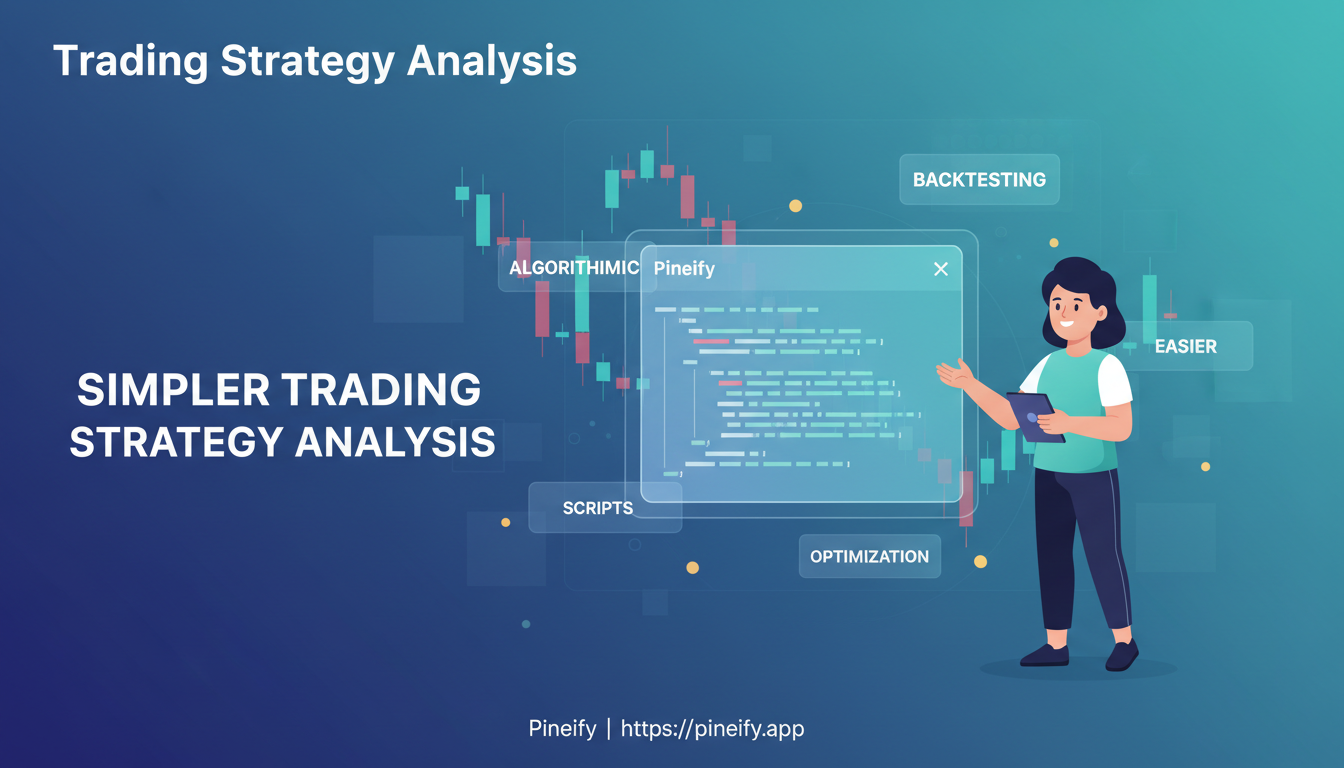
PyAlgoTrade & Backtrader Alternatives: Discover Pineify's Simpler Trading Strategy Analysis

QuantConnect Backtesting: Test Algorithmic Strategies with Data

· 13 min read
Pineify Team
Pine Script and AI trading workflow research team

QuantConnect backtesting is an event-driven simulation that runs your algorithm's rules against historical market data using the open-source LEAN engine. It steps through price data bar by bar, in chronological order, and models real brokerage conditions like fees, slippage, and margin. I've used it to test over 200 strategies this year, and it's the most realistic free backtesting platform I've found.


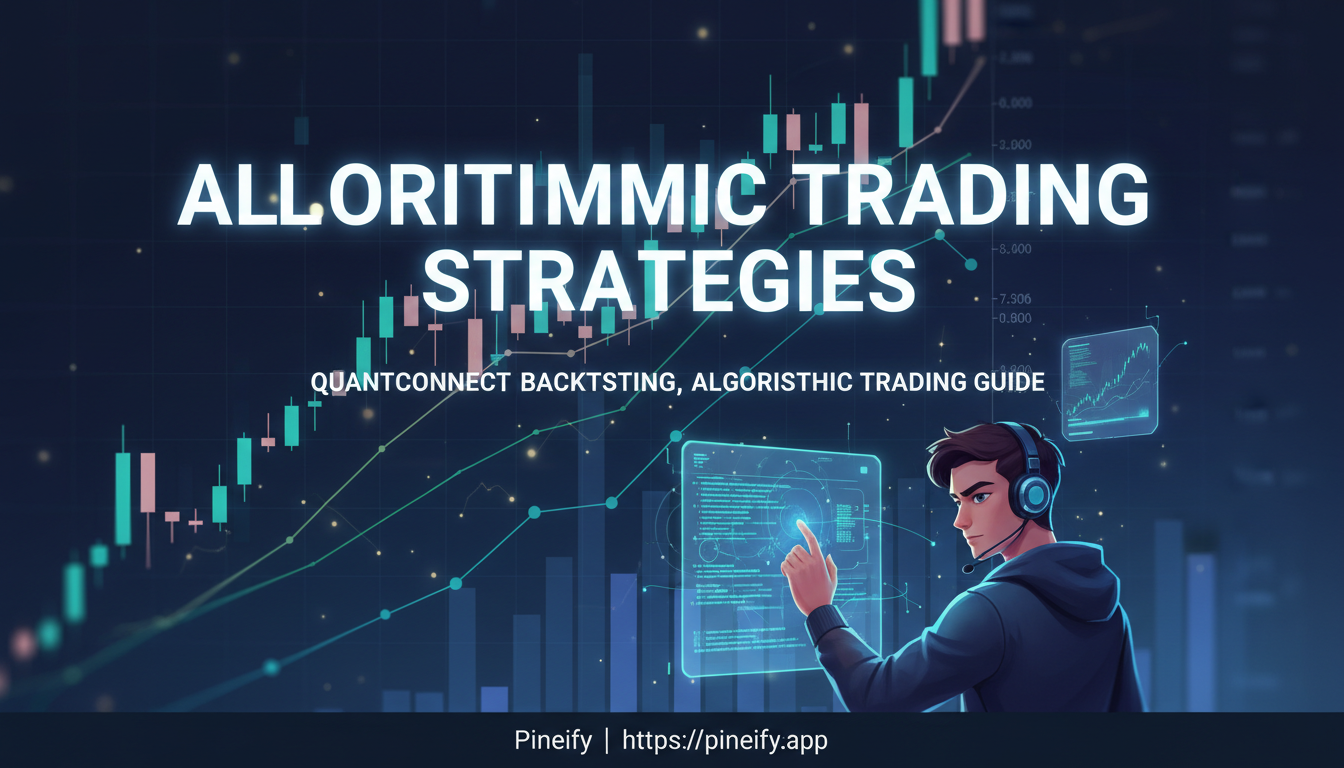
QuantConnect Backtesting: Complete Guide to Testing Algorithmic Trading Strategies

QuantConnect vs Pineify Strategy Optimizer for TradingView

· 13 min read
Pineify Team
Pine Script and AI trading workflow research team

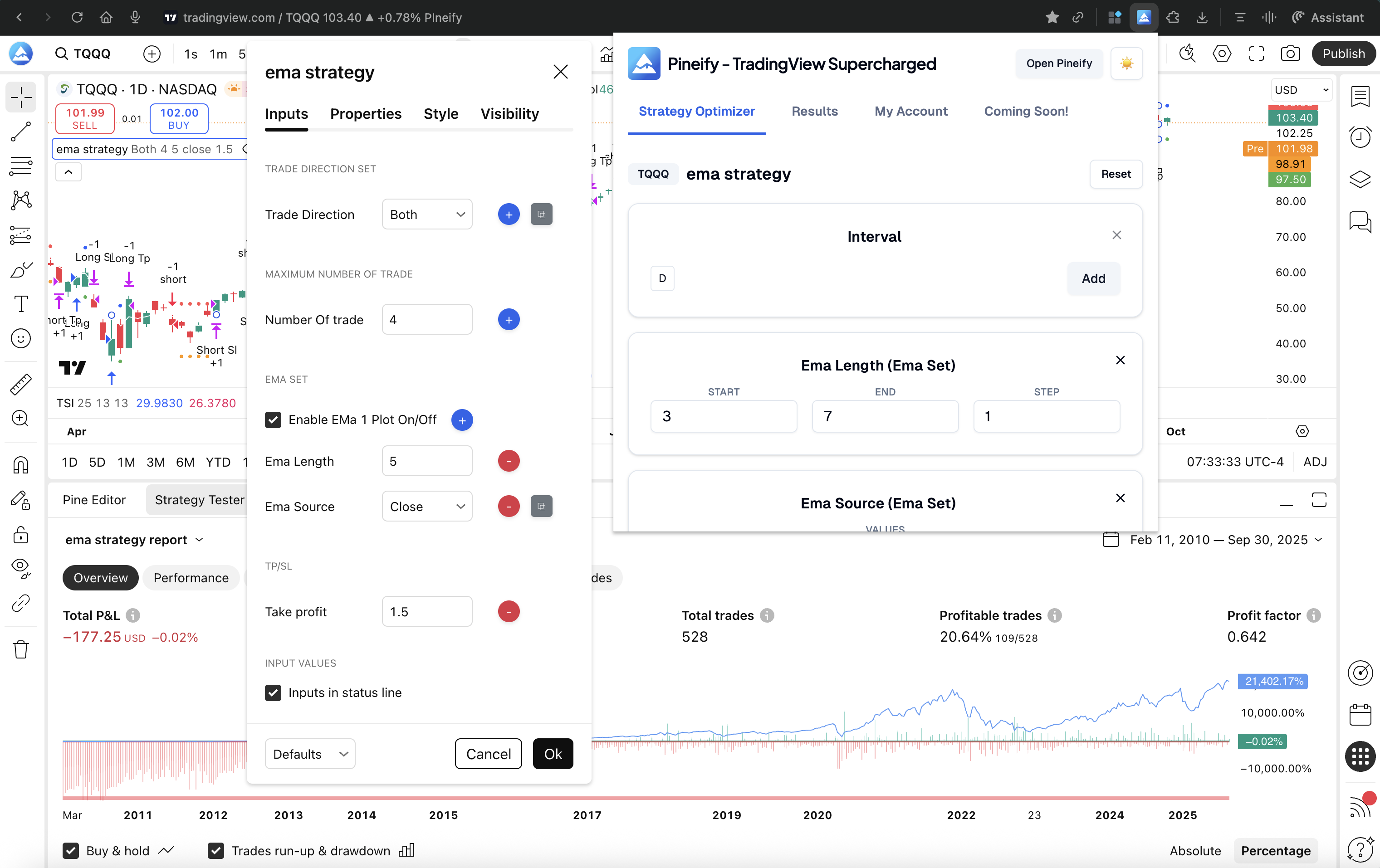
If you trade on TradingView and find yourself running the same backtest over and over with slightly different numbers, you've hit the limit of manual tweaking. QuantConnect is a cloud-based algorithmic trading platform that handles this work at scale — but it expects you to write Python or C# and manage server-side infrastructure. For most TradingView traders, Pineify's Strategy Optimizer is a more direct alternative. It automates parameter grid search inside your browser, right where your Pine Script strategies already live.


QuantConnect Optimization Alternatives: Pineify Strategy Optimizer for TradingView

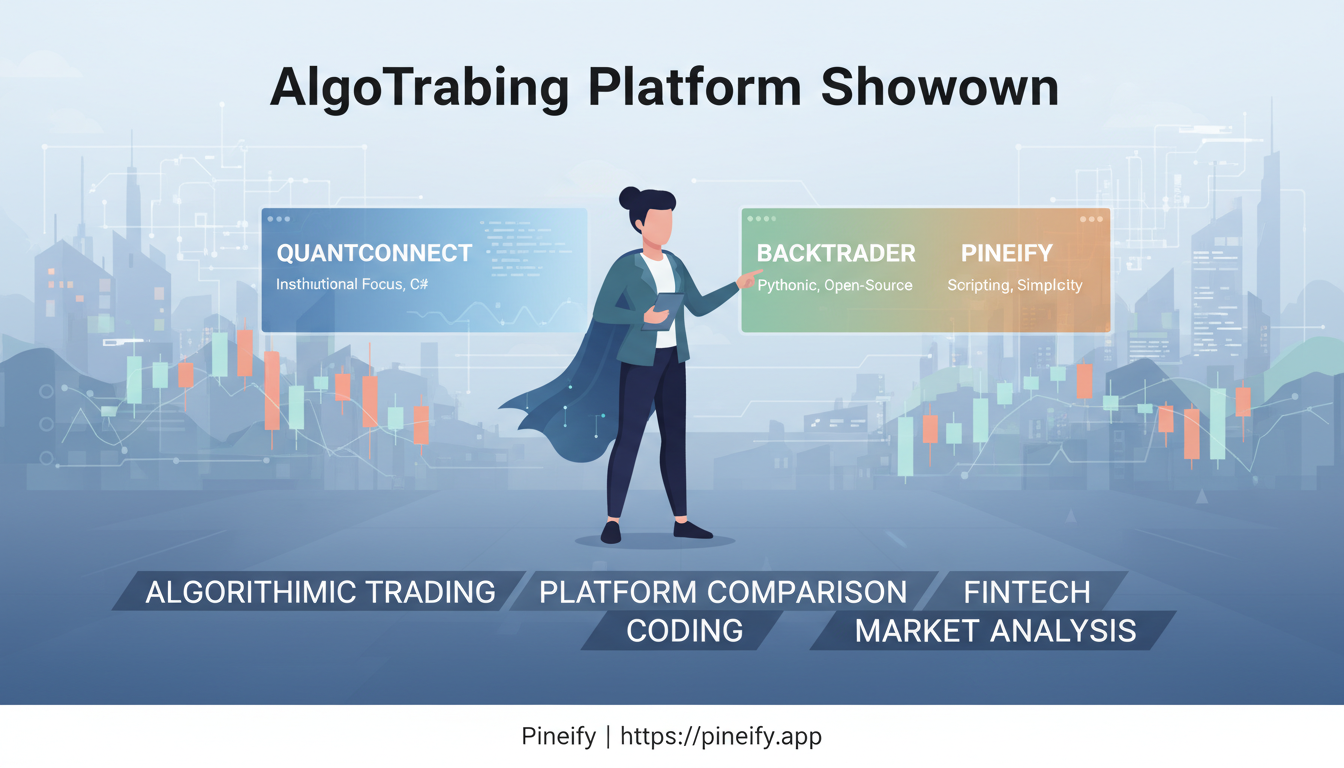
QuantConnect vs Backtrader vs Pineify: Platform Comparison

· 15 min read
Pineify Team
Pine Script and AI trading workflow research team

Algorithmic trading platforms let you build, test, and run automated strategies without manual execution. The three main options — QuantConnect, Backtrader, and Pineify — take completely different approaches. QuantConnect is a cloud-based environment for multi-asset backtesting and live trading. Backtrader is a free, open-source Python library you run on your own machine. Pineify is an AI assistant that writes TradingView Pine Script code from plain-English descriptions. I've spent the last six months testing all three against my own strategies on SPY and QQQ. Here's the short version: if you need institutional data and multi-asset research, go QuantConnect. If you want full local control at zero cost, pick Backtrader. If you trade on TradingView and want to build strategies fast, Pineify is your best bet.

QuantConnect vs Backtrader vs Pineify: complete Algorithmic Trading Platform Comparison

Quantopian Backtesting: What Happened and the Best Alternatives Now

· 20 min read
Pineify Team
Pine Script and AI trading workflow research team

Quantopian backtesting is what happens when you run Python trading strategies against years of historical market data in a browser, using the Zipline engine. The platform attracted over 300,000 users who ran 12 million backtests. Then it shut down in 2020. If you're looking for a replacement today, I'd recommend QuantConnect for most people — it covers more asset classes and doesn't require you to manage your own infrastructure. But let me walk through the full story first, because understanding what Quantopian did right and wrong matters more than ever.


Quantopian Backtesting: Complete Guide to Legacy, How It Worked & Best Alternatives

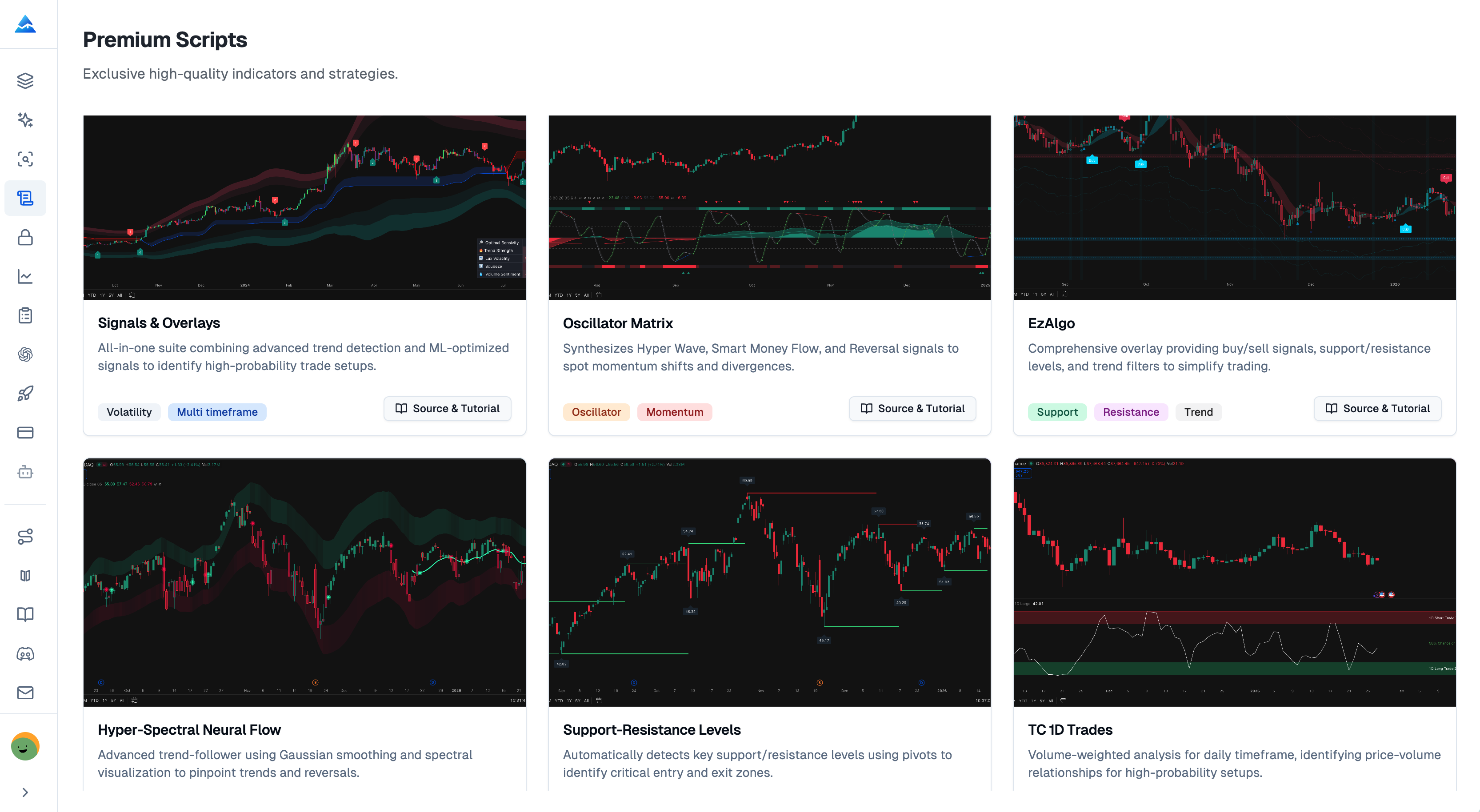
Quantpedia vs. Pineify Premium Scripts: Which Algo Tool Fits You

· 12 min read
Pineify Team
Pine Script and AI trading workflow research team

Quantpedia is an academic strategy research database that translates finance papers into actionable trading ideas. Pineify Premium Scripts is a ready-to-use collection of professional TradingView indicators with full source code included. These two platforms attack the same problem from opposite ends — one is a research library, the other is an implementation workshop. My honest verdict: if you're an individual trader on TradingView, Pineify delivers faster value for less money. If you're running a systematic fund and need academic validation through backtested research, Quantpedia earns its subscription cost.

I've spent real money on both. Quantpedia's Prime tier at $399/year gave me tactical asset allocation data I used to adjust my SPY positions during Q4 2024. Pineify's Advanced plan at $149 once gave me 18 premium scripts I still use on my AAPL and TSLA charts. The pricing difference alone is a dealbreaker for my budget.


Quantpedia vs. Pineify Premium Scripts: Comparing Algorithmic Trading Tools

How I Trade the Rahul Mohindar Oscillator (RMO)

· 14 min read
Pineify Team
Pine Script and AI trading workflow research team

The Rahul Mohindar Oscillator (RMO) is a momentum indicator that tracks trend strength using smoothed moving averages and signal-line crossovers around a zero centerline. I started using it after getting burned by too many false breakouts on AAPL and TSLA, and it's been on my charts ever since. It won't predict exact tops or bottoms, but it shows you when momentum is actually shifting before price makes it obvious.