187 posts tagged with "Indicator"

Blog posts related to the Indicator

View All Tags

ECCI 3TF: Multi-Timeframe CCI Indicator for TradingView

· 14 min read

If you've ever struggled to understand whether a price move is just a short-term blip or part of a larger trend, you know how frustrating it can be. I've spent countless hours flipping between timeframes, trying to piece together the bigger picture. That's exactly why the ECCI 3TF (Enhanced CCI Three Timeframes) indicator has become one of my go-to tools.

The ECCI 3TF solves a common trading problem: seeing momentum across multiple timeframes without cluttering your chart with multiple indicators. By displaying three CCI lines calculated at different period lengths, this indicator shows you whether short-term, medium-term, and long-term momentum are aligned or diverging. In my trading experience, this alignment (or lack thereof) often signals the difference between high-probability setups and traps.

What makes this indicator particularly useful is its elegant simplicity. Instead of switching between timeframes manually, you get an instant visual of momentum convergence. When all three lines point in the same direction, it's like getting a green light from three independent sources. When they disagree, it tells you to proceed with caution.

ECCI 3TF Indicator

CCI Coded OBV Indicator: Volume Analysis with Momentum Color Signals

· 12 min read

Have you ever stared at an OBV line on your chart and thought, "Okay, it's going up... but is this actually a strong move or just noise?" That's the exact problem I ran into for months before discovering the CCI Coded OBV indicator.

This indicator takes the classic On-Balance Volume and adds a layer of intelligence by coloring the OBV line based on the Commodity Channel Index (CCI). When CCI is positive (showing bullish momentum), the OBV line turns green. When CCI goes negative (bearish momentum), the line turns red. It's a simple visual upgrade that completely changes how you read volume flow.

What I've found particularly useful is how quickly you can spot when volume and momentum are aligned versus when they're fighting each other. A rising OBV line that keeps flashing red tells you something very different than a rising green line - and that difference has saved me from plenty of bad entries.

CCI Coded OBV Indicator Chart

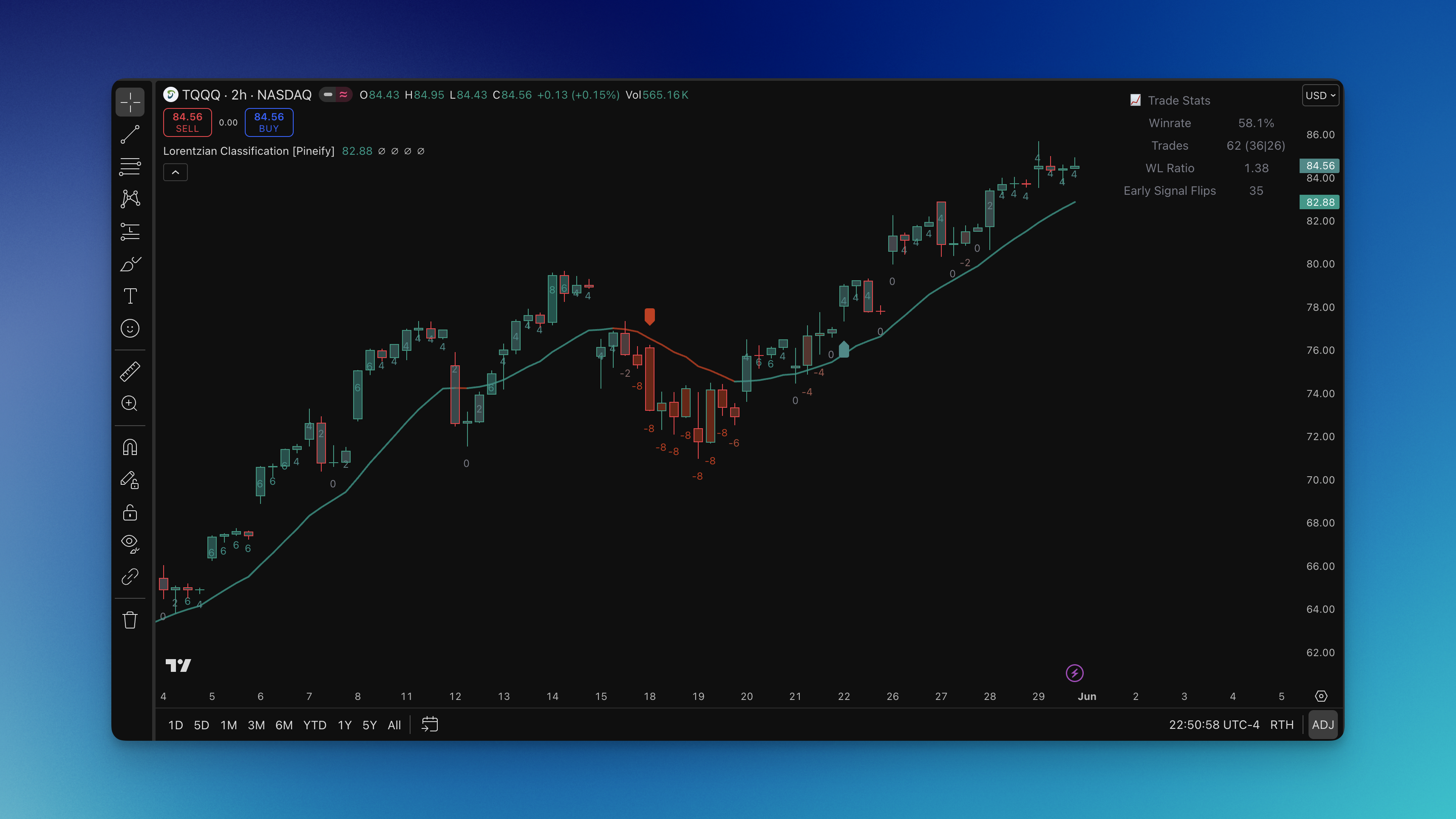
GKYZ-Filtered Non-Linear Regression MA: A Volatility-Adaptive Trend Indicator That Cuts Through Noise

· 12 min read

I've tested dozens of moving averages over the years, and here's what always bothered me about traditional regression-based smoothers: they respond to every little price wiggle, even the ones that don't matter. In choppy markets, that means constant color changes, endless whipsaws, and a lot of frustration trying to figure out which signals are real.

The GKYZ-Filtered Non-Linear Regression MA (GKYZFNLRMA) tackles this problem by adding a volatility-based filter to a quadratic regression calculation. Instead of reacting to every price movement, it uses the Garman-Klass-Yang-Zhang volatility estimator to filter out changes that are smaller than the current volatility threshold. The result is a smoother trend line that still catches real moves while ignoring the noise that trips up simpler indicators.

After testing this on various markets and timeframes, I've found it particularly useful in situations where standard moving averages generate too many false signals—volatile crypto pairs, choppy consolidation phases, and ranging markets where trend followers usually get eaten alive.

GKYZ-Filtered Non-Linear Regression MA Indicator

CM RSI-2 Indicator: A Simple Yet Powerful Mean Reversion Trading System

· 11 min read

If you've ever watched a stock get absolutely crushed for a few days in a row and thought "this has to bounce soon," then the CM RSI-2 indicator is right up your alley. I've found this to be one of the most straightforward yet effective mean reversion systems out there. It's based on research by Larry Connors and Cesar Alvarez, who discovered that extremely short-term RSI readings (just 2 periods!) can identify high-probability reversal points.

The beauty of CM RSI-2 lies in its simplicity. Unlike complicated systems with dozens of rules, this indicator gives you clear visual signals right on your chart. Green bars mean "buy," red bars mean "short," and yellow bars tell you it's time to exit. After testing this indicator across different markets, I've noticed it works particularly well in stocks that tend to mean-revert rather than trend for extended periods. If you want to understand the foundation of RSI calculations, check out this comprehensive guide on the standard RSI indicator.

CM RSI-2 Indicator Chart

Linear Regression Candles Indicator: Smoothed Price Action for Clearer Trends

· 13 min read

Ever looked at a candlestick chart during choppy market conditions and felt like you were trying to find a trend in pure chaos? I've spent countless hours squinting at noise-filled charts, missing good setups because the price action was too erratic to read clearly.

Linear Regression Candles solved that problem for me. Instead of plotting raw OHLC data, this indicator applies linear regression to each price component - open, high, low, and close. The result is a smoothed set of candles that filter out the noise while preserving the underlying trend structure.

What I've found most valuable is how these smoothed candles make trend changes visible earlier. When raw candles are still fighting back and forth, the LinReg candles often show a clearer directional bias. Combined with a signal line (SMA or EMA of the close), you get a clean framework for identifying trend direction and potential reversals.

Linear Regression Candles Indicator Chart

SMA of CCI Indicator: Smoother Signals for Better Trades in TradingView

· 13 min read

If you've ever used the Commodity Channel Index (CCI) and found yourself overwhelmed by its rapid swings and false signals, you're not alone. I've been there too, watching the CCI bounce around like a hyperactive kid on a sugar rush, making it hard to distinguish real opportunities from noise.

That's exactly why the SMA of CCI exists. By applying a Simple Moving Average to the standard CCI, this indicator smooths out those erratic movements and reveals the underlying momentum with much greater clarity. In my trading experience, switching from raw CCI to the smoothed version has significantly reduced the number of premature entries I used to make.

The concept is simple but powerful: take the CCI's momentum readings and run them through an SMA filter. What you get is a cleaner signal line that still captures the essence of momentum analysis but with far fewer whipsaws. It's like putting on glasses for the first time - suddenly, everything becomes clearer.

SMA of CCI Indicator Chart

NRTR Indicator: Nick Rypock Trailing Reverse for TradingView

· 15 min read

Have you ever watched a profitable trade reverse and wipe out your gains because your stop loss was too tight or too loose? I've been there countless times in my early trading days. The Nick Rypock Trailing Reverse (NRTR) indicator solves this exact problem by automatically adjusting your stop levels based on price action, helping you stay in winning trades longer while protecting your capital when the trend shifts.

The NRTR is a dynamic trailing stop indicator that adapts to market volatility by calculating percentage-based stop levels. Unlike fixed stop losses, it moves with the price trend, tightening as the trend strengthens and flipping direction when momentum reverses. After testing this indicator across various markets and timeframes, I've found it particularly effective for trend-following strategies where you want to let profits run while maintaining disciplined risk management.

In this guide, you'll learn exactly how the NRTR indicator works, how to configure it for different trading styles, and practical strategies to incorporate it into your trading system.

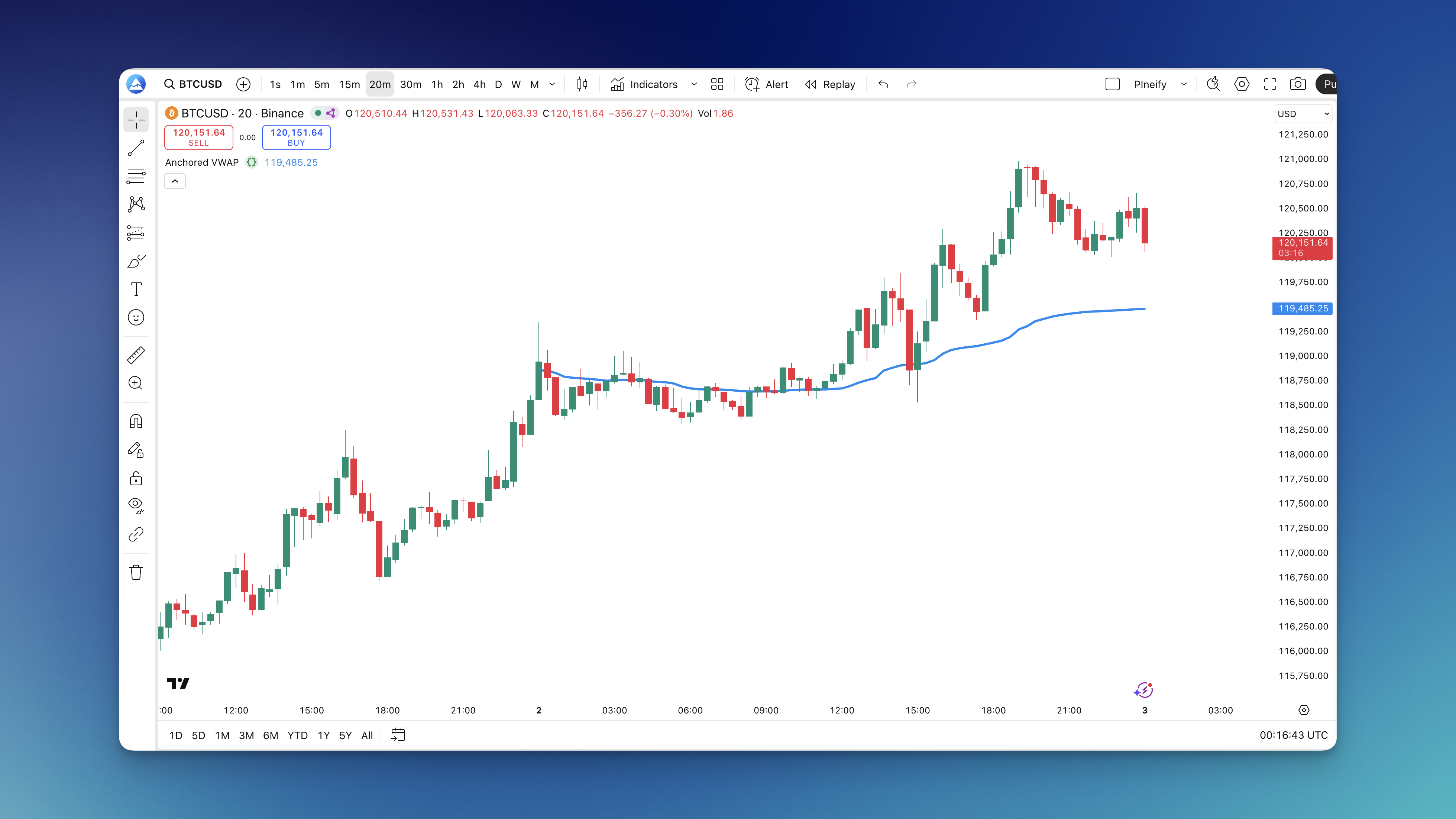
Support Resistance MTF Indicator: Multi-Timeframe Levels for Better Trading Entries

· 20 min read

Have you ever entered a trade on a 15-minute chart, only to watch price immediately reverse at a resistance level that was clearly visible on the 4-hour chart? I've been there countless times. The Support Resistance MTF (Multi-Timeframe) indicator solves this exact problem by displaying support and resistance levels from both your current timeframe and a higher timeframe simultaneously on your chart.

After testing this indicator across various markets and timeframes, I've found it particularly valuable for avoiding false breakouts and identifying high-probability trade setups. Instead of constantly switching between timeframes to check key levels, you get a complete picture of where institutional traders and larger timeframe participants are likely to defend positions. This multi-timeframe perspective helps you align your trades with the broader market structure, significantly improving your win rate.

In this guide, I'll walk you through exactly how the Support Resistance MTF indicator works, how to configure it for different trading styles, and share practical strategies I've developed for using these dynamic zones in real trading scenarios.

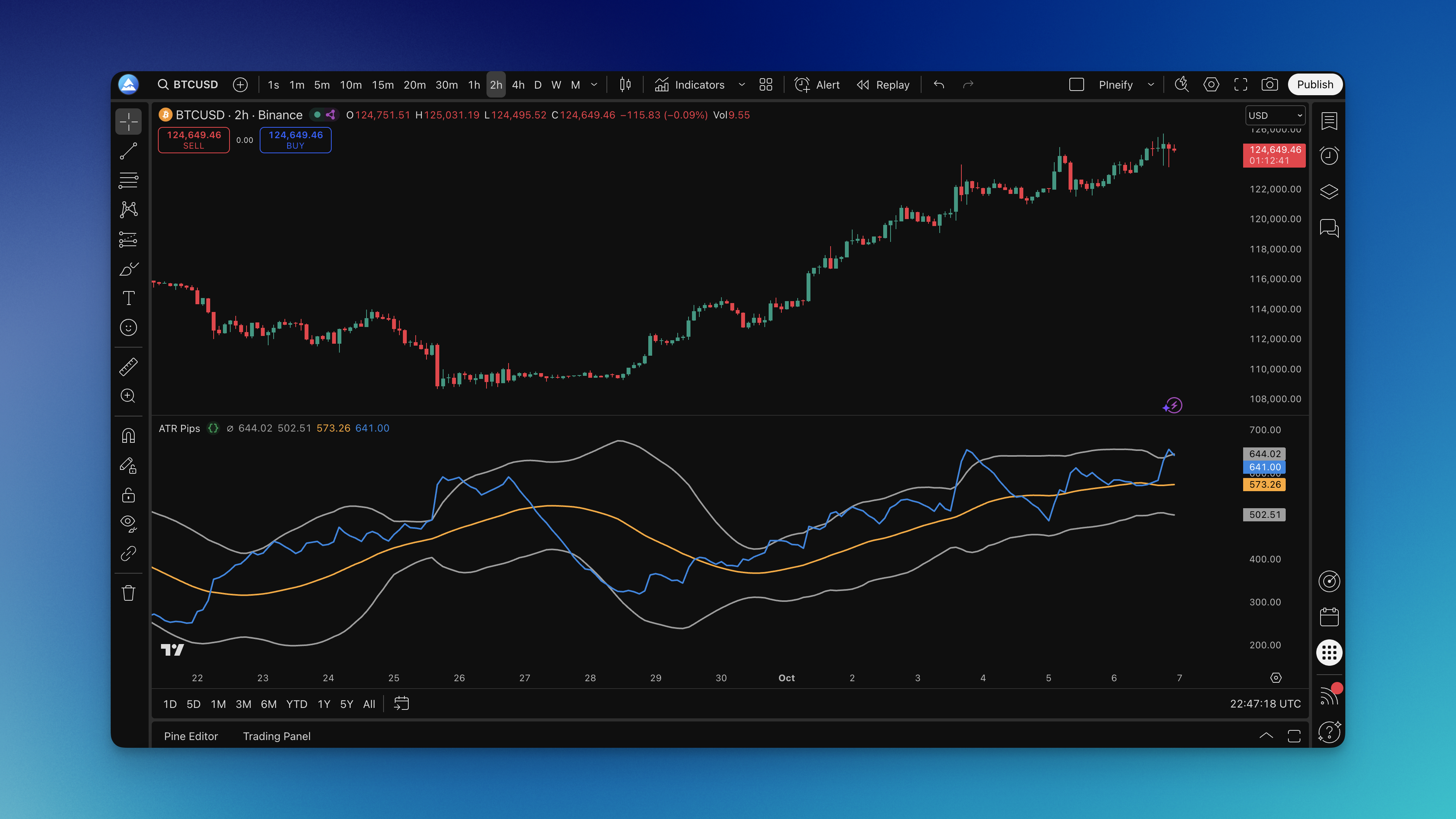
VOL/OI Footprint Indicator TradingView: Volume Delta Histogram for Cleaner Order Flow Reads

· 9 min read

Most traders watch price first, then glance at volume as a second opinion. In fast markets, that often feels too slow. By the time a candle closes, you may still be unsure if buyers pushed it up, or if sellers simply stopped hitting the bid.

That is why I like using a simple delta-style histogram as a “pressure meter” under the chart. It does not predict the next candle. It helps you describe what the current candle likely represents: more buying pressure, more selling pressure, or a quiet bar with no commitment.

This post breaks down the VOL/OI FP indicator (VOL/OI Footprint). You will learn what it measures, how to add it to TradingView, and how to use it with clear trade rules and risk limits.

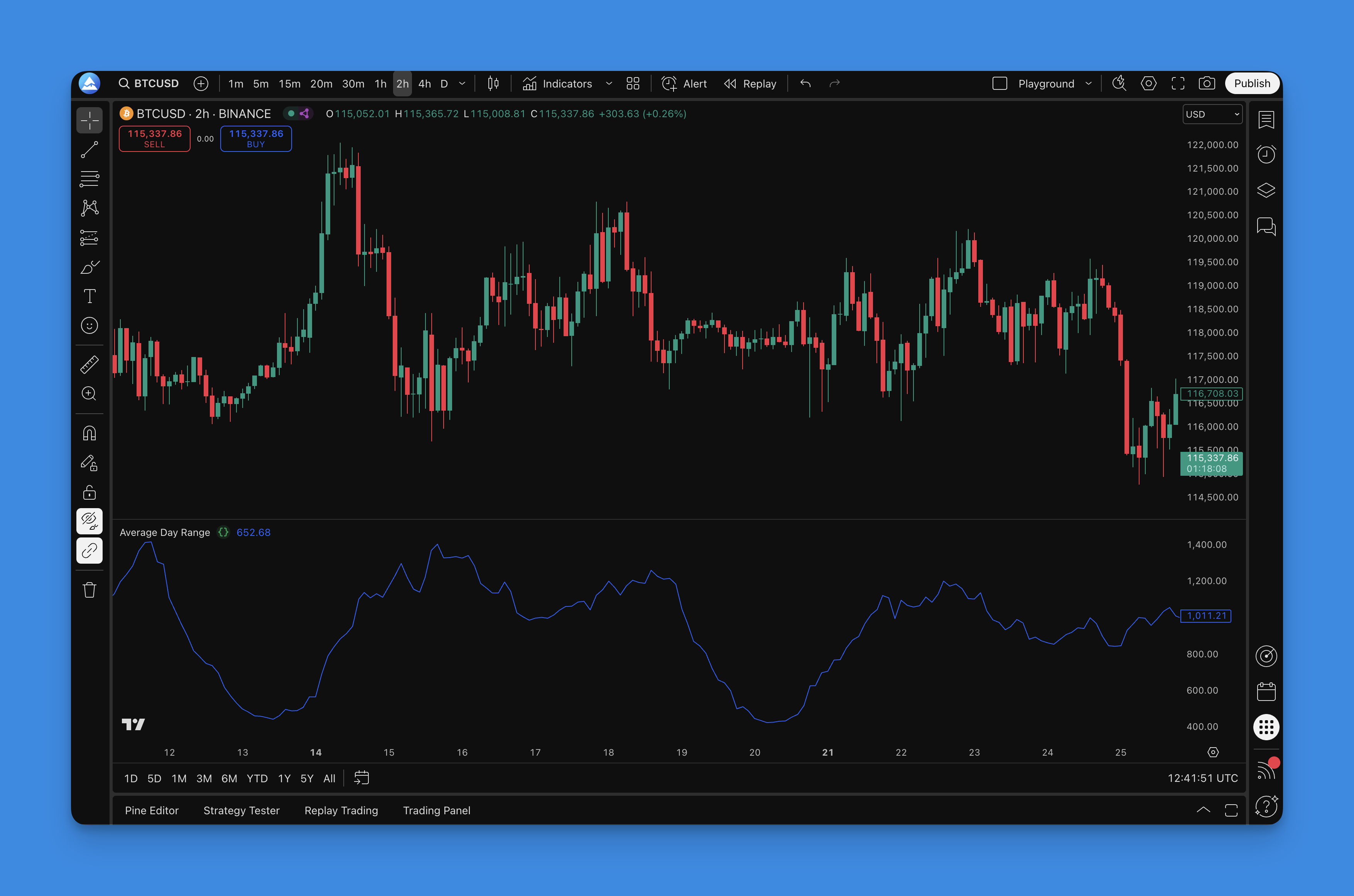
Adaptive Moving Average Indicator: The Smart MA That Actually Reads Market Conditions (Not Just Price)

· 13 min read

Here's something that frustrated me for years: regular moving averages treat every price movement the same way. Whether the market is screaming in one direction or just bouncing around going nowhere, a simple moving average doesn't care—it just averages the numbers.

The Adaptive Moving Average (AMA) actually pays attention to what the market is doing. When price is trending strongly, the AMA speeds up to stay close to the action. When the market gets choppy and starts ranging sideways, it slows down to filter out the noise. It's like having a moving average that can read the room.

This isn't just a neat trick—it solves the two biggest problems traders face with traditional moving averages: lagging behind during strong trends and getting whipsawed during consolidation. The AMA adjusts its sensitivity automatically based on how efficiently price is moving.