AI for Forex Trading: The Complete Guide to Transforming Your Trading Strategy

· 17 min read

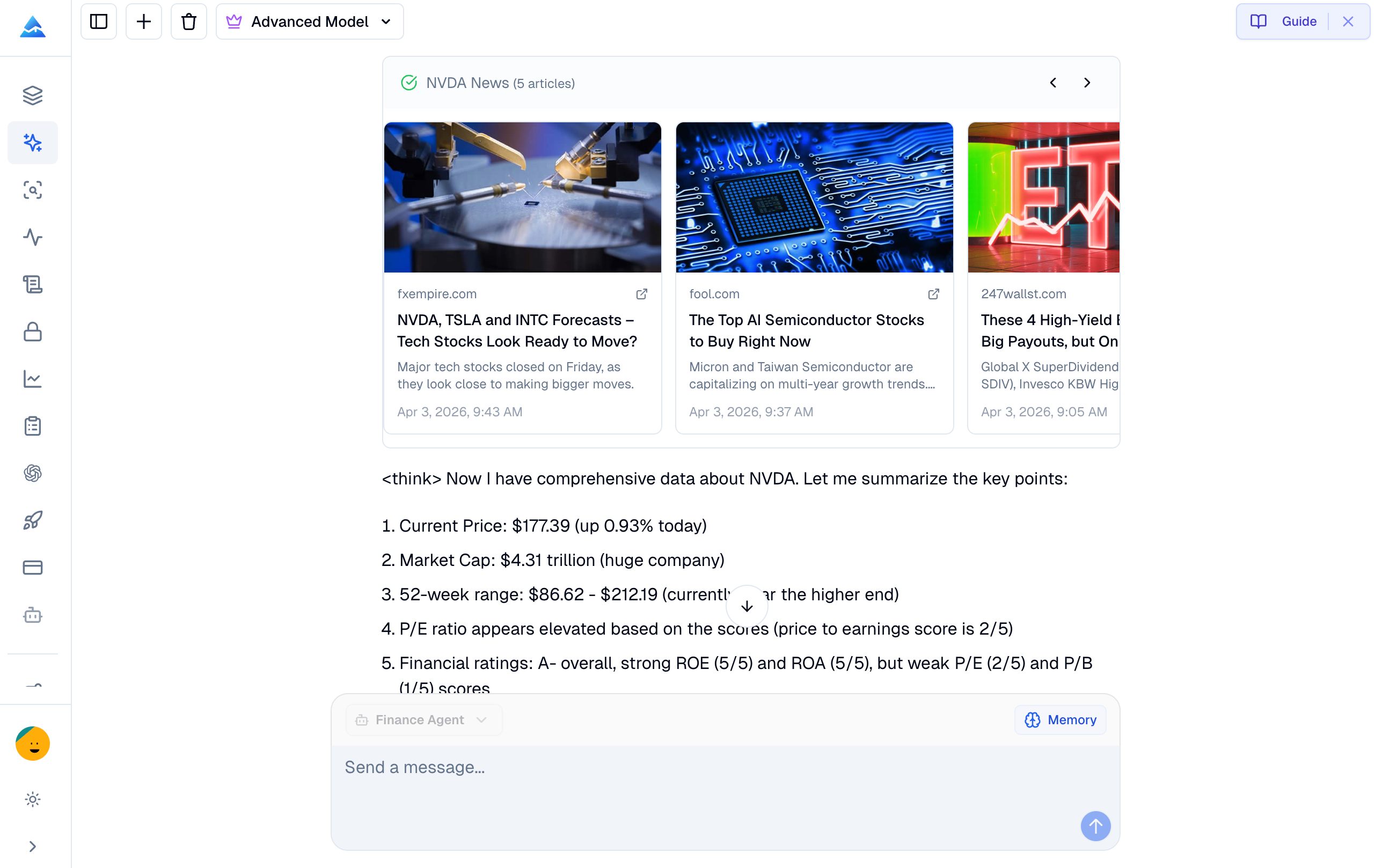
The global forex market is where currencies are traded, and it’s massive—we’re talking over $7 trillion changing hands every single day. With so much happening at once, it’s no wonder traders are turning to artificial intelligence (AI) to help make sense of it all. AI can sift through mountains of data, spot subtle patterns, and place trades in the blink of an eye. This shift is really taking off: the AI trading market was valued at about $21.59 billion in 2024 and is expected to jump to around $24.53 billion in 2025. That’s a sign of how quickly this technology is being adopted.

AI for Forex Trading: The Complete Guide to Transforming Your Trading Strategy

NRTR Indicator: Nick Rypock Trailing Reverse for TradingView

· 15 min read

Have you ever watched a profitable trade reverse and wipe out your gains because your stop loss was too tight or too loose? I've been there countless times in my early trading days. The Nick Rypock Trailing Reverse (NRTR) indicator solves this exact problem by automatically adjusting your stop levels based on price action, helping you stay in winning trades longer while protecting your capital when the trend shifts.

The NRTR is a dynamic trailing stop indicator that adapts to market volatility by calculating percentage-based stop levels. Unlike fixed stop losses, it moves with the price trend, tightening as the trend strengthens and flipping direction when momentum reverses. After testing this indicator across various markets and timeframes, I've found it particularly effective for trend-following strategies where you want to let profits run while maintaining disciplined risk management.

In this guide, you'll learn exactly how the NRTR indicator works, how to configure it for different trading styles, and practical strategies to incorporate it into your trading system.

Support Resistance MTF Indicator: Multi-Timeframe Levels for Better Trading Entries

· 20 min read

Have you ever entered a trade on a 15-minute chart, only to watch price immediately reverse at a resistance level that was clearly visible on the 4-hour chart? I've been there countless times. The Support Resistance MTF (Multi-Timeframe) indicator solves this exact problem by displaying support and resistance levels from both your current timeframe and a higher timeframe simultaneously on your chart.

After testing this indicator across various markets and timeframes, I've found it particularly valuable for avoiding false breakouts and identifying high-probability trade setups. Instead of constantly switching between timeframes to check key levels, you get a complete picture of where institutional traders and larger timeframe participants are likely to defend positions. This multi-timeframe perspective helps you align your trades with the broader market structure, significantly improving your win rate.

In this guide, I'll walk you through exactly how the Support Resistance MTF indicator works, how to configure it for different trading styles, and share practical strategies I've developed for using these dynamic zones in real trading scenarios.

Best Momentum Indicator TradingView: Your Complete Guide to Trading Success

· 18 min read

Thinking about whether a market move has real power behind it, or if it’s running out of gas? That’s where momentum indicators on TradingView come in. They’re like a dashboard for your charts, helping you gauge the speed and strength of price changes. By spotting when trends are strong or when they might be about to flip, these tools can seriously sharpen your timing for entering and exiting trades. If you're new to the platform, a solid foundation is key, so consider checking out the Best TradingView Tutorial: Master the Platform in 2025 to get the most out of these features.

With so many to choose from on TradingView, knowing which momentum indicators fit your style isn't just helpful—it can make a real difference in your results.

Best Momentum Indicator TradingView: Your Complete Guide to Trading Success

Best Market Profile Indicator TradingView: Complete Guide to Top Trading Tools

· 16 min read

If you're trying to read the market's mind—to figure out where it feels comfortable and where it gets anxious—market profile indicators are like a secret decoder ring. They help you see the structure beneath the noise, pointing out high-probability zones for your next trade. On TradingView, you've got a great mix of built-in tools and clever community scripts that visualize this, showing you where value was established and where key price levels might hold.

This guide walks through the best market profile indicators on TradingView, what they do, and how you can use them to sharpen your trading decisions. For developers looking to build upon these visual concepts, exploring the TradingView Charting Library: Empowering Developers with Advanced Financial Visualization can provide deep insights into creating custom analytical tools.

Best Market Profile Indicator TradingView: Complete Guide to Top Trading Tools

Best Market Structure Indicator TradingView: Top Tools for Smart Money Trading

· 16 min read

If you're trying to see what the big market players are up to, understanding market structure is like learning to read their footprints. On TradingView, a whole set of tools called market structure indicators can help you do just that. They automatically spot important shifts and breaks in the price action, highlighting moments where the trend might be gaining strength or getting ready to flip. With so many options available, finding the right tool for you can make a real difference in how clearly you see trading opportunities.

Best Market Structure Indicator TradingView: Top Tools for Smart Money Trading

VOL/OI Footprint Indicator TradingView: Volume Delta Histogram for Cleaner Order Flow Reads

· 9 min read

Most traders watch price first, then glance at volume as a second opinion. In fast markets, that often feels too slow. By the time a candle closes, you may still be unsure if buyers pushed it up, or if sellers simply stopped hitting the bid.

That is why I like using a simple delta-style histogram as a “pressure meter” under the chart. It does not predict the next candle. It helps you describe what the current candle likely represents: more buying pressure, more selling pressure, or a quiet bar with no commitment.

This post breaks down the VOL/OI FP indicator (VOL/OI Footprint). You will learn what it measures, how to add it to TradingView, and how to use it with clear trade rules and risk limits.

Pineify® Smart Money Indicator for TradingView - Signals & Overlays

· 16 min read

Finding the right tool on TradingView can feel overwhelming. With so many indicators, how do you find one that actually clears the clutter and helps you see what's really happening? It’s even better when that tool mirrors how the big players—the institutions—actually trade. That’s where Pineify® - Signals & Overlays™ comes in. Think of it as a unified system that brings together several smart analytical methods, helping you avoid the common frustration of getting mixed signals from a bunch of separate indicators. For those looking to automate their strategies based on such signals, understanding the tools available is key; you can explore options in our guide 3Commas TradingView Signals: Complete Guide to Automated Crypto Trading.

Pineify® Smart Money Indicator for TradingView - Signals & Overlays

Best AI Stock Trading Bots: Your Complete Guide to Automated Trading

· 19 min read

AI stock trading bots are like having a tireless assistant who watches the markets for you, 24 hours a day. They sift through mountains of data, spot opportunities, and place trades, all on autopilot. By using advanced machine learning, these tools can recognize patterns and react to market shifts in ways that would be incredibly difficult—or just plain exhausting—for a person to do manually. This is especially useful when dealing with the intricacies of TradingView chart settings, which can be optimized by a bot to maintain the perfect analysis environment. With so many options out there now, figuring out which ones are truly reliable and packed with useful features has become a key step for anyone looking to trade.

Best AI Stock Trading Bots: Your Complete Guide to Automated Trading

AI Trading Agent: The Ultimate Guide to Automated Trading

· 18 min read

So, you've probably heard about AI doing everything from writing emails to driving cars. But have you thought about it managing investments? AI trading agents are basically putting that powerful technology to work in the financial markets. Think of them as a hyper-alert, data-crunching co-pilot for your trading. They analyze the markets in real-time, make decisions, and place trades—all without getting swayed by fear or greed.

At their core, these agents are smart software. They don't just follow a simple "if-then" rulebook. Instead, they learn from vast amounts of data—price movements, trading volume, news headlines, even social media buzz—to spot patterns and opportunities a human might miss. They can adapt to new market conditions and execute complex strategies at lightning speed. For traders who are serious about developing their own edge, this often starts with mastering the tools of the trade, such as understanding the intricacies of the Best Predictive Indicator TradingView: Pineify® - Signals & Overlays™.

AI Trading Agent: The Ultimate Guide to Automated Trading