request.security() in Pine Script: Multi-Timeframe Without Surprises

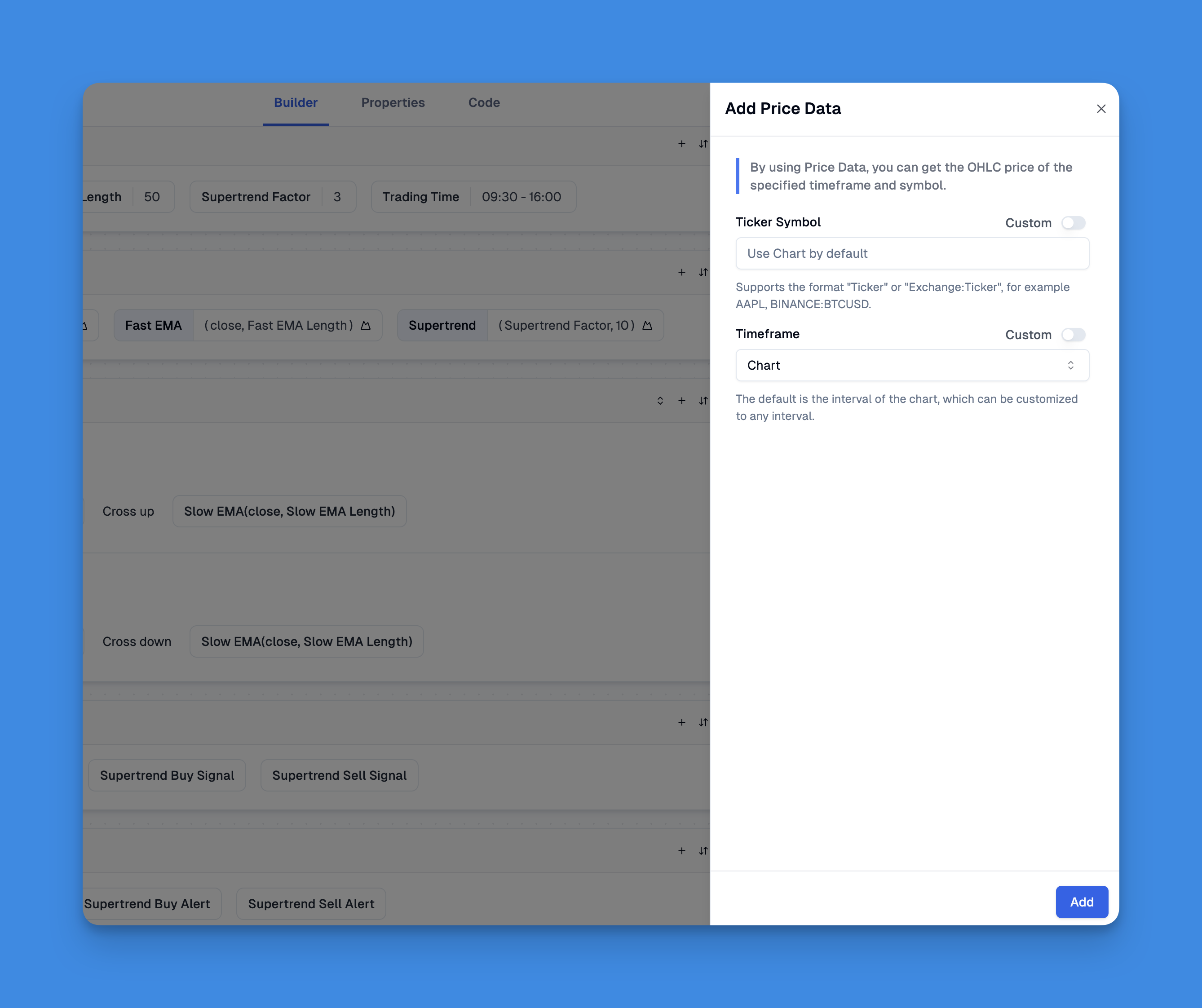
request.security() is a Pine Script function that fetches data from any symbol or timeframe, not just the one on your current chart. You can pull OHLCV values, custom calculations, or entire indicator outputs from another context and display them in your active script.
Ever found yourself on a 1-minute chart needing the daily trend? Or trading SPY but wanting to watch what the VIX is doing at the same time? That's what this function supports.
The requested context has its own bars and confirmation timing. An expression that compiles can still use an invalid timeframe or produce changing values on realtime bars.
Pine Script na(): Missing Values, Fallbacks and Valid Signals
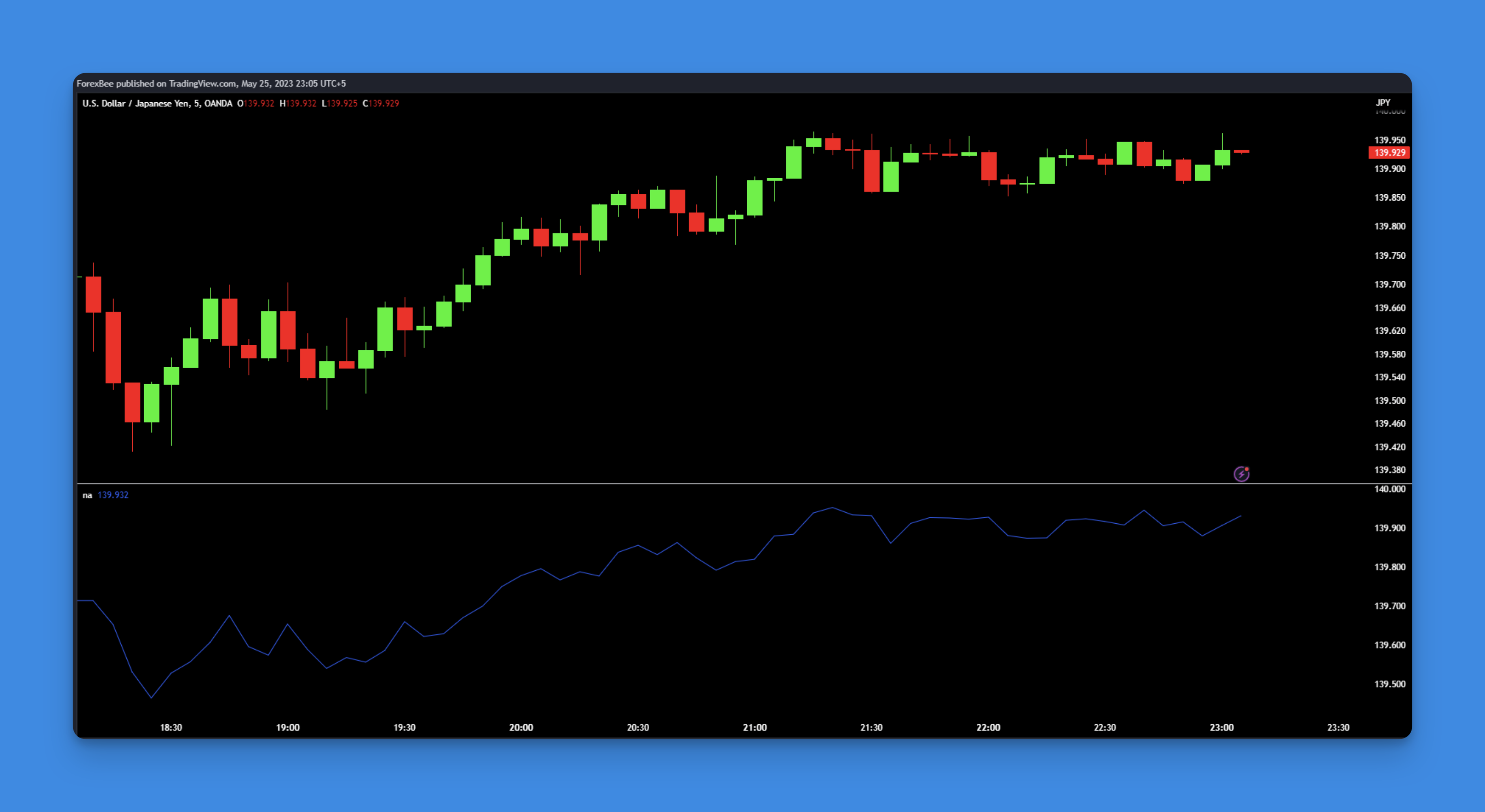
na represents an unavailable value; na(value) checks for it. Missing numeric data usually propagates through arithmetic rather than crashing a script. A guard should express what the calculation needs, not replace every missing observation with an invented zero.

ta.barssince in Pine Script: Event Counts and Correct Cooldowns
ta.barssince(condition) returns zero when the condition is true, then counts chart bars until it is true again. Before the first occurrence, it returns na. The count measures time since that event, not the age or strength of a trend.
LuxAlgo Library: Find Scripts and Check What Their Signals Mean
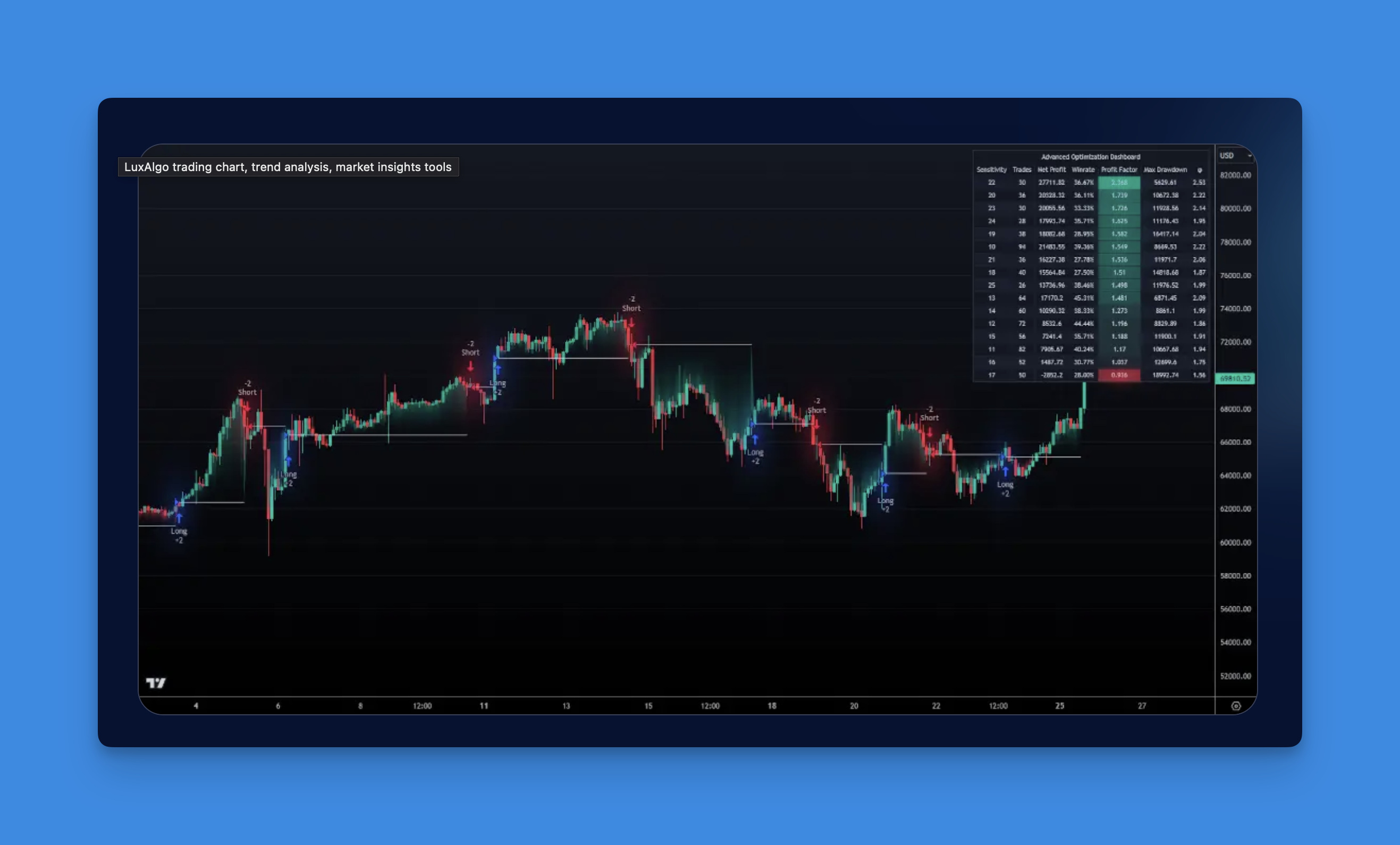
LuxAlgo’s library is a catalog of indicators and trading concepts. To use a specific tool, check its own page, supported platform, access terms and calculation rules. The earlier description of a fixed 200-tool collection with identical features is no longer a reliable guide.

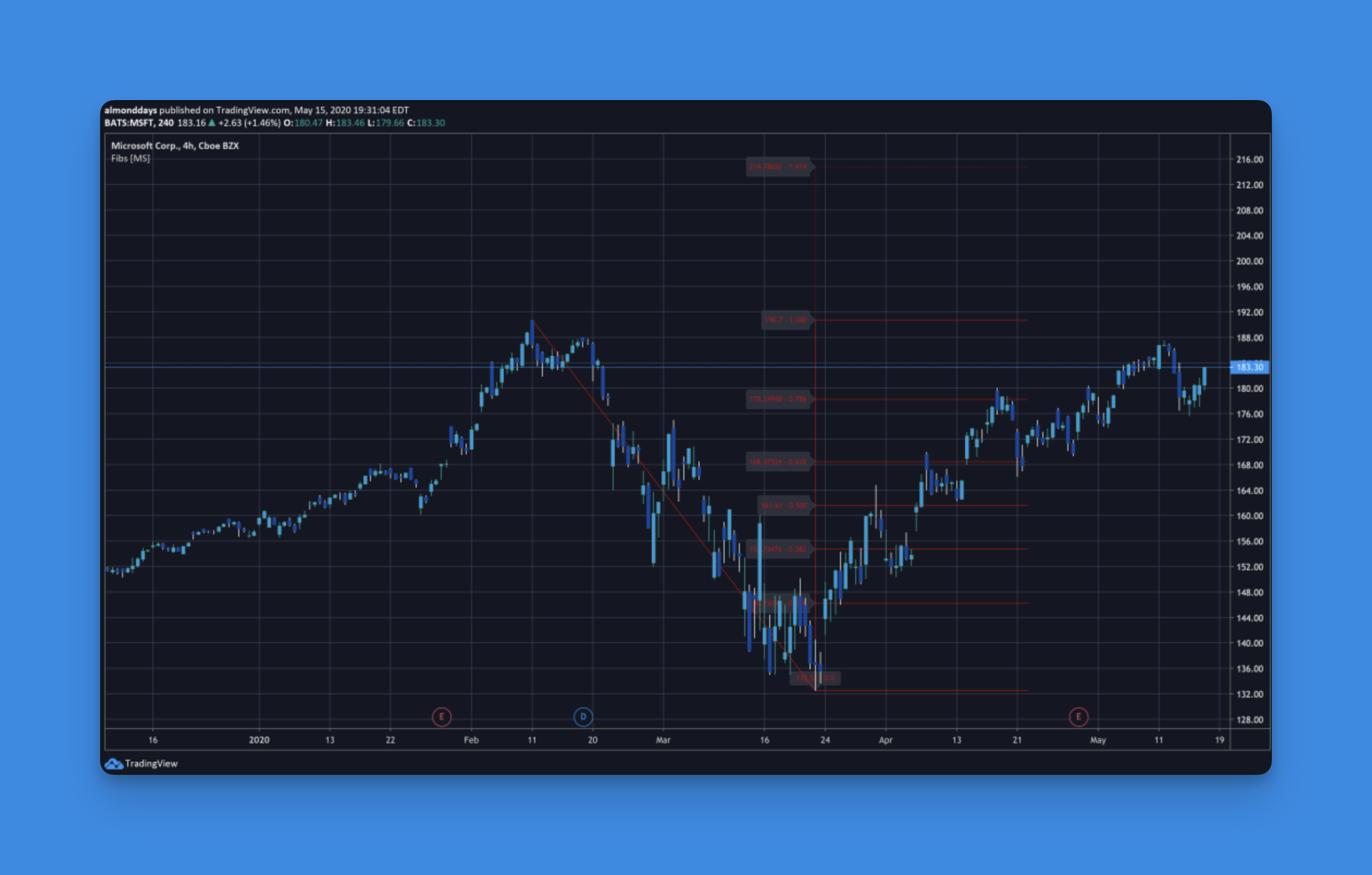
Fibonacci Retracements in Pine Script: Anchors, Alerts and Test Limits
Fibonacci retracement levels divide a selected price move into proportional distances. Their usefulness depends on how the endpoints are chosen and when those endpoints become known. A mathematical ratio alone does not establish support, resistance or a profitable entry.

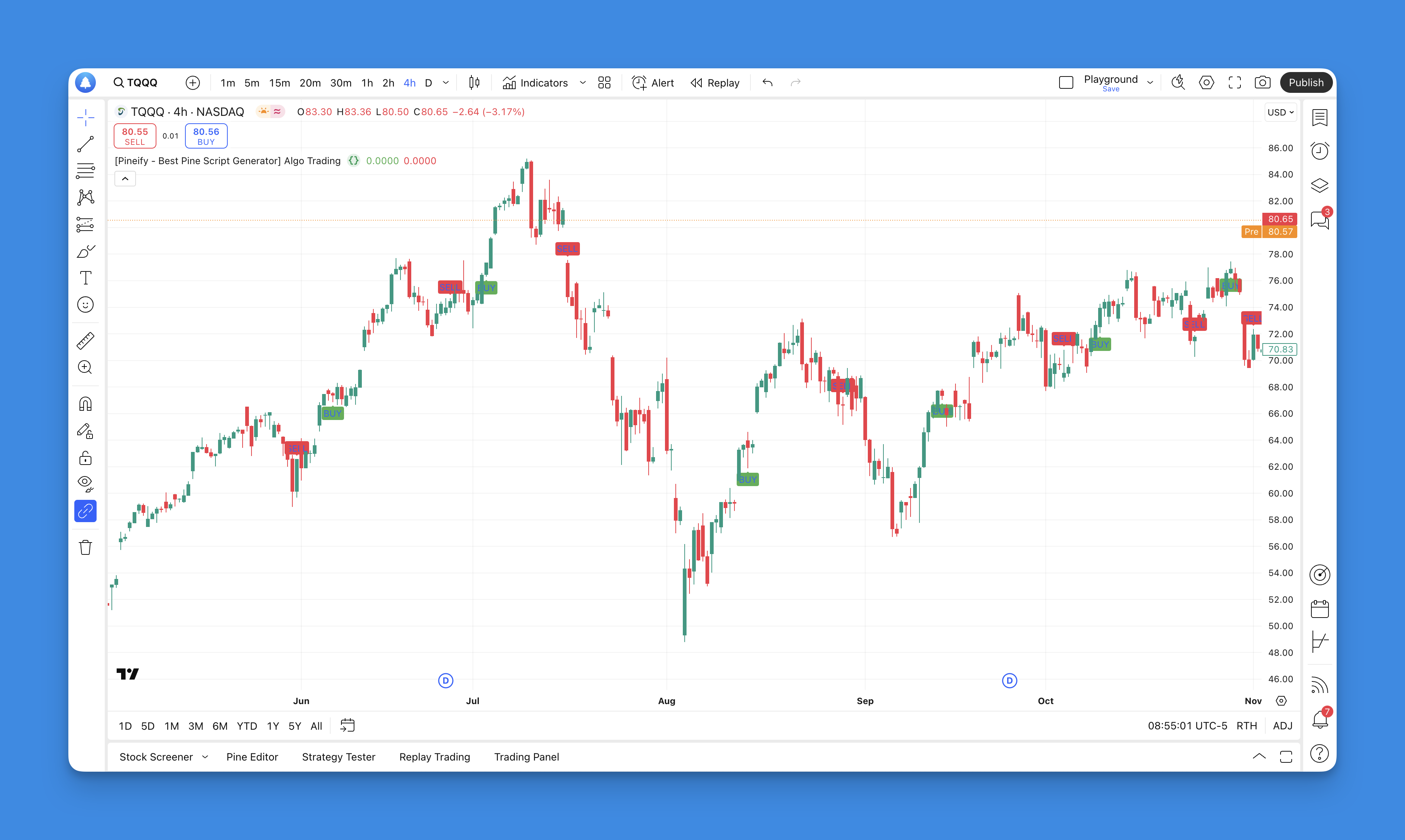
Pine Script Algorithmic Trading: Signals, Backtests and Execution
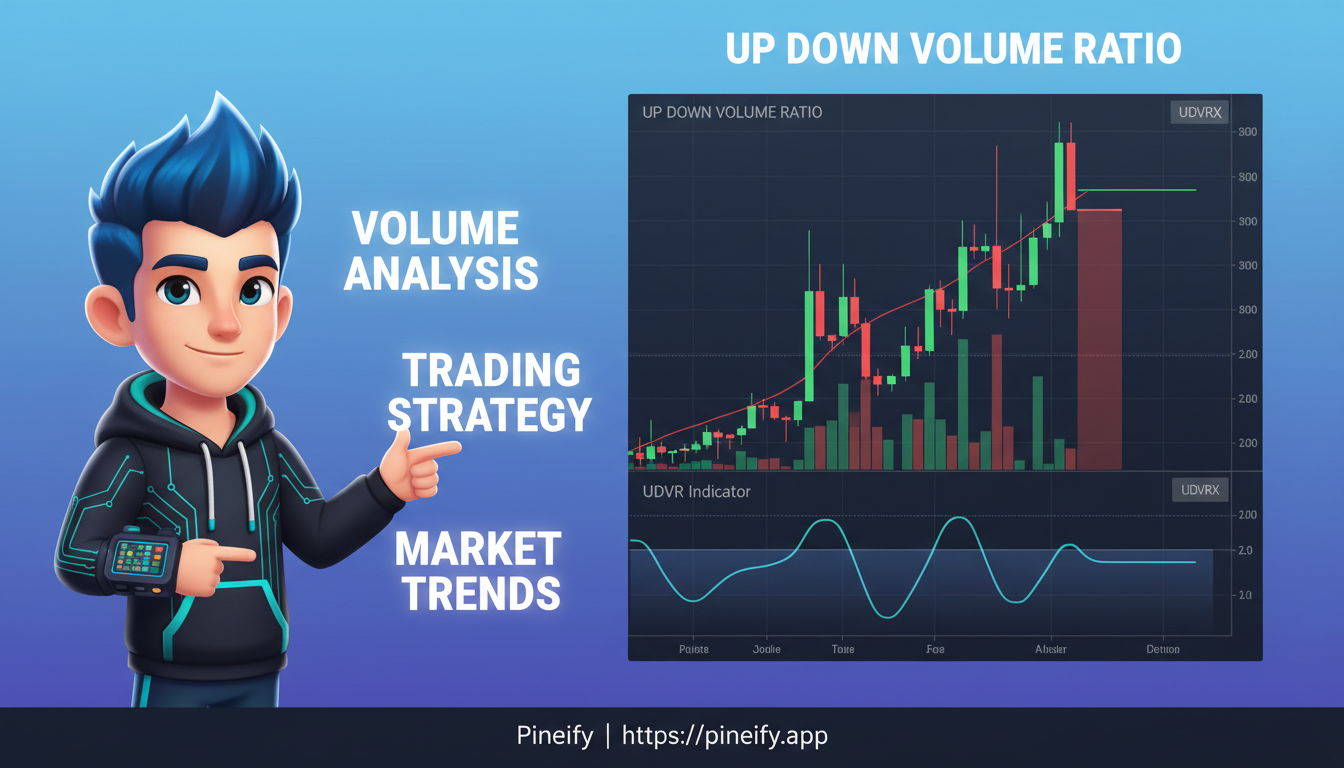
Up/Down Volume Ratio: Calculation, Data and Interpretation
An up/down volume ratio compares volume assigned to rising and falling bars over a lookback window. It describes that classification of historical volume; it does not reveal who traded or establish that institutions are accumulating a position.
Uptrick on TradingView: Volatility Adjusted Trail and Alpha Trend
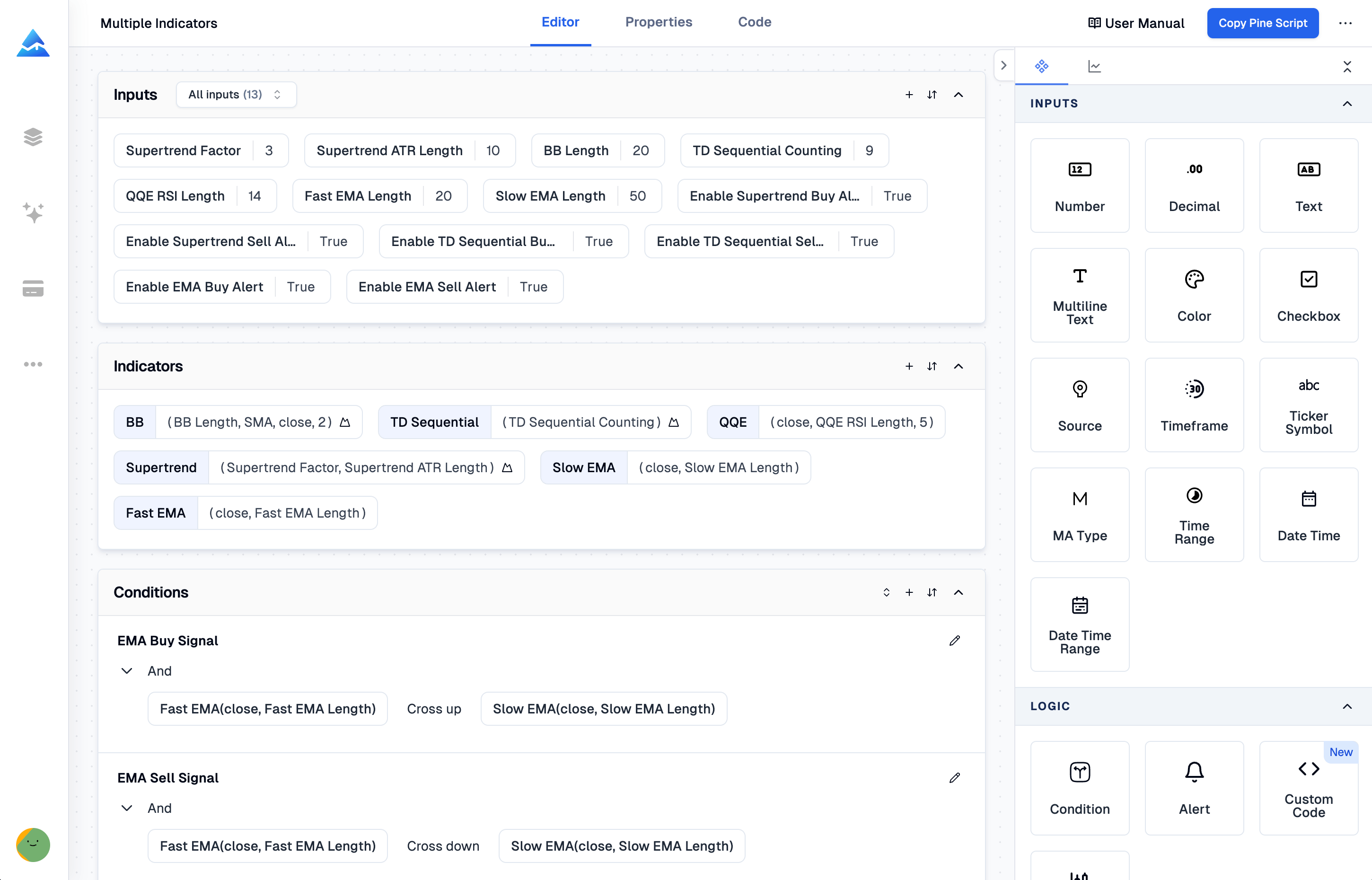
Visual Pine Script Editor vs Tickeron: Code and Signals
Pineify's visual Pine Script editor is a configuration tool that creates Pine Script from user-configured rules. Tickeron documents AI robots, signals and virtual-account workflows. Compare the exact output and controls you need rather than assuming all Tickeron products are unmodifiable or that all Pineify output is automatically reliable.