TradingView vs Thinkorswim: The Ultimate Platform Comparison for Traders

· 15 min read
Pineify Team
Pine Script and AI trading workflow research team

Whether you've been day trading for years or you're just dipping your toes into technical analysis, picking the right platform can make a huge difference in how you trade. In 2026, two names keep coming up in conversations: TradingView and Thinkorswim. Both let you start for free, both are packed with powerful features, and both have millions of loyal users — but they're built for very different kinds of traders. This side-by-side look covers everything from pricing and charting to community features and options trading, so you can figure out which one fits your style.


TradingView vs Thinkorswim: The Ultimate Platform Comparison for Traders

What Is TradingView?

TradingView is a charting and analysis platform that lives entirely in your browser. Over 100 million traders around the world use it. It doesn't tie you to one broker — you can link it to dozens of them, like Interactive Brokers or tastytrade, and place trades straight from the charts. For more on customizing your TradingView charts, see this guide on changing between line and candle charts. What makes it stand out is its clean, easy-to-use design, a huge library of more than 400 built-in indicators, plus over 100,000 community-created indicators. On top of that, there's a lively social trading side where people share chart ideas and Pine Script strategies.

What Is Thinkorswim?

Thinkorswim—often called ToS for short—is a trading platform built for serious traders. Originally created by TD Ameritrade, it’s now owned by Charles Schwab after they bought TD Ameritrade in 2020. If you have a Schwab brokerage account, you get access to Thinkorswim at no extra cost (no platform fees, just your regular trading costs).

What makes it stand out is how powerful it is, especially for options traders. You can write your own custom scripts with ThinkScript, build your own stock scanners, set up multi-leg option trades, and watch real-time risk analytics—all with tools that feel more like what a professional trading desk would use. It’s not just a basic app; it’s a full desktop platform that gives you a lot of control and insight, which is why many active traders in the U.S. rely on it.

TradingView vs Thinkorswim: Which One Works Better for You?

Deciding between TradingView and Thinkorswim really comes down to what you need most. Below is a no‑nonsense look at how they compare across the features that matter.

FeatureTradingViewThinkorswim
Overall Rating4.8 / 5.04.3 / 5.0
Platform TypeWeb + App (Broker-Agnostic)Desktop + Web + App (Schwab)
Charting⭐⭐⭐⭐⭐ Excellent⭐⭐⭐ Good
Options Trading⭐⭐ Limited⭐⭐⭐⭐⭐ Best-in-Class
Ease of Use⭐⭐⭐⭐ 80%⭐⭐⭐⭐ 75%
Social / Community⭐⭐⭐⭐⭐ Very Strong⭐⭐ Limited
Backtesting⭐⭐⭐⭐ Visual Strategy Tester⭐⭐⭐ ThinkScript-based
Global Markets⭐⭐⭐⭐⭐ 50+ Countries⭐⭐⭐ Primarily US
PricingFree + Paid PlansFree with Schwab Account

Charting Tools: TradingView Takes the Lead

When you’re comparing charting platforms, TradingView is the one that stands out. It gives you over 20 different chart types, more than 110 smart drawing tools, and you can set custom timeframes. The SuperCharts environment is pretty loaded. One of my favorite features is the Bar Replay tool – it lets you rewind any chart to a specific point in history and replay price action candle by candle. If you want to test out a trading idea or practice a strategy without putting real money on the line, this is a game-changer.

Now, Thinkorswim (ToS) is no slouch either when it comes to charts. It has its own ThinkScript language, which means you can build or tweak hundreds of indicators and studies. There are 300+ built-in studies, and the charts are tightly linked to trade tickets. So, it’s definitely functional. But honestly, the interface feels a bit old and cluttered compared to TradingView’s clean, modern look. Switching between chart tabs and trade tabs on ToS isn’t as smooth as TradingView’s workflow – it just doesn’t flow as naturally.

Winner: TradingView – for its cleaner design, access to global markets, and a richer set of charting features that make it easier to use day in and day out.

Options Trading: Thinkorswim Wins

If you’re serious about options, Thinkorswim is the clear winner here. TradingView just can’t keep up. ToS was built from the ground up for options traders, and it shows in every feature.

Here’s what you get with Thinkorswim:

  • Multi-leg options strategy builders – Easily set up spreads, straddles, iron condors, and more.
  • Greeks analysis – See Delta, Gamma, Theta, and Vega at a glance.
  • Probability analysis tools – Figure out the odds of your trade working out.
  • Risk profile visualizations – Instantly see what could happen to your position.
  • Option Hacker and Spread Hacker scanners – Find the exact trades you’re looking for.
  • Strategy Roller – Automatically roll covered calls without manual work.

TradingView’s options tools are getting better, but they’re still far behind. If you're interested in backtesting options strategies, this tool for option omega backtesting can help. For one thing, it doesn’t natively model US equity options. So if your day-to-day involves complex options strategies and multi-leg orders, Thinkorswim is the platform you want.

Winner: Thinkorswim – No contest for anyone who lives and breathes options.

Scanning and Screening

When it comes to scanning stocks and options, both TradingView and Thinkorswim bring solid tools to the table—but they shine in different areas.

TradingView’s stock screener is all about speed and simplicity. It covers global markets, lets you filter by technical and fundamental criteria, and even gives you a Technical Rating (ranging from Strong Buy to Strong Sell) that’s based on 13 indicators. The whole thing feels visual and intuitive—you can get a good idea of what’s moving in just a few clicks.

Thinkorswim, on the other hand, goes deeper, especially if you’re focused on US markets. Its scanner offers over 60 customizable filters, with 30 of those dedicated to fundamental data like EPS, ROE, and profit margins. The Stock Hacker and Option Hacker tools are some of the most powerful in the industry for screening US equities and options. You can really dial in exactly what you’re looking for.

Winner: TradingView if you want fast, global, and technical screening; Thinkorswim if you need deep fundamentals and options screening in the US market.

Backtesting and Strategy Development

When you're building and testing trading strategies, the tools you can use make a huge difference. Let's compare how TradingView and Thinkorswim handle backtesting.

TradingView runs on Pine Script, which is pretty easy to pick up even if you're not a programmer. You can code up a custom indicator or a full trading strategy, then immediately run it through the built-in Strategy Tester. This tester shows you an equity curve, drawdown stats, and a full log of every trade. The whole process is fast and visual, so you can tweak your logic and see the results in seconds. It's great for quickly iterating on ideas without getting bogged down.

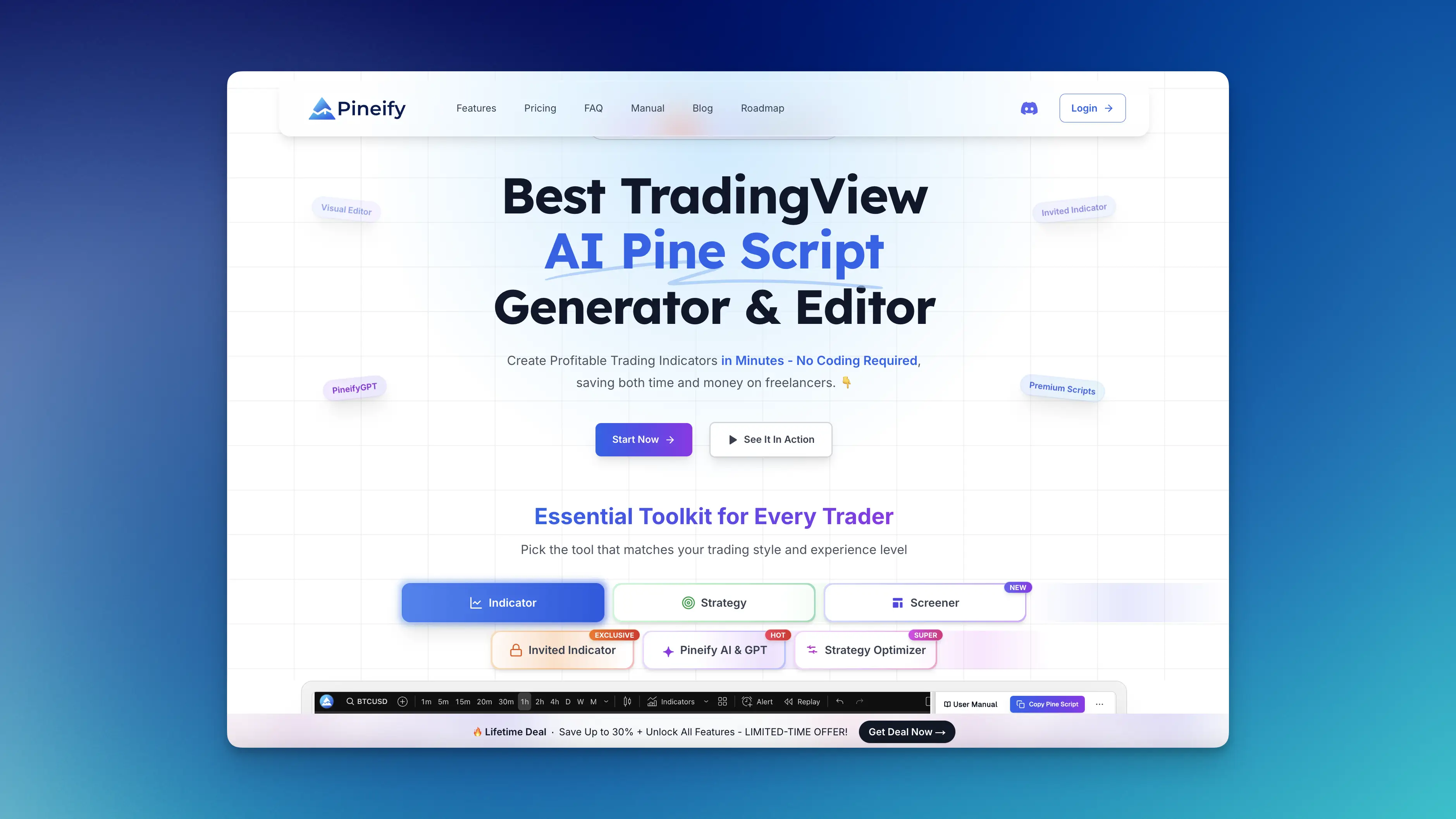
Pineify Website

Speaking of building on TradingView's strengths, Pineify supercharges your entire Pine Script workflow. With its Visual Editor, you can create complex indicators and strategies without writing a single line of code—combine 235+ technical indicators, add candlestick patterns, and generate error-free code instantly. Or if you prefer coding, the Pine Script AI Agent turns your trading ideas into perfect Pine Script in minutes, outperforming ChatGPT, Gemini, and Claude. Plus, you get a Backtest Deep Report that transforms TradingView's basic test results into institutional-grade analysis with 16+ KPIs, rolling window analysis, Monte Carlo simulation, and more. It's like having a quant team in your toolbox, all with a one-time payment and lifetime updates. For deeper market analysis, also check out Pineify's market insights on options flow and dark pool activity.

On the other hand, Thinkorswim uses ThinkScript. It's a powerful language—you can do a lot with it once you learn the ropes—but it takes more effort to set up a complete backtesting workflow. You can simulate strategy entries right on the chart, and ToS really shines when it comes to risk analysis and more advanced metrics. But if you're a retail trader looking for a streamlined, code-to-test pipeline, TradingView's approach is far more straightforward and beginner-friendly.

So which one comes out ahead? For most traders who want to test ideas quickly and get visual feedback right away, TradingView is the way to go. Backtesting feels faster and more accessible, which means you can spend less time wrestling with syntax and more time actually improving your strategies. Thinkorswim has its strengths, especially if you need deep risk analysis, but for pure speed and ease of use, TradingView takes the win here.

Social Features and Community

When it comes to building a community around trading, TradingView really stands out. The platform grew popular in large part because of its strong social trading network. You can share chart ideas, comment on other people's analyses, follow traders you admire, and browse through tons of scripts and strategies created by the community. If you're the kind of trader who learns by watching others or likes to discover fresh setups, this feature alone makes TradingView hard to beat.

Thinkorswim, on the other hand, has its own internal chat and gives you access to Trader TV — live market coverage — plus educational webinars and tutorials. The community there is active, but it's much smaller and not nearly as interactive as what you'll find on TradingView.

Winner: TradingView — it's one of the largest and most engaged trading communities in the world.

Pricing

PlanTradingViewThinkorswim
Free TierYes (ad-supported, limited features)Yes (with Schwab account)
Paid PlansEssential, Plus, Premium, Premium+N/A (no platform fee)
Options / Futures FeesVaries by connected brokerStandard Schwab rates apply
Paper TradingYes (Bar Replay + Strategy Tester)Yes (Paper Money — $100,000 virtual balance)

TradingView's free version actually works pretty well, but you're limited to one chart per tab and only three indicators per chart. If you're serious about trading, you'll probably want to upgrade to at least the Essential or Plus plan. On the other hand, Thinkorswim is completely free as long as you have a Schwab account — a fantastic deal if you're already with Schwab.

Winner: Tie — both offer strong value for different needs.

Mobile Experience

When you're on the go, having a solid mobile app makes all the difference. I've spent a good amount of time testing both TradingView and Thinkorswim on my phone, and here's how they stack up.

TradingView's mobile app is smooth and well thought out. The interface is clean, fast, and responsive — it just feels right. Almost everything you can do on the desktop version works on mobile too: indicators, drawing tools, alerts, you name it. I'd say it scores about 90% for mobile experience.

Thinkorswim's mobile app is surprisingly packed for a brokerage app. You get watchlists, full trade tickets, charts, news, and even chat rooms. That's a lot of functionality in your pocket. Still, it doesn't feel as polished as TradingView when it comes to the overall mobile flow.

Winner: TradingView — hands down the better mobile experience. It's the one I'd reach for when I'm away from my desk.

Who Should Use Each Platform?

TradingView is a great fit if you:

  • Trade stuff all over the world – forex, crypto, international stocks, futures, you name it
  • Want some of the best, prettiest charts out there that are also super customizable
  • Like being part of a community where traders share ideas, scripts, and strategies
  • Want a platform that works with your current broker, not one that forces you to switch
  • Enjoy fast backtesting with a scripting language (Pine Script) that’s easy to pick up

Thinkorswim is a solid choice if you:

  • Mostly trade US stocks and options
  • Already bank with Schwab (or are thinking about opening an account there)
  • Need a powerful tool to build complex options strategies and analyze Greeks in depth
  • Want to screen stocks with over 60 different filters for fundamentals
  • Prefer everything – your broker, your platform, your tools – in one seamless place

Can You Use Both?

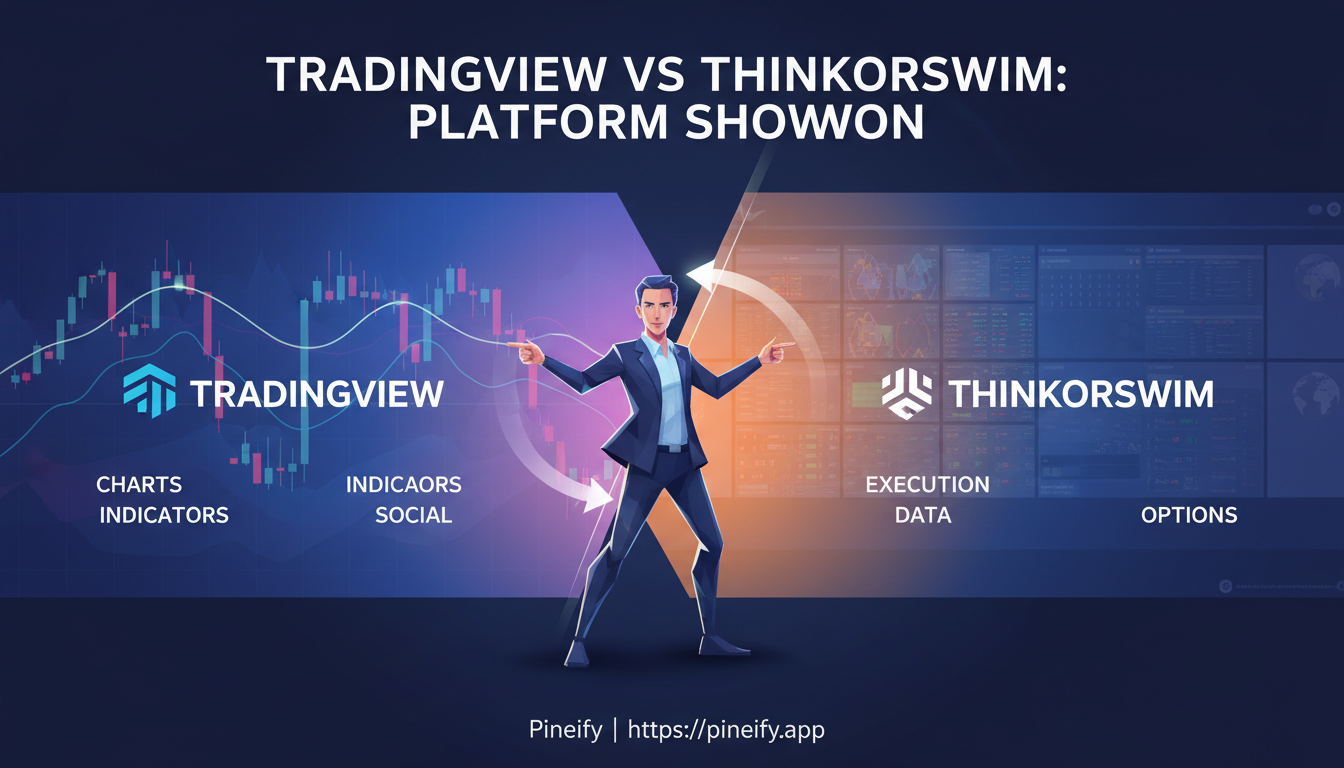
A lot of serious traders actually run both platforms at the same time — and it's a pretty smart move. Think of TradingView as your go‑to for research and charting: you spot setups across markets, build and test strategies, and stay connected with the trading community. Then Thinkorswim becomes your main place for actually executing trades: handling complex options plays, managing how orders get routed, and tapping into Schwab's solid brokerage backbone. By using both, you fill in the gaps that each one has on its own.

Frequently Asked Questions (FAQ)

Q: Is TradingView better than Thinkorswim for beginners?
A: Honestly, it depends on what you’re looking for. TradingView has a cleaner, more modern interface that’s a bit easier to jump into, and getting started feels less overwhelming. Thinkorswim packs a lot of features, so it can feel like drinking from a fire hose at first. But both platforms require some time to learn—no magic shortcut there. If you want a gentler start, TradingView might feel more approachable.

Q: Can I use TradingView without a broker account?
A: Absolutely. TradingView works as a standalone charting and analysis tool. You don’t need a broker to explore charts, draw trendlines, or use indicators. You only connect a broker when you’re ready to place live trades directly from TradingView. Otherwise, it’s like a free map for the markets.

Q: Is Thinkorswim free?
A: Yes, Thinkorswim is completely free to use once you have a Charles Schwab brokerage account. There are no extra fees for the platform itself. You only pay standard commissions when you trade options or futures (stocks are commission-free at Schwab). So the tool itself won’t cost you a dime.

Q: Which platform is better for day trading?
A: That depends on your style. Thinkorswim gives you advanced order types, direct routing, and execution tools that serious US market day traders rely on. It’s built for speed and control. TradingView shines if you’re trading multiple markets (crypto, forex, stocks) and care more about chart analysis than order routing. For pure charting, TradingView wins. For placing fast trades, Thinkorswim takes the lead.

Q: Does TradingView offer paper trading?
A: TradingView has something called Bar Replay, which lets you step through historical price bars to test strategies—it’s great for backtesting. But for live simulated trading (where the market moves in real time but with fake money), Thinkorswim’s Paper Money account is way stronger. You get a $100,000 virtual account that feels like the real thing. So if you want to practice live trading without risk, go with Thinkorswim.

Next Steps

Alright, so you’ve read the comparison and you’re ready to pick a platform (or maybe both). Here’s how to actually get moving:

  1. Give TradingView a spin for free – Head over to tradingview.com. No credit card needed, just sign up and start poking around the charts, test the screener, and see what the community’s talking about. It’s a low‑risk way to see if the interface clicks with you.

  2. Open a Schwab account to unlock Thinkorswim – If options trading is a big part of your plan, Thinkorswim is a beast of a platform, and it’s free with a Schwab brokerage account. Go to schwab.com to get started. You don’t need a ton of money to open an account, and you’ll get the full desktop app and mobile tools.

  3. Use both – Honestly, a lot of experienced traders run them side by side. Keep TradingView open for research, scanning, and analysis, then switch to Thinkorswim when you’re ready to execute trades or manage complex options positions. They complement each other really well.

If this helped you think through things, share it with a friend who’s also on the fence. And drop a comment below with your own experience – are you Team TradingView, Team Thinkorswim, or rocking both?


Sources: Liberated Stock Trader — TradingView vs ThinkOrSwim 72-Point Test | StockBrokers.com — TradingView Review 2026 | newtrading.io — TradingView vs Thinkorswim Simulator Comparison | StockAnalysis — TradingView Review | Bullish Bears — Thinkorswim Review